



George IV Bookcase
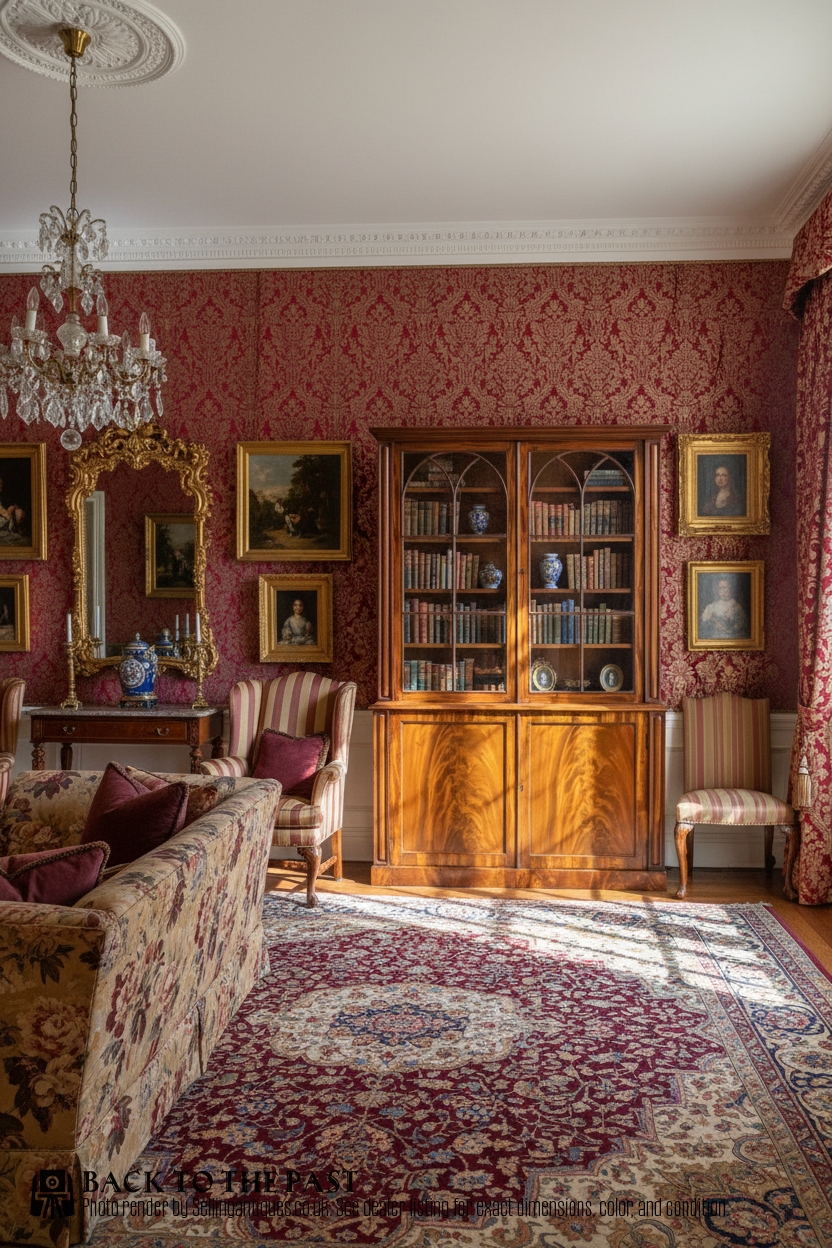
A george iv bookcase brings substantial architectural presence and rich cabinet timbers into a room, offering both display and concealed storage.

George IV Bookcase
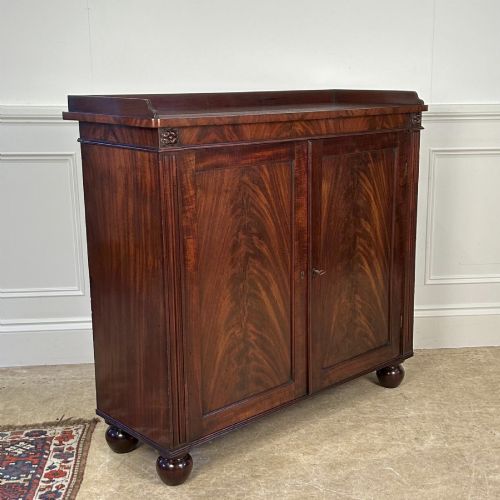
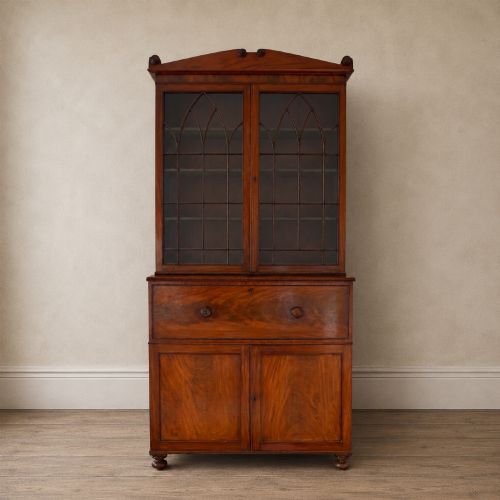
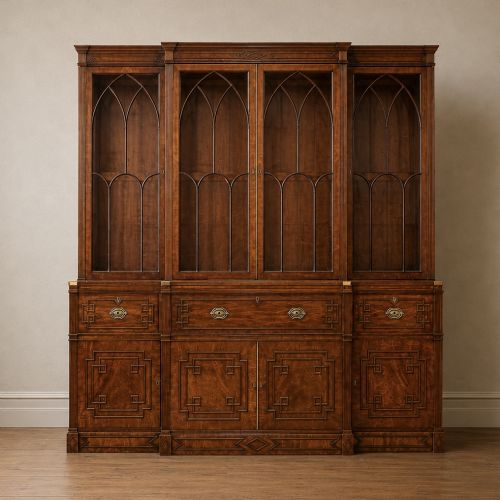
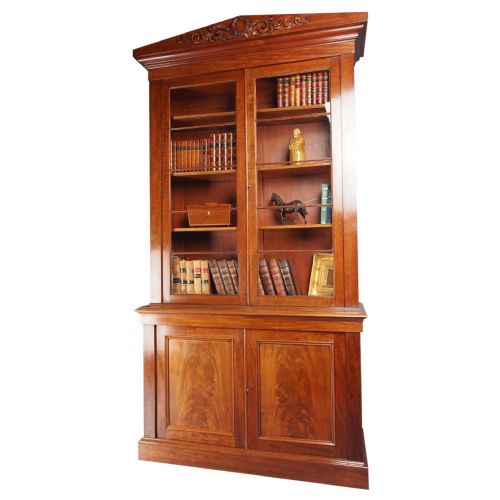
When searching for a george iv bookcase, you encounter pieces spanning the 19th century, Georgian, and Regency periods that range from imposing breakfront library editions to compact dwarf forms. These storage pieces take several structural shapes, including glazed bookcases, secretaire bookcases with drop-down writing drawers, open waterfall shelving, and side cabinets with cupboard bases.
The most common examples met on this page are constructed in mahogany and rosewood, frequently incorporating glazed upper doors and enclosed lower sections. Cabinet makers of the era also produced specialised formats such as etageres, chiffoniers, and low pier cabinets designed for specific domestic functions.
How they were made
Cabinet makers relied heavily on solid timber and figured veneers, selecting dense mahogany, flame mahogany veneer, and rich rosewood to cover large structural surfaces. Exotic accents such as thuya wood and oak appear alongside structural brass hardware and marble tops.
Construction techniques combined robust joinery with decorative detailing, utilising glazed panel doors, graduated shelving tiers, and tambour mechanisms. Workshops also applied gothic revival motifs and architectural pediments to create visual depth across breakfront and floor-standing carcasses.
George IV Bookcase Retail Price Guide 2026
Typical asking prices for george iv bookcase among the pieces listed under this phrase on Sellingantiques today, from the lower quarter to the upper quarter. They describe what is for sale here now, not the wider market.
Listings feature both mahogany and rosewood alongside less common timber choices such as thuya wood and marble top surfaces.
What varies in quality
Quality in these storage pieces rests primarily on the selection of timber figures and the precision of the cabinet work. Pieces featuring highly figured flame mahogany or richly grained solid rosewood sit comfortably above plain utility alternatives.
The sophistication of internal fittings also dictates the hierarchy. A secretaire bookcase with finely divided pigeon holes, concealed drawers, and smooth-running drop fronts demonstrates superior workshop standards compared to a basic shelved interior.
Gillows·George Oakley
The George IV Bookcase Glossary
- Secretaire bookcase
- A tall storage unit featuring a pull-out or drop-front drawer fitted with small drawers and pigeon holes for writing, positioned beneath glazed upper shelves.
- Breakfront
- A large cabinet design where the central section projects forward from the flanking wings, adding architectural depth to library bookcases.
- Waterfall bookcase
- A tiered open shelving unit where each successive shelf is narrower than the one below, creating a cascading silhouette.
- Etagere
- A set of open graduated shelves designed for displaying small decorative objects rather than heavy folios.
- Chiffonier
- A low sideboard or cabinet featuring shelves mounted above a closed cupboard base, developed during the Regency and George IV periods.
George IV Bookcase: Frequently Asked Questions
What is a secretaire bookcase?
A secretaire bookcase combines a traditional library display cabinet with a concealed writing desk drawer. The front pulls down to reveal fitted compartments and small pigeon holes.
This clever dual-purpose design allowed homeowners to conduct correspondence without needing a separate desk in the room.
How do I tell rosewood from mahogany?
Rosewood displays a dense, dark grain with characteristic purplish-brown tones and strong contrasting black figuring. Mahogany tends towards a warmer reddish-brown hue with straighter linear grain patterns or rippled flame figures.
Both timbers were heavily favoured during the George IV period for high-status library furniture.
Where were these bookcases placed?
These pieces were designed for principal reception rooms, gentlemen's libraries, and drawing rooms in large country houses and town residences. Large breakfront editions stood against long walls, while dwarf and pier cabinets fit neatly beneath windows.
Their substantial presence anchored the formal interior decoration schemes of the era.
Are the shelves adjustable?
Many period bookcases feature adjustable wooden shelving supported by rack-and-pinion mechanisms or traditional wooden fillets. This allowed owners to alter shelf heights to accommodate folio volumes of varying sizes.
Fixed shelving is more commonly found in smaller open waterfall or dwarf formats.