




Georgian Rosewood Cabinet
A georgian rosewood cabinet brings rich dark timber and precise brass inlay into a room, offering both display space and refined storage.
Georgian Rosewood Cabinet
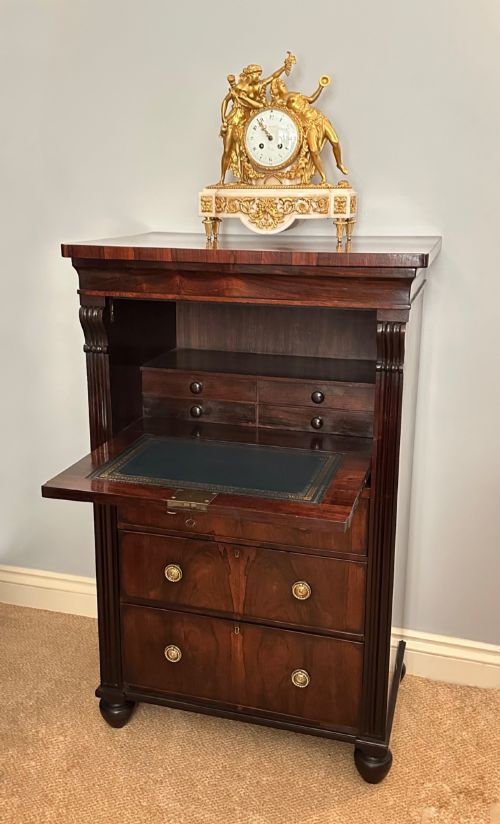
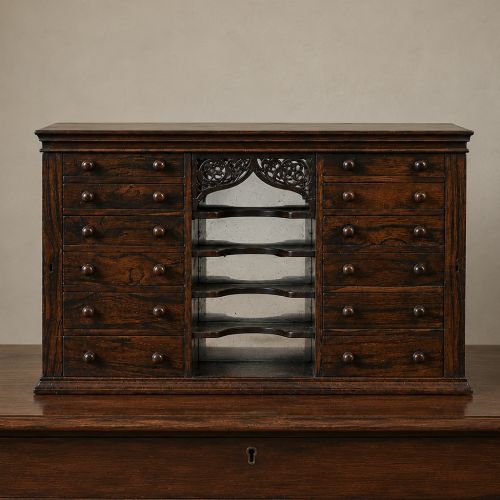
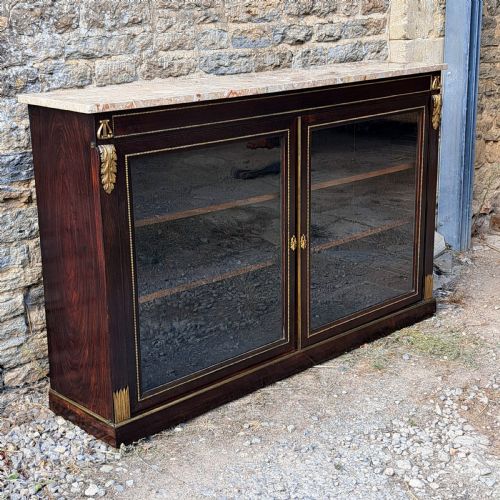
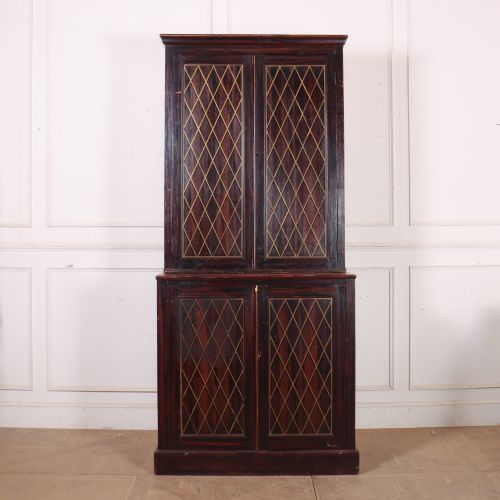
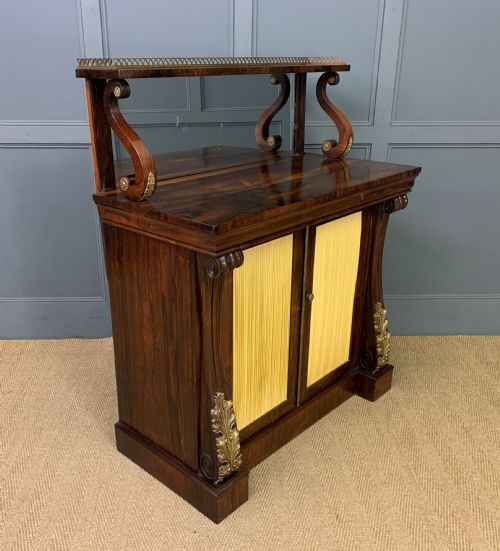
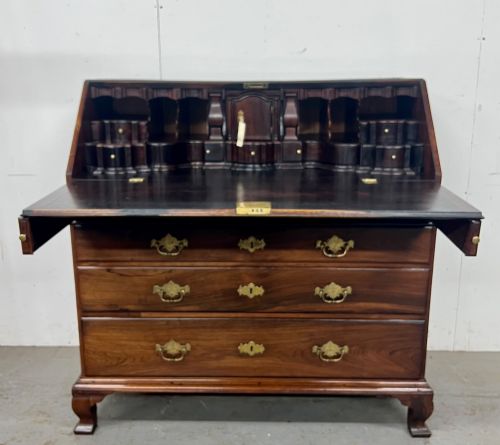
A georgian rosewood cabinet spans several forms designed to hold books, collections, or writing materials, with chiffoniers and bookcases appearing most frequently on this page. These pieces date primarily from the Regency and Georgian periods, alongside later revivals, and take the form of side cabinets, secretaires, and breakfront bookcases.
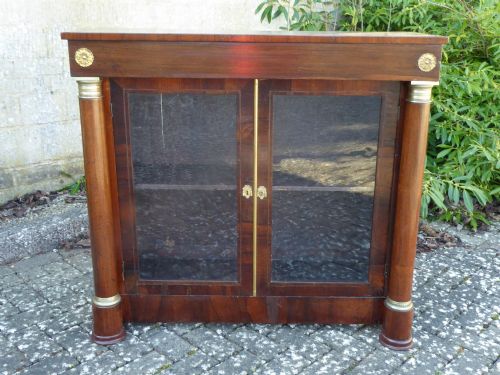
The construction ranges from compact writing cabinets and miniature chests to large breakfront bookcases and cellarettes. Many examples incorporate glazed doors for display, mirrored backs, or open shelving flanked by columns and pilasters.
How they were made
Cabinet makers utilised dense rosewood veneers and solid Brazilian rosewood over secondary timbers, frequently enhancing the dark grain with contrasting brass inlay, brass mounts, and parcel gilt details. Crossbanding in alternative timbers such as mahogany or satinwood frames the primary surfaces.
Interiors often feature secondary woods like mahogany alongside functional additions including leather writing surfaces, marble tops, silk fabric linings, and mirror glass. Some variants employ simulated rosewood paint techniques on alternative timbers to achieve the desired dark aesthetic.
Georgian Rosewood Cabinet Retail Price Guide 2026
Typical asking prices for georgian rosewood cabinet among the pieces listed under this phrase on Sellingantiques today, from the lower quarter to the upper quarter. They describe what is for sale here now, not the wider market.
Some gentlemen's table cabinets hide mother of pearl inlay behind closed doors.
What varies in quality
The refinement of the brass inlay work and the depth of the rosewood grain set the standard for better pieces. Crispness in the carving of wooden details and the precision of fitted drawers separate superior examples from standard production.
Originality of components, from the glass panels to the brass mounts and internal leather linings, dictates the standing of a piece. Finer cabinets retain their original hardware and structural integrity without extensive timber replacement.
Gillows
The Georgian Rosewood Cabinet Glossary
- Chiffonier
- A low sideboard or cabinet featuring shelves or enclosed cupboards below, often fitted with a mirrored back or brass gallery.
- Wellington chest
- A tall, narrow chest of drawers secured by a locking hinged side flap that fastens over the drawer edges.
- Crossbanding
- A border technique where thin strips of veneer are laid across the grain of the main surface to create a framed effect.
- Breakfront
- A piece of furniture where the central section projects forward from the flanking outer sections.
- Bonheur du jour
- A light lady's writing desk featuring a small cabinet or set of drawers atop the main writing surface.
Georgian Rosewood Cabinet: Frequently Asked Questions
What is a chiffonier?
A chiffonier is a low cabinet designed for living spaces, typically featuring shelves or cupboards enclosed by doors.
Many examples from the Regency period incorporate brass inlay and mirrored backs to reflect light in a room.
How do I identify a Wellington chest?
A Wellington chest stands as a tall, narrow set of drawers secured by a single hinged locking stile on one side.
This vertical locking mechanism holds all the drawers shut simultaneously with one key turn.
What is simulated rosewood?
Simulated rosewood is a painted finish applied to alternative timbers to mimic the dark figured grain of genuine rosewood.
Cabinet makers utilised this technique during the nineteenth century to achieve a high-end look using more accessible woods.
Where were these cabinets placed?
These cabinets sat primarily in principal reception rooms, libraries, and parlours for storing books, china, or writing equipment.
Lower chiffonier forms often stood against drawing room walls beneath pier glasses or paintings.