






English Mahogany Bookcase
An English mahogany bookcase brings rich timber and architectural presence to a room, offering practical shelving alongside refined period cabinetwork.
Forms and periods of the English mahogany bookcase
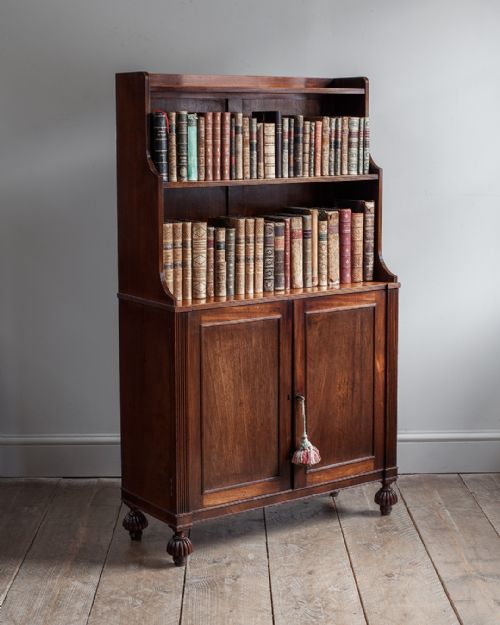
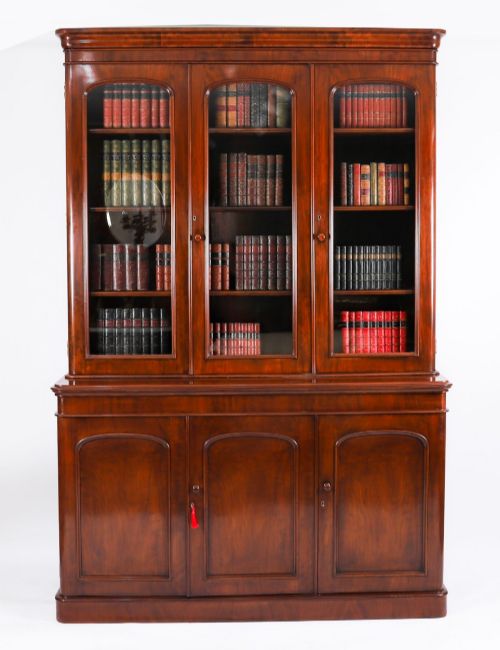
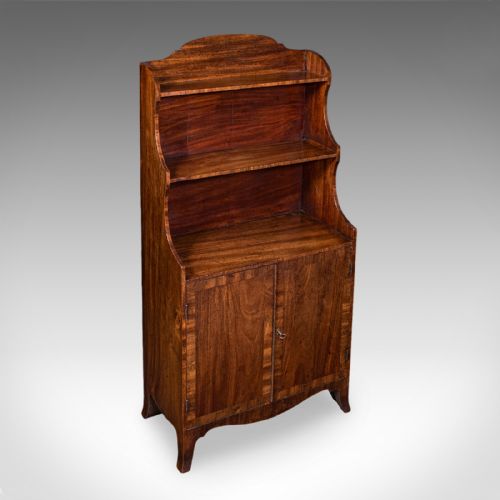
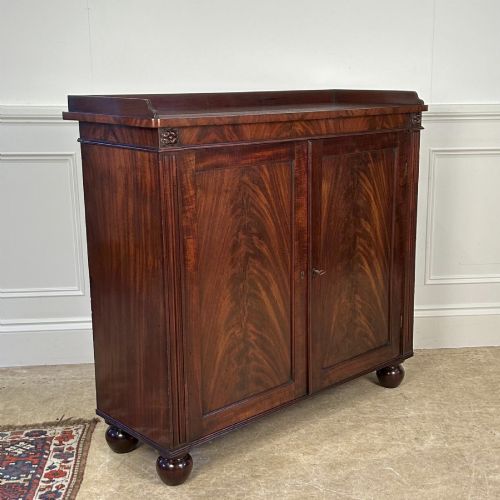
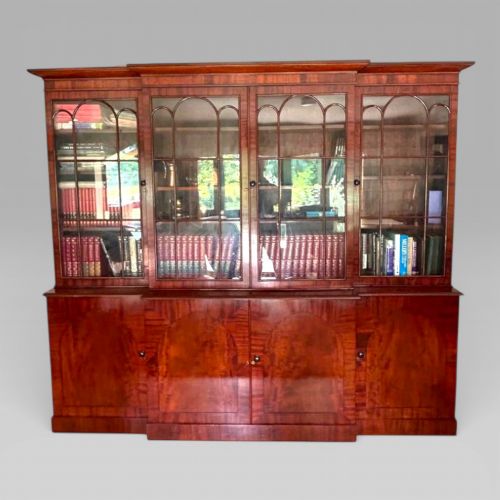
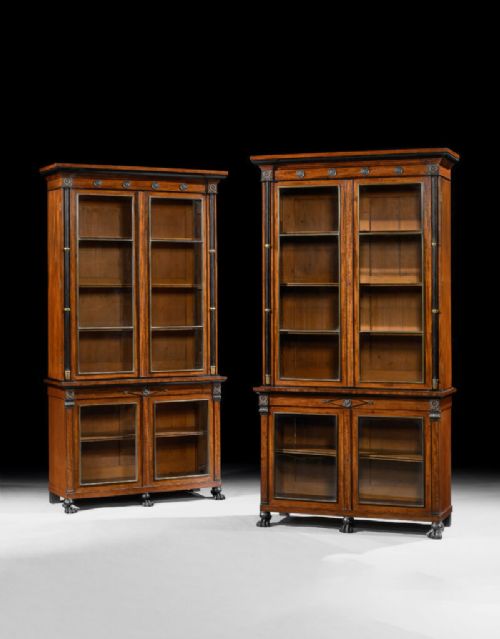
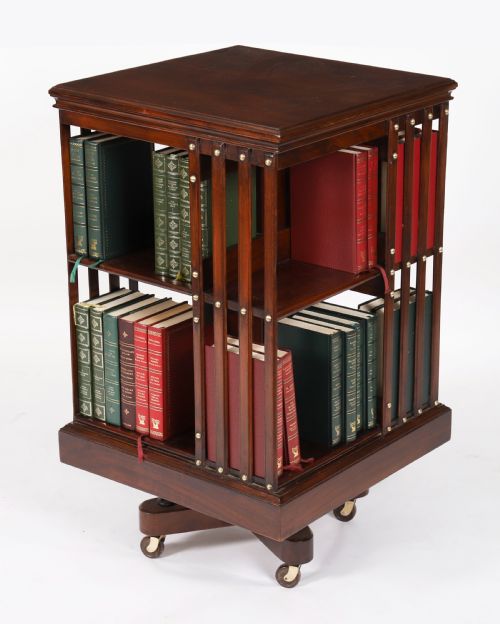
The English mahogany bookcase appears across multiple historic periods, taking the form of large breakfront library pieces, tall glazed display cabinets, and smaller open shelves or waterfall designs. Pieces originate from the Georgian, Regency, William IV, and Edwardian eras, reflecting changing domestic requirements for storing and displaying volumes.
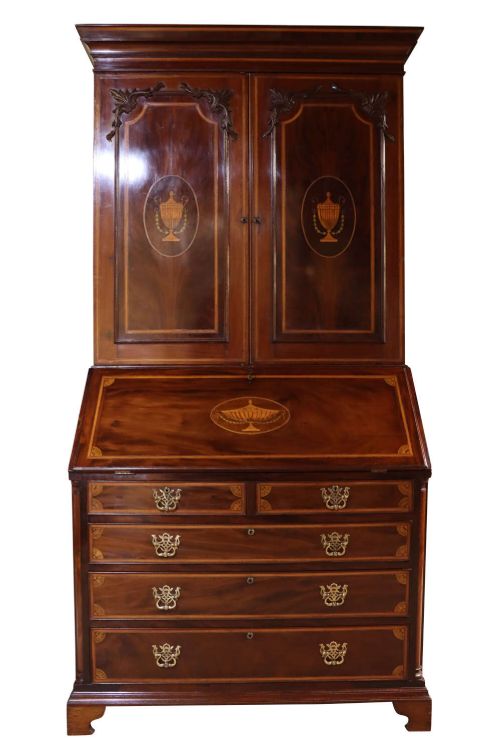
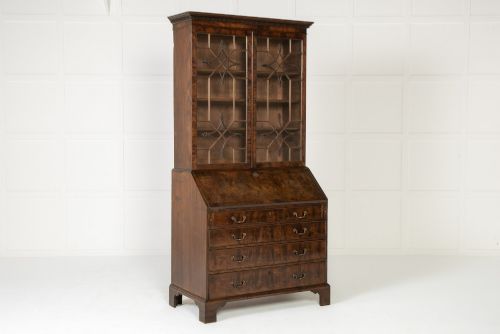
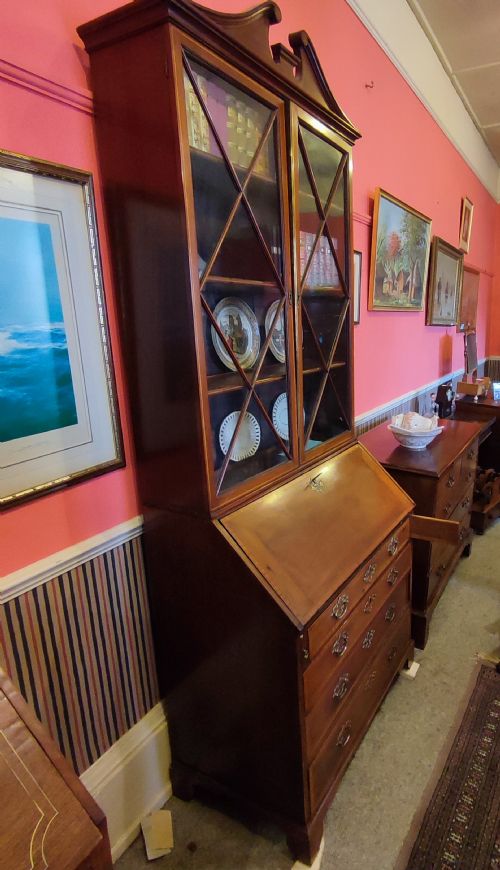
Tall library bookcases often incorporate lower wooden cupboards beneath glazed upper doors, while smaller domestic examples utilise open shelving or writing compartments. Bureau and secretaire variations combine a fold-down desk drawer with upper bookcase sections, serving multiple functions within a single piece of furniture.
The most frequently encountered examples on this page span the 18th century through to the Edwardian period, constructed with varying proportions from compact open stands to expansive breakfront units intended for grand reception rooms.

Materials and construction methods
Makers utilised solid mahogany and striking flame mahogany veneers over secondary timbers, often accentuating the grain with contrasting satinwood or ebony stringing. Glass panes are fitted within timber lattice frames, whilst brass handles, escutcheons, and door fittings provide functional metal details.
Cabinetmakers employed traditional joinery techniques such as dovetailed drawer construction and panelled doors to ensure stability across large library units and smaller rotating bookshelves alike.
Retail Price Guide 2026
Typical UK retail prices for english mahogany bookcase, calculated from the Sellingantiques database of over a million retail prices indexed since 2003. This retail price guide relies exclusively on Sellingantiques data; no external sources or auction records are used, so the figures do not describe the wider market.
Some Edwardian revolving bookcases let readers spin an entire library shelf with a single flick of the wrist.
Distinctions in construction and timber selection
Quality rests in the choice of mahogany, where highly figured flame veneers and rich natural patination elevate a piece above standard stock. The crispness of carved mouldings, the integration of astragal glazing bars, and the retention of original brass hardware further separate ordinary production from finer workshop output.
Proportion and architectural balance dictate the overall success of a design, with superior examples exhibiting careful grain matching across large breakfront doors and refined interior arrangements.
Gillows
The English Mahogany Bookcase Glossary
- Breakfront
- A cabinet design where the central section projects forward from the flanking wings, adding architectural depth and presence to large library bookcases.
- Astragal
- The narrow wooden moulding strips dividing panes of glass within cabinet doors, characteristic of Georgian and Regency glazed bookcases.
- Secretaire
- A cabinet incorporating a pull-down drawer front that conceals a writing surface, small drawers, and pigeonholes.
- Waterfall bookcase
- A tiered open shelving unit where each successive shelf steps back from the one below, popular during the Regency and Edwardian periods.
- Flame mahogany
- A veneer cut from timber where the branch meets the trunk, producing a distinctive, fiery ripple pattern prized in cabinetmaking.
Frequently Asked Questions
How do I date an English mahogany bookcase?
Dating relies on observing construction methods, timber choice, and stylistic details such as bracket feet, plinth bases, or glazing bar patterns. Georgian pieces typically display simpler internal frameworks and dense timber, whereas Edwardian examples often include lighter inlays and simpler mechanical fittings.
Secondary woods visible inside drawers and backboards also provide clues to age, shifting from oak and pine in earlier centuries to softer commercial timbers in later decades.
What is the difference between a library bookcase and a display cabinet?
Library bookcases were traditionally built on a substantial scale to house bound volumes, frequently featuring enclosed wooden cupboards in the lower section to store folios and papers out of sight. Display cabinets generally prioritise visibility with extensive glass panels intended for porcelain and decorative objects.
Many large antiques combine both functions, offering enclosed lower storage beneath shelved upper compartments protected by glazed doors.
Are secretaire bookcases practical for modern use?
The fold-down writing drawer provides a concealed surface for laptop work or correspondence, making these pieces adaptable for study spaces or sitting rooms. Interior pigeonholes and small drawers offer organised storage for stationery.
Because the drop-front functions as a desk, placement requires sufficient clearance in front of the cabinet when opened.
How should I care for antique mahogany timber?
Maintain a stable room environment away from direct heat sources and strong sunlight to prevent the timber and veneers from drying out or fading. Regular dusting with a soft, dry cloth preserves the finish without requiring heavy polishes.
Period brassware benefits from minimal intervention, retaining its natural tone rather than undergoing aggressive cleaning.