
Mahogany Display Bookcase
A mahogany display bookcase combines practical shelving for a library with glazed doors for showing prized volumes and decorative objects.
Defining the mahogany display bookcase
A mahogany display bookcase serves as both a functional piece of library furniture and a cabinet for displaying collections. These items span periods from the Georgian era through the nineteenth century to the early twentieth century.
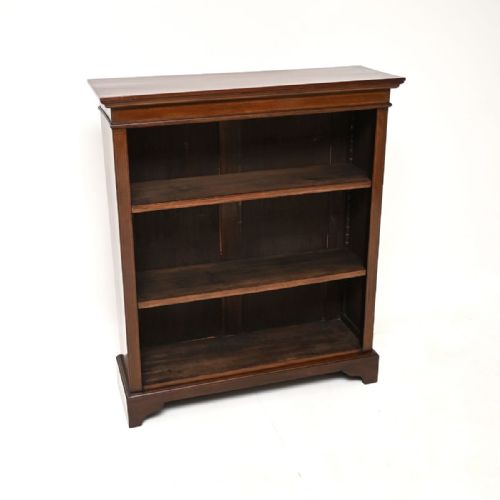
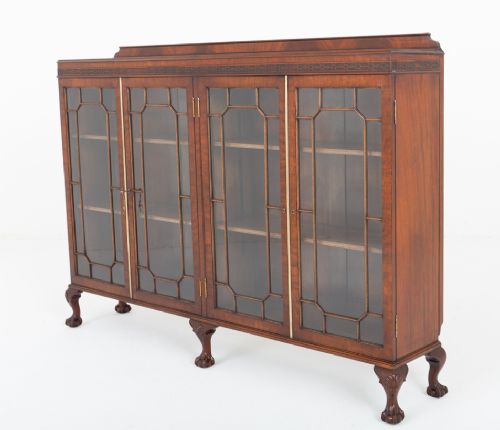
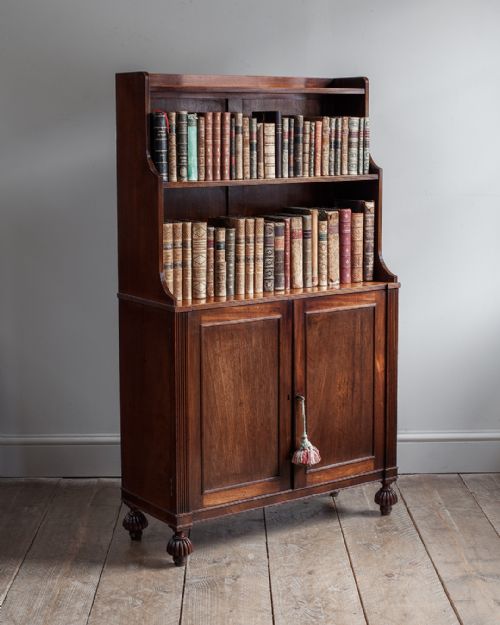
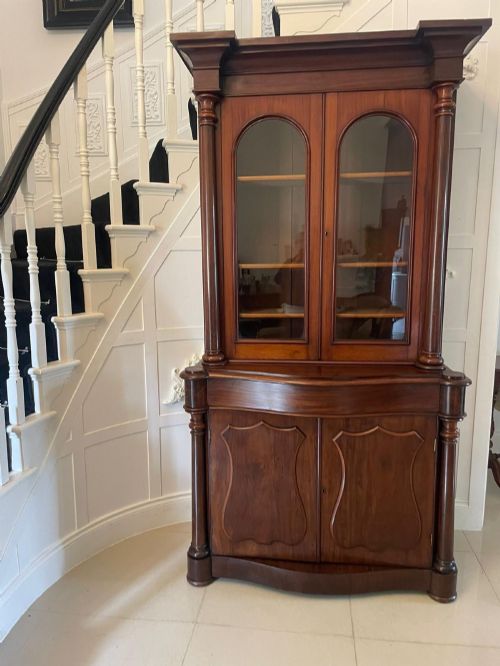
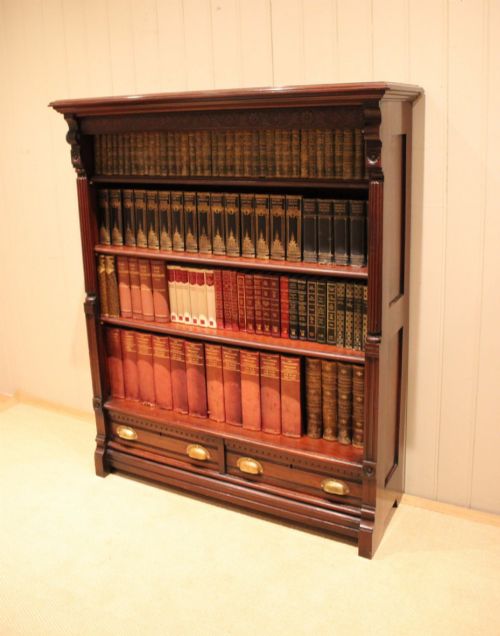
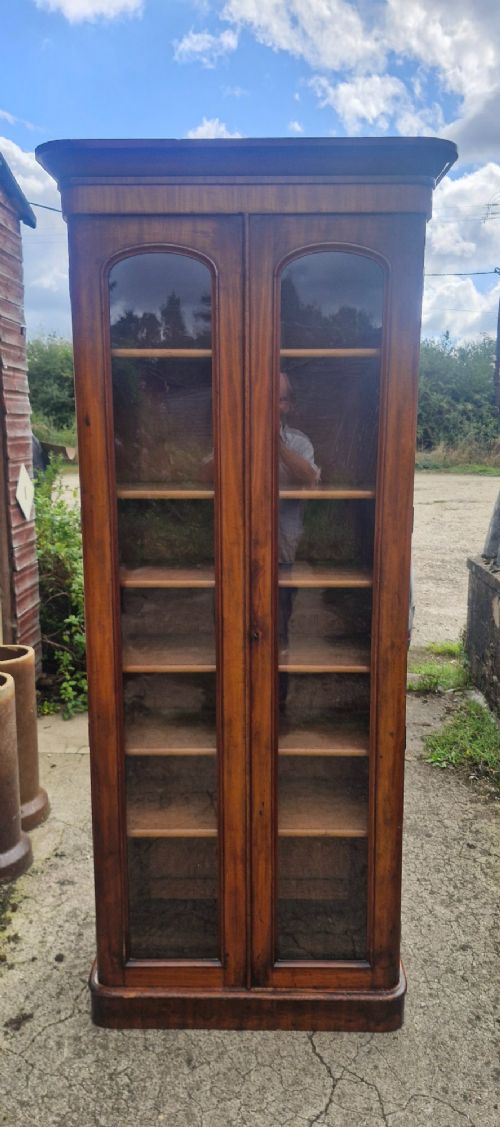
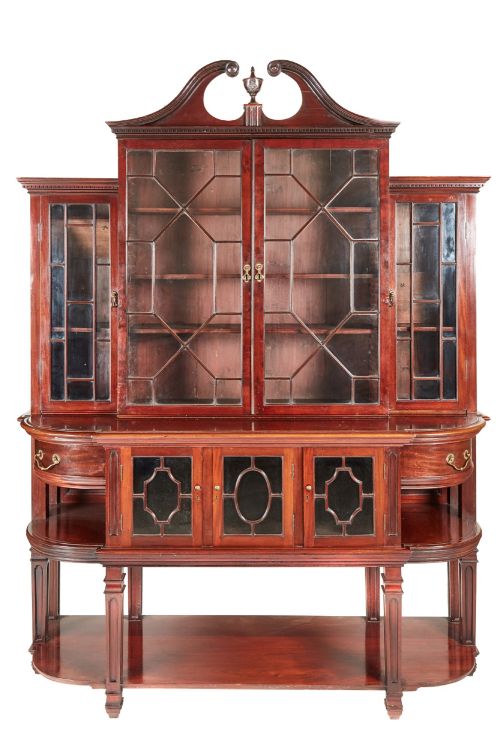
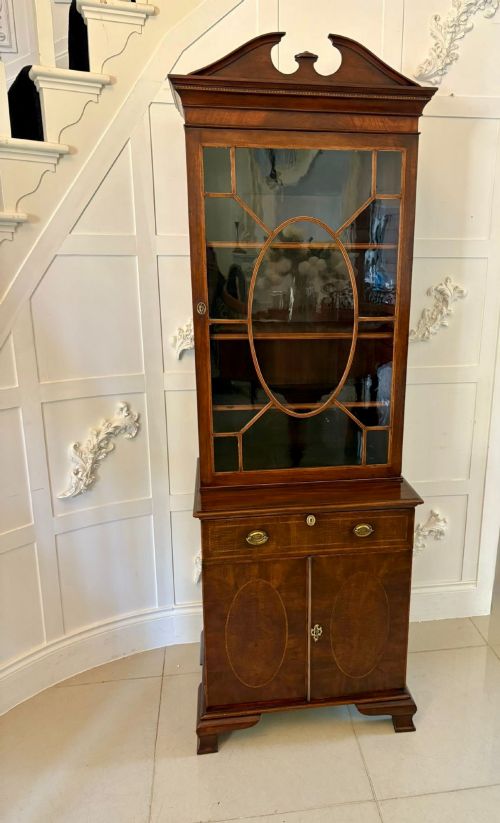
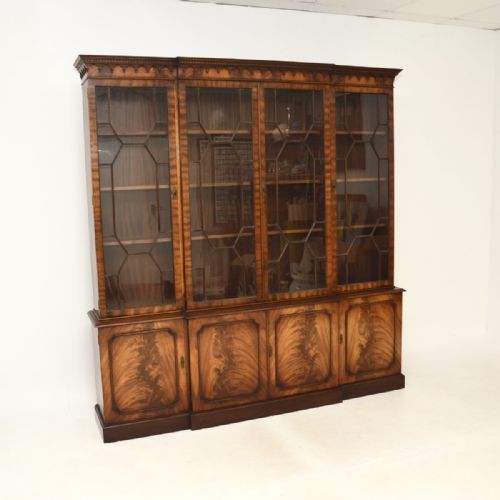
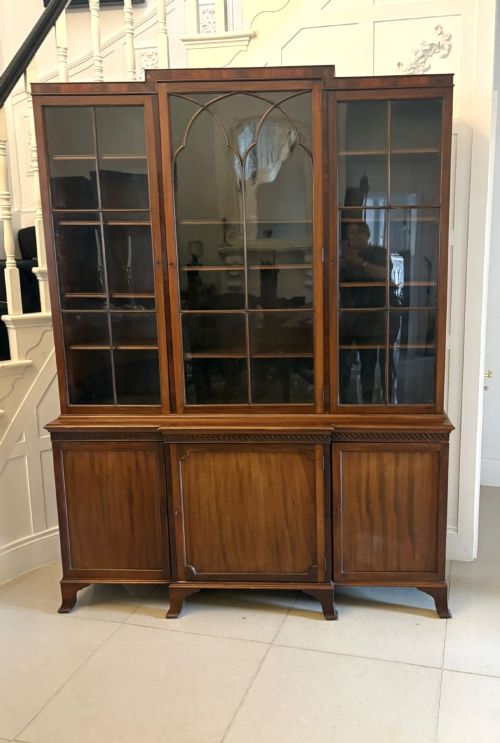
The most common forms on this page include glazed cabinets, breakfront bookcases, and tall two-door library pieces. Makers often incorporated glass doors to protect books and curiosities from dust while keeping them visible.
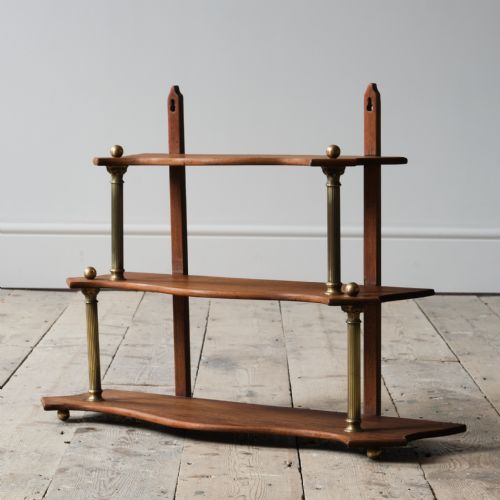
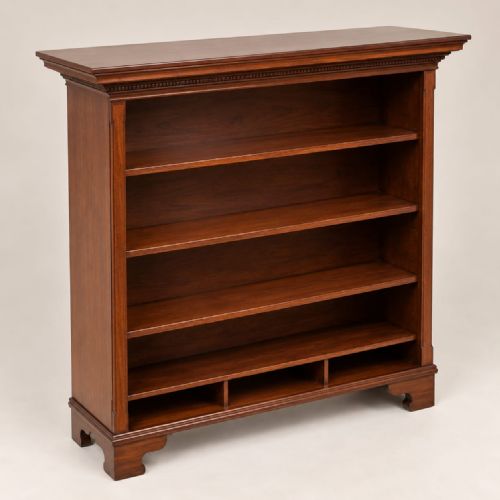
Revival styles heavily influence the selection, with Chippendale, Sheraton, and Neoclassical designs appearing alongside Victorian and Edwardian interpretations. Pieces range from narrow wall-mounted shelves to large floor-standing library cabinets.
Materials and construction
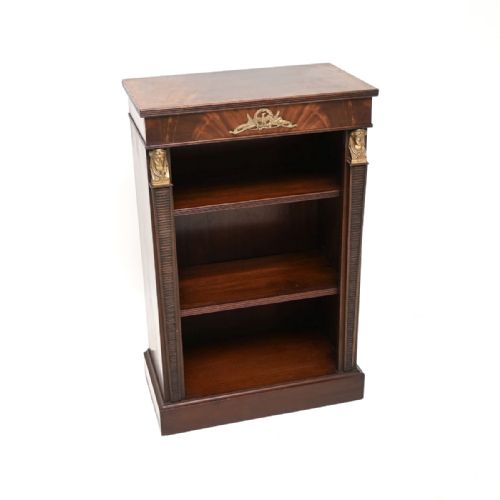
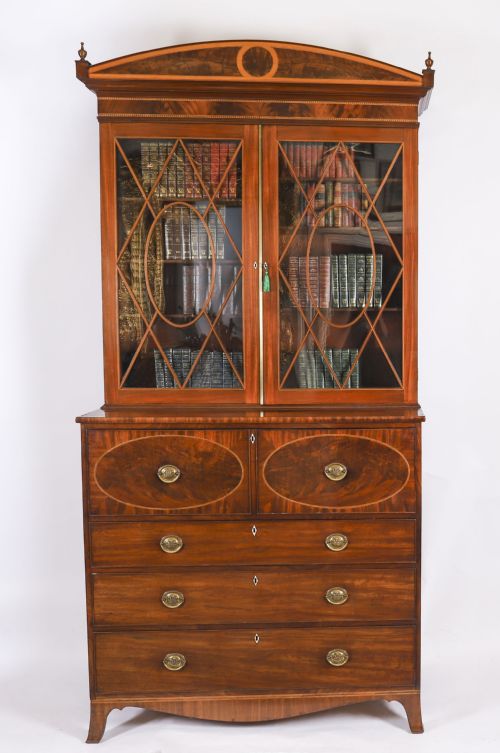
Cabinet makers utilised solid mahogany and figured veneers such as flame mahogany, occasionally enhancing surfaces with satinwood inlay or marquetry. Brass mounts, handles, and fittings add structural and decorative contrast to the timber.
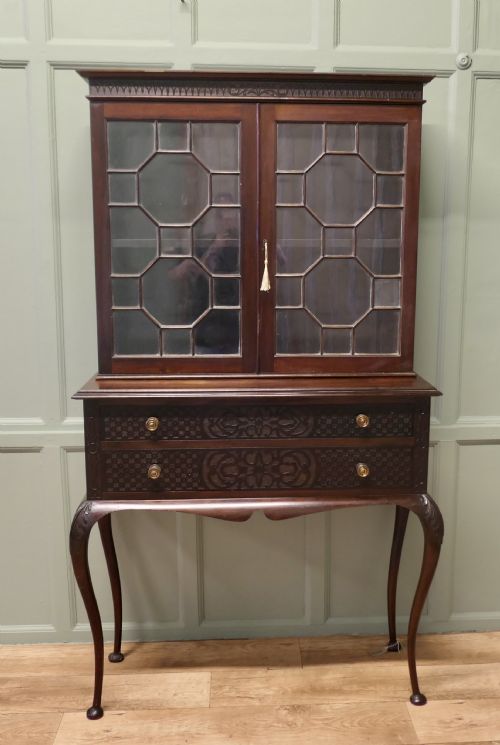
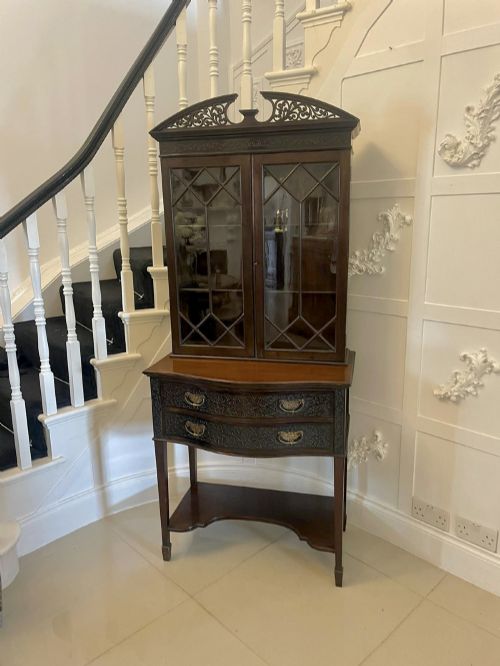
Glazing is a defining characteristic, utilising individual glass panes held by wooden astragals or fretwork. Interior arrangements frequently feature adjustable display shelves to accommodate varying book sizes and ornaments.
Retail Price Guide 2026
Typical UK retail prices for mahogany display bookcase, calculated from the Sellingantiques database of over a million retail prices indexed since 2003. This retail price guide relies exclusively on Sellingantiques data; no external sources or auction records are used, so the figures do not describe the wider market.
Listings feature pieces spanning the Georgian era, the nineteenth century, 1900, 1930, and various revival styles.
Distinctions in craftsmanship
Quality rests in the selection of timber grain, particularly the depth and movement in figured flame mahogany veneers. Finer examples display precise marquetry, delicate satinwood inlay, and intricate carved fretwork rather than plain surfaces.
Structural integrity shows in the joinery of the shelving and the execution of astragal-glazed doors. Pieces associated with notable firms or robust Georgian and revival workshops often exhibit superior proportions and heavier brass hardware.
T Inglesant And Sons Leicester·Maison Jansen
The Mahogany Display Bookcase Glossary
- Astragal
- Moulding profiles that hold individual panes of glass within a glazed door. These wooden bars form geometric patterns across the front of the bookcase.
- Breakfront
- A piece of furniture where the central section projects forward from the flanking outer sections. This creates architectural depth and a more imposing silhouette.
- Flame mahogany
- A veneer cut from the branch junction of the mahogany tree, producing a distinctive flickering flame pattern. It is prized for its decorative visual movement.
- Vitrine
- A glass-sided cabinet designed specifically for the display of objects and curiosities. In these listings, the term often overlaps with glazed display bookcases.
- Marquetry
- The art of applying decorative veneer pieces to a structure to form pictorial or geometric designs. It frequently incorporates lighter timbers like satinwood against the dark mahogany background.
Frequently Asked Questions
What is a mahogany display bookcase?
A mahogany display bookcase is a dual-purpose piece featuring wooden shelving enclosed by glass doors. It allows owners to store books while exhibiting decorative items safely.
These cabinets range from compact wall-hanging shelves to large freestanding library bookcases with multiple doors. The combination of timber and glass creates an imposing yet refined focal point in a room.
How do I date a mahogany bookcase?
Dating relies on observing stylistic details, construction methods, and timber treatments across different eras. Georgian and Regency pieces often show heavier architectural proportions and solid construction, whereas Edwardian examples frequently feature delicate inlay.
Revival styles from around 1900 emulate earlier Georgian or Chippendale aesthetics but use manufacturing techniques specific to the turn of the twentieth century. Examining the interior woodwork and glass helps clarify the period of manufacture.
Are the shelves adjustable?
Many examples include adjustable display shelves supported by traditional wooden racks or metal pins. This allows the interior height to be altered for different volumes or display pieces.
Original adjustable systems indicate a higher quality of manufacture. Buyers should check the interior configuration to confirm how the shelves are supported.
How do I care for mahogany furniture?
Mahogany requires stable room conditions away from direct sunlight and sudden temperature shifts. Excessive heat can dry out the timber and cause veneers to lift.
Regular dusting with a soft cloth keeps the surface clean. Occasional light polishing maintains the natural lustre of the wood without building up heavy wax residues.