



Period Open Bookcase
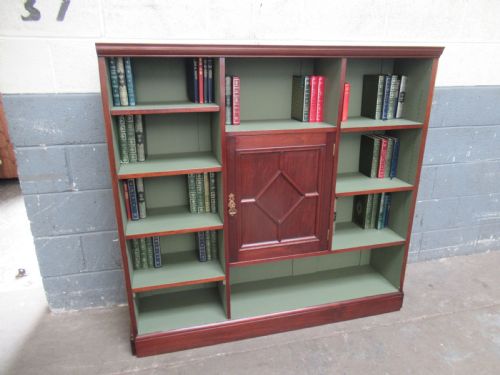
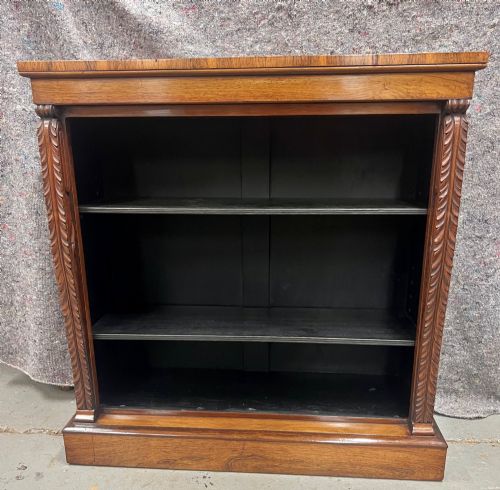
When you search for a period open bookcase, you find accessible timber shelving units designed to display volumes and objects without glazed doors.
Period Open Bookcase
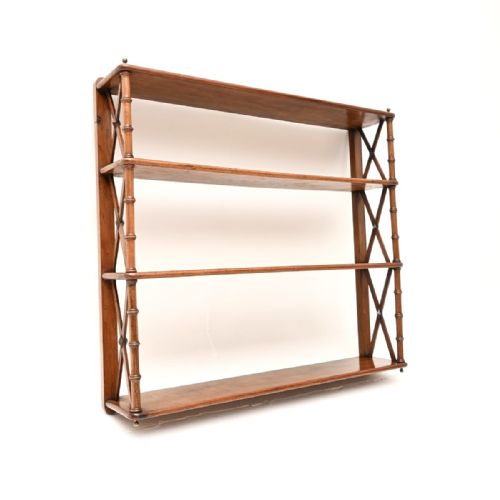
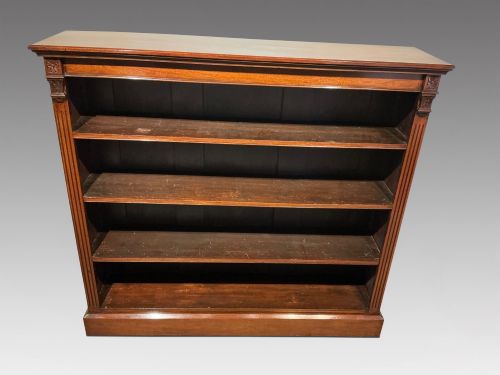
A period open bookcase provides accessible shelving for books and decorative objects without the barrier of glazed cabinet doors. These pieces range from compact wall-mounted formats to substantial breakfront library units designed for domestic interiors.
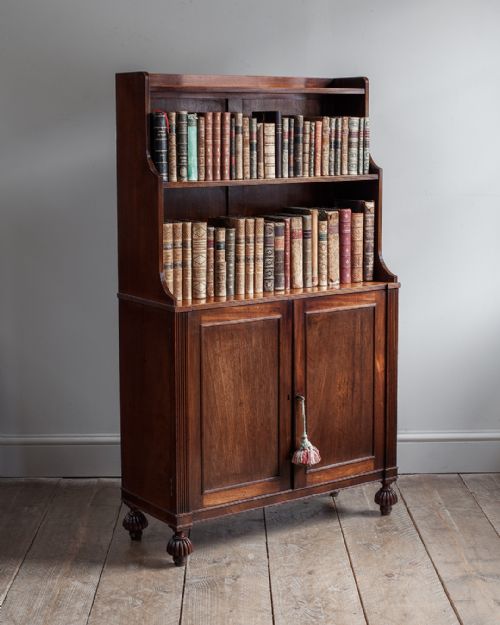
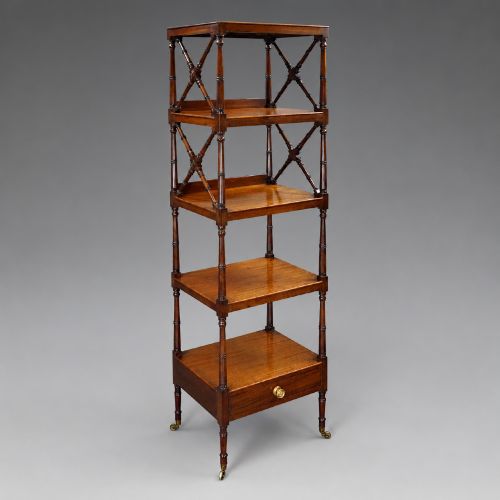
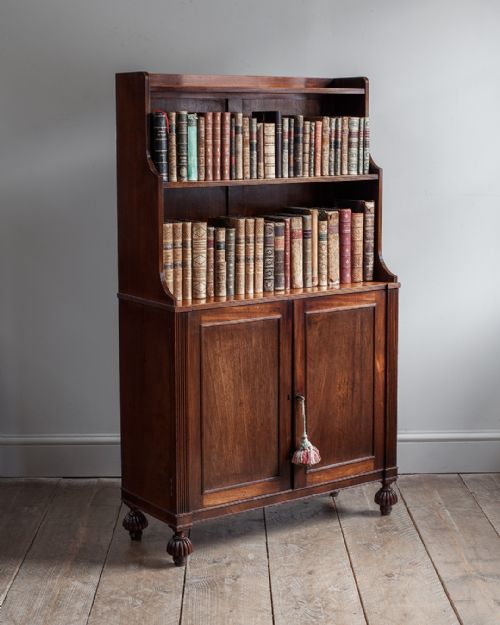
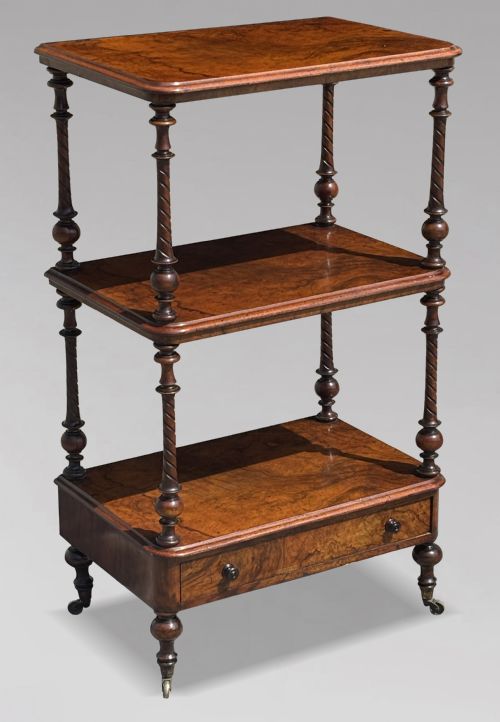
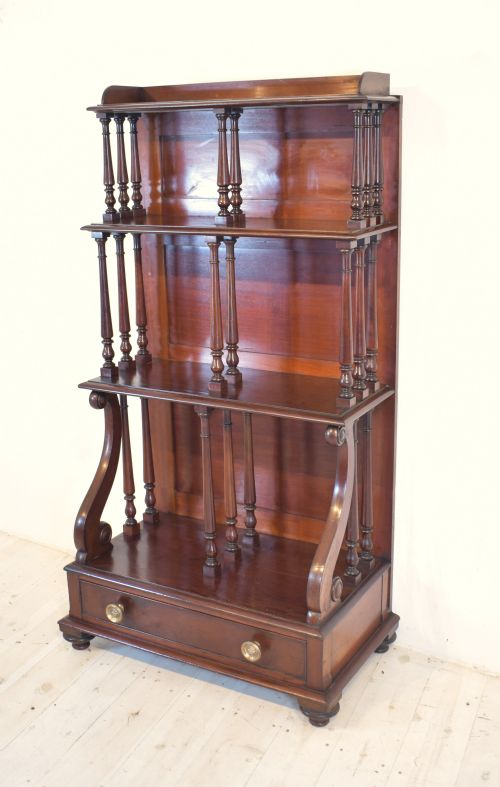
The selections span several centuries and styles, frequently appearing in Regency, Georgian, Victorian, and Edwardian designs. Makers utilised various forms including multi-tiered whatnots, waterfall shelves, and inverted breakfront cabinets.
Mahogany and walnut predominate across the listed inventory, often complemented by rosewood, satinwood, and oak. Pieces frequently incorporate brass details, leather accents, or simulated grains to enhance their visual appeal.
How they were made
Cabinetmakers constructed these bookcases using dense hardwoods like mahogany, walnut, and rosewood, frequently selecting figured veneers or flame mahogany to create varied surface patterns. Workshops applied brass for inlay, grilles, and structural mounts.
Techniques relied on traditional joinery methods to build stable tiered shelving units, breakfront carcasses, and smaller wall-mounted formats. Craftsmen also incorporated leather insertions, parcel gilding, and marquetry inlay to finish specific designs.
Listings feature mahogany, walnut, and rosewood bookcases spanning the Georgian, Regency, Victorian, and Edwardian periods.
What varies in quality
Quality depends upon the choice of timber, where figured veneers, burr walnut, and rich mahogany elevate the visual depth of the piece. The selection of secondary woods and the precision of brass inlay further distinguish standard production from exceptional work.
Proportion and execution define the hierarchy of these items, from simple utility pieces to complex breakfront or waterfall configurations with careful architectural detailing.
Gillows·Shoolbred and Sons·Holland and Sons·Maple and Co·Shapland and Petter
The Period Open Bookcase Glossary
- Breakfront
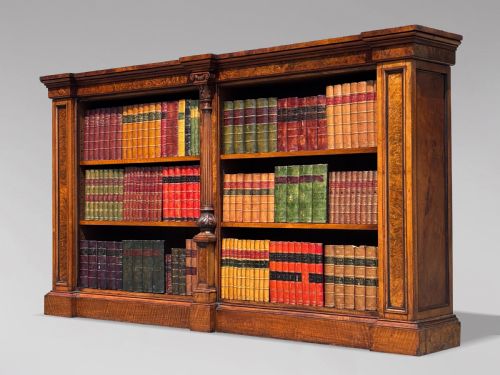
- A cabinet design where the central section projects forward from the flanking wings. This configuration creates architectural depth in larger library furniture.
- Waterfall bookcase
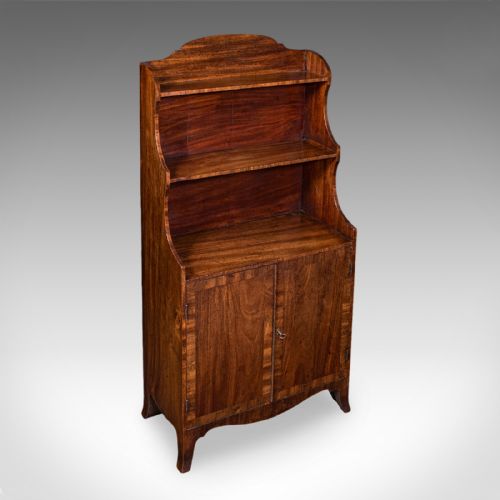
- A tiered shelving unit where the side panels taper in a step-down profile towards the top. Shelves typically decrease in depth from bottom to top.
- Whatnot
- A multi-tiered piece of freestanding furniture designed for displaying ornaments and books. These units generally feature slender corner supports and open shelves.
- Gonçalo Alves
- A dense exotic hardwood with striking contrasting grain patterns. Makers utilised this timber for decorative Regency cabinets.
- Chiffonier
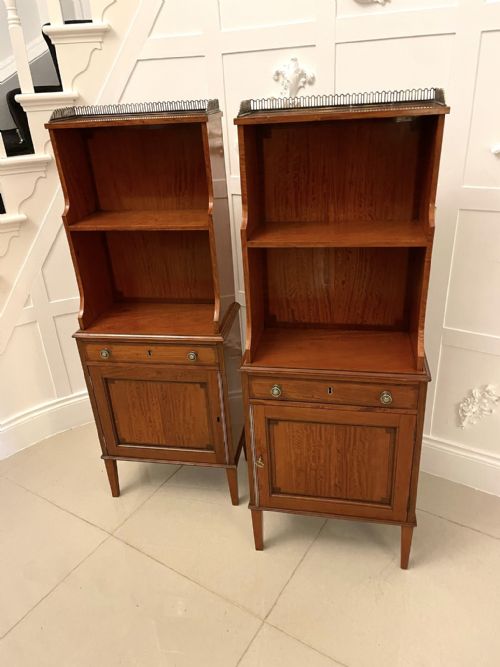
- A low sideboard or cabinet equipped with shelving or drawers. These items often feature enclosed lower cupboards beneath open upper display areas.
Period Open Bookcase: Frequently Asked Questions
How do I identify a Regency open bookcase?
Regency examples typically display clean architectural lines, rosewood or mahogany timbers, and occasional brass inlay or parcel gilding.
They date from the early nineteenth century and frequently incorporate compact proportions or breakfront carcasses.
Where were whatnots used?
Whatnots served as versatile display stands for books and ornaments in nineteenth-century drawing rooms and parlours.
Their multi-tiered open construction allowed items to be viewed from multiple angles within a room.
What is burr walnut?
Burr walnut refers to the highly figured grain taken from the growth excrescence of a walnut tree.
Victorian cabinetmakers prized this veneer for its complex swirling patterns on open bookcase doors and panels.