

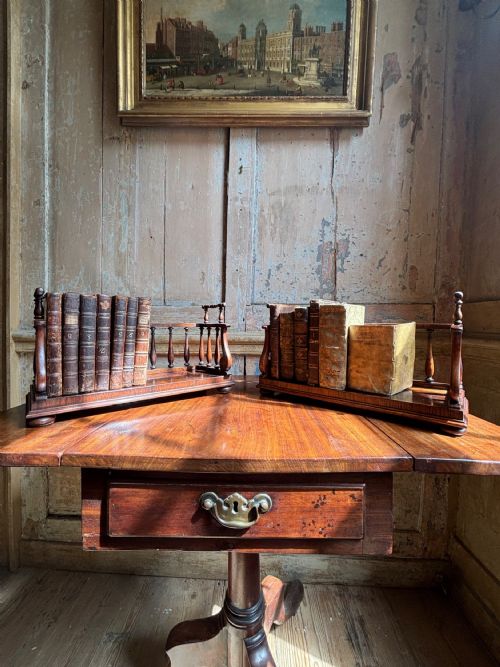


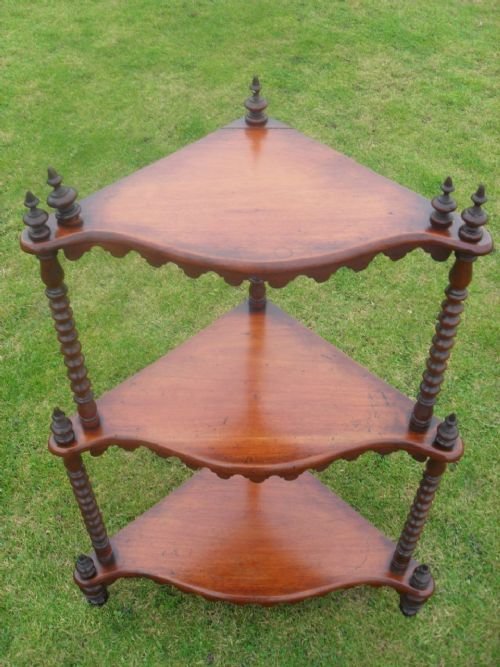


Turned Spindle Shelf
A turned spindle shelf is a practical wall or floor display piece valued for upright turned supports, and you will find mahogany and walnut examples here.
Turned Spindle Shelf
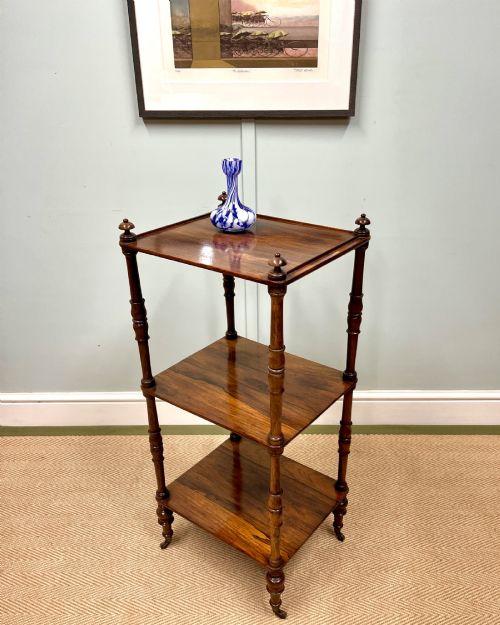
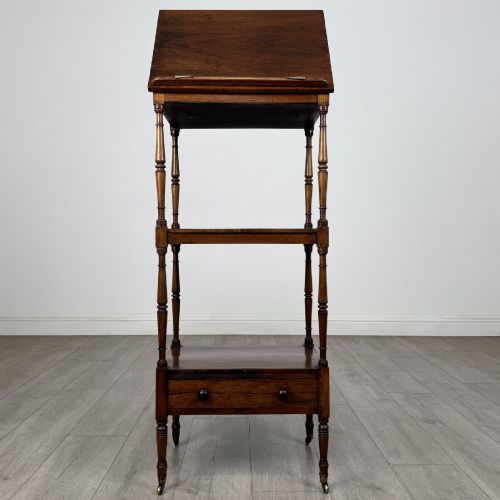
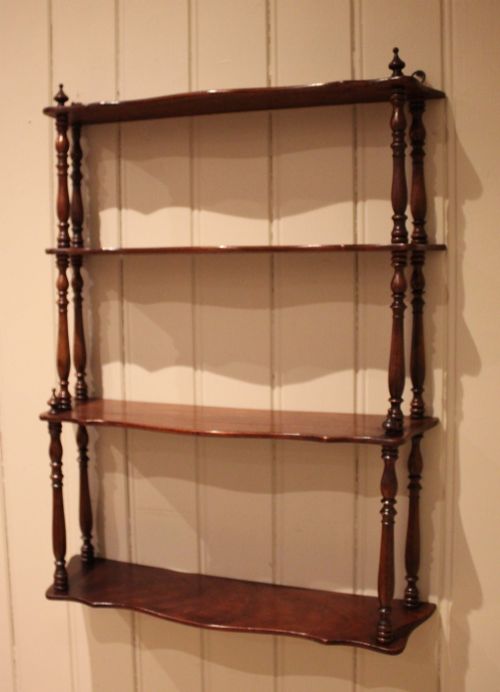
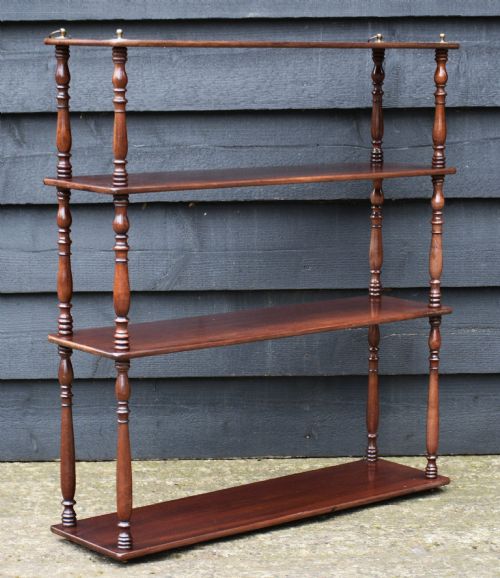
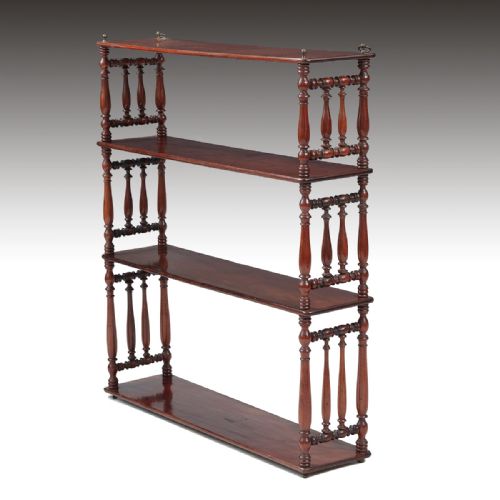
A turned spindle shelf provides tiered storage or display space using vertical turned uprights, appearing in forms such as hanging shelves, wall shelves, book stands, and multi-tiered whatnots.
The pieces on this page span the Georgian, Regency, William IV, and Victorian periods, with nineteenth-century examples forming the core of the selection.
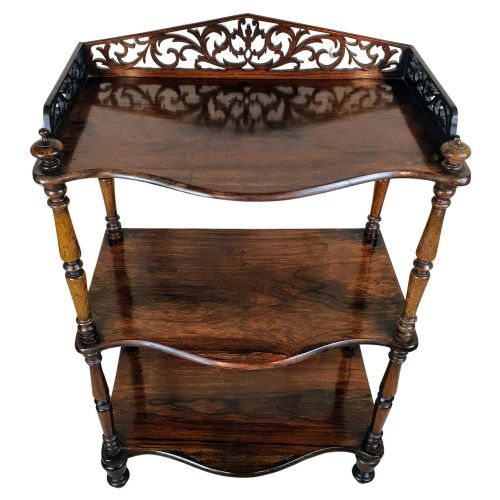
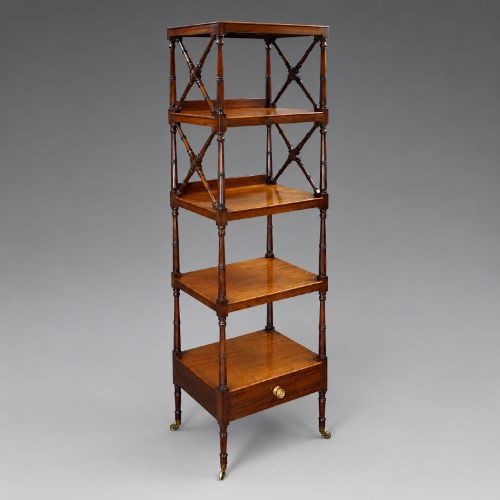
Makers utilised various timber formats, ranging from wall-hanging units to larger freestanding whatnots with cupboard bases and serpentine fronts.
Materials and construction
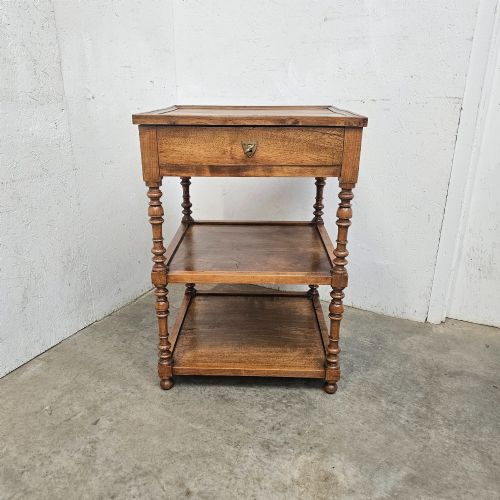
Cabinetmakers constructed these shelves primarily using dense timbers such as mahogany, walnut, rosewood, and cherry wood, alongside satin birch, oak, and ebonised wood.
Structural integrity relies on turned wooden supports and spindles that divide the tiers, sometimes augmented by brass fittings or applied mouldings.
French styles such as French provincial and French chateau sit alongside English country house and Arts and Crafts aesthetics within the manufacturing traditions represented.
Turned Spindle Shelf Retail Price Guide 2026
Typical asking prices for turned spindle shelf among the pieces listed under this phrase on Sellingantiques today, from the lower quarter to the upper quarter. They describe what is for sale here now, not the wider market.
The selection includes regional interpretations ranging from English country house furniture to French provincial designs.
Variations in quality
The refinement of the turning on the spindles and upright supports distinguishes standard production from more ambitious cabinetmaking.
Timber selection and grain matching across multiple tiers indicate the original tier of commissioning, particularly in mahogany and rosewood pieces.
The complexity of the form, such as the inclusion of serpentine fronts, cellarettes, or cupboard bases, elevates the status of the piece.
Gillows
The Turned Spindle Shelf Glossary
- Etagere
- A piece of furniture consisting of a set of open shelves for displaying small objects. The term originates from French cabinetmaking.
- Serpentine front
- A furniture front curved in a wave-like shape, convex at the ends and concave in the centre. This profile requires skilled carpentry.
- Cellarette
- A cabinet or container used for holding bottles of wine, occasionally incorporated into the base of larger shelving units. It provides secure storage.
- Ebonised wood
- Timber treated with a dark stain or finish to imitate ebony. This technique was popular in nineteenth-century decorative furniture.
Turned Spindle Shelf: Frequently Asked Questions
What is a turned spindle shelf used for?
These pieces function as versatile display units for books, ceramics, and ornaments. They utilise vertical space effectively in both compact rooms and larger reception spaces.
Historically, they held prized household objects and reading materials within easy reach of seating areas.
How do I identify a Victorian whatnot?
Victorian examples frequently employ rich mahogany or rosewood, incorporating multiple stacked tiers linked by sturdy turned columns. They often display robust proportions and practical additions like cupboard bases.
Stylistic cues draw heavily on earlier Georgian and Regency traditions while retaining distinct mid-to-late nineteenth-century manufacturing traits.
Are hanging shelves sturdy enough for heavy books?
Wall-hanging shelves are primarily designed for lighter display items, small volumes, and decorative ornaments. Their load capacity depends entirely on secure wall fixings and the structural integrity of the timber.
For heavier collections, freestanding whatnots or bookcases distribute weight directly to the floor.
What is the difference between an etagere and a whatnot?
While both terms describe tiered shelving units, etagere often denotes pieces of French origin or lighter decorative character. Whatnot is traditionally the English term for multi-tiered display furniture.
In practice, makers and sellers used both designations interchangeably for similar open shelving forms.