
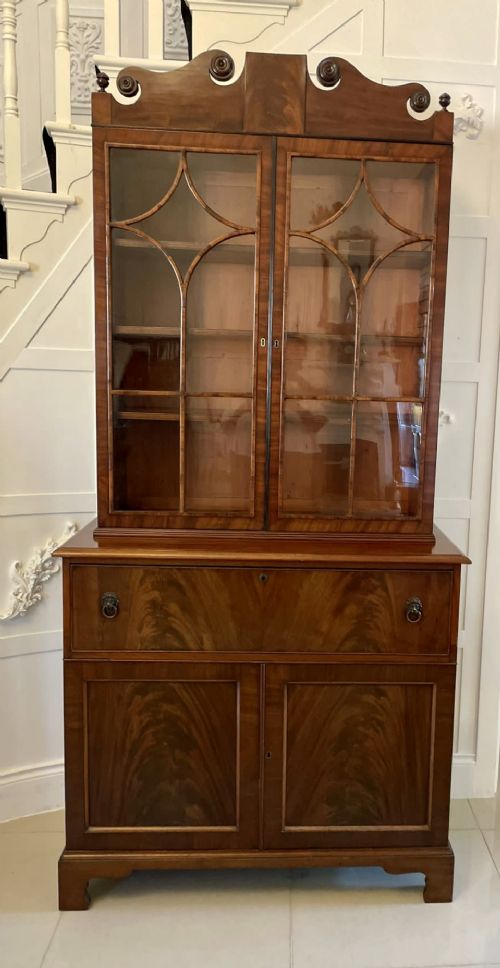
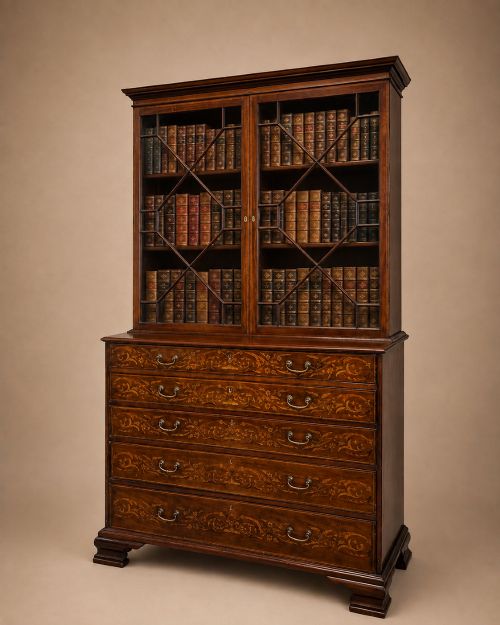
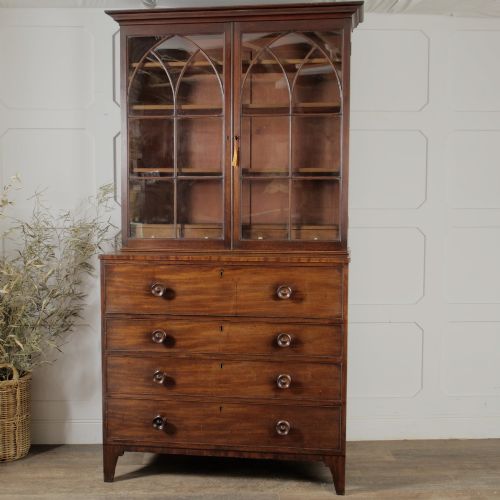
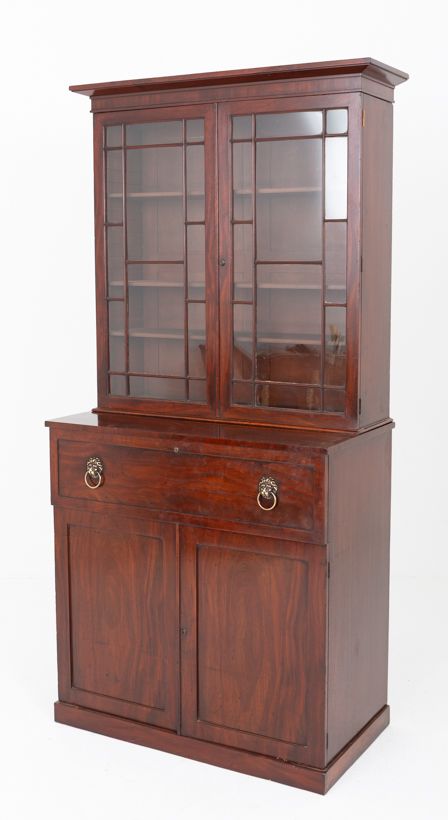
Georgian Secretaire Cabinet
A georgian secretaire cabinet combines a dedicated writing surface with concealed drawers and upper shelving, offering a practical workspace disguised as an elegant bookcase.
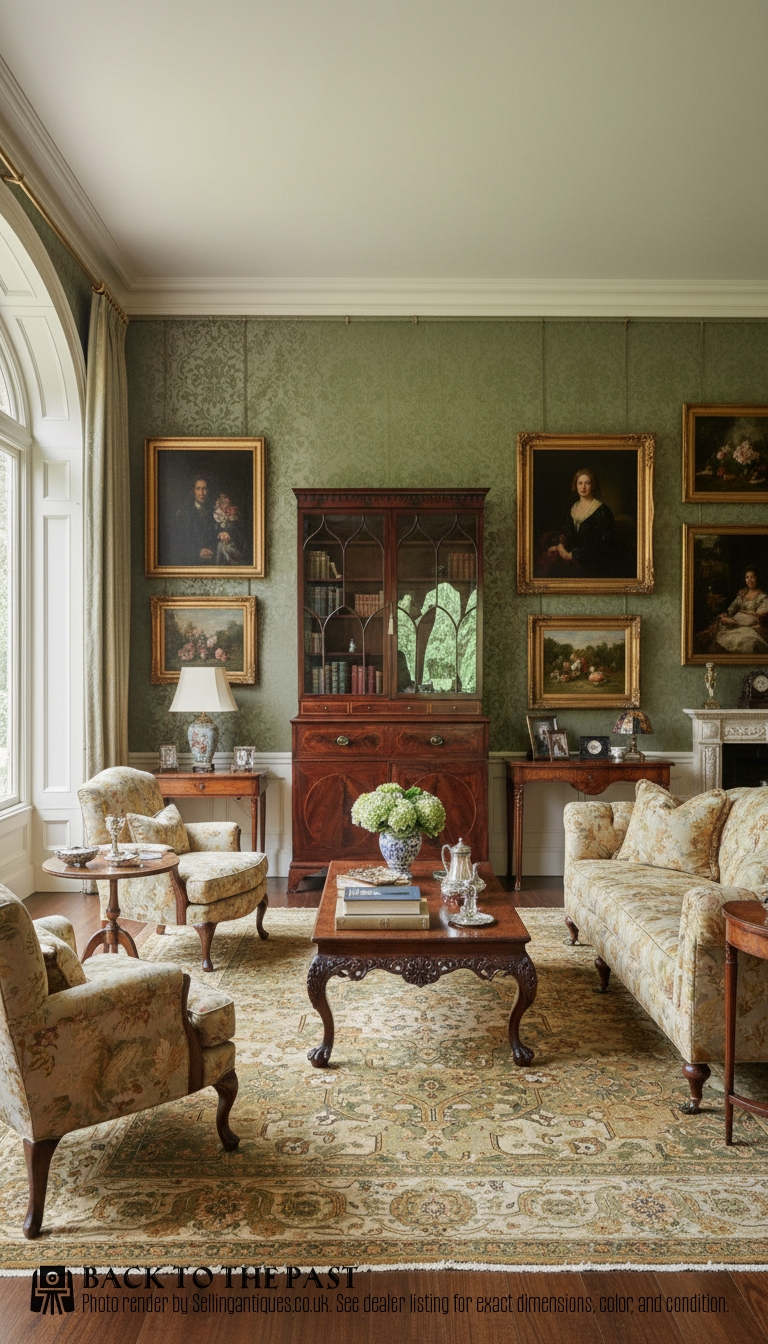
What a georgian secretaire cabinet is
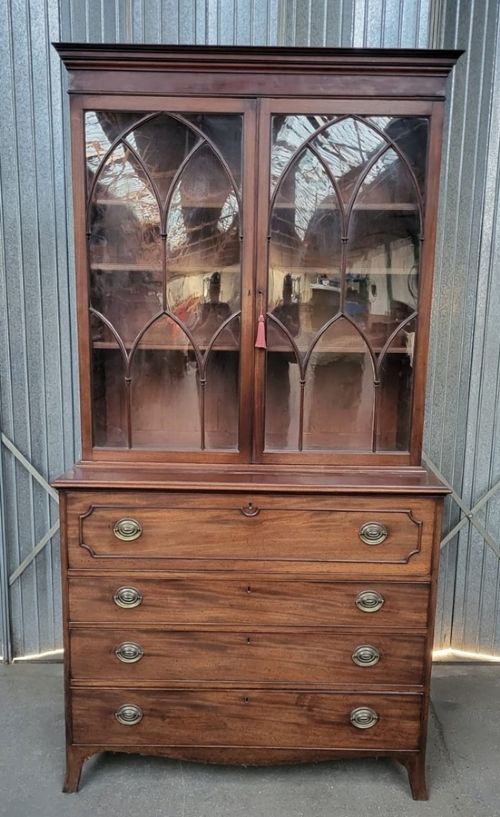
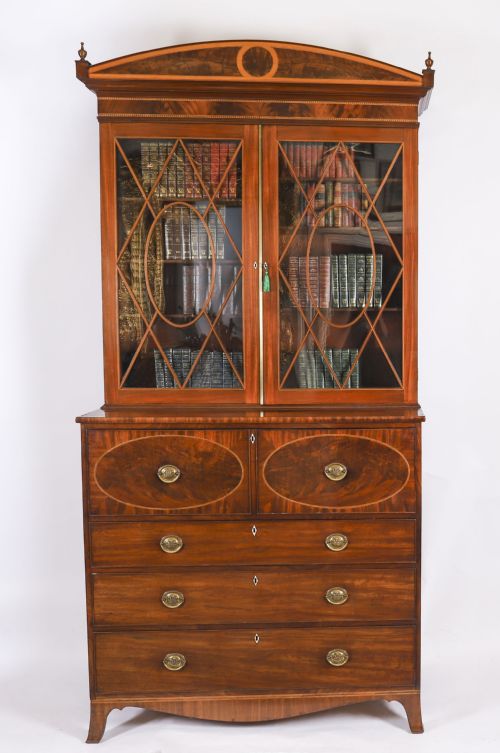
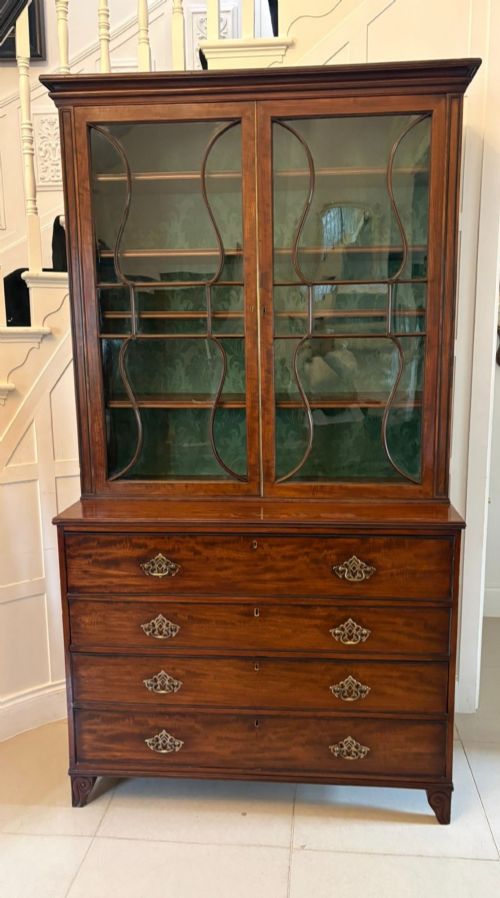
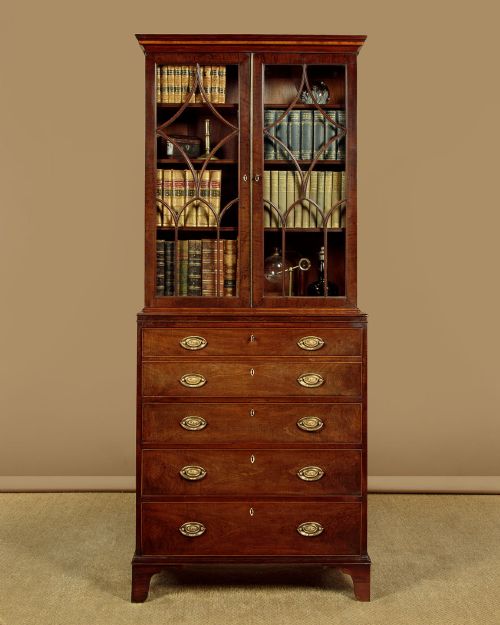
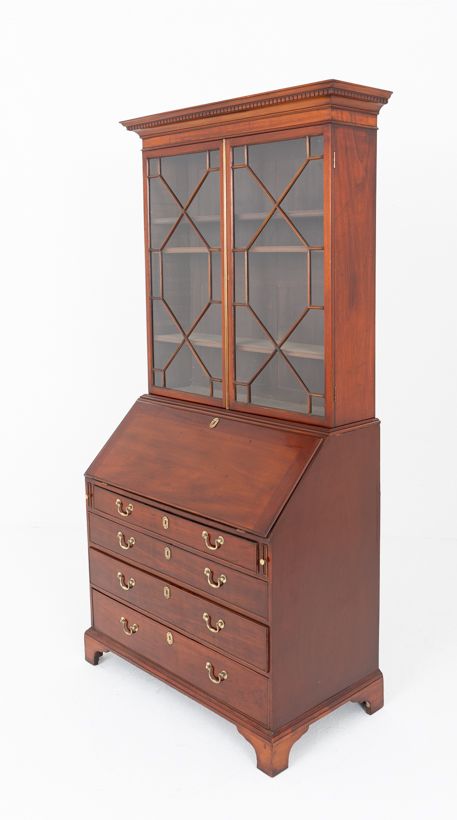
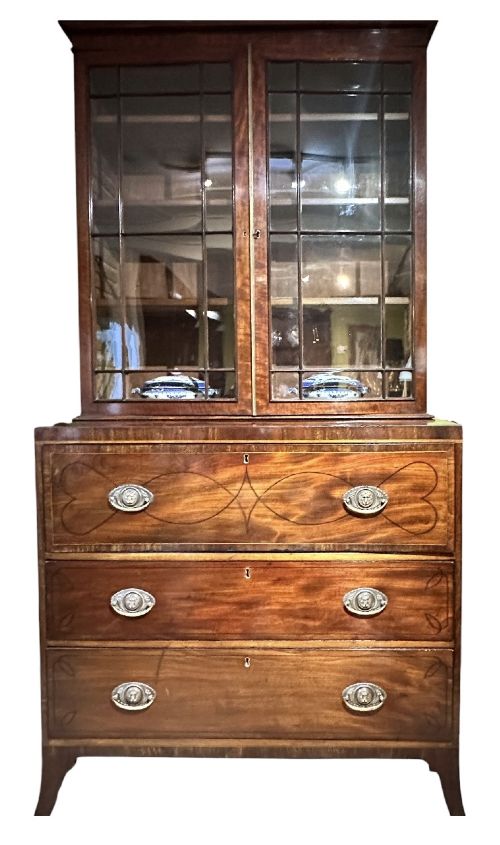
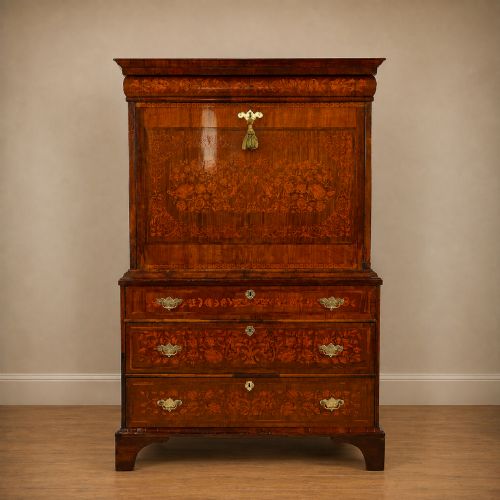
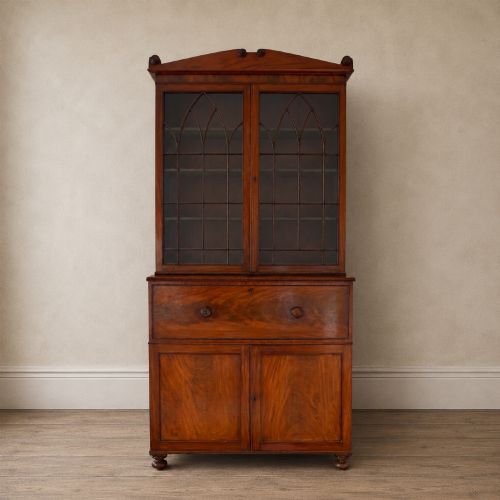
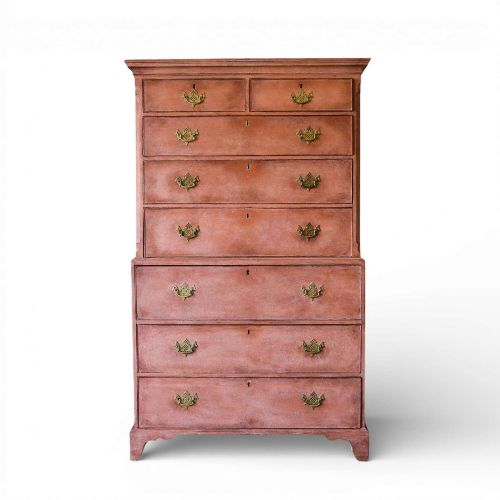
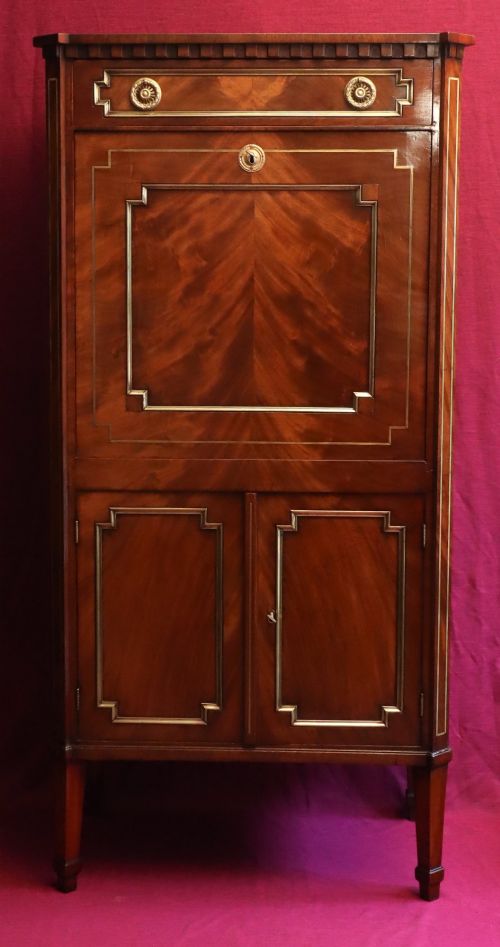
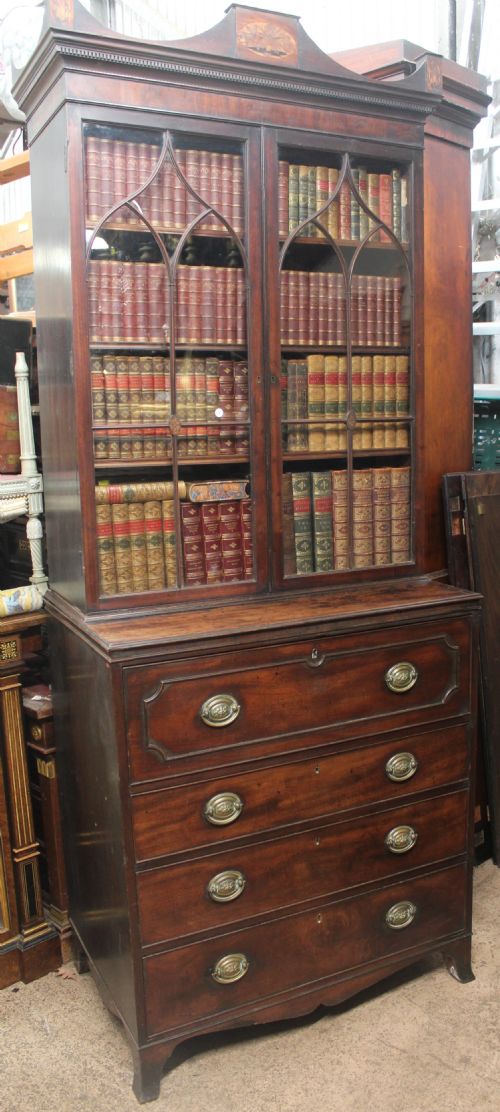
A georgian secretaire cabinet is a sophisticated dual-purpose piece designed for both storage and correspondence, commonly manifesting as bureau bookcases, writing cabinets, and secretaire bookcases across this selection.
The prevailing form on this page pairs a glazed or solid upper bookcase with a lower section featuring a fitted drop-front writing drawer that conceals smaller pigeonholes and drawers within.
Originating predominantly from the 18th century and the Regency period, these cabinets reflect the evolving domestic requirements of Georgian interiors through refined proportions and cabinetry.
How they were made
Cabinetmakers constructed these pieces primarily using dense timbers such as figured mahogany, walnut, and exotic satinwood and sabicu, often highlighting the natural grain patterns across primary surfaces.
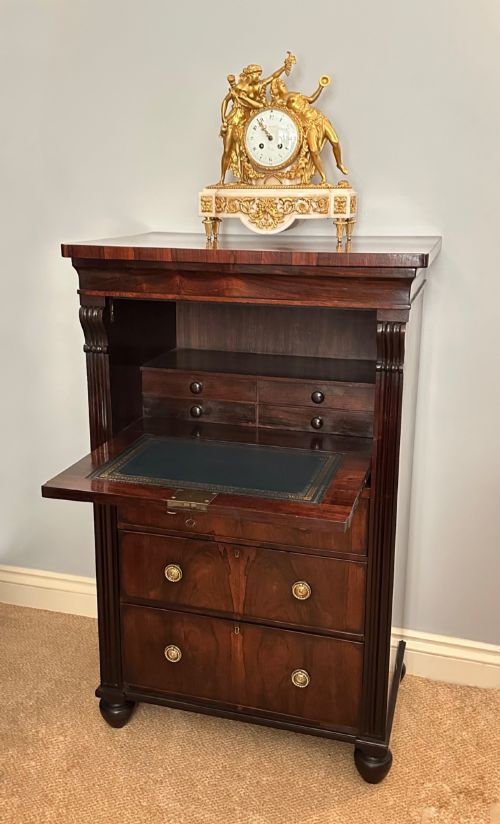
Structural and decorative detailing relies on applied brass hardware, glazed upper doors, and inset leather writing surfaces that provide a durable and contrasting workspace inside the drop-front drawer.
Retail Price Guide 2026
Typical UK retail prices for georgian secretaire cabinet, calculated from the Sellingantiques database of over a million retail prices indexed since 2003. This retail price guide relies exclusively on Sellingantiques data; no external sources or auction records are used, so the figures do not describe the wider market.
Listings feature mahogany, walnut, satinwood, and sabicu timbers across 18th century and Regency periods.
What varies in quality
The distinction between standard and exceptional pieces rests upon the choice of timber veneer, where highly figured mahogany, burl walnut, or contrasting satinwood and sabicu elevate the visual depth of the cabinet.
Quality also reveals itself in the intricacy of the internal fittings, such as secret compartments, delicately dovetailed small drawers, and the precision of the glazing bars on the upper bookcase doors.
Gillows of Lancaster·Thomas Hope
The Georgian Secretaire Cabinet Glossary
- Secretaire drawer
- A pull-out drawer featuring a hinged front that drops down to reveal a writing surface and internal stationery compartments. This clever mechanism conceals the desk function when closed.
- Bureau bookcase
- A tall case furniture piece combining a slant-front or secretaire desk lower section with an upper shelved cabinet for books. It serves dual storage and writing purposes.
- Satinwood
- A lustrous, yellowish timber prized for its fine grain and glowing appearance, frequently utilised for decorative veneers in high-status furniture of the period.
- Sabicu
- A dense, durable tropical hardwood with a rich dark tone, employed in select high-end cabinetmaking for its strength and distinctive grain.
- Glazing bar
- A narrow wooden strip holding individual panes of glass within a cabinet door, often shaped into geometric or tracery patterns typical of the era.
Frequently Asked Questions
What is a georgian secretaire cabinet?
A georgian secretaire cabinet is a dual-purpose furniture form featuring an upper bookcase or display area combined with a lower drawer that drops open to reveal a fitted writing desk.
These pieces were designed for domestic correspondence and book storage, maintaining a formal appearance in a drawing room or study while concealing practical workspace.
How do I use a secretaire drawer?
To use the secretaire drawer, you unlock and pull the main drawer forward, then lower the hinged front panel to rest horizontally on specialised support arms.
This action exposes a fitted interior of small pigeonholes and miniature drawers designed for holding stationery, letters, and ink supplies.
How do I distinguish 18th century from regency pieces?
Eighteenth-century examples often display classical proportions and figured walnut or mahogany veneers, sometimes incorporating satinwood or sabicu details reflecting earlier Georgian tastes.
Regency period pieces tend to show bolder architectural lines, darker mahogany timbers, and design influences associated with cabinetmakers like Thomas Hope or Gillows.
Where were these cabinets placed in a home?
They were typically housed in libraries, private studies, or formal reception rooms where both book collections and a private place for writing were required.
The closed bookcase upper section kept valuable volumes protected behind glass doors while the drop-front desk provided immediate access to writing materials.