

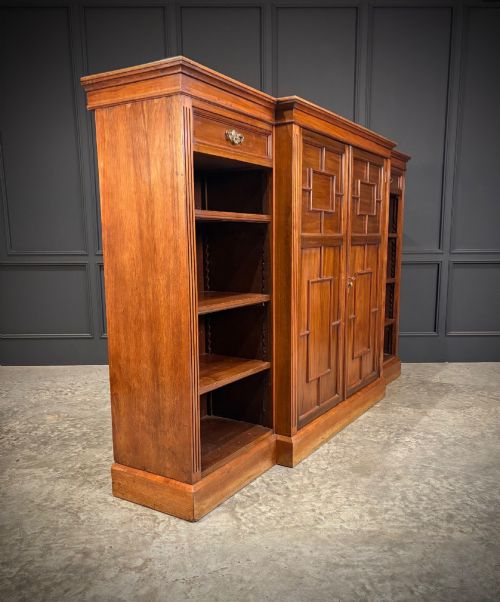
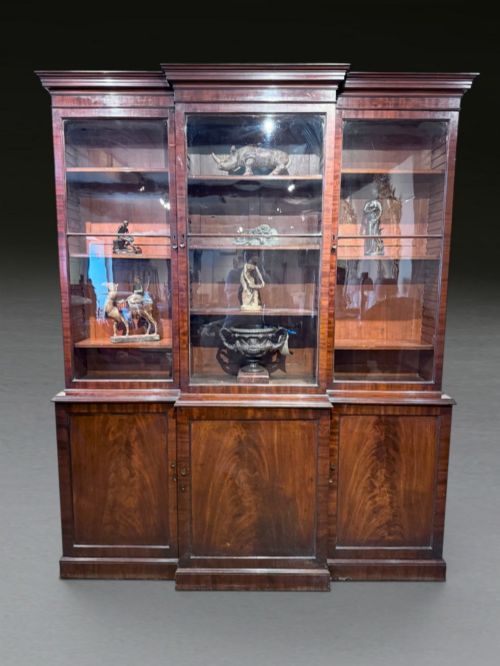
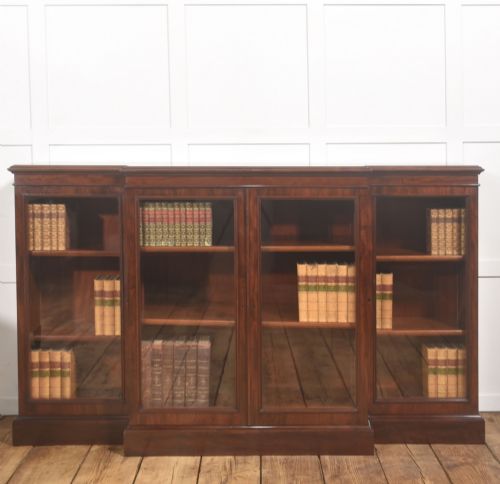
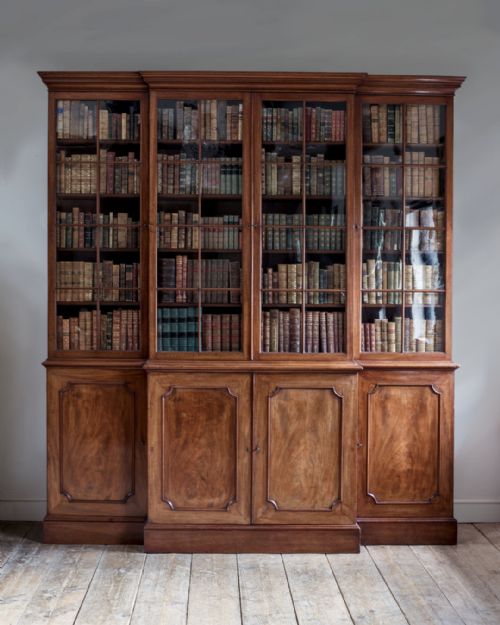
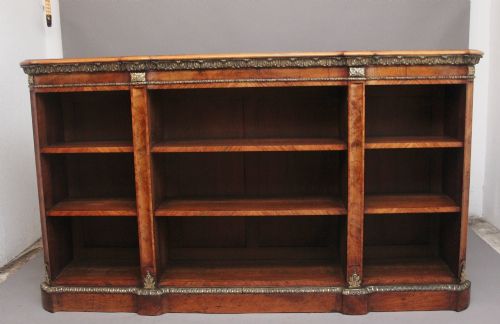
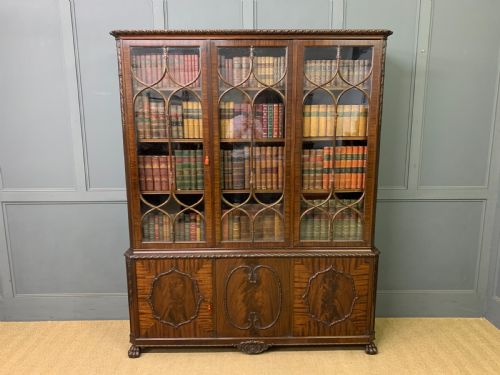
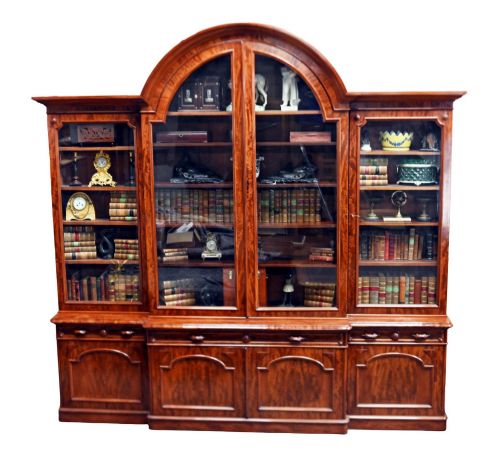
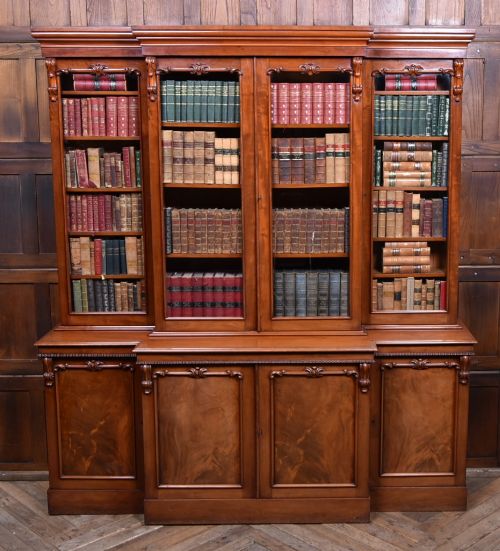
Breakfront Library Cabinet
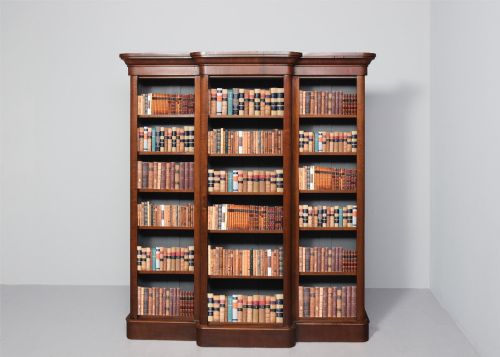
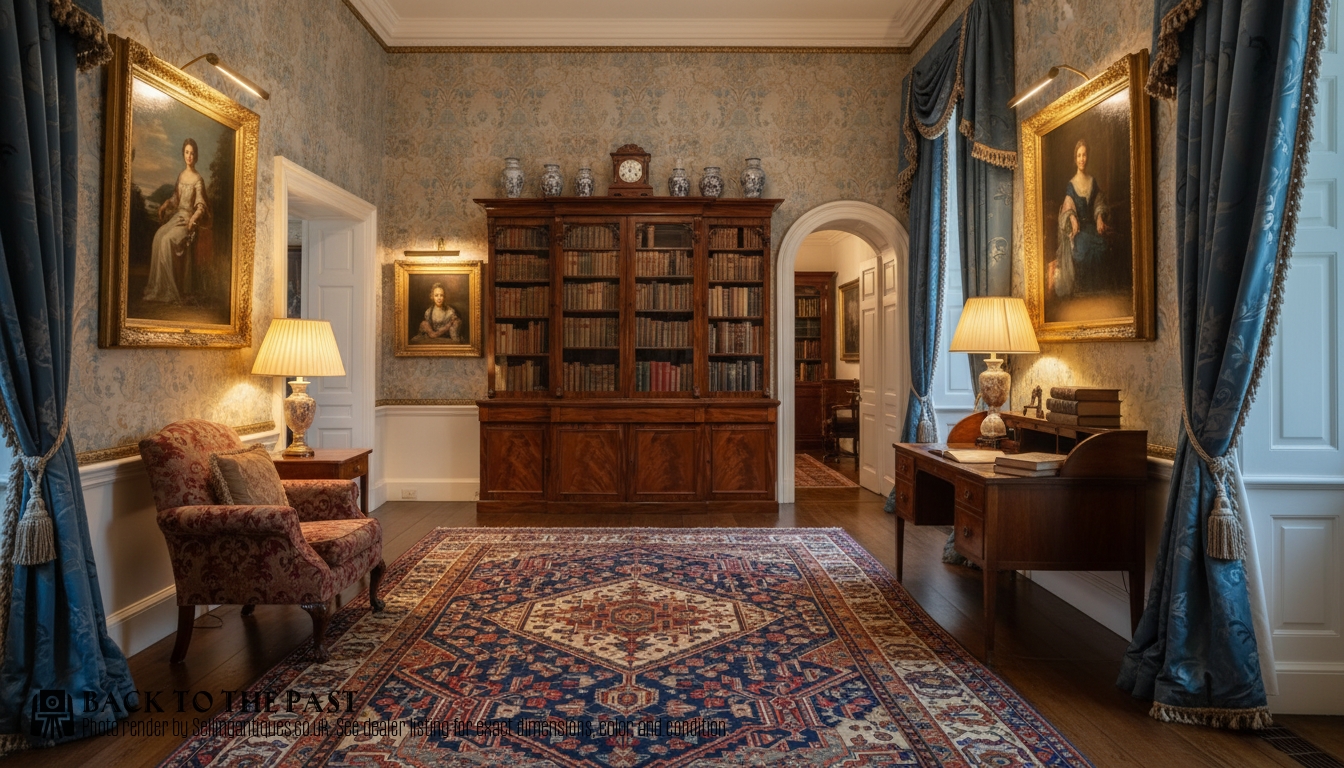
A breakfront library cabinet is a commanding piece of architectural furniture designed to anchor a room while housing an extensive collection of volumes behind glass.
Breakfront Library Cabinet
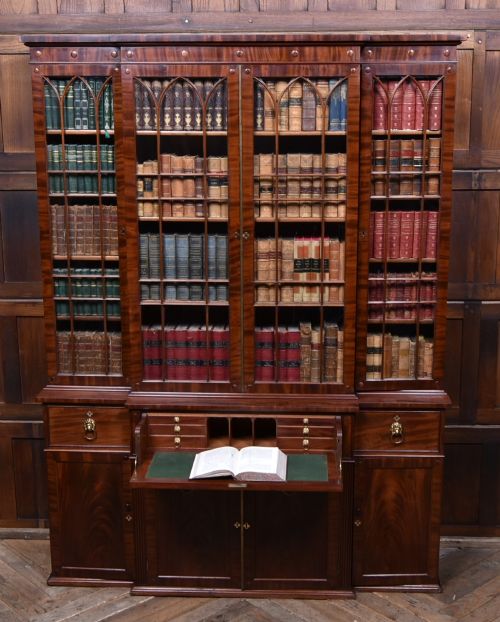
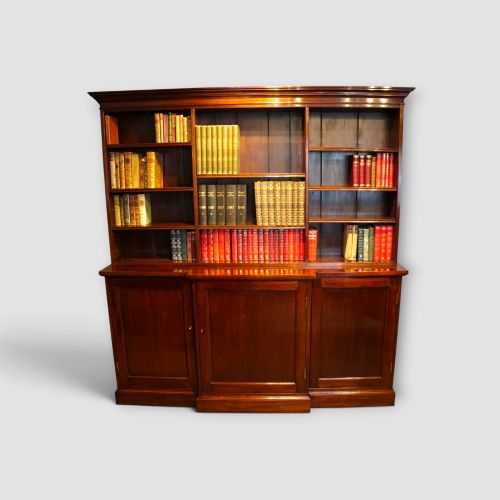
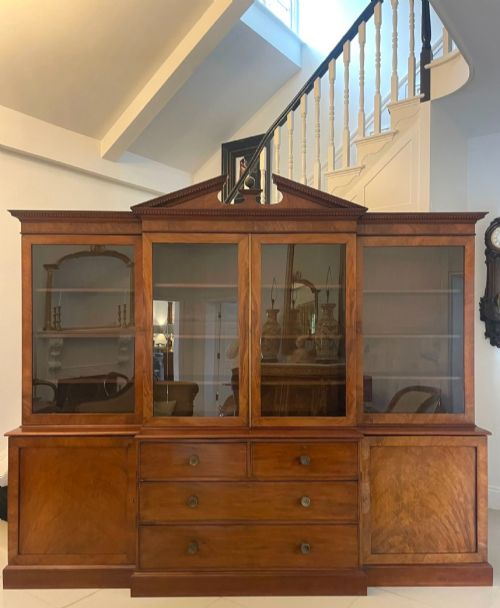
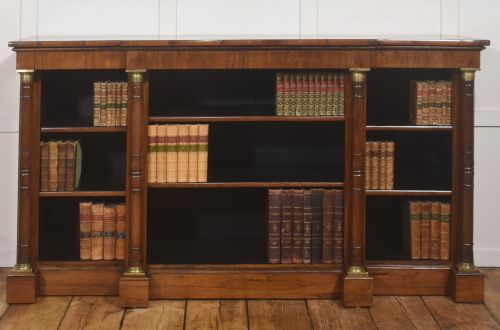
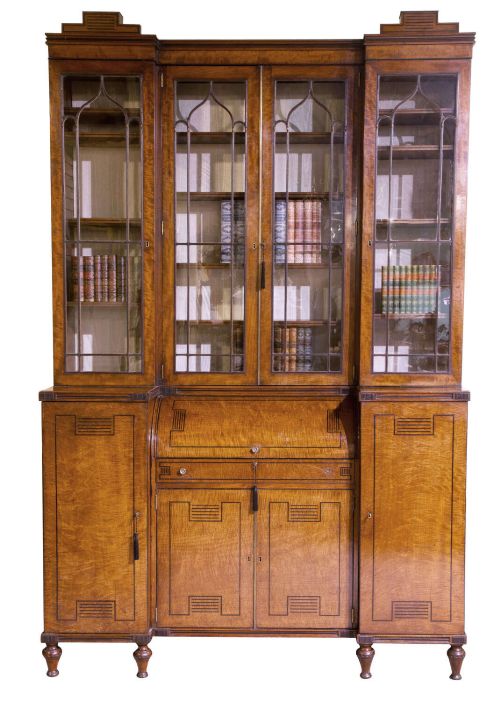
The layout generally comprises glazed upper doors for book display above solid lower doors or a secretaire drawer, establishing a grand vertical presence. Examples on this page span from eighteenth-century Chippendale period designs through Victorian and Edwardian interpretations up to nineteen-ten Sheraton Revival pieces.
Makers and workshops of the nineteenth century produced substantial library bookcases with carved details, brass mounts, and multi-door configurations. The form serves primarily as a primary storage solution for serious libraries and drawing rooms, maintaining a disciplined symmetry across all periods.
Materials and construction
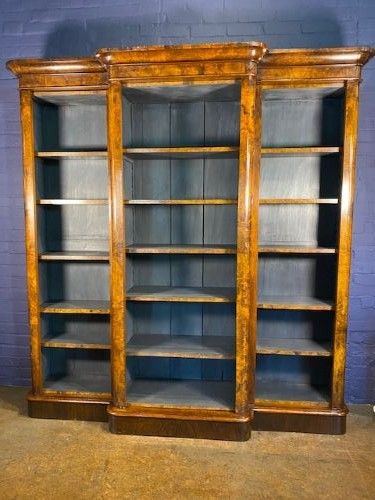
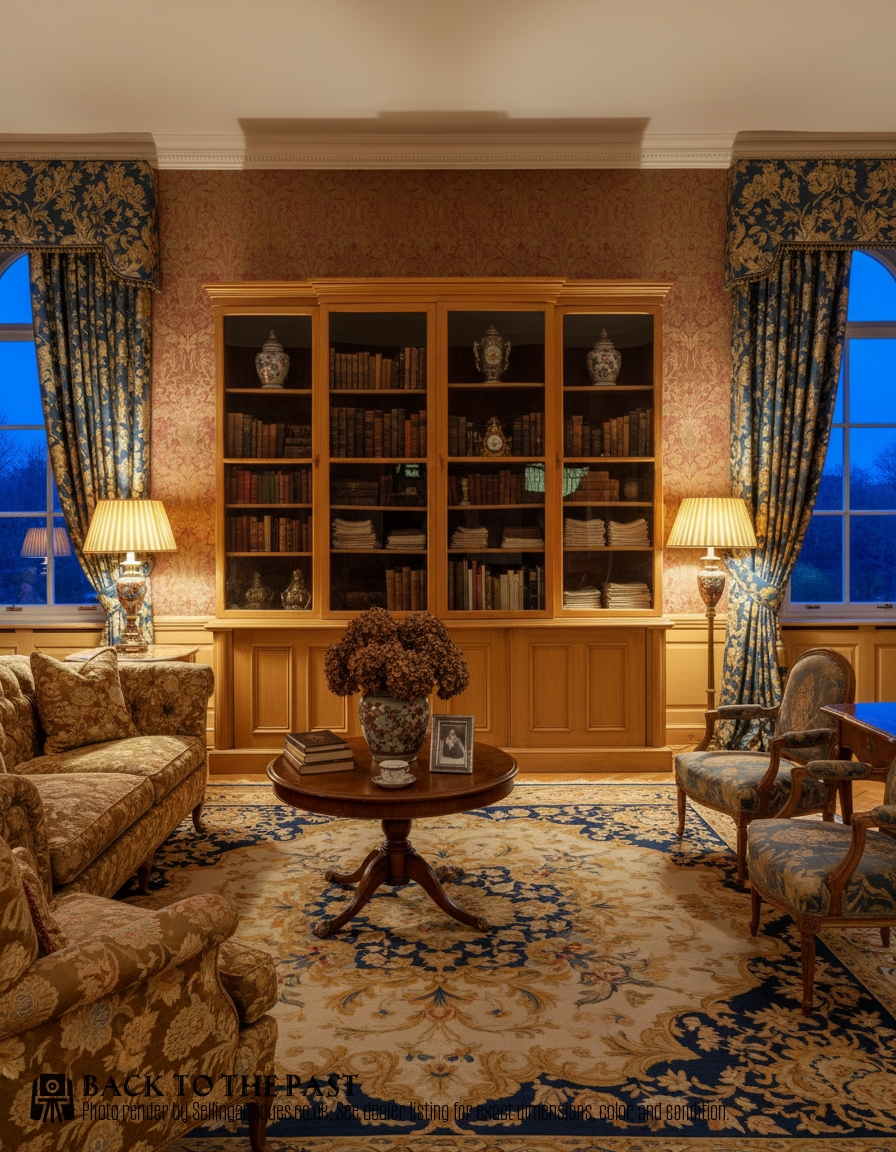
Cabinet makers utilised dense timber stocks such as mahogany, walnut, and satinwood, often pairing primary display surfaces with pine for internal framing and secondary carcases. These woods were selected for structural stability and finished with polished surfaces that accentuated the natural grain.
Glazing bars divided the large glass doors into geometric panes, while brass hardware secured the heavy doors and drawers. Applied carvings and painted decorations added decorative depth to the structural mahogany framework of the Victorian and Georgian eras.
Breakfront Library Cabinet Retail Price Guide 2026
Typical asking prices for breakfront library cabinet among the pieces listed under this phrase on Sellingantiques today, from the lower quarter to the upper quarter. They describe what is for sale here now, not the wider market.
Some nineteenth-century makers concealed entire writing desks inside the drawers so you can pay bills while pretending to read philosophy.
Assessing quality
Superior quality in a breakfront library cabinet is evident in the selection of figured timber veneers and the precision of the glazing bars on the doors. Finer examples display crisply carved mouldings and balanced proportions across the projecting central section and the recessed wings.
The integration of functional elements such as secretaire drawers with fitted writing interiors distinguishes high-grade cabinet work from standard utility storage. The harmony between the primary mahogany carcase and secondary woods inside reveals the original maker's commitment to durability.

Gillows
The Breakfront Library Cabinet Glossary
- Breakfront
- A piece of furniture with a central section that projects forward from the flanking sides. This architectural layout creates visual depth and breaks the monotony of a long straight wall.
- Secretaire
- A desk disguised as a drawer, featuring a drop-front panel that opens to reveal small drawers and pigeonholes. It adds a practical writing surface to a large bookcase.
- Glazing bar
- A narrow strip of wood or metal holding the panes of glass within a sash. Fine glazing bars create delicate geometric patterns across the bookcase doors.
- Satinwood
- A pale, lustrous timber native to India and Ceylon, highly prized for inlaid decoration and fine veneers during the late eighteenth and early nineteenth centuries.
Breakfront Library Cabinet: Frequently Asked Questions
What is a breakfront library cabinet?
A breakfront library cabinet is a large freestanding bookcase distinguished by a central section that projects further into the room than the side sections. These pieces combine glazed upper display doors with lower cupboards or drawers to organise and protect significant book collections.
Originally commissioned for large country houses and town mansions, they function as both architectural focal points and practical storage. The design allows for varied internal depths and visual interest across the facade.
How do I date a breakfront bookcase?
Dating relies on examining the timber species, construction methods, and stylistic details such as glazing bar thickness and cornice design. Eighteenth-century pieces often show Chippendale influences, whereas nineteenth-century examples range from heavy Victorian mahogany to lighter Sheraton Revival satinwood.
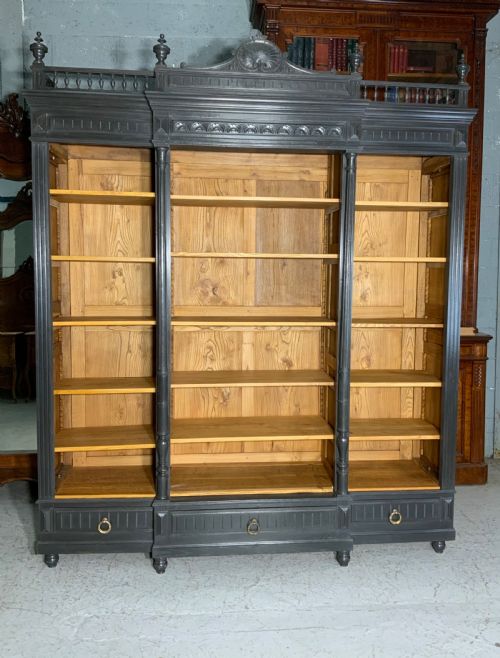
Archival listings indicate that styles evolved from solid Georgian proportions to more eclectic Victorian interpretations incorporating carved supports and ebonised finishes. Hardware and secondary woods like pine provide further clues to the manufacturing decade.
Where should I place this cabinet?
Because of their substantial dimensions, these cabinets require a principal room with adequate wall space and ceiling height to accommodate their monumental presence. Libraries, large studies, and spacious drawing rooms provide the appropriate architectural scale.
Ensure the floor can support the combined weight of the hardwood carcase, glass, and heavy book volumes. Positioning away from direct sunlight protects the timber finish and the contents inside.