


Bowfront Display Cabinet
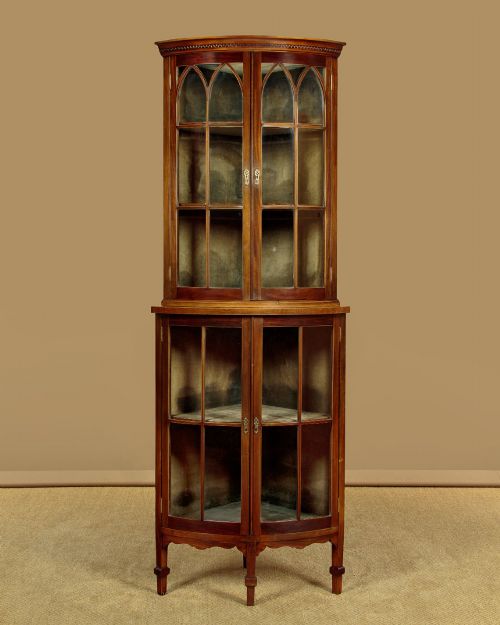
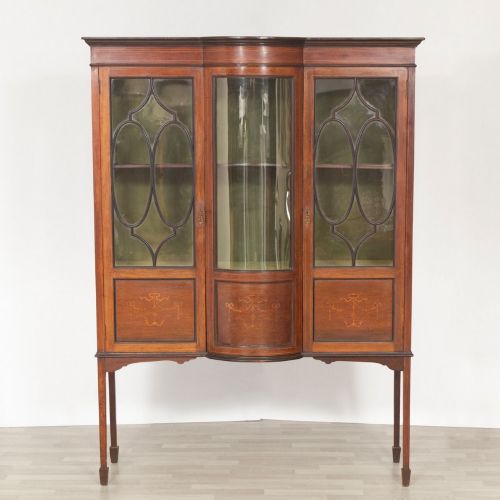
These bowfront display cabinet examples bring curving mahogany and satinwood elegance to a room, offering glazed storage for cherished china and books.
What these pieces are
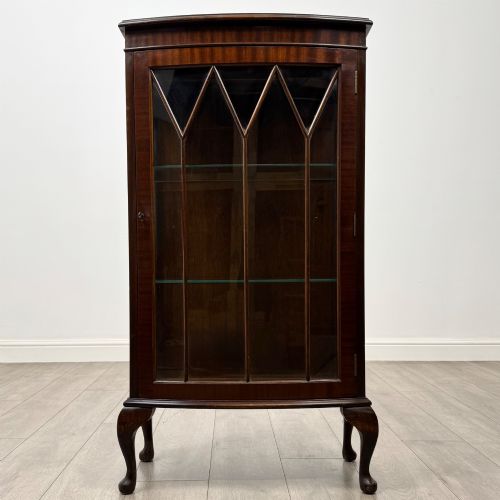
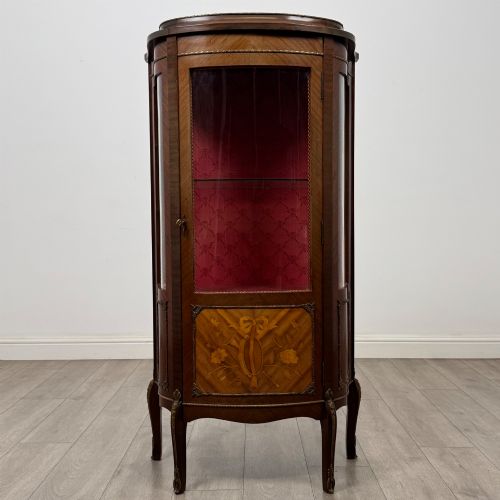
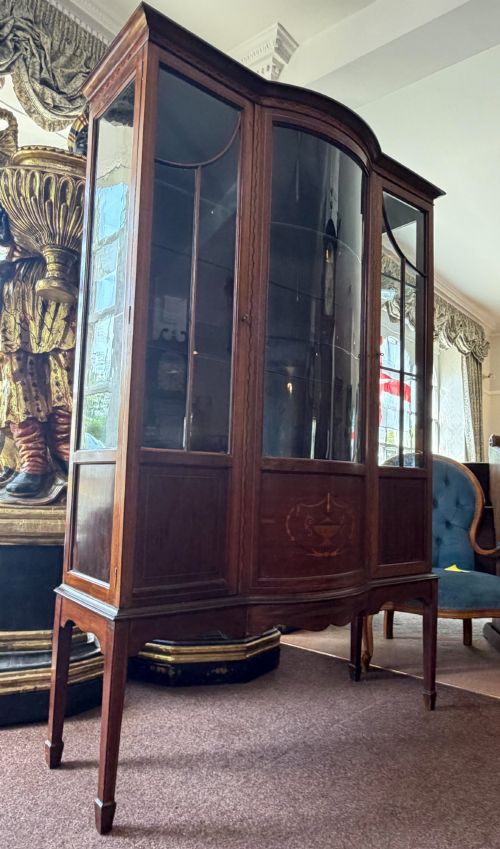
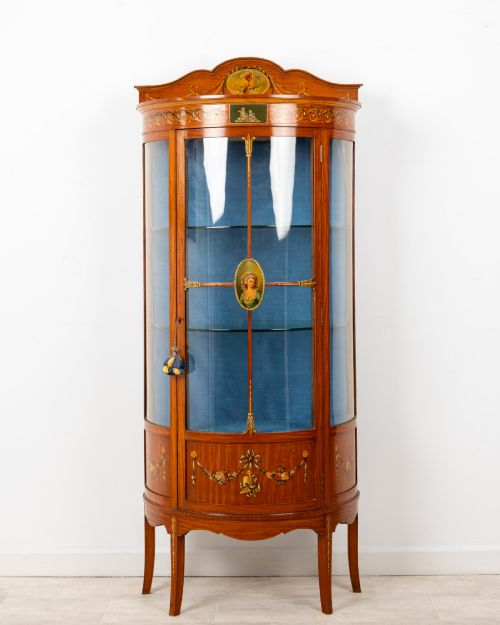
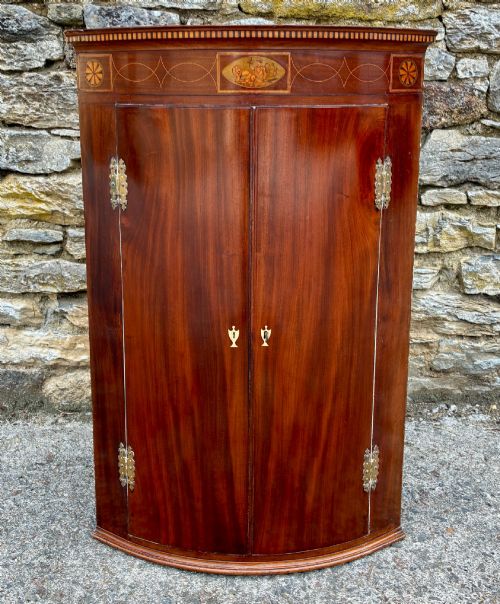
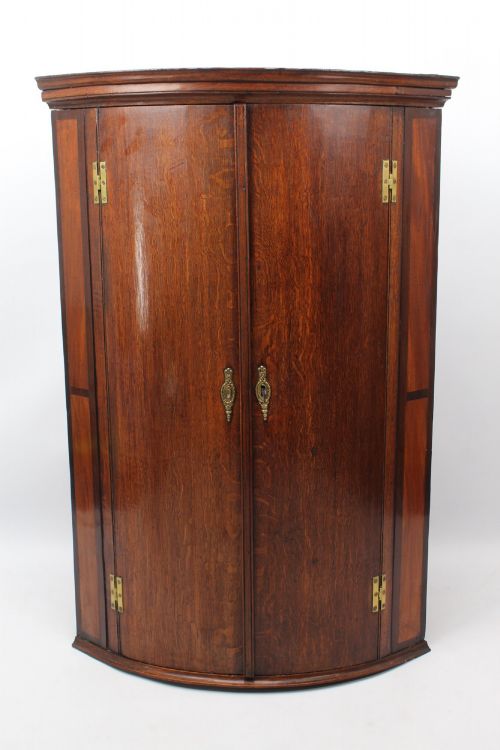
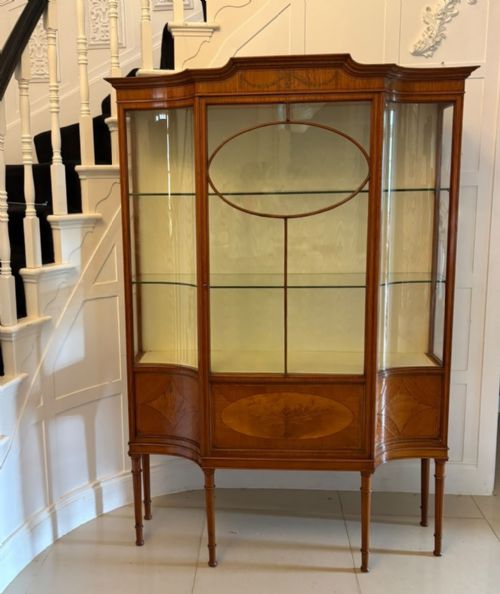
A bowfront display cabinet brings a distinctive curved glass facade to a room, designed to showcase china and books while softening the corners of a space. The pieces found here span the Edwardian era, Victorian period, and the year 1900, alongside Georgian Revival and Sheraton Revival interpretations.
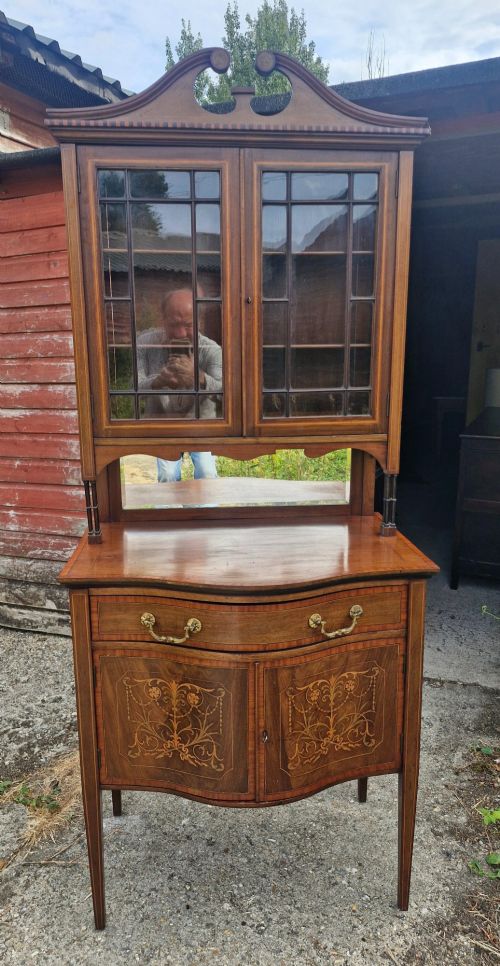
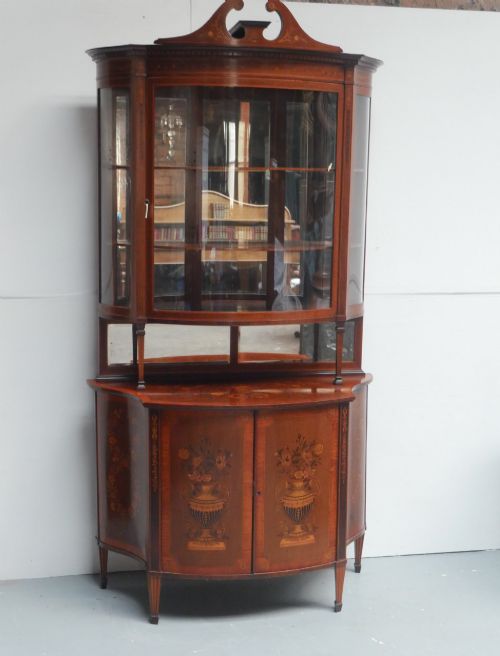
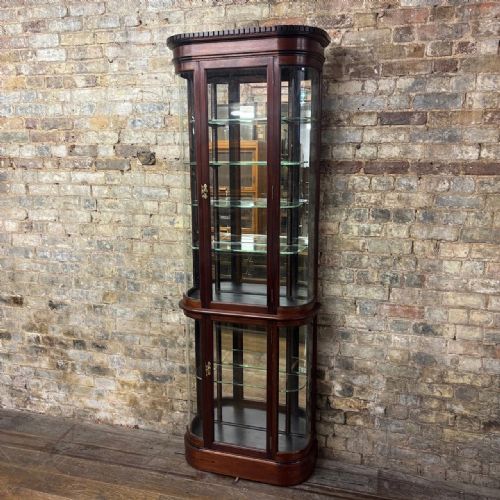
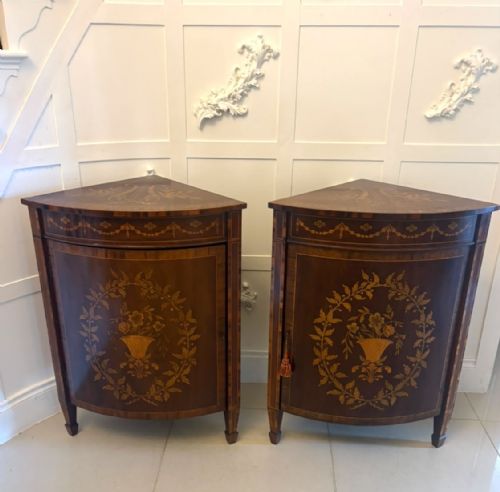
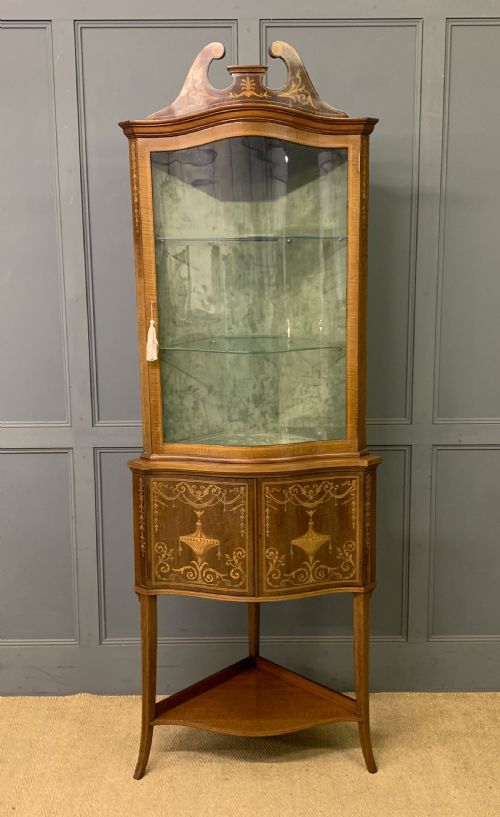
The most common form on this page is the Edwardian inlaid mahogany display cabinet, often featuring two parts and delicate marquetry. Tall corner cabinets and smaller tabletop or floor-standing variants also appear, utilising mahogany, satinwood, and occasionally walnut or oak.
Makers such as Edwards and Roberts produced notable examples in this style, influencing the wider output of the period. Revivalist pieces draw heavily on Georgian and Chippendale aesthetics, translating eighteenth-century design principles into late-nineteenth and early-twentieth-century domestic furniture.
How they were made
Cabinet makers constructed these pieces primarily from solid mahogany and satinwood, frequently employing fine veneers and marquetry inlay to decorate the curved surfaces. Glass panels were fitted into wooden doors to protect the contents while maintaining visibility from multiple angles.
Internal elements often include fabric linings or mirrored backs to enhance the display of china and glassware. Brass hardware such as hinges and escutcheons complete the construction, alongside fitted shelving designed to support collections.
Retail Price Guide 2026
Typical UK retail prices for bowfront display cabinet, calculated from the Sellingantiques database of over a million retail prices indexed since 2003. This retail price guide relies exclusively on Sellingantiques data; no external sources or auction records are used, so the figures do not describe the wider market.
Behind the curved glass doors, mirrored backs double the visual volume of every teacup placed inside.
What varies in quality
The standard of a bowfront display cabinet rests on the precision of its curved woodwork and the crispness of its marquetry inlay. Superior examples demonstrate seamless joinery along the convex front, where bending timber or shaping solid wood requires exceptional skill.
Finer pieces incorporate select timber grains, hand-painted details, and maker attribution such as the work associated with Edwards and Roberts. The harmony of proportions between the upper glazed section and the lower support defines the visual success of the piece.
Edwards and Roberts
The Bowfront Display Cabinet Glossary
- Bowfront
- A convex, outward-curving front facade typical of certain cabinets and chests. This curved profile softens room lines and provides enhanced interior angles.
- Marquetry
- Decorative veneer patterns formed from different woods, shells, or ivories fitted together to create pictures or geometric designs. It appears frequently on Edwardian cabinet doors and friezes.
- Satinwood
- A durable, yellowish timber prized for its lustrous sheen and smooth texture. It is often utilised for banding and inlay work on mahogany furniture.
- Sheraton Revival
- A late-nineteenth and early-twentieth-century design movement inspired by the neoclassical furniture of Thomas Sheraton. Pieces in this style utilise balanced proportions, classical inlays, and tapered legs.
- Escutcheon
- A protective plate surrounding a keyhole, usually fashioned from brass. It serves both a functional purpose and a decorative role on cabinet doors.
Frequently Asked Questions
What is a bowfront display cabinet?
A bowfront display cabinet is a piece of furniture featuring a convex, curving front and glass panels designed to exhibit china, books, or decorative objects.
These cabinets protect collections from dust while allowing visibility from various angles within a room.
How were these cabinets used?
Historically, households utilised these cabinets in dining rooms and drawing rooms to display fine porcelain, glassware, and treasured volumes.
The glass doors kept delicate items secure while presenting them as part of the interior decor.
Where should I place one?
These cabinets suit corners or flat walls where the curved front can soften architectural lines and draw the eye.
Placing them away from direct sunlight helps protect interior fabric linings and wooden finishes.
How do I identify an Edwardian piece?
Edwardian cabinets often display lighter mahogany timbers, refined marquetry inlay, and slender proportions influenced by Sheraton Revival designs.
Construction details and hardware typical of the early twentieth century further assist in dating the piece.