
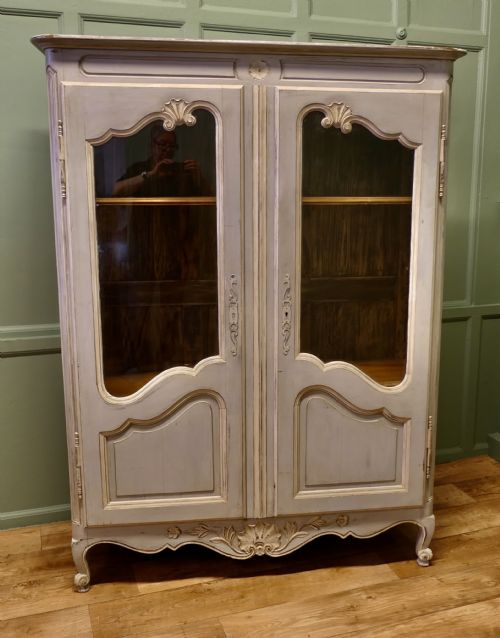
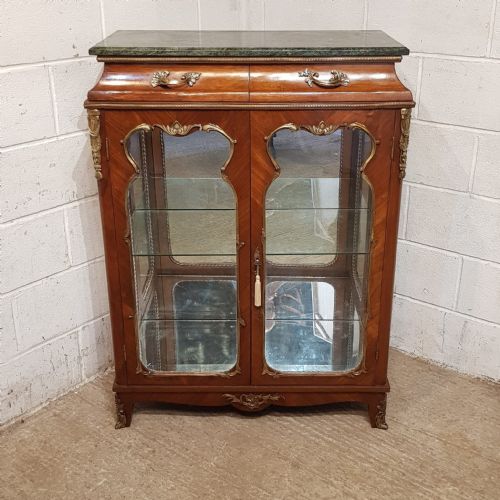
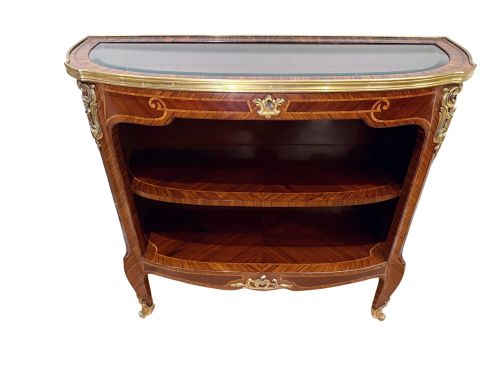
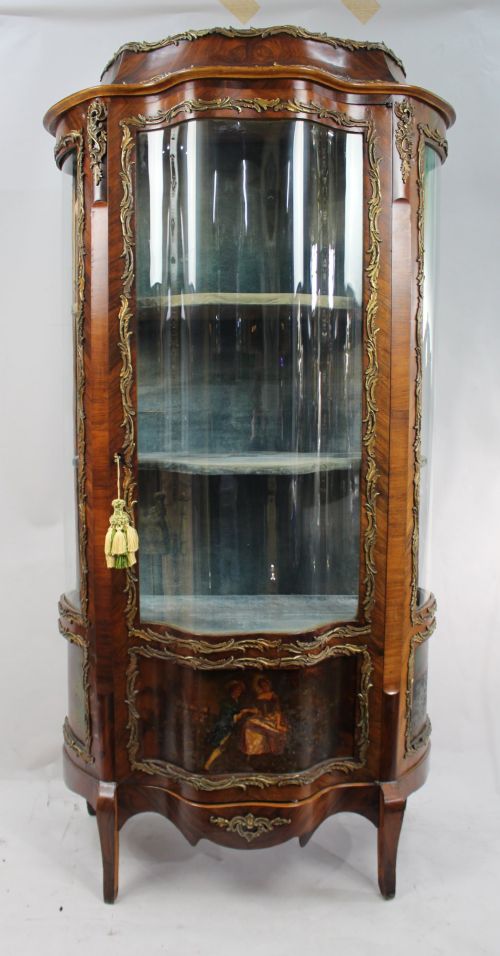
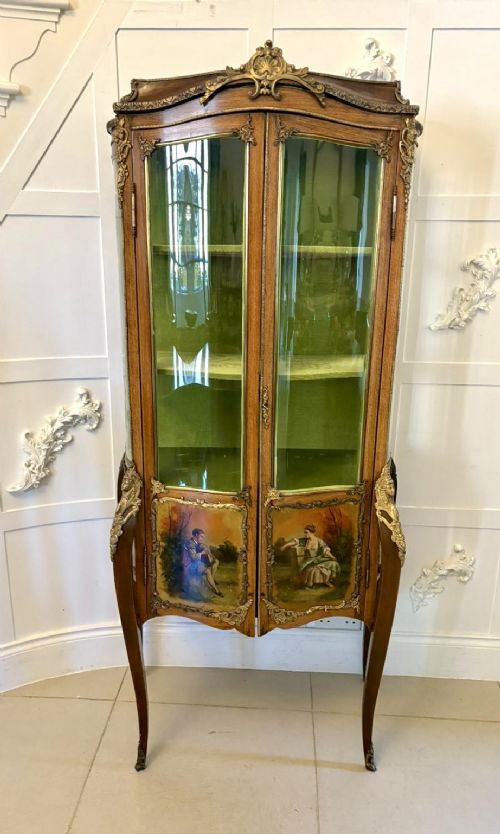
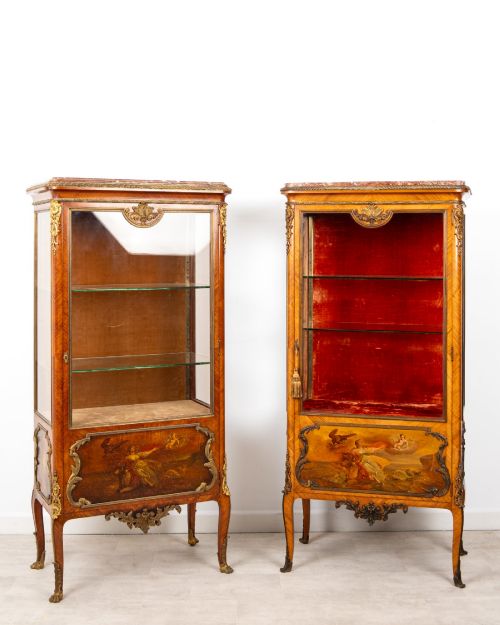
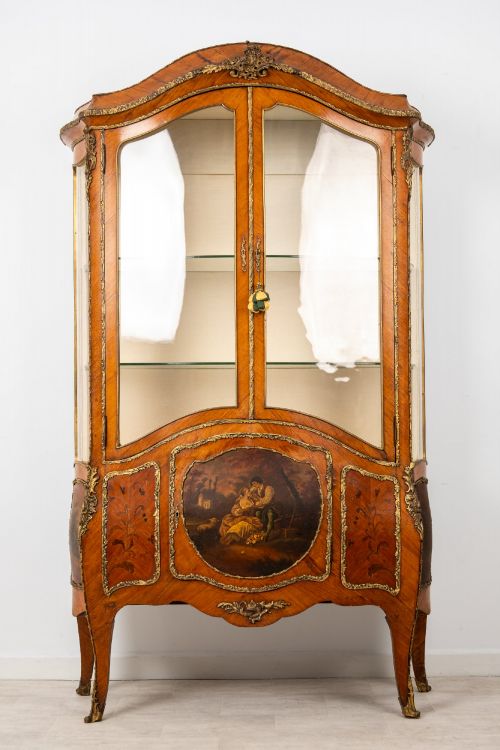
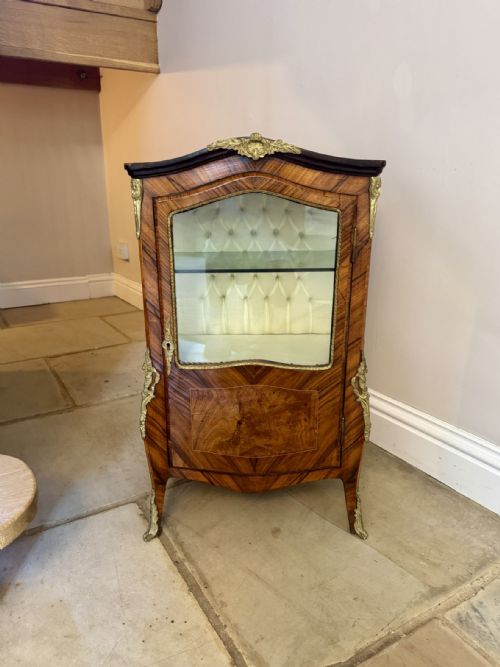
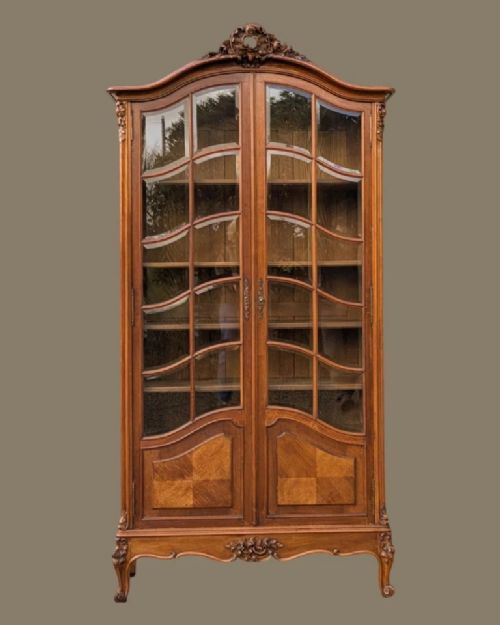
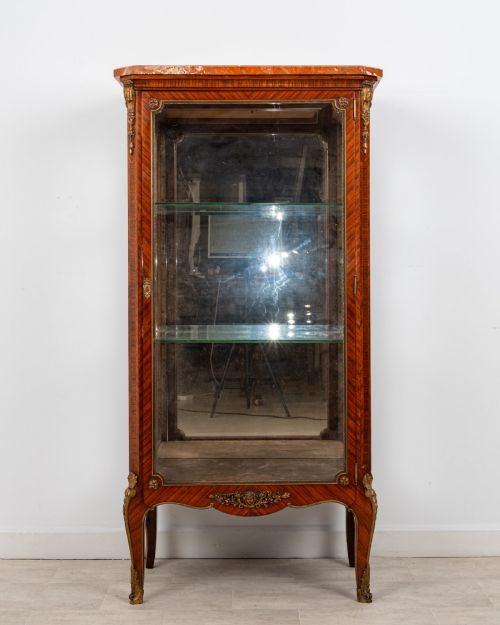
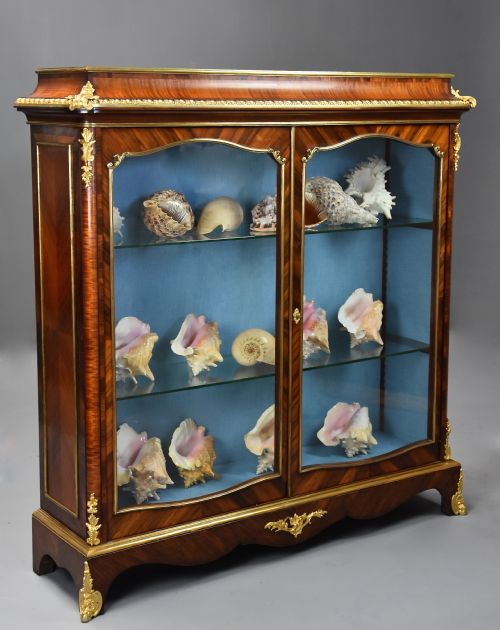
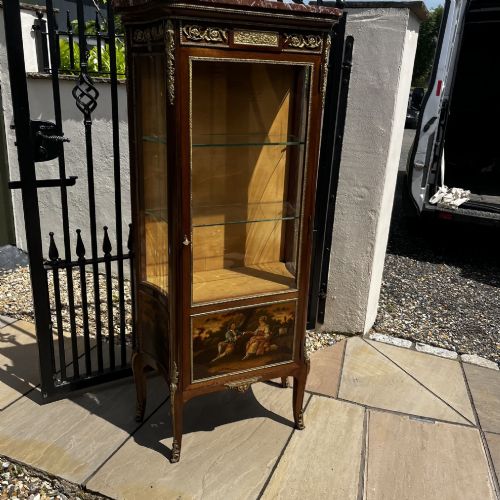
Louis XV Vitrine Cabinet
A louis xv vitrine cabinet brings exquisite French rococo revival display to a room, framing precious objects behind curved glass.
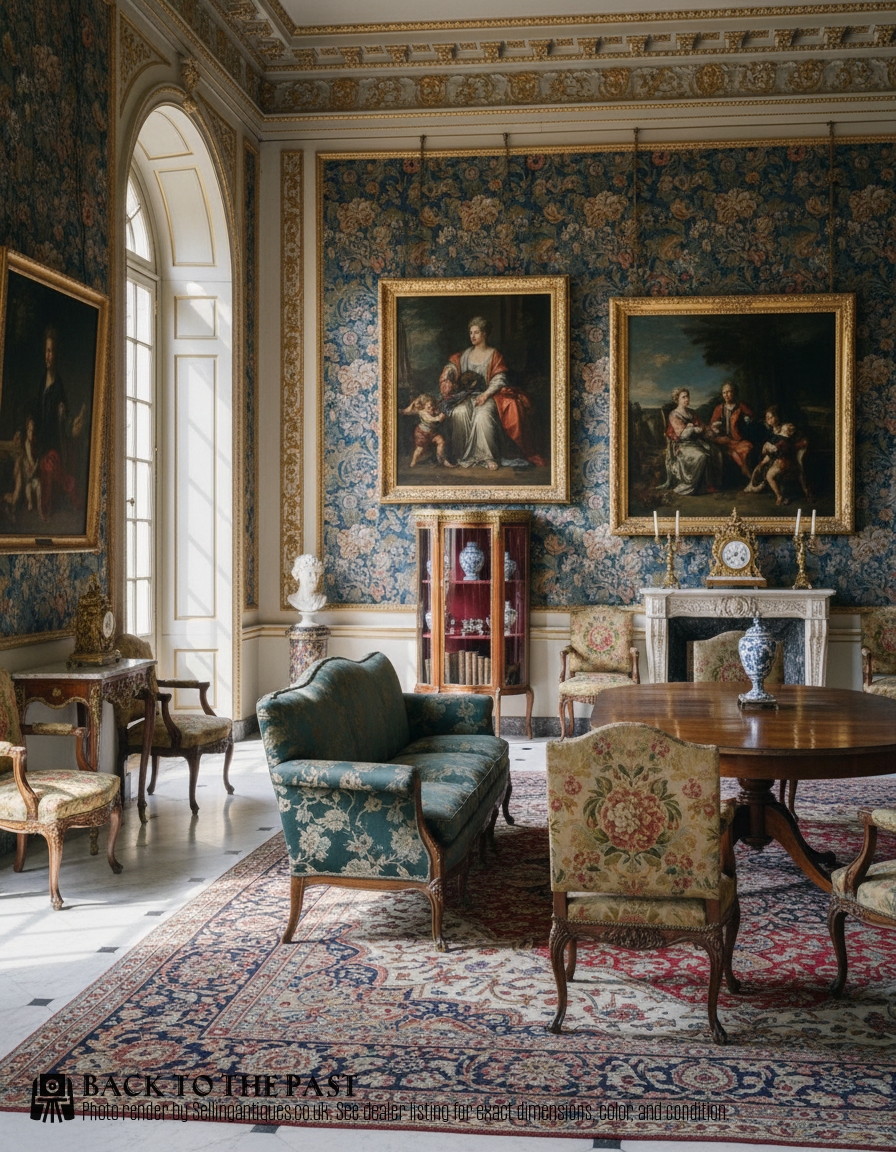
What these pieces are
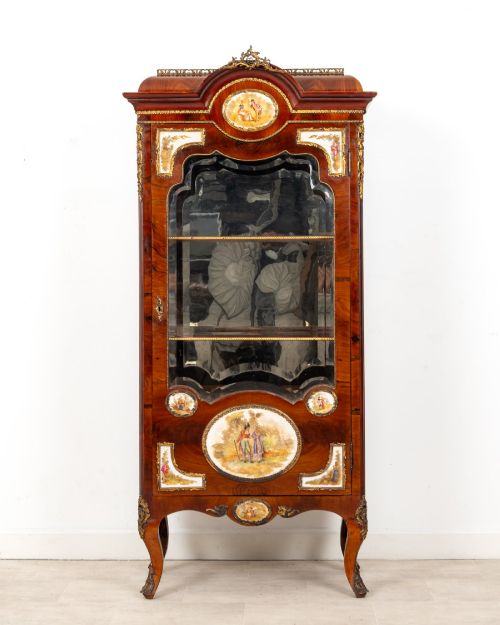
A louis xv vitrine cabinet is a glazed display piece originating from French design traditions, created to showcase porcelain, silver and curiosities. The pieces on this page span the eighteenth, nineteenth and early twentieth centuries, capturing the enduring appeal of rococo curves and elaborate mounts.
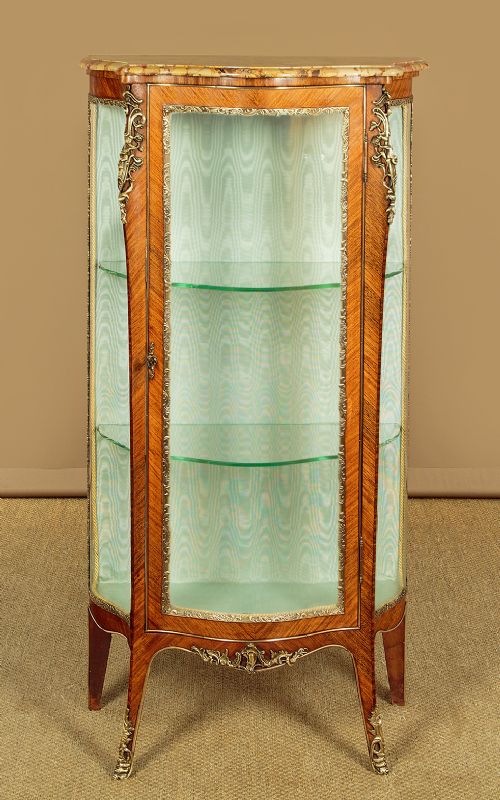
Most examples belong to revival movements from the nineteenth century, including French rococo revival and Louis XV style pieces executed in walnut, mahogany and kingwood. These cabinets utilise serpentine fronts and glazed doors to create a light, elegant silhouette suited to formal reception rooms.
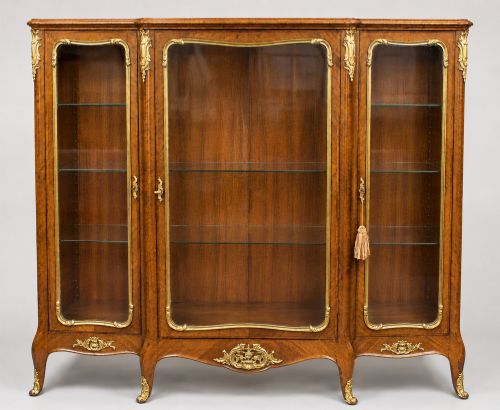
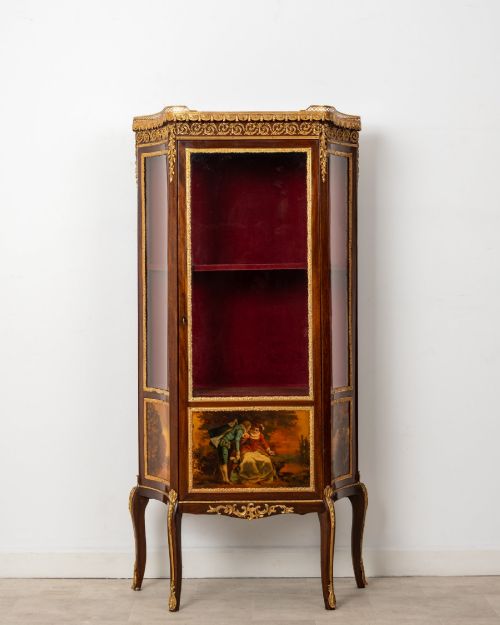
Makers and workshops produced variations ranging from single-door pedestals to large two-door bookcases with marble tops. Vernis Martin decorated panels frequently appear alongside marquetry and gilt bronze mounts, reflecting the luxurious aesthetic demanded by nineteenth-century chateau interiors.
How they were made
Cabinetmakers constructed these frames using timber carcases veneered in rich woods such as kingwood, mahogany and walnut, often enhanced with intricate marquetry patterns. Marble tops provide a solid, cooling contrast to the delicate woodwork and glazed sides.
Ormolu and gilt bronze mounts cast in scrolling foliage and asymmetrical rococo motifs embellish the corners, feet and frames. Curved glass panels require specialist glazing techniques to fit the undulating serpentine frontages without stress.
Retail Price Guide 2026
Typical UK retail prices for louis xv vitrine cabinet, calculated from the Sellingantiques database of over a million retail prices indexed since 2003. This retail price guide relies exclusively on Sellingantiques data; no external sources or auction records are used, so the figures do not describe the wider market.
Some cabinets feature curved glass so precisely bent that insects have occasionally mistaken the painted pastoral scenes inside for a real meadow.
What varies in quality
The distinction between standard production and masterwork pieces lies in the crispness of the gilt bronze or ormolu mounts and the precision of the kingwood veneers. Superior cabinets display hand-chiselled mounts with deep relief, whereas lesser examples use simpler, cast-only brass details.
Proportion and execution of the serpentine curves dictate the architectural harmony of the piece, with finer cabinets maintaining balanced fluidity from the cornice down to the sabots. Vernis Martin painted panels demonstrate varying artistic skill, where delicate pastoral scenes elevate the work significantly.
Francois Linke
The Louis XV Vitrine Cabinet Glossary
- Ormolu
- Gilt bronze mounts applied to furniture. This technique involves coating cast bronze with a layer of gold amalgam and heating it to bond the finish.
- Kingwood
- A dense, richly figured Brazilian timber utilised for decorative veneers. Cabinetmakers prized its contrasting dark and golden brown grains for geometric marquetry.
- Vernis Martin
- A type of simulated Japanese lacquer developed in France. Artisans applied multiple layers of varnish to create translucent, highly polished painted panels.
- Serpentine
- A curved line that is convex in the middle and concave at the ends. This undulating shape defines the fronts of many rococo revival display cabinets.
- Marquetry
- Inlaid wood veneers arranged in pictorial or geometric designs. Craftsmen cut contrasting timbers together to fit flush into the cabinet surface.
Frequently Asked Questions
What is a louis xv vitrine cabinet?
A louis xv vitrine cabinet is a glazed display furniture piece characterised by curved serpentine woodwork, glass panels and ornamental ormolu mounts. These cabinets were designed to exhibit prized collections of porcelain and decorative art.
Most surviving examples date from nineteenth-century revival periods, drawing inspiration from eighteenth-century French chateau aesthetics. They utilise rich veneers like kingwood and mahogany alongside marble tops.
How do I date a vitrine cabinet?
Dating relies on examining the construction methods, timber choices and mount styles present in the piece. Eighteenth-century originals differ structurally from nineteenth-century revival interpretations.
Revival pieces from the eighteen-hundreds often incorporate machine-cut veneers alongside hand-finished ormolu, whereas twentieth-century items show later internal fixings and modern glass production standards.
Where should I place a vitrine cabinet?
These display cabinets suit formal reception rooms, drawing rooms or studies where their glazed panels can protect collections from dust. Position them away from direct sunlight to preserve delicate wood veneers and painted panels.
Ensure the floor is level, as serpentine cabinets with delicate ormolu feet require stable placement to prevent door alignment issues over time.
How do I clean the glass and mounts?
Clean glass panels with a mild, non-ammonia window cleaner applied to a cloth rather than sprayed directly onto the wood. This prevents moisture damage to surrounding veneers and painted surfaces.
Dust ormolu mounts gently with a soft brush, avoiding metal polishes that strip the historic gilding and leave abrasive residues in the recessed chasing.