


Serpentine Glass Cabinet
A serpentine glass cabinet combines undulating curves with glazed panels, offering a sophisticated display for prized collections.

Identifying serpentine glass cabinet
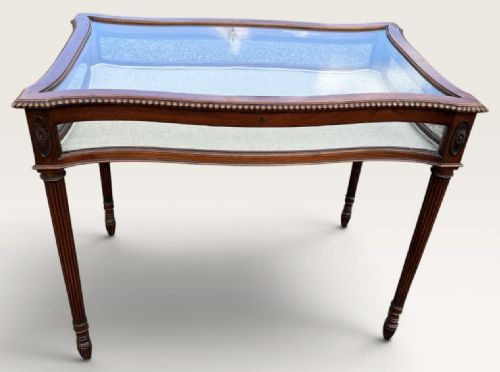
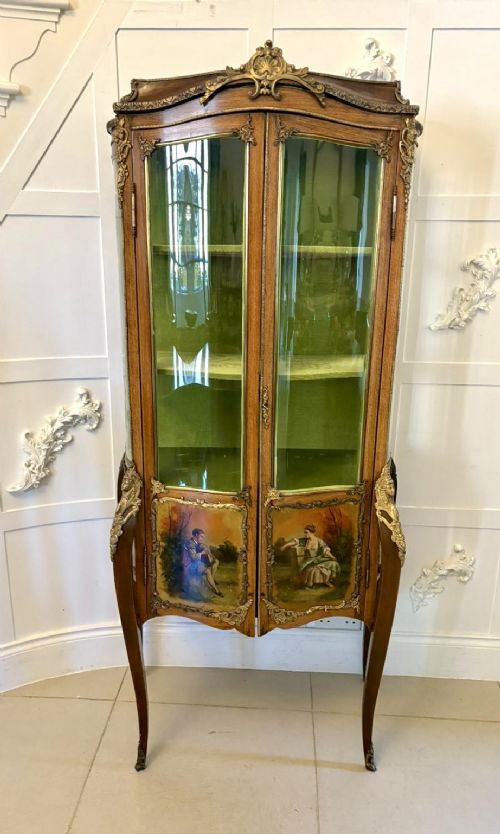
A serpentine glass cabinet presents a curved, undulating front profile combined with glazed panels designed to showcase delicate objects. These pieces emerge predominantly in the nineteenth century, drawing heavily on French Rococo Revival, Louis XV Revival, and Louis XVI styles.
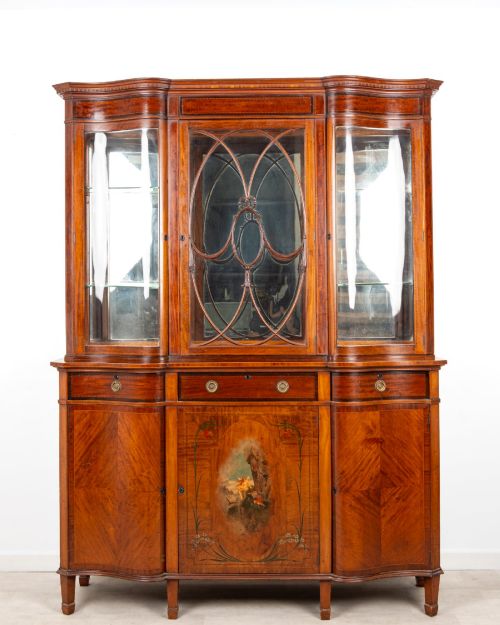
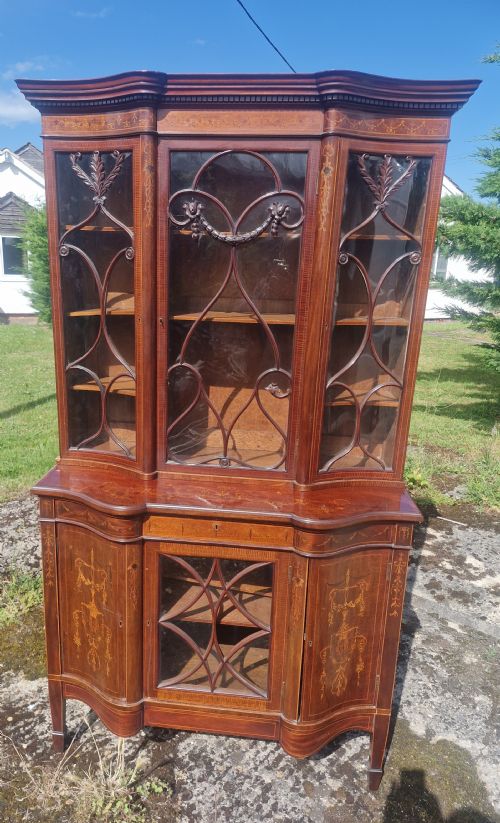
The form typically manifests as a display cabinet, vitrine, or cabinet on stand, housing shelves behind glass doors. Surviving examples reflect periods spanning the Victorian era through the turn of the twentieth century, with materials including mahogany, kingwood, and walnut.
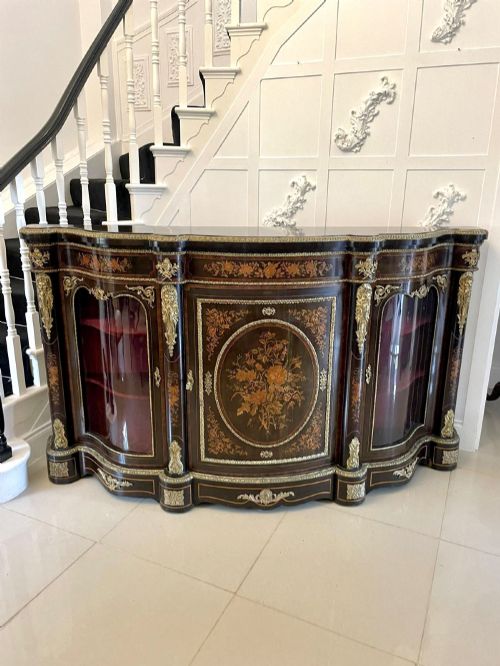
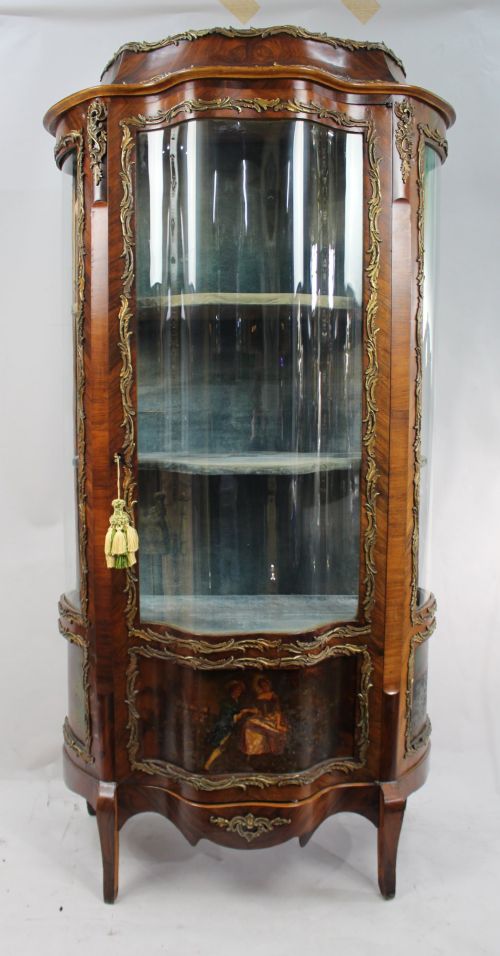
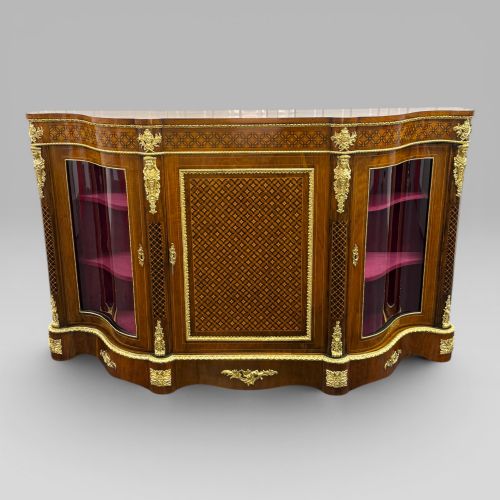
Buyers encountering this selection will find variations in scale and ornamentation, from serpentine fronted cabinets with marquetry inlay to bombé vitrines mounted with ormolu.
Construction and Materials
Cabinet makers utilised foundational timbers such as mahogany, walnut, and satinwood, frequently applying kingwood veneers to achieve rich surface figuring. Marquetry inlay appears across panels, integrating contrasting woods to form decorative motifs.
Glazed doors and side panels allow light to enter the interior, which is often lined with velvet or fabric. Ormolu mounts are cast and chased to highlight the structural curves and corners of the furniture.
Vernis Martin lacquer finishes are applied to select surfaces, employing specialised varnishes to mimic Japanese decorative panels popular in French-influenced furniture.
Retail Price Guide 2026
Typical UK retail prices for serpentine glass cabinet, calculated from the Sellingantiques database of over a million retail prices indexed since 2003. This retail price guide relies exclusively on Sellingantiques data; no external sources or auction records are used, so the figures do not describe the wider market.
Vernis Martin lacquer finishes let makers paint miniature pastoral scenes that stubbornly refuse to fade behind curved glass.
Distinctions in Quality
The calibre of a serpentine glass cabinet rests on the precision of its curved woodwork and the fluidity of the serpentine contour. Finer pieces demonstrate meticulous hand-fitting of ormolu mounts and intricate, unblemished marquetry inlay.
Material selection dictates the upper tier of the range, where choice kingwood veneers and sophisticated Vernis Martin lacquer work elevate the piece. The integration of curved glass panels also distinguishes superior examples from simpler glazed constructions.
Edwards and Roberts
The Serpentine Glass Cabinet Glossary
- Serpentine
- A furniture front characterised by a wavy contour with a convex centre flanked by concave curves. This shaping requires expert woodworking to ensure the doors and frame align smoothly.
- Ormolu
- Gilded bronze ornamentation applied to furniture mounts and feet. It provides a bright metallic contrast to dark woods like mahogany and kingwood.
- Vernis Martin
- A simulated lacquer finish developed by the Martin brothers in eighteenth-century France. It reappears on revival pieces to create translucent painted scenes.
- Marquetry
- Decorative veneer patterns formed by fitting together small pieces of different coloured wood. These intricate designs adorn the surfaces of cabinet doors and panels.
- Bombe
- A swelling, outward-curving profile found on the lower sections of certain cabinets. This bulging form demands advanced shaping techniques from the cabinet maker.
Frequently Asked Questions
What is a serpentine glass cabinet?
A serpentine glass cabinet is a display piece featuring a wavy, undulating front profile and glazed panels designed to show off decorative objects.
These cabinets emerge primarily during the nineteenth century in various revival styles, incorporating materials like mahogany, kingwood, and ormolu mounts.
How do I date a serpentine glass cabinet?
Dating relies on examining the timber, construction methods, and stylistic influences, such as French Rococo Revival or Louis XV designs.
Most surviving examples date from the Victorian period up to nineteen hundred, showing distinct cabinet-making techniques of that era.
Where were these cabinets placed?
These cabinets served as focal points in drawing rooms and parlours to display porcelain, silver, and other collected curiosities.
The glazed panels and mirrored or fabric-lined interiors were arranged to maximise the visibility of the contents.
How do I care for the wood and ormolu?
Maintenance involves keeping the cabinet away from direct sunlight and fluctuating humidity to protect the delicate veneers and interior fabric linings.
Ormolu mounts require gentle dusting with a soft cloth without abrasive metal cleaners that can damage the gilt surface.