
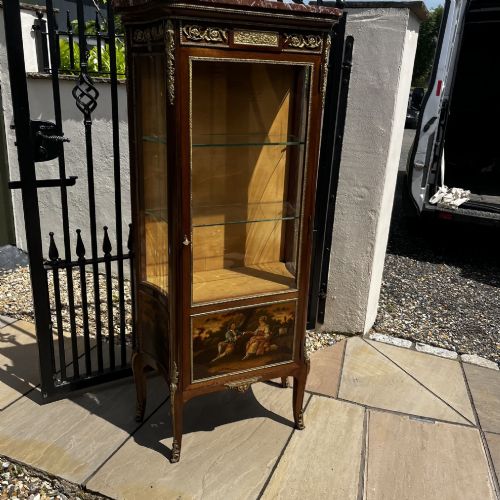
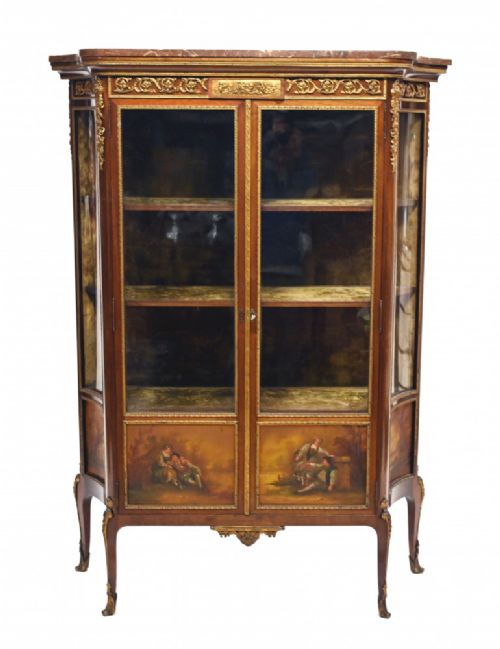


Gilt Bronze Display Case
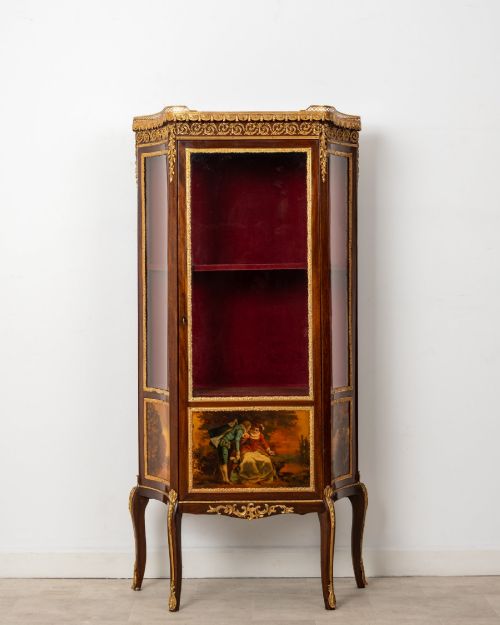
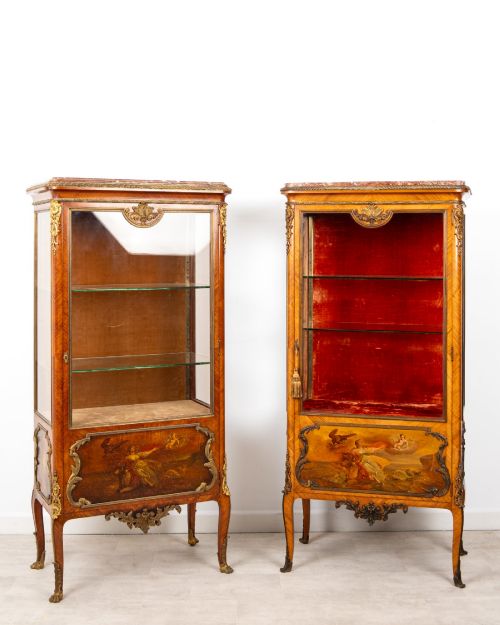
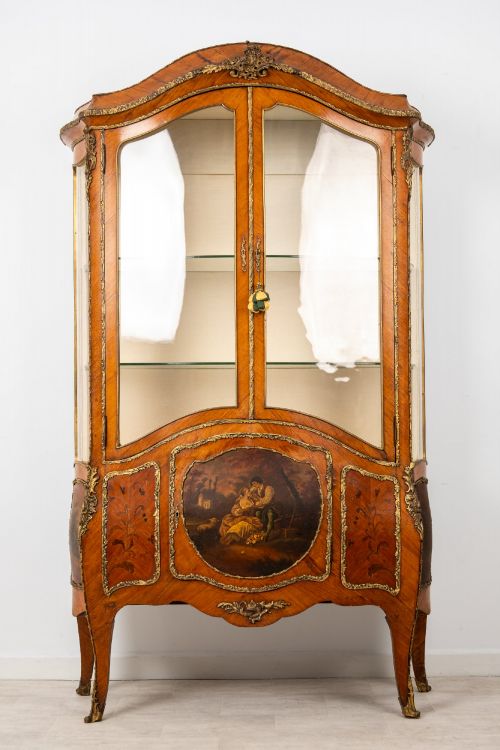
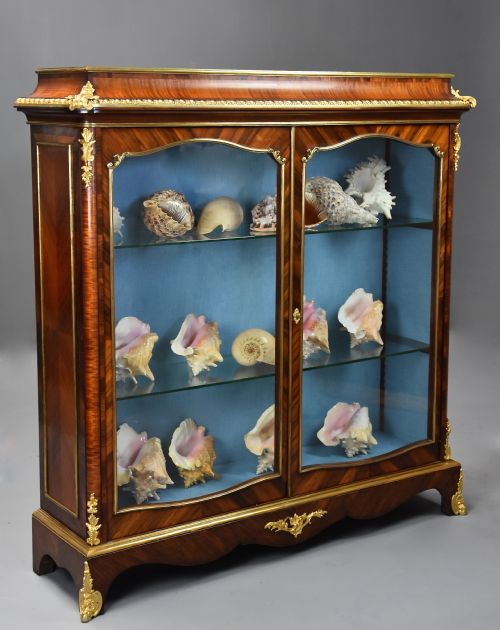
When you select a gilt bronze display case, you bring home a French nineteenth-century vitrine designed to showcase precious objects under glass.
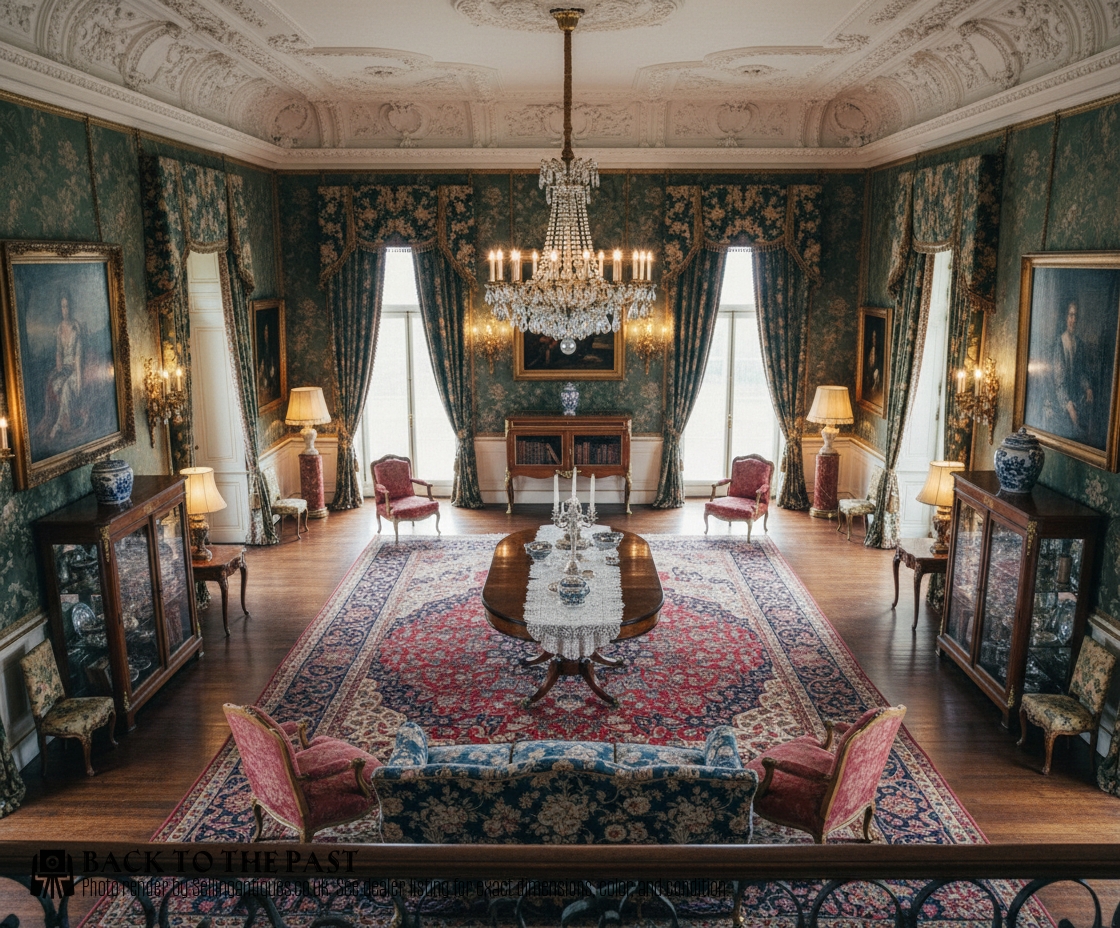
Gilt Bronze Display Case
A gilt bronze display case is typically encountered as a freestanding French vitrine, bijouterie table, or cabinet dating from the nineteenth century. These pieces combine glazed panels with timber carcases to protect and exhibit small treasures.
The selection ranges from tall wall cabinets and pier cabinets to serpentine-fronted vitrines and low tables designed for drawing rooms. Most examples follow revivalist decorative schemes originating in France during the Victorian and Edwardian eras.
How they were made
Cabinetmakers constructed the carcases using foundational timbers such as mahogany, walnut, and rosewood, frequently veneered with kingwood and laid with parquetry or marquetry patterns. Painted panels in the Vernis Martin tradition often decorate the lower sections.
Gilt bronze and ormolu mounts provide structural enrichment along edges, feet, and friezes, secured alongside marble tops. Glass panes are fitted into doors and sides to enclose the display space fully.
Gilt Bronze Display Case Retail Price Guide 2026
Typical asking prices for gilt bronze display case among the pieces listed under this phrase on Sellingantiques today, from the lower quarter to the upper quarter. They describe what is for sale here now, not the wider market.
Listings feature eighteenth-century revival styles including Louis XV and Louis XVI alongside nineteenth-century Victorian and Edwardian production dates.
What varies in quality
Quality separates ordinary production from exceptional workshop output through the crispness of the gilt bronze chasing and the precision of the veneer work. Maker attribution to known firms elevates the standing of an individual cabinet.
The depth of the marquetry, the integration of hand-painted Vernis Martin panels, and the weight of the marble tops define the upper tier of the range.
G. Durand·François Linke·Paul Somani
The Gilt Bronze Display Case Glossary
- Ormolu
- Gilded bronze mounts applied to furniture to accent corners, mounts, and borders. This decorative technique originated in France and defines much nineteenth-century cabinetwork.
- Vitrine
- A glass-fronted cabinet designed for the display of porcelain, silver, and small curiosities. These pieces often feature glass side panels to maximise illumination.
- Vernis Martin
- A type of simulated Japanese lacquer developed in France, featuring painted pastoral or romantic scenes on a varnished ground. It frequently appears on lower door panels of cabinets.
- Kingwood
- A dense South American timber prized for its rich figuring, commonly cut into veneers for geometric parquetry patterns. It forms the primary surface wood on many nineteenth-century French pieces.
- Bijouterie table
- A low display table with a glazed top and compartmented interior made to hold jewellery and medals. These tables sit centrally in reception rooms.
- Marquetry
- The art of applying thin slices of wood veneer to a structural carcase to form pictorial or geometric designs. Craftsmen select contrasting timbers to achieve tonal variation.
Gilt Bronze Display Case: Frequently Asked Questions
What fits inside a gilt bronze display case?
These cabinets suit small porcelain figures, pocket watches, medals, and fragile glassware collected during the nineteenth century. The enclosed glass shelves keep dust away from delicate items.
Larger vitrines accommodate modest table services or collections of books alongside decorative objects.
How do I identify French revival styles?
Louis XV style pieces display asymmetrical curves, serpentine fronts, and flowing floral mounts. Louis XVI style cabinets rely on symmetrical proportions, fluted columns, and classical motifs.
Checking the marquetry patterns and leg shapes helps distinguish between these revival periods.
Where should I place a vitrine?
Vitrines require stable positions away from direct sunlight to protect interior fabrics and polished timber surfaces. Placing them against flat interior walls allows the glass panels to catch ambient room light.
Freestanding models need level flooring to ensure the glazed doors open and close smoothly.
What is the difference between a cabinet and a bijouterie table?
Cabinets stand vertically with side and front glass panels designed for eye-level viewing of shelves. Bijouterie tables feature a horizontal glazed surface that lifts or slides to reveal shallow compartments.
Both serve to exhibit collections, but tables focus on items viewed from above.