

Ormolu Mounted Display Case
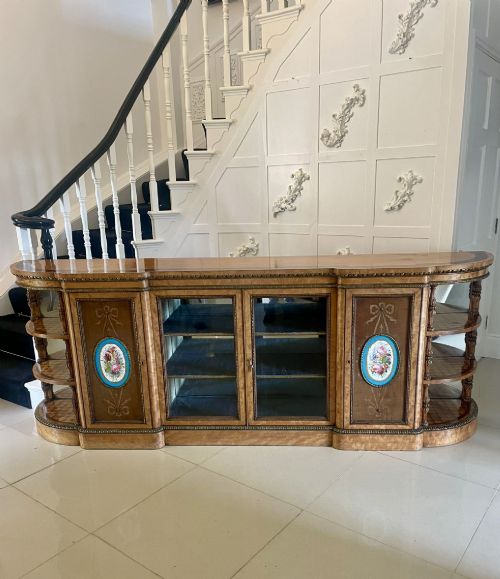
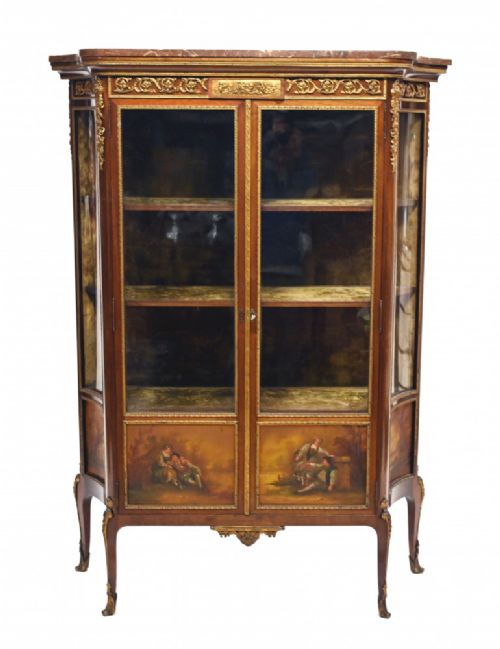
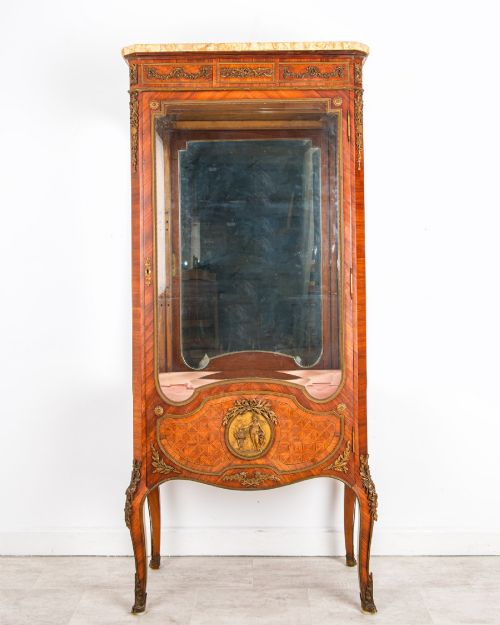
An ormolu mounted display case brings French and Victorian craftsmanship into a room, combining fine timber frames with cast bronze highlights to showcase precious objects.
Ormolu Mounted Display Case
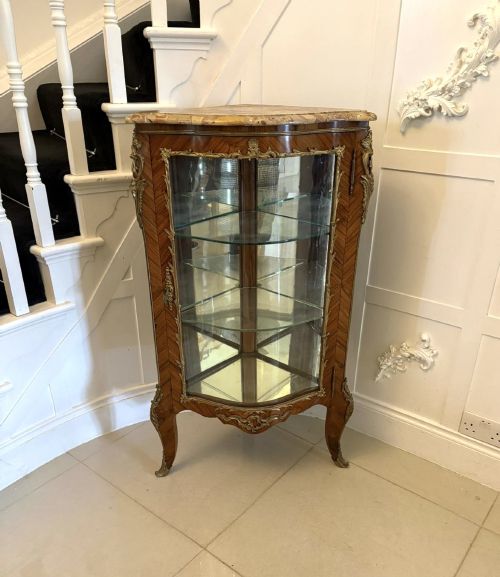
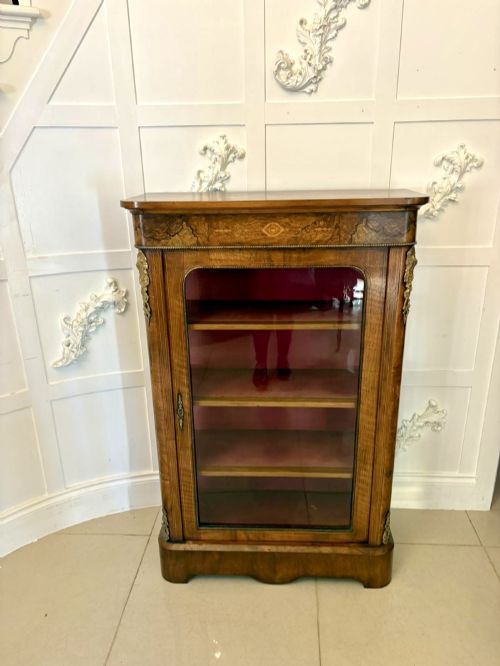
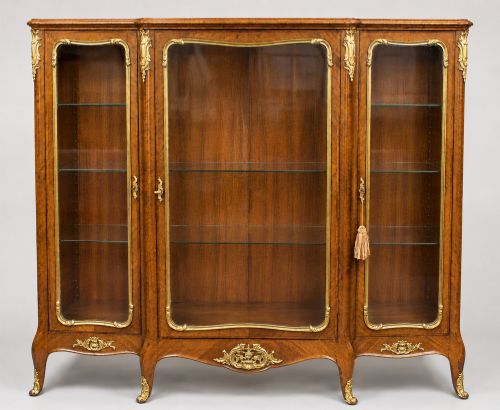
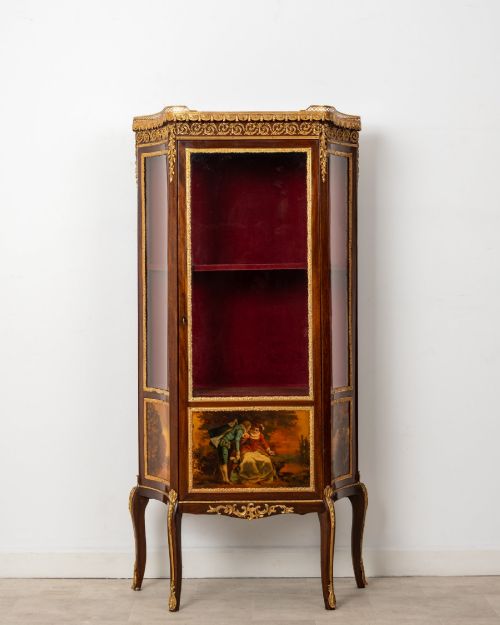
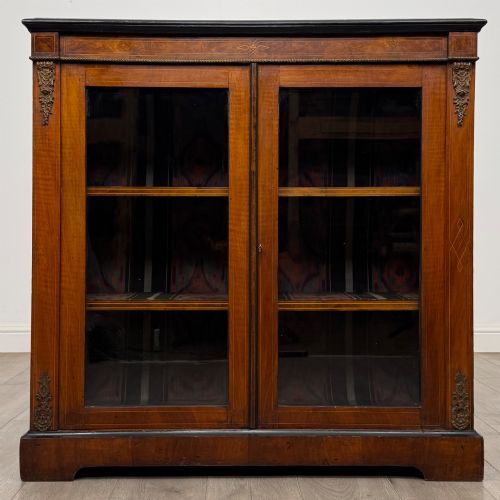
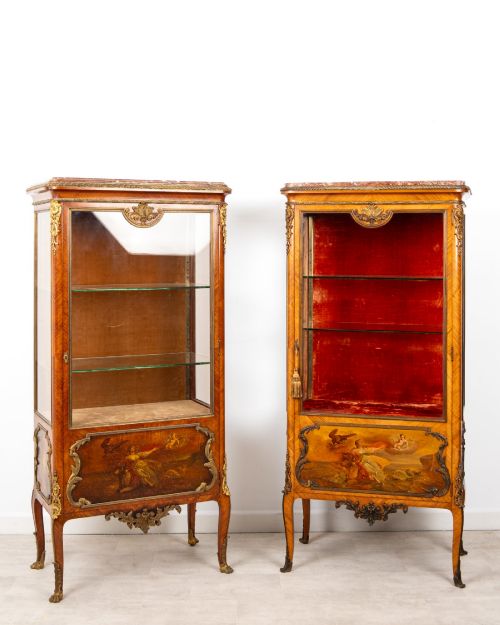
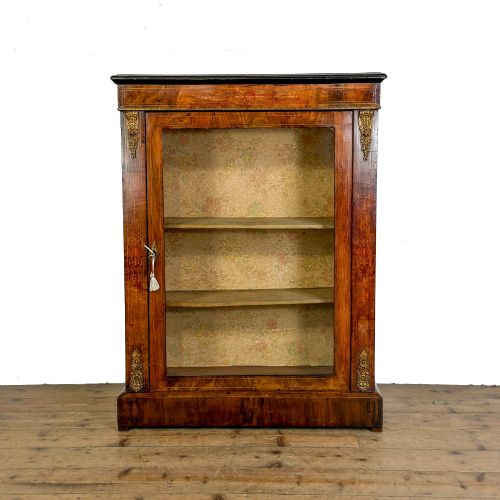
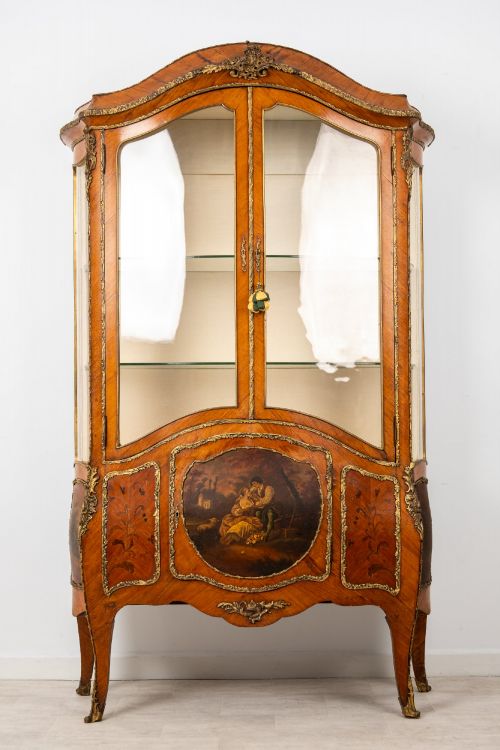
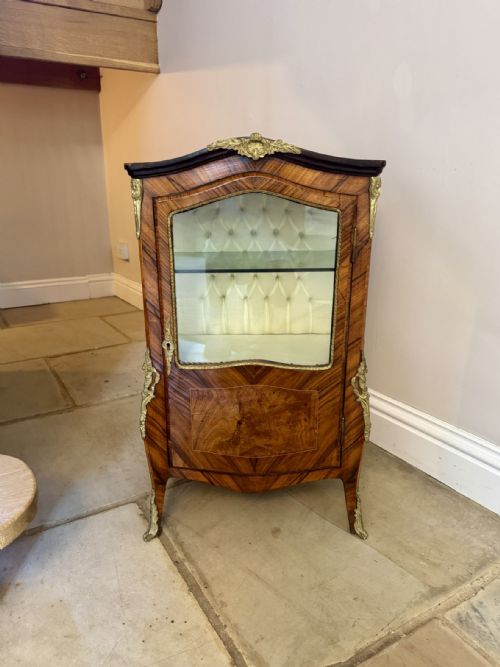
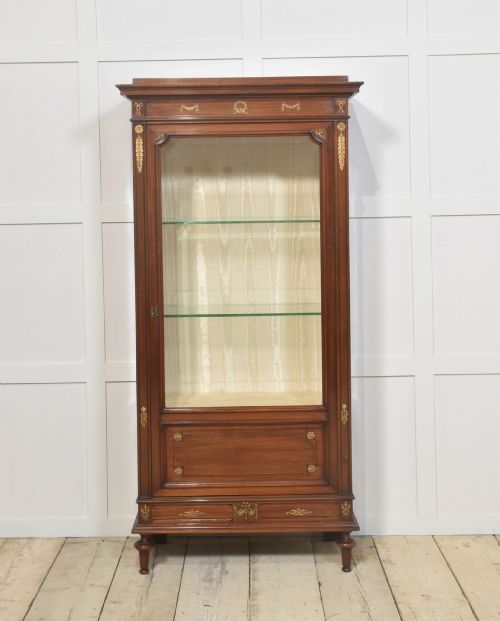
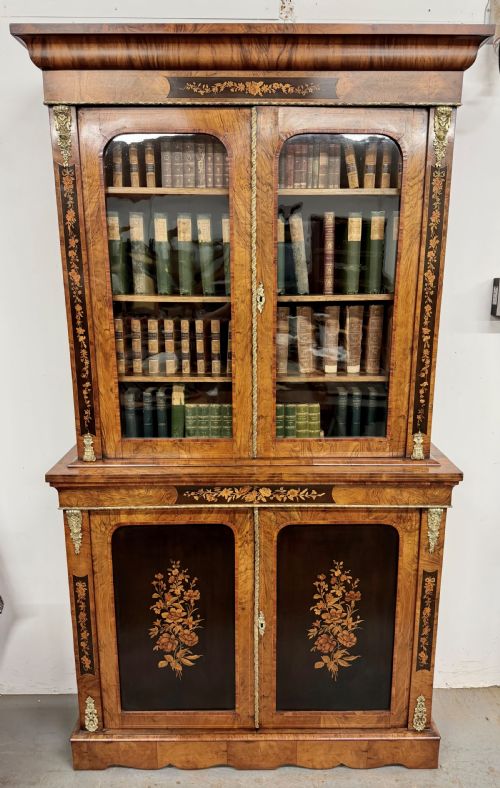
When searching for an ormolu mounted display case, collectors encounter elaborate French vitrines, serpentine corner cabinets, and upright Victorian pier cabinets designed to exhibit porcelain and small treasures. These pieces span the nineteenth century and the Edwardian era, drawing heavily on Louis XV and Louis XVI revival styles, alongside French Rococo and Empire influences.
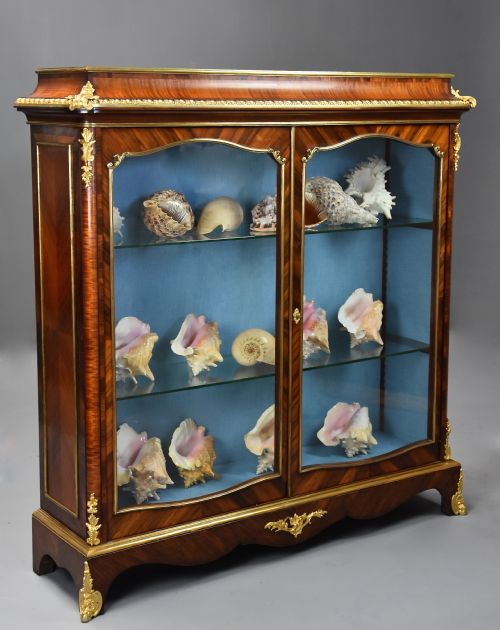
The most frequent examples on this page are French vitrines and English pier cabinets constructed from kingwood, walnut, and mahogany, frequently finished with glass panels and velvet interiors. Such furniture serves both practical storage and decorative display, anchoring a drawing room or salon with distinct period character.
Materials and construction
Cabinet makers utilised dense hardwoods including kingwood, burr walnut, and mahogany as foundations for intricate marquetry, parquetry, and Boulle brass inlays. These timber carcasses receive detailed mounts of ormolu, which is cast and gilded bronze applied to corners, borders, and feet.
Glazed doors and side panels enclose velvet-lined shelving, while selected French models incorporate painted Vernis Martin panels depicting pastoral scenes. Marble tops appear frequently on continental pieces, adding weight and contrasting colour to the timber and metalwork.
Listings feature nineteen-century Victorian and Edwardian periods alongside French revival styles executed in kingwood, walnut, mahogany, and marble.
Standards of craftsmanship
The distinction between ordinary and exceptional cabinets rests in the crispness of the ormolu casting and the depth of the timber figuring. Superior pieces display finely chased bronze mounts that fit snugly against curved wood surfaces without gaps.
Marquetry precision and the quality of internal joinery further separate workshops, where makers working in the manner of François Linke or firms such as G. Durand achieved greater refinement in proportion and decorative harmony.
François Linke·G. Durand
The Ormolu Mounted Display Case Glossary
- Ormolu
- Gilded bronze mounts applied to furniture. This technique provides metallic highlights that contrast with dark timber veneers.
- Vitrine
- A glass-fronted cabinet designed for displaying porcelain and curiosities. These pieces often feature glazed sides to maximise light penetration.
- Pier cabinet
- A narrow upright cabinet built to stand against the wall space between windows. Victorian examples frequently utilise burr walnut and marquetry.
- Vernis Martin
- Simulated Japanese lacquer developed in France during the eighteenth century. Cabinets from later revival periods borrow this painted technique for lower door panels.
- Marquetry
- Decorative patterns formed by fitting contrasting veneer pieces into a wood ground. Floral and geometric designs appear across Victorian and French surfaces.
Ormolu Mounted Display Case: Frequently Asked Questions
Where should I place an ormolu mounted display case?
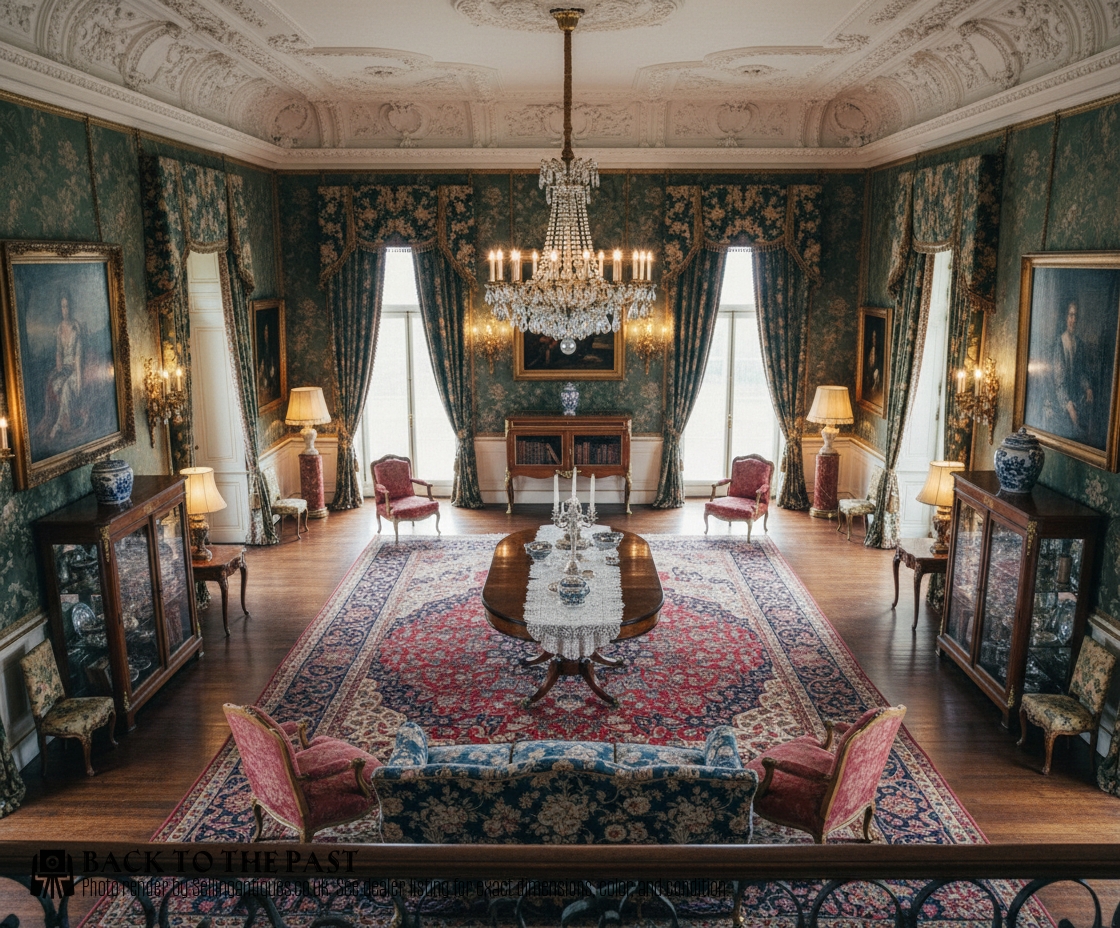
These cabinets suit drawing rooms, dining spaces, or hallways where natural light illuminates the glass panels and interior contents. Placing them away from direct sunlight protects both the timber veneers and the velvet linings.
Ensure the floor is level so the glazed doors hang true and latch correctly without straining the hinges or the delicate ormolu mounts.
How do I care for ormolu mounts?
Dust bronze mounts gently with a soft, dry brush to prevent dirt accumulation in the chased recesses. Avoid abrasive cleaning agents that can strip the original gilding from the bronze.
Apply a microcrystalline wax sparingly to the timber surfaces around the mounts, buffing gently to maintain a soft sheen without touching the metal.
How do I distinguish French and Victorian styles?
French pieces frequently utilise kingwood, curvaceous serpentine forms, and heavy ormolu rococo mounts in the manner of Louis XV and XVI. Victorian English alternatives often rely on figured walnut, rectilinear or pier proportions, and subtle marquetry inlay.
Examining the internal construction, timber choices, and secondary woods helps confirm whether a cabinet originated in a British workshop or a Parisian studio.