
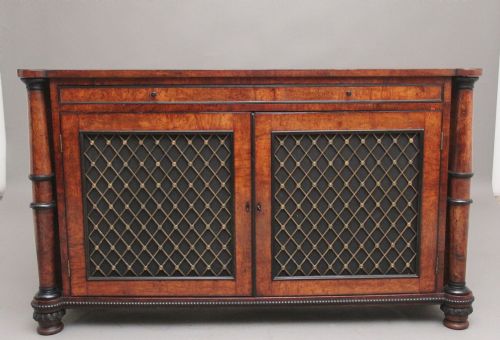
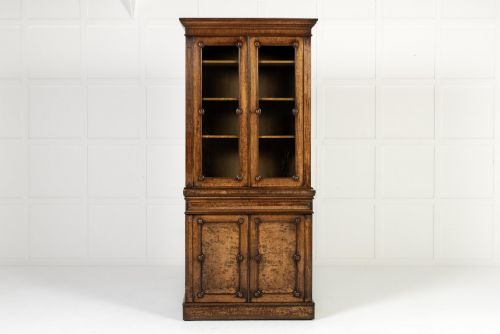


Pollard Oak Bookcase
A pollard oak bookcase brings dark figured timber into a room, offering heavy warmth and visual depth that suits traditional studies.
What a pollard oak bookcase is
A pollard oak bookcase is a cabinet designed for holding books, constructed predominantly from pollard oak and related timber forms. These pieces date principally from the nineteenth century and the Victorian period, with occasional examples extending to other eras.
The objects on this page appear in various formats, including open bookcases, glazed display cabinets, breakfront library bookcases, and secretaire variants with drop-front writing sections. Dimensions range from small bureau bookcases to large three-door library furniture.
How they were made
Makers utilised pollard oak and burr pollard oak for decorative surfaces, combining these distinct timbers with standard oak, glass, and brass fittings. The characteristic clusters of knots in the wood create intense patterning across the doors and drawer fronts.
Joinery methods reflect nineteenth-century cabinet-making standards, incorporating glazed doors for dust protection and fitted drop fronts for writing compartments in secretaire models.
Retail Price Guide 2026
Typical UK retail prices for pollard oak bookcase, calculated from the Sellingantiques database of over a million retail prices indexed since 2003. This retail price guide relies exclusively on Sellingantiques data; no external sources or auction records are used, so the figures do not describe the wider market.
Listings feature nineteenth-century and Victorian periods, alongside Gothic Revival and Grand Regency styles.
What varies in quality
Quality rests primarily on the density and visual impact of the timber figure, alongside the architectural scale of the bookcase. Pieces featuring heavily figured burr pollard oak or complex breakfront forms represent the upper tier of the range.
Construction depth and secondary timber choices separate standard utility pieces from grand library furniture designed for prominent nineteenth-century interiors.
A Blain And Son Liverpool·William Trotter
The Pollard Oak Bookcase Glossary
- Pollard oak
- Timber taken from trees that were pollunted or cut back to encourage dense, knotty growth with swirling grain patterns. This wood was favoured by nineteenth-century cabinet makers for decorative veneering.
- Secretaire
- A cabinet incorporating a pull-down or drop-front drawer that serves as a writing desk, often fitted with small internal pigeonholes and drawers.
- Breakfront
- A large piece of furniture where the central section projects forward from the flanking wings, adding architectural presence to library bookcases.
- Glazed
- Fitted with glass panels in the doors to display books while protecting them from dust.
Frequently Asked Questions
What is a pollard oak bookcase?
A pollard oak bookcase is a storage piece constructed using timber from trees that were cut back to produce densely figured wood. These cabinets typically date from the nineteenth century.
They serve as functional storage for libraries and studies while displaying strong natural grain patterns across their surfaces.
How do I identify a Victorian pollard oak bookcase?
Victorian examples generally feature the characteristic dark, knot-heavy wood grain associated with pollard growth, often combined with glazed doors or breakfront configurations. Construction details follow nineteenth-century cabinet-making standards.
Many pieces also include architectural elements or fitted secretaire drawers typical of the period.
Where were these bookcases used historically?
These bookcases were built for domestic libraries, studies, and drawing rooms of grand nineteenth-century residences. They provided secure storage for bound volumes and private correspondence.
Large breakfront versions belonged in substantial institutional or country house libraries, while smaller bureau formats suited private sitting rooms.
How do I care for pollard oak furniture?
Pollard oak furniture requires stable room humidity and protection from direct sunlight to prevent the timber and veneers from drying out. Regular dusting with a soft, dry cloth preserves the polished surface.
Avoid placing these bookcases near direct heat sources which can cause timber movement or cracking in older joints.