


Carved Oak Writing Cabinet
A carved oak writing cabinet brings heavy timber and practical stationery storage together, making a strong centrepiece for a traditional study.
Carved Oak Writing Cabinet
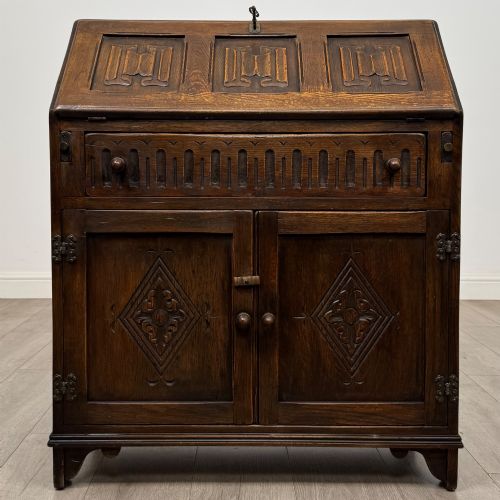
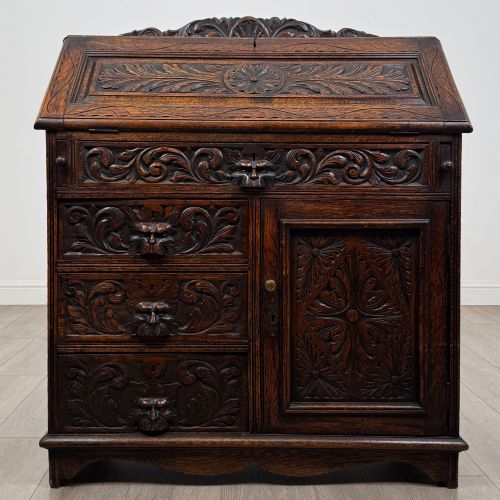
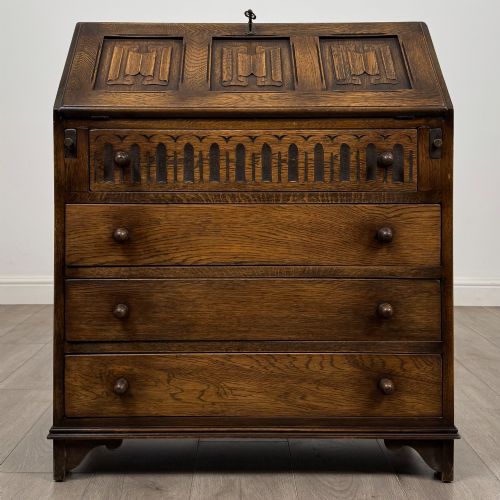
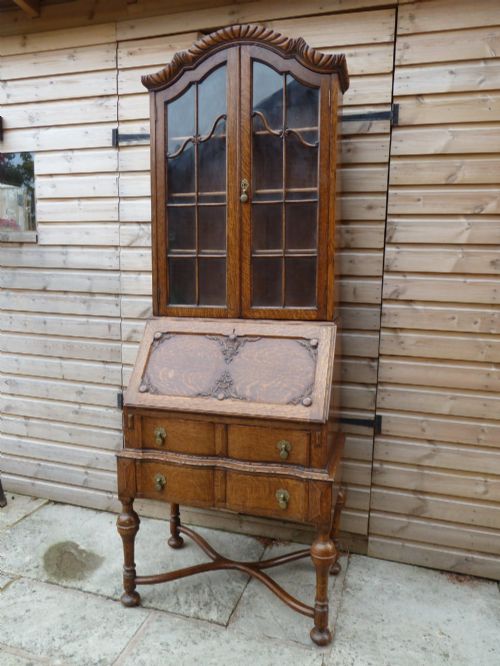
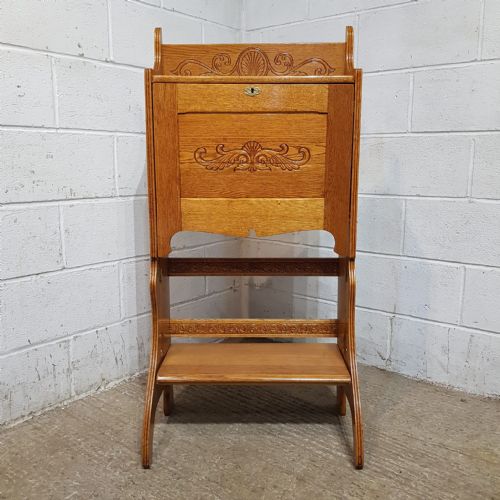
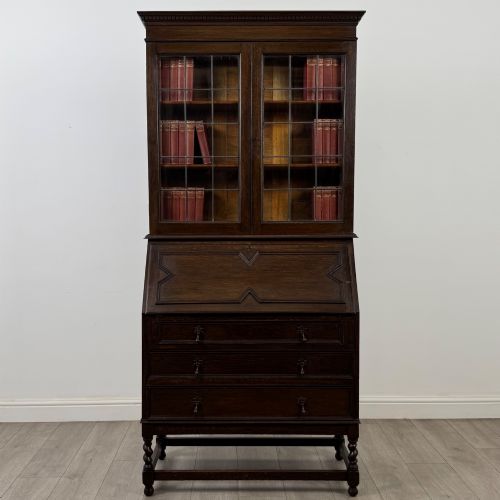
A carved oak writing cabinet encompasses a range of bureau bookcases, drop-front desks, and secretaire cabinets originating mostly from the Victorian, Edwardian, and early twentieth-century periods. When searching for a carved oak writing cabinet, buyers encounter substantial timber forms decorated with linenfold panels, Green Man carvings, or Jacobean Revival motifs.
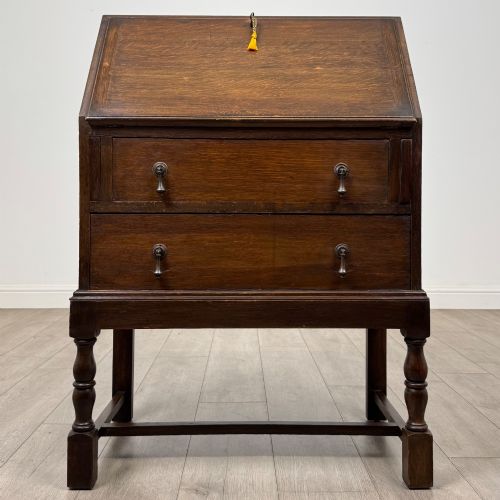
The selection ranges from vernacular seventeenth-century formats to late nineteenth-century Arts and Crafts interpretations and fitted roll-top desks. Bureau bookcases with upper shelving glass doors appear frequently alongside compact Davenport desks and drop-front writing bureaux.
Makers and retailers such as Morris & Co, Liberty & Co, and Robert Mouseman Thompson occasionally emerge in the evidence, linking standard domestic furniture to known workshops of the Arts and Crafts movement.
How they were made
Construction relies heavily on solid oak and pollard or burr oak veneers, supported by secondary structural timbers and panels. Timber surfaces receive deep hand-carving in styles ranging from Tudor and Jacobean revivals to geometric linenfold patterns.
Hardware details incorporate brass fittings, wrought iron handles, and glass panel doors for upper bookcase sections. Interiors frequently feature leather writing surfaces, moving compartments, and fitted pigeonholes designed for stationery and correspondence.
Carved Oak Writing Cabinet Retail Price Guide 2026
Typical asking prices for carved oak writing cabinet among the pieces listed under this phrase on Sellingantiques today, from the lower quarter to the upper quarter. They describe what is for sale here now, not the wider market.
Listings feature oak, brass, glass, and leather across Victorian, Edwardian, and seventeenth-century periods.
What varies in quality
The standard of carving defines the upper tier of these cabinets, distinguishing crisp, deep relief work from shallow machine-milled replication. Superior pieces display thoughtful integration of decorative elements such as Green Man faces or linenfold panels across the entire timber frame.
Internal complexity and material selection further separate ordinary production items from exceptional workshop examples. Superior construction employs high-grade solid oak, well-figured veneers, and intricate moving internal compartments rather than basic softwood framing.
Morris & Co·George W Jack·Robert Mouseman Thompson·Liberty & Co
The Carved Oak Writing Cabinet Glossary
- Linenfold
- A style of wood carving that imitates folded linen fabric, frequently seen on Edwardian and revival panels. It creates a textured surface across flat cabinet doors and bureau fronts.
- Secretaire
- A piece of furniture incorporating a writing drawer or drop-front desk surface that conceals small drawers and pigeonholes. This form allows a tall bookcase or cabinet to function as a writing desk.
- Davenport
- A compact small desk featuring a sloping writing surface and drawers opening to the side. These pieces often incorporate hinged stationery compartments on top.
- Jacobean Revival
- A nineteenth and twentieth-century design style copying seventeenth-century English furnishings. It utilises heavy oak, geometric moulding, and bold turned supports.
- Green Man
- A sculptural architectural ornament depicting a human face emerging from or entwined with foliage. Carved versions appear frequently on Victorian oak cabinetwork.
Carved Oak Writing Cabinet: Frequently Asked Questions
What is a carved oak writing cabinet?
A carved oak writing cabinet is a piece of wooden furniture designed for correspondence, combining a writing surface with enclosed storage and shelving. These items range from drop-front bureau bookcases to compact Davenport desks.
They appear across various periods including the seventeenth century, Victorian era, and Edwardian decades, often decorated with revival carving styles.
How do I identify the period?
Period identification relies on matching stylistic revival cues, construction methods, and material choices recorded in the timber work. Victorian examples often feature heavy Green Man carvings, while Edwardian pieces frequently display linenfold panels.
Earlier seventeenth and eighteenth-century items show vernacular joinery techniques and simpler structural framing compared to later mass-produced revival furniture.
Where should I place it?
These substantial oak cabinets suit studies, home offices, or living rooms where their dark timber tones complement traditional interiors. Tall bureau bookcases require adequate wall clearance and ceiling height.
Smaller Davenport desks and table-height writing cabinets fit comfortably into restricted corners while offering functional desktop space.
How do I care for the wood?
Maintaining carved oak requires regular dusting with a soft, dry cloth to prevent dirt accumulation within deep panel recesses. Avoid placing the timber in direct sunlight or near heat sources to prevent shrinkage.
Periodic application of suitable beeswax helps nourish the polished oak surface and preserves the depth of the grain.