

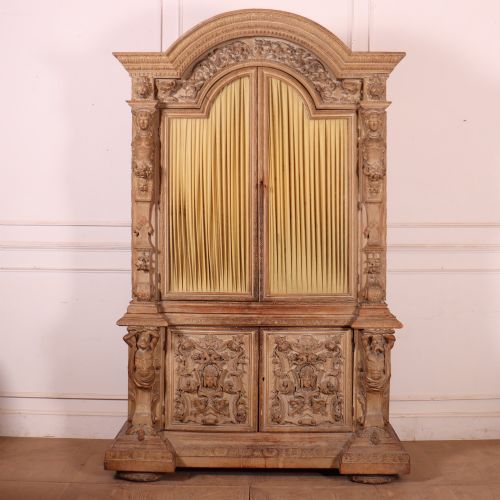
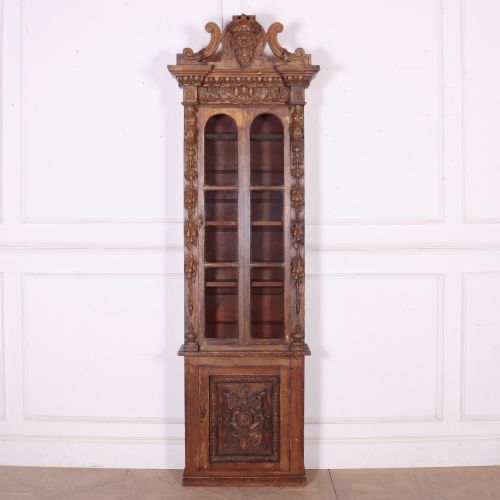


Renaissance Revival Bookcase
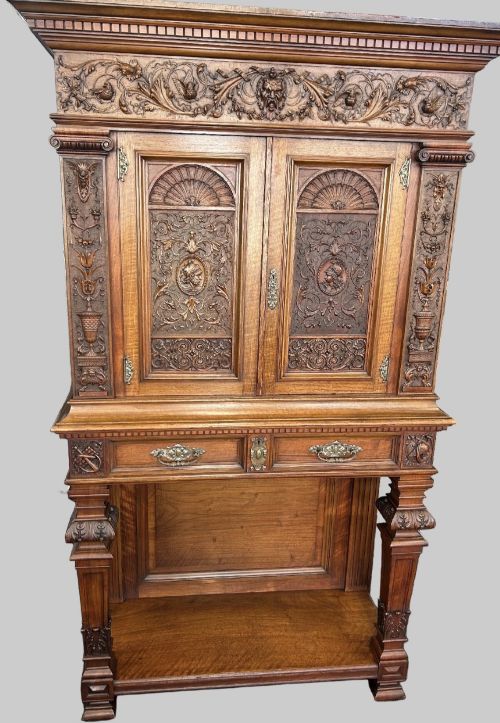
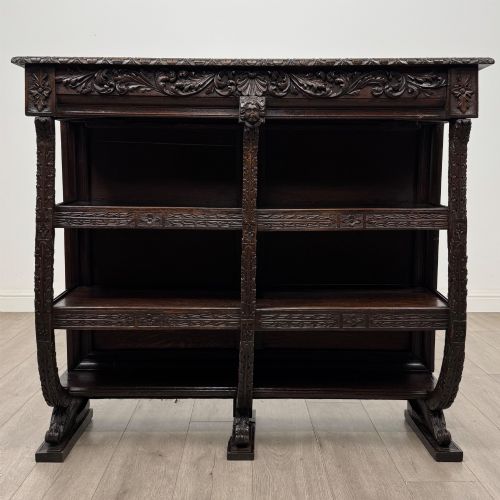
A renaissance revival bookcase brings hefty historic timber and deep architectural carving straight into a serious room.
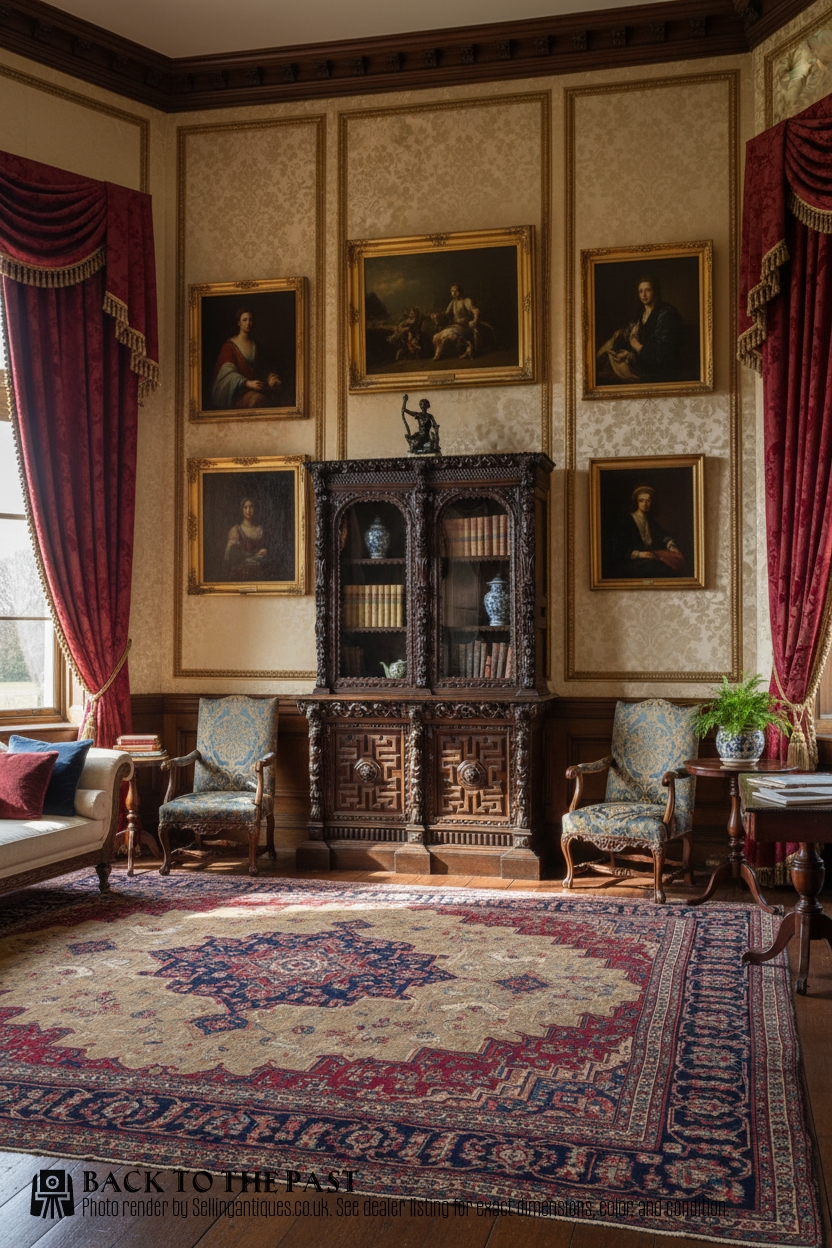
Renaissance Revival Bookcase
A renaissance revival bookcase combines heavy historic presence with the practical storage needed for a serious library. These pieces draw on 19th Century and Victorian revivals of earlier classical forms, often arriving in sturdy oak or walnut.
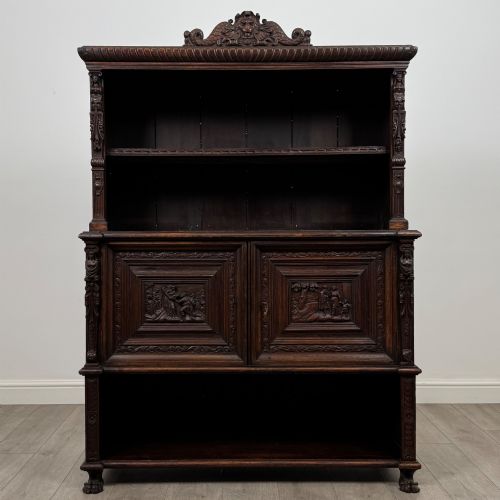
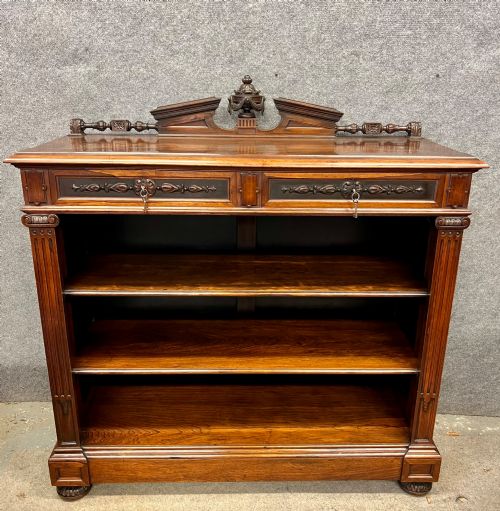
Most examples found here date to the Victorian era or the late 19th Century, taking the shape of open bookcases, tall glazed cabinets, or fitted two-part units. The style leans heavily into architectural motifs borrowed from French, Italian, and Flemish traditions.
Buyers will encounter closed cupboards, secretaire variants with brass panels, and open shelf layouts designed to anchor a substantial room. Each piece reflects the 19th Century appetite for historic revivalism applied to everyday domestic furniture.
How they were made
Makers relied primarily on solid oak, walnut, and pine as the structural timber for these heavy carcasses. Timber selection dictated how deeply the wood could be carved without splitting along the grain.
Carving was executed entirely by hand, bringing out the high relief seen on panels, cornices, and pilasters. Glazed doors used individual panes of glass held by wooden glazing bars, whilst brass fixtures provided durable hardware for hinges and handles.
Renaissance Revival Bookcase Retail Price Guide 2026
Typical asking prices for renaissance revival bookcase among the pieces listed under this phrase on Sellingantiques today, from the lower quarter to the upper quarter. They describe what is for sale here now, not the wider market.
Keep an eye out for the occasional Green Man peering from the oak foliage.
What varies in quality
The depth and crispness of the carving set one piece apart from another, separating routine workshop production from ambitious cabinet work. Relief work featuring figures, Green Men, or complex strapwork requires a skilled hand that elevates the entire furniture piece.
Timber selection and structural complexity also divide the range, with solid golden oak or figured walnut commanding attention over simpler pine carcases. The inclusion of specialised elements like stained glass panels, fitted secretaire drawers, or breakfront architecture indicates a higher tier of design.
The Renaissance Revival Bookcase Glossary
- Renaissance Revival
- A 19th Century design movement that drew inspiration from 15th and 16th Century European architecture and decorative arts. It manifests in heavy proportions, classical columns, and deep relief carving.
- Secretaire Bookcase
- A dual-purpose piece featuring a pull-down writing desk drawer combined with open shelving or enclosed upper cabinet space. This form provided a compact writing surface within the library storage.
- Vitrine
- A glass-fronted cabinet designed for displaying books, ceramics, or curiosities while protecting them from dust. The glazed doors allow full visibility of the interior contents.
- Breakfront
- A piece of furniture whose central section projects forward from the flanking outer sections. This architectural arrangement creates depth and shadow across the front elevation.
- Flemish Revival
- A specific regional offshoot of the 19th Century revival styles drawing on 17th Century Flemish art. It typically incorporates robust scrollwork, heavy fruit swags, and dark patinated oak.
Renaissance Revival Bookcase: Frequently Asked Questions
How do I date a 19th century bookcase?
Dating relies on examining construction methods, timber choices, and stylistic markers recorded across the Victorian era. Late 19th Century examples often show specific revival sub-styles like Flemish or Italian motifs.
Hardware such as brass hinges and the condition of the timber grain help confirm the period of manufacture.
Where should I place a large oak bookcase?
These substantial pieces require a room with adequate wall space and ceiling height to accommodate their heavy proportions. Placing them in a study, library, or large living room allows the carved oak to anchor the interior.
Direct sunlight should be avoided to protect the finish of the historic timber and any glass panels.
What is the difference between an open bookcase and a cabinet?
An open bookcase provides direct access to shelves without doors, making it ideal for everyday book storage. A cabinet incorporates solid or glazed doors to enclose the contents.
Cabinets often include lower drawers or lockable storage spaces alongside the main shelving area.