
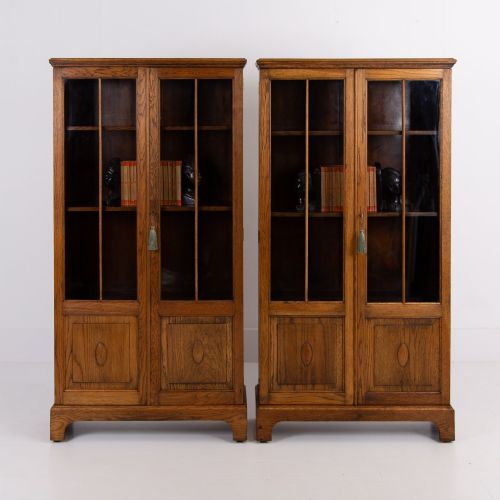
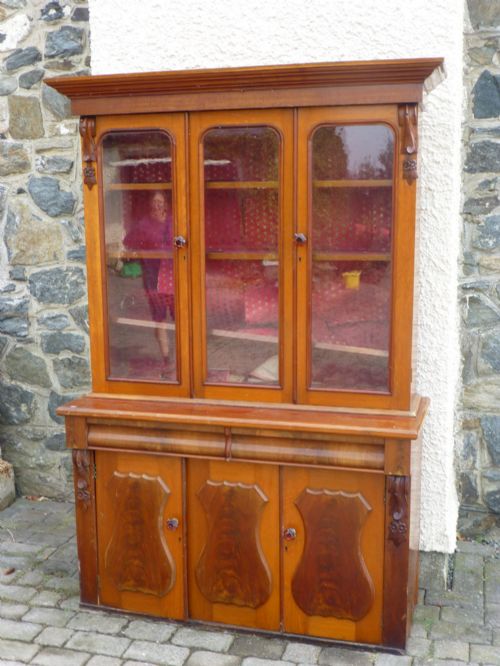
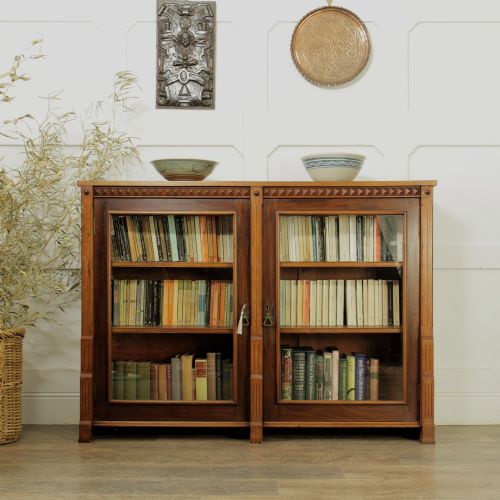
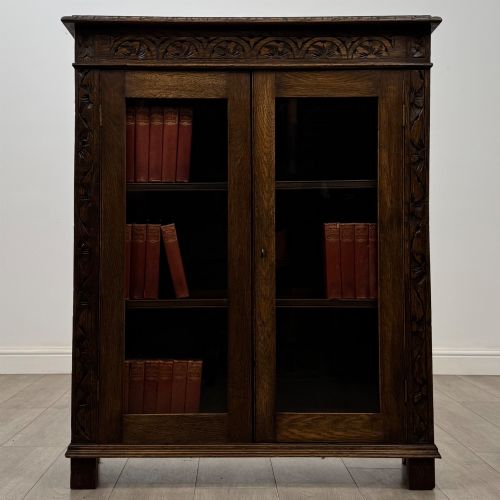
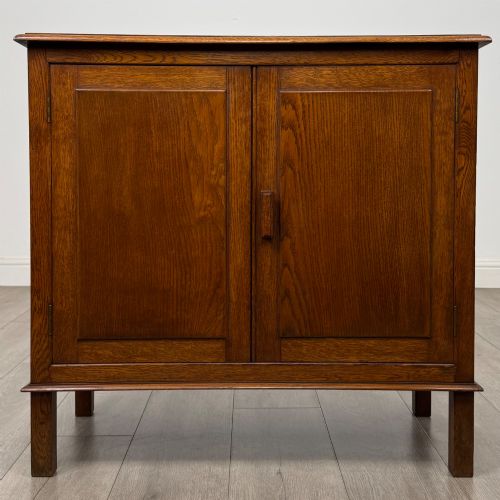
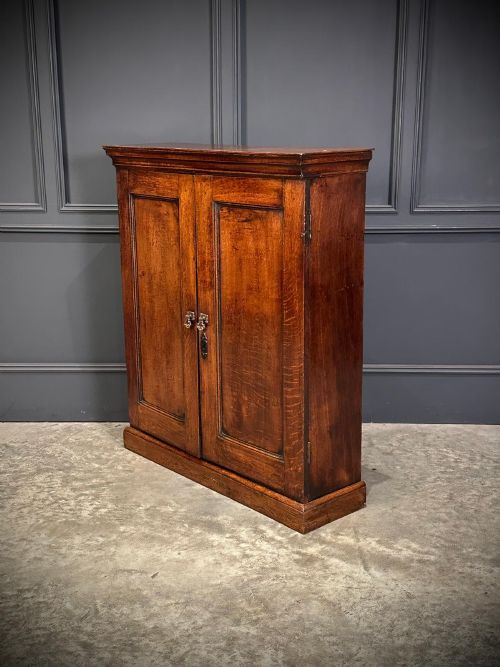
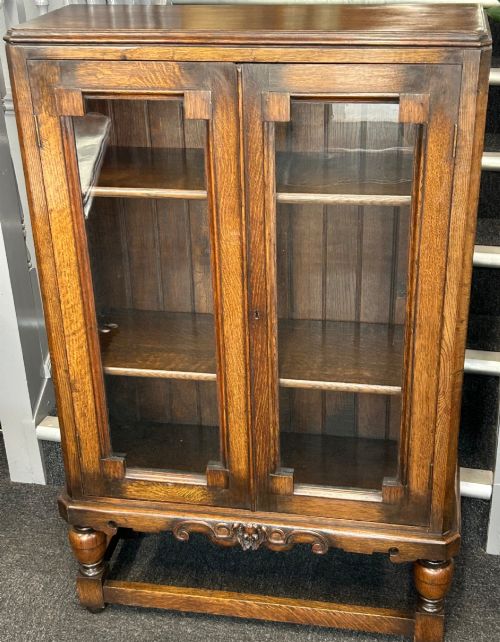
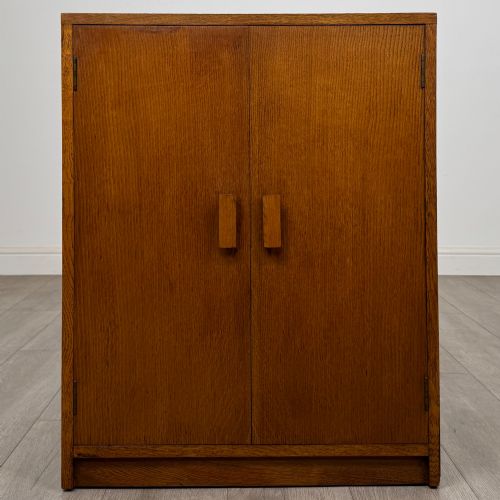

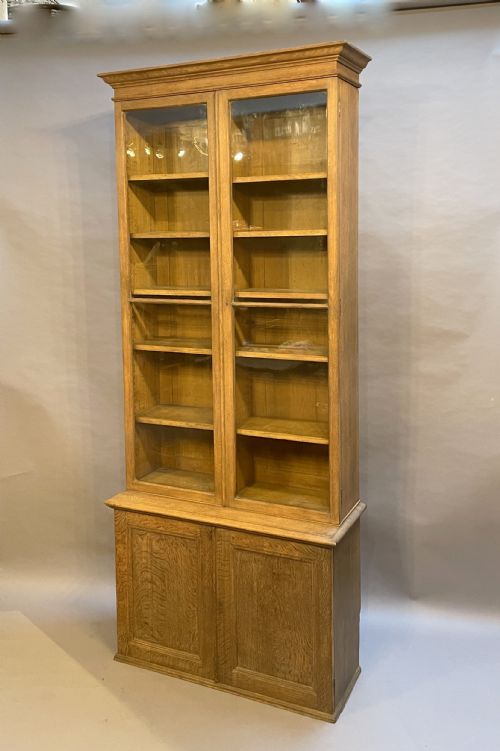


Two Door Oak Bookcase
A two door oak bookcase brings substantial timber and glass panels together to house a library with architectural presence.
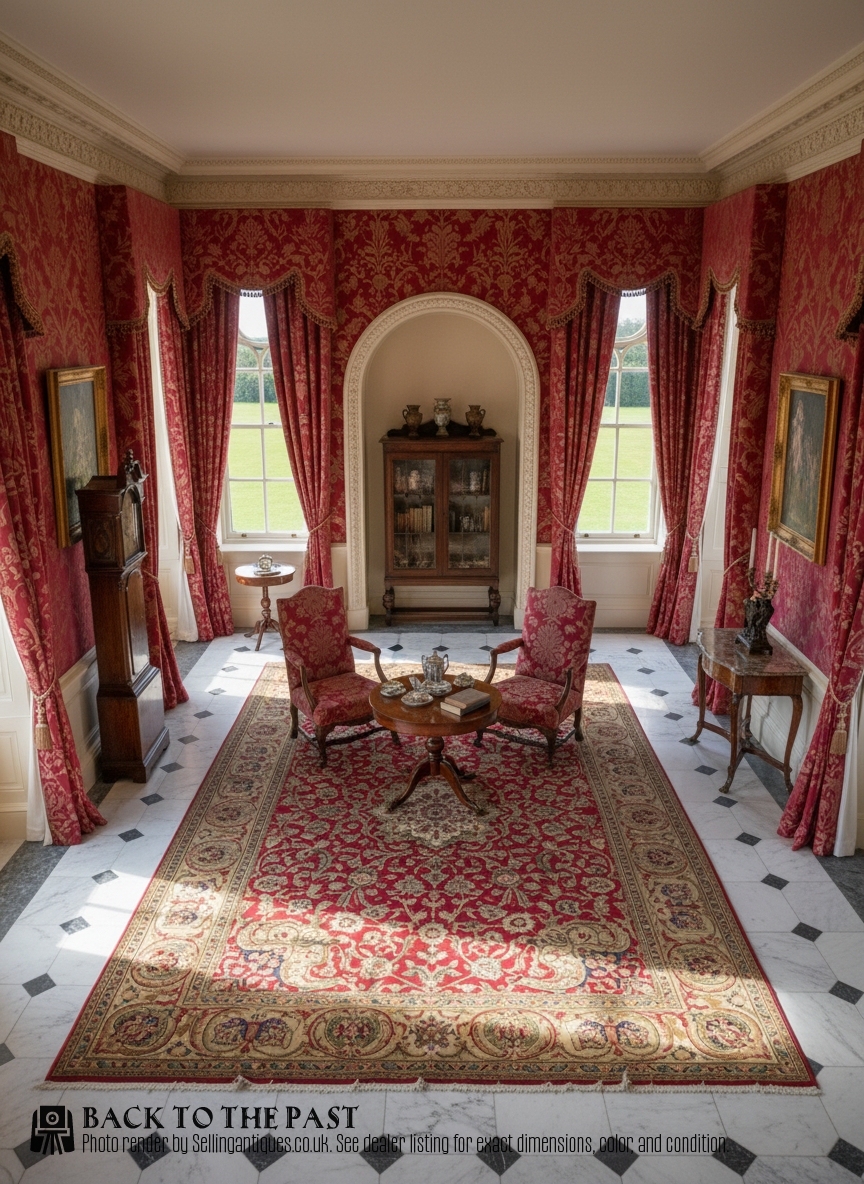
Identifying a two door oak bookcase
A two door oak bookcase is a substantial piece of furniture designed to house books and display volumes behind glazed or panelled doors. These cabinets appear primarily in Victorian, Edwardian, and early twentieth-century iterations, spanning the 1910s, 1920s, and 1930s.
The form ranges from dwarf bookcases to tall cabinet variations, occasionally incorporating glazed upper doors above a solid cupboard base. Buyers will encounter both simple glazed fronts and more decorative interpretations featuring carved details.
The materials remain consistent across the periods, utilising solid and golden oak paired with glass panes, brass fittings, and occasional lead work. Stylistic touches draw on Jacobean Revival and Art Nouveau traditions alongside plain functional designs.
Evaluating the craftsmanship
Quality in these bookcases rests on the selection of the oak timber and the precision of the joinery in the door frames and shelving supports. Pieces constructed from solid oak throughout command greater appreciation than those utilising secondary timbers on less visible sections.
The ambition of the decorative programme separates standard utility cabinets from finer examples, particularly where carvers applied Green man motifs, detailed foliage, or intricate barley twist columns. The integration of leaded glass work and substantial brass furniture further elevates the character of the piece.
Retail Price Guide 2026
Typical UK retail prices for two door oak bookcase, calculated from the Sellingantiques database of over a million retail prices indexed since 2003. This retail price guide relies exclusively on Sellingantiques data; no external sources or auction records are used, so the figures do not describe the wider market.
The archive shows a strong presence of 1920s solid oak examples alongside heavily carved Victorian pieces featuring Green man motifs.
The Two Door Oak Bookcase Glossary
- Oak
- A durable hardwood native to temperate regions, prized for its strength and prominent grain. It forms the primary structural and visual material for these bookcases.
- Jacobean Revival
- A nineteenth and early twentieth-century style borrowing heavy proportions and geometric carvings from seventeenth-century English design. It often appears on carved oak bookcases.
- Barley twist
- A decorative turning technique resembling a spiralling rope, frequently utilised on the upright columns of cabinet frames.
- Dwarf bookcase
- A low-standing piece of furniture designed to sit beneath window height while providing accessible shelving.
- Leaded glass
- Small panes of glass held together by strips of lead cames to form geometric or decorative patterns within the door frame.
Frequently Asked Questions
How do I clean a wooden bookcase?
Dust the oak surfaces regularly with a soft, dry cloth to prevent the accumulation of dirt within the grain. Avoid silicone-based polishes that build up a residue over time, opting instead for traditional beeswax applied sparingly.
Clean the glass panels using a mild glass cleaner sprayed onto a cloth rather than directly onto the glass. This protects the surrounding wood and lead work from excess moisture.
Can adjustable shelves be expected?
Many period bookcases feature fixed wooden shelving systems built directly into the structural carcass during initial manufacture. Some later twentieth-century variants introduce simple peg-and-slot mechanisms for shelf height adjustment.
Checking the interior configuration helps determine whether the bookcase accommodates folio volumes or standard octavo books. Fixed shelves often indicate earlier, more traditional construction methods.
How do I date an oak bookcase?
Dating relies on examining the construction methods, hardware, and stylistic indicators present in the woodwork. Victorian and early twentieth-century pieces often display hand-finished dovetails and specific revival motifs such as Green man carvings or barley twists.
Later 1920s and 1930s examples tend toward simpler lines, lighter golden oak tones, and minimal ornamentation. Comparing the door hinges and brass fittings with known period styles provides further chronological context.
Are these cabinets suitable for small rooms?
Dwarf versions of the two door oak bookcase offer reduced height while maintaining ample storage capacity behind glass panels. Their low profile prevents them from dominating smaller interiors.
Selecting a light oak finish also helps visually brighten compact spaces compared to darker, heavily carved Victorian alternatives. The sliding or swinging doors require minimal clearance for everyday access.