
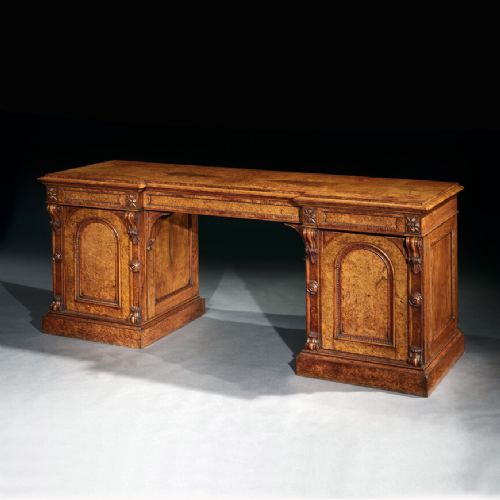
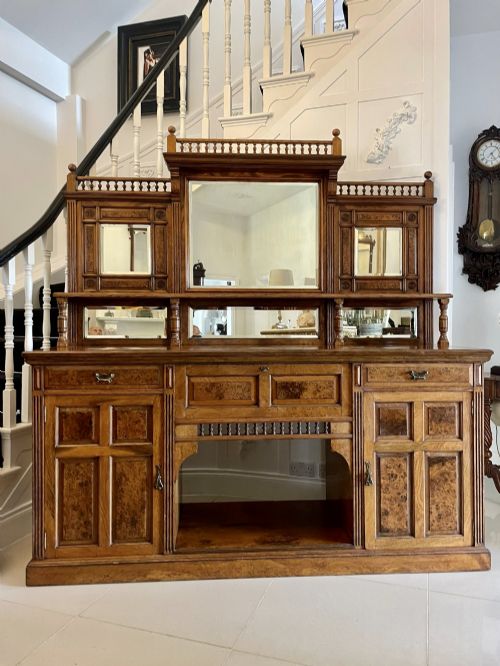


Victorian Pollard Oak Furniture
Victorian pollard oak furniture brings striking figured timber and rich nineteenth-century craftsmanship into domestic spaces.
What Victorian pollard oak furniture is
Victorian pollard oak furniture comprises substantial case pieces and tables fashioned from timber harvested from pollarded trees, which creates a characteristic clustered grain pattern. The selection on this page centres primarily on the nineteenth century, featuring major forms such as sideboards, bookcases, and work tables.
Makers utilised this highly figured wood for pieces designed to command attention in principal rooms, combining utility with decorative presence. Alongside standard Victorian items, the inventory includes specific regional pieces and examples reflecting the Gothic Revival style.
How Victorian pollard oak furniture was made
Craftsmen built these items using solid oak and pollard or burr oak veneers, selecting sections with dense clusters of knots and swirling growth rings to face the primary surfaces. Carcases often incorporated secondary timbers to provide structural stability beneath the decorative exterior.
Hardware in brass and inset glass panels frequently complemented the rich, dark tones of the timber. Joinery methods relied on traditional cabinet-making techniques appropriate for heavy nineteenth-century sideboards, secretaires, and centre tables.
Retail Price Guide 2026
Typical UK retail prices for victorian pollard oak furniture, calculated from the Sellingantiques database of over a million retail prices indexed since 2003. This retail price guide relies exclusively on Sellingantiques data; no external sources or auction records are used, so the figures do not describe the wider market.
Some tables hide their working functions beneath wild, spotty timber tops.
What varies in quality
Quality in these pieces rests upon the density and visual impact of the pollard oak figure, alongside the crispness of any applied carving or Gothic Revival detailing. Finer examples display meticulous matching of the burr veneers across large expanses like sideboard doors and bookcase fronts.
The integrity of the construction and the distinction of the maker also separate standard production from exceptional pieces. Marked items from established firms demonstrate superior secondary timber selection and more refined internal fittings within secretaire drawers and cupboards.
James Winter And Sons·Boothroyd Sons And Rimmer·A Blain And Son
The Victorian Pollard Oak Furniture Glossary
- Pollard oak
- Timber taken from trees that were cut back close to the trunk to encourage dense, branching growth, producing a highly decorative and spotty grain pattern. This figure is sliced into veneers for prominent furniture surfaces.
- Burr oak
- A growth deformity on an oak tree that yields a swirling, knotted grain configuration. Cabinet makers prized burr sections for their rich visual texture on tabletops and cabinet doors.
- Secretaire bookcase
- A tall storage piece incorporating a pull-down writing drawer fitted with small pigeonholes and inner compartments, positioned beneath upper bookshelf sections. These combined desk and library functions in Victorian interiors.
- Gothic Revival
- An architectural and decorative style drawing on medieval forms, featuring pointed arches, tracery, and heavy mouldings. This aesthetic influenced mid-nineteenth-century case furniture.
- Centre table
- A freestanding table designed to stand in the middle of a room rather than against a wall, finished with decorative detail on all sides.
Frequently Asked Questions
What is pollard oak?
Pollard oak comes from trees pruned repeatedly at height, which forces the timber to develop a dense, speckled grain full of tiny knots. Cabinet makers prized this figured wood for decorative surfaces.
On this page, the material appears on large nineteenth-century case pieces and tables, giving them a distinctive spotted appearance.
How do I date these pieces?
Dating relies on stylistic clues, construction methods, and occasionally maker marks stamped into the timber or hardware. Nineteenth-century pieces often reflect Victorian proportions and specific revivals.
Examining the secondary woods and interior drawer construction helps confirm the production era alongside any recorded history.
Where should I place a sideboard?
Sideboards suit dining rooms, hallways, or spacious living areas where their considerable depth and weight can be accommodated. They provide substantial surface and interior storage.
Keeping them away from direct heat sources preserves the stability of the pollard oak veneers and the underlying timber carcase.
How do I clean pollard oak?
Dusting regularly with a soft, dry cloth prevents the buildup of grit that might scratch the polished surface. Avoid modern silicone sprays or heavy liquid polishes.
Applying traditional beeswax occasionally helps nourish the historic timber and maintains a gentle, protective sheen.