

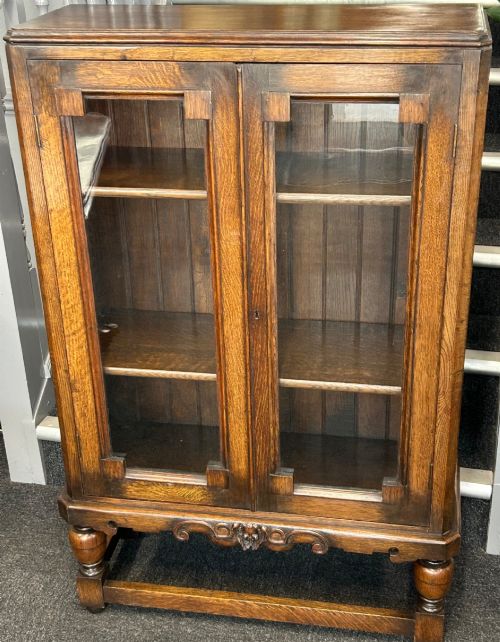
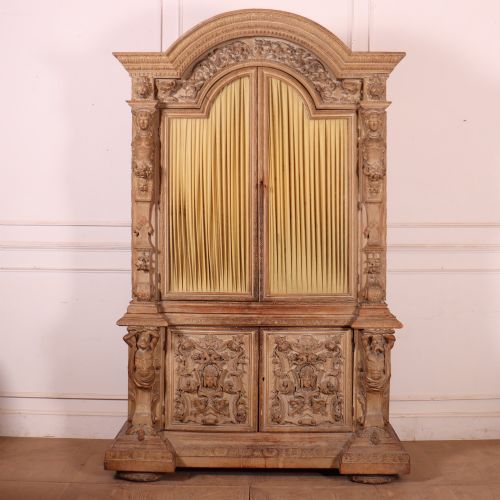


Carved Oak Vitrine
A carved oak vitrine offers a stately timber frame and glass panels to display your collection securely while anchoring a room with historic presence.
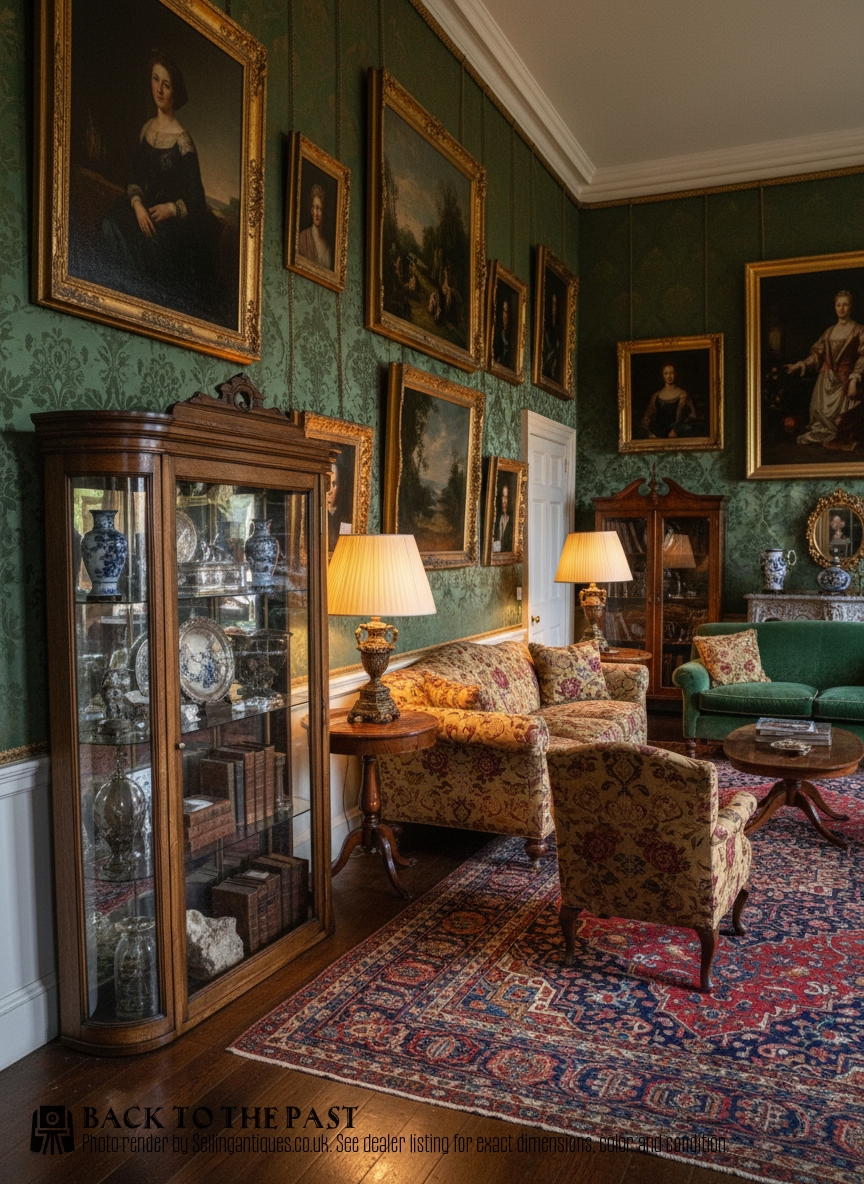
Carved Oak Vitrine
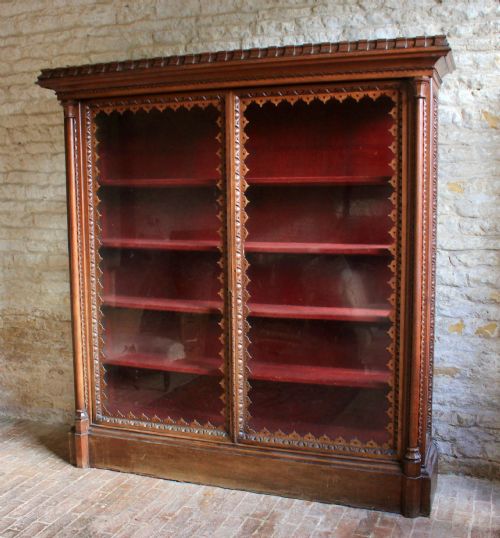
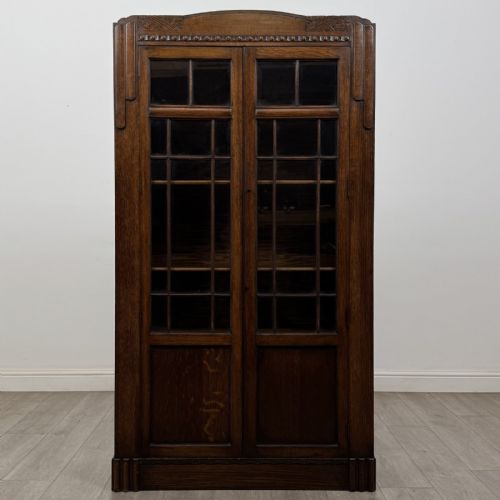
A carved oak vitrine combines structural timber framing with transparent glazing to exhibit objects of curiosity and fine tableware. When you explore a carved oak vitrine, you encounter pieces designed for principal reception rooms and libraries.
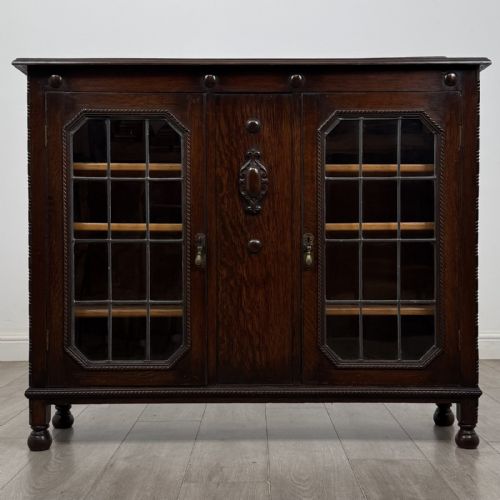
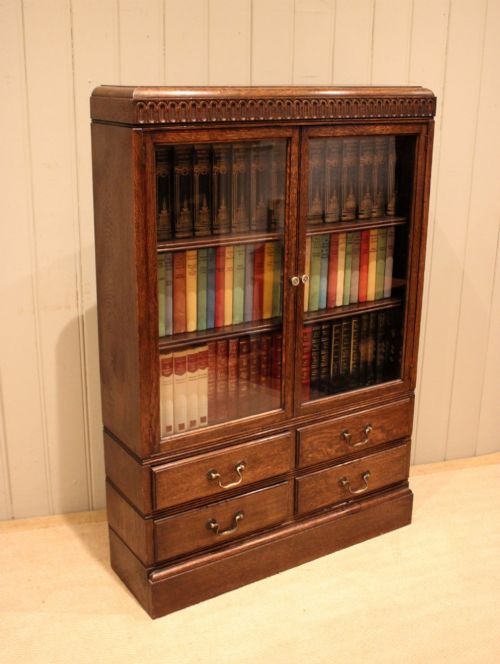
The selections span diverse eras from the eighteenth century through the Edwardian period and the nineteen-twenties. Common configurations include two-door glazed cabinets, taller bookcases, and two-part commode combinations.
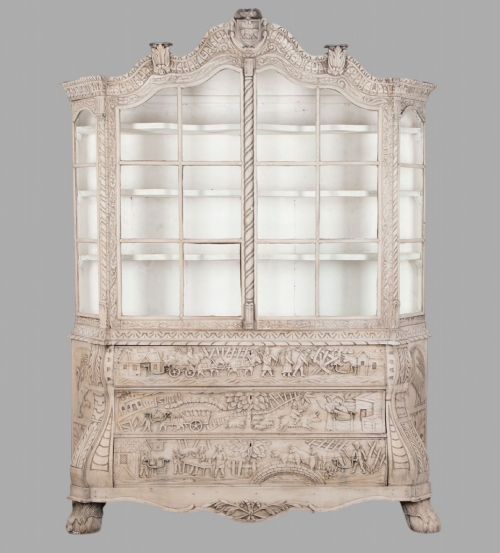
Stylistic influences vary significantly across the inventory, encompassing Jacobean Revival, French Provincial, Gothic Revival, and Arts and Crafts movements. Many incorporate regional European characteristics, such as Dutch bombé shapes or North European cupboard designs.
Materials and construction methods
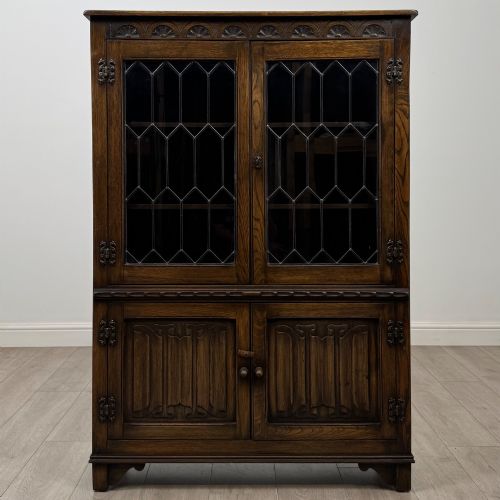
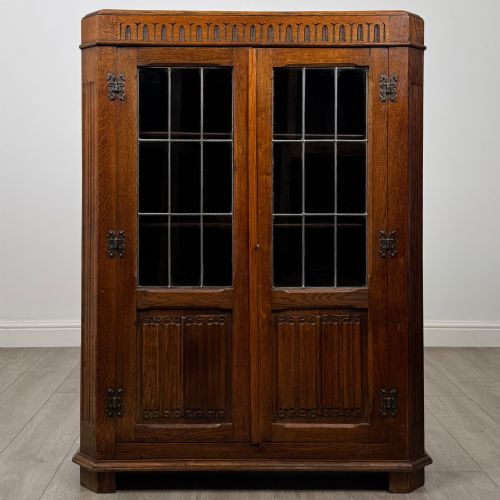
Makers utilised solid oak alongside glass panes for doors and side panels, often supplemented by brass hardware, iron fittings, and lead cames. Interior elements occasionally integrate secondary woods like walnut or textile linings.
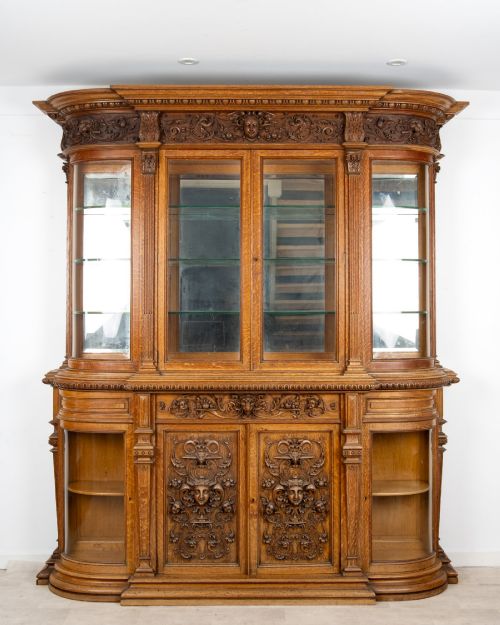
Carpenters applied dense hand-carving to the timber surfaces, creating motifs such as linenfold panels, heavy relief work, and barley twist turnings. Structural assembly relies on traditional joinery techniques appropriate to periods ranging from Georgian to early twentieth-century workshops.
Carved Oak Vitrine Retail Price Guide 2026
Typical asking prices for carved oak vitrine among the pieces listed under this phrase on Sellingantiques today, from the lower quarter to the upper quarter. They describe what is for sale here now, not the wider market.
One late nineteenth-century bookcase cabinet carries later sign-written German beer-related emblems.
Determinants of quality
The distinction between standard and exceptional pieces rests upon the crispness and depth of the timber carving. Superior examples demonstrate confident hand execution rather than mechanical repetition.
Proportion and architectural balance dictate the overall standing of a cabinet, alongside the integration of original glass and functional period hardware like brass hinges and locks.
The Carved Oak Vitrine Glossary
- Vitrine
- A glass-fronted cabinet designed for displaying fine objects or curiosities. These pieces originated in France to showcase porcelain and decorative arts.
- Linenfold
- A style of relief carving on wood that imitates folded linen cloth. This motif appears frequently on panelling and cabinet doors from revival periods.
- Bombé
- A swelling, outward-curving contour found on furniture fronts and sides. This form demands advanced woodworking skill to achieve balanced proportions.
- Barley twist
- A spiral turning resembling a twisted rope, used to shape wooden furniture legs and upright supports. It gained popularity during the seventeenth century and subsequent revival eras.
- Liège cabinet
- A regional type of tall storage cabinet associated with the Belgian city of Liège. These pieces often exhibit robust proportions and elaborate carved ornamentation.
Carved Oak Vitrine: Frequently Asked Questions
What is a carved oak vitrine used for?
These cabinets serve primarily to display and protect valuable collections, ceramics, books, or glassware behind glass doors. They provide enclosed shelving while keeping contents clearly visible.
Historically, they occupied prominent spaces in drawing rooms and libraries, allowing households to exhibit their prized possessions to visitors.
Are these cabinets difficult to maintain?
Maintenance involves standard timber care, requiring periodic dusting and occasional treatment with appropriate wood waxes to preserve the finish. Avoiding direct sunlight prevents the oak from drying out.
The glass panels benefit from regular cleaning with standard glass solutions applied carefully to avoid contact with the surrounding wood.
Where should I place a vitrine?
A vitrine requires a stable location away from direct heat sources and dramatic temperature fluctuations that could affect the oak and glass. Placed against a sturdy interior wall, it commands visual attention in a dining room, hallway, or study.
Adequate floor space is essential to accommodate the door swing and allow comfortable viewing of the interior contents.