

Gothic Carved Side Table
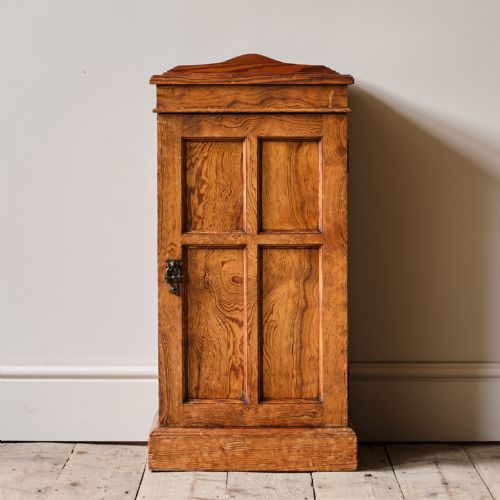
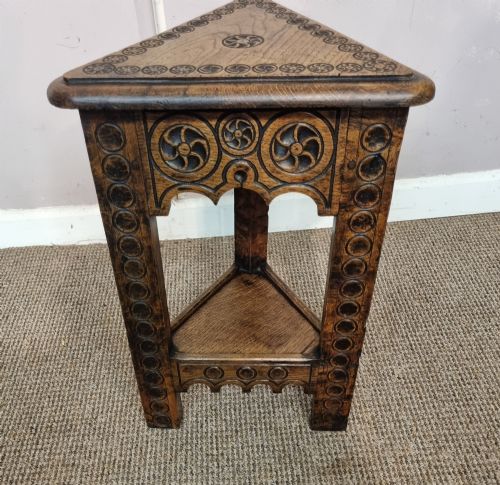
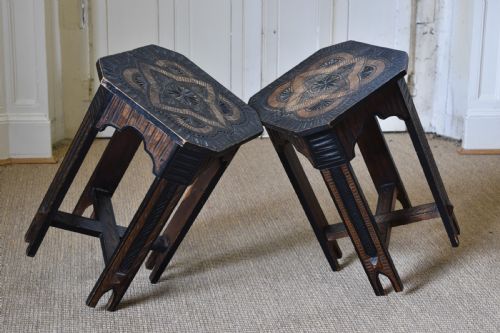
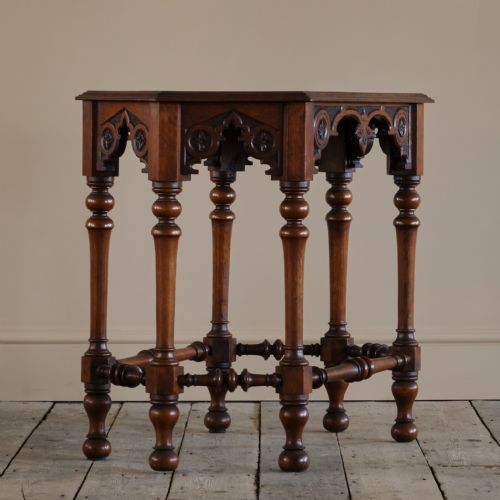
These gothic carved side table pieces bring dark timber and pointed arches into a room, offering sturdy surfaces shaped by Victorian revivalists.
Gothic Carved Side Table
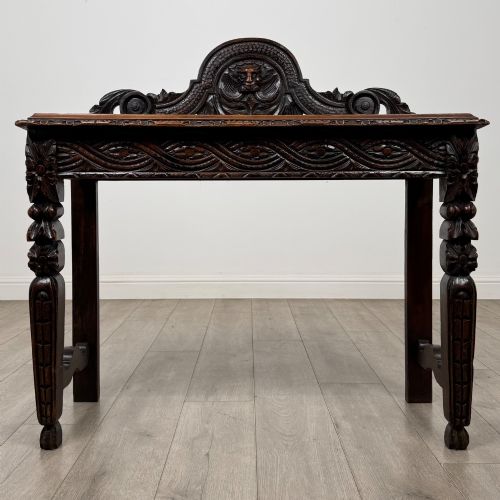
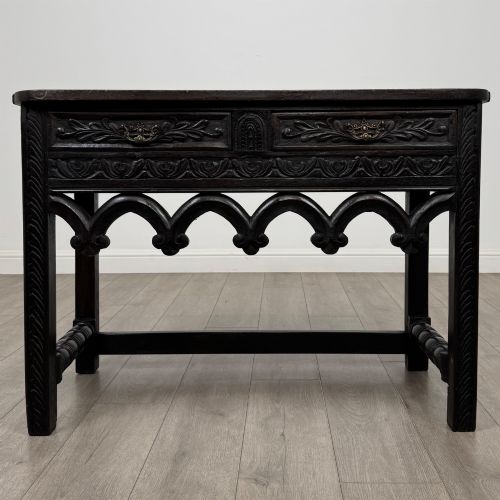
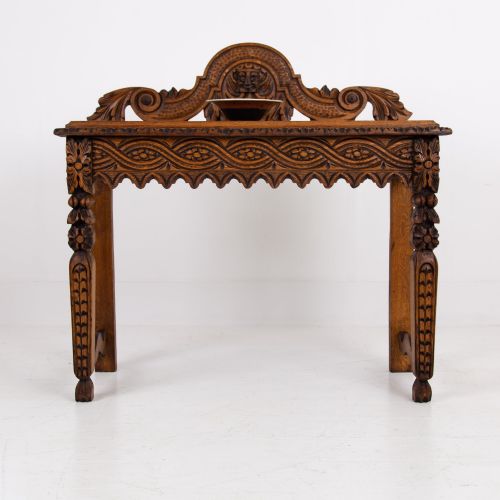
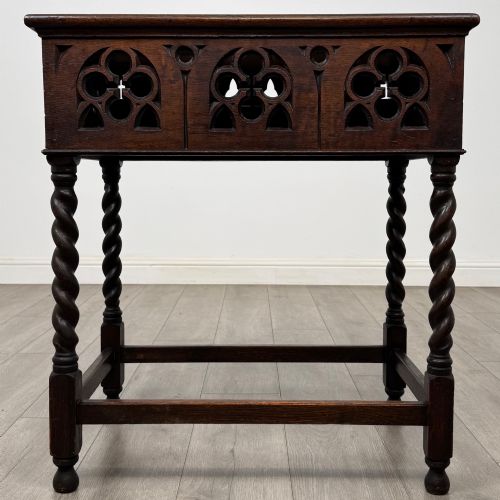
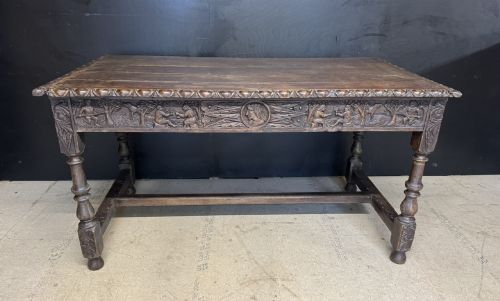
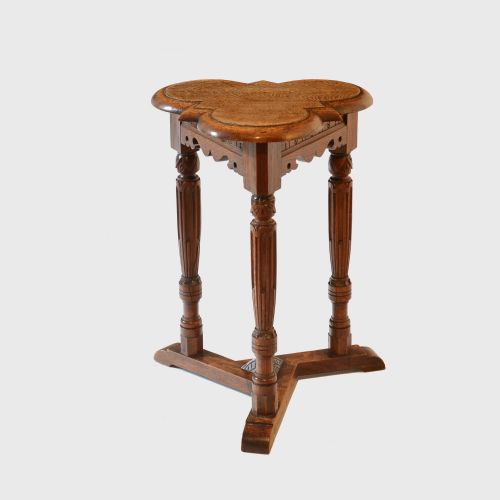
A gothic carved side table brings architectural detail into domestic rooms, drawing on medieval motifs like trefoils, pointed arches, and tracery. You will most frequently encounter these items in solid oak from the nineteenth century, often bearing the heavy relief carving typical of the Victorian Gothic revival and related stylistic movements.
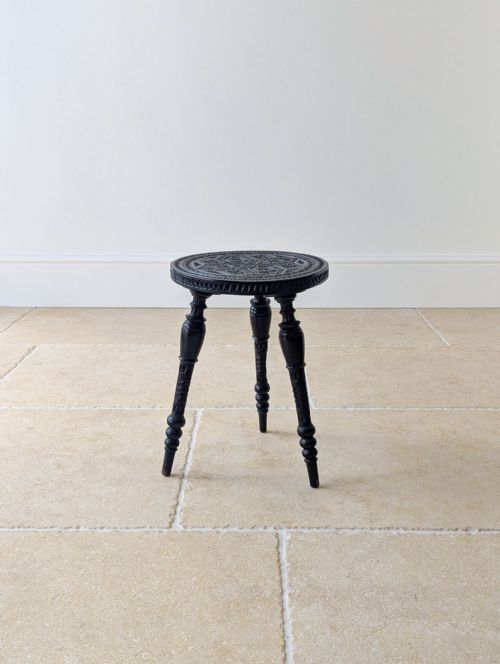
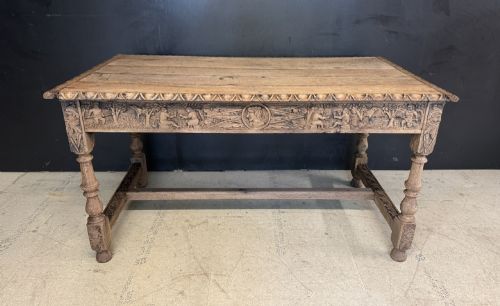
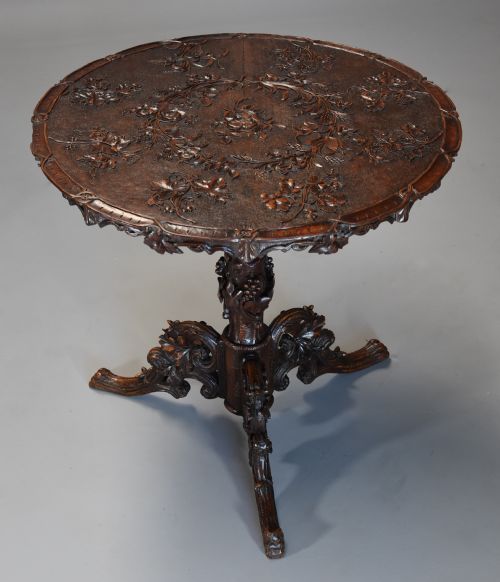
Beyond standard side tables, this search captures occasional tables, console tables, and small writing desks built with similar dark timber and religious or secular medieval ornamentation. These forms served practical household roles in libraries, halls, and parlours while displaying the maker's skill in decorative woodwork.
Materials and construction
Oak dominates this category, selected for its grain and its ability to hold deep, crisp chisel work without splintering. Craftsmen utilised chip carving, relief work, and panel construction to build sturdy frames that supported heavy ornamentation.
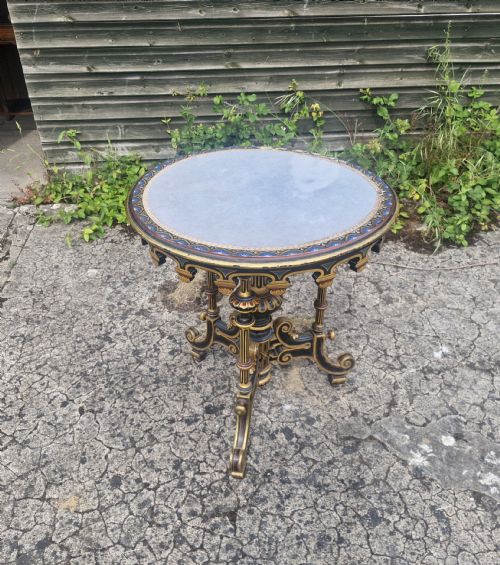
Secondary materials such as pine, brass, and iron appear in supporting roles for structural framing, hardware, or specific regional forms. Painted wood and ebonised finishes also surface occasionally, offering alternative textures to the standard polished timber.
Several tables feature carved zodiac signs and mystical symbols, designed for Victorian parlours where guests dabbled in astrology and tarot.
Markers of quality
The depth and precision of the chisel work distinguish superior examples from simpler production pieces. Crisp undercutting in foliage and figural carvings, such as Green Man motifs, shows a sculptor rather than a machine at work.
Timber selection and joint construction dictate the longevity and presence of the furniture. Quartersawn oak with visible medullary rays and tight joinery separate high-grade nineteenth-century pieces from utilitarian workshop output.
The Gothic Carved Side Table Glossary
- Gothic Revival
- A nineteenth-century movement that revived medieval architectural forms, pointed arches, and decorative tracery in architecture and furniture.
- Green Man
- A sculptural motif showing a human face emerging from or entwined with foliage, frequently found in medieval and revivalist woodwork.
- Chip Carving
- A style of carving where small chips are removed from a flat surface in a geometric pattern.
- Trefoil
- A graphic ornament composed of three overlapping rings or lobes, commonly seen in Gothic tracery and panel decoration.
- Console Table
- A table designed to be fixed against a wall, often supported by brackets or pillars rather than four freestanding legs.
Gothic Carved Side Table: Frequently Asked Questions
What periods do these tables come from?
Most pieces originate in the nineteenth century, spanning the Victorian era and the height of the Gothic Revival movement. Production also extends into the early twentieth century with later revival interpretations.
Craftsmen during these periods drew directly on medieval architecture, adapting stone and cathedralls details for domestic timber furniture.
How were these tables used originally?
They served as decorative and functional surfaces in Victorian parlours, libraries, and halls for holding lamps, books, or decorative objects. Some included drawers for writing materials or folding tops for games.
Their substantial construction allowed them to handle daily household use while projecting an atmosphere of historical weight and seriousness.
How do I care for antique oak furniture?
Keep timber pieces away from direct heat sources and sudden temperature changes to prevent the wood from splitting or warping. Dust regularly with a dry cloth and apply occasional high-grade wax to nourish the finish.
Avoid modern liquid polishes containing silicone, which can build up on the surface and damage the aged patina over time.
How can I tell a revival piece from medieval work?
Nineteenth-century revival items display machine-sawn timber elements, modern fixings, and construction methods characteristic of Victorian workshops. True medieval furniture from before the sixteenth century uses entirely different joinery and tool marks.
Examine the secondary woods and interior drawer construction to confirm the nineteenth-century Victorian manufacturing date.