




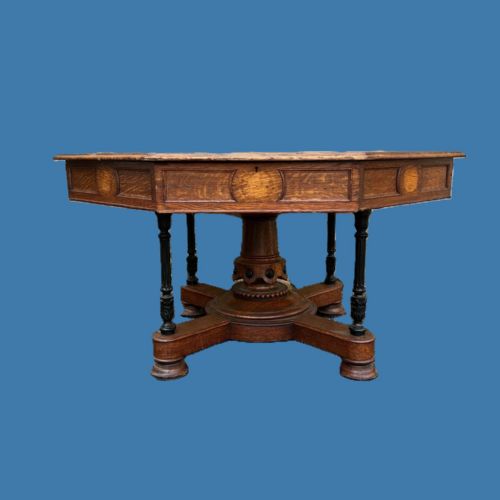


Gothic Writing Table
A gothic writing table brings robust architectural timber and pointed arches into the study.
Gothic Writing Table
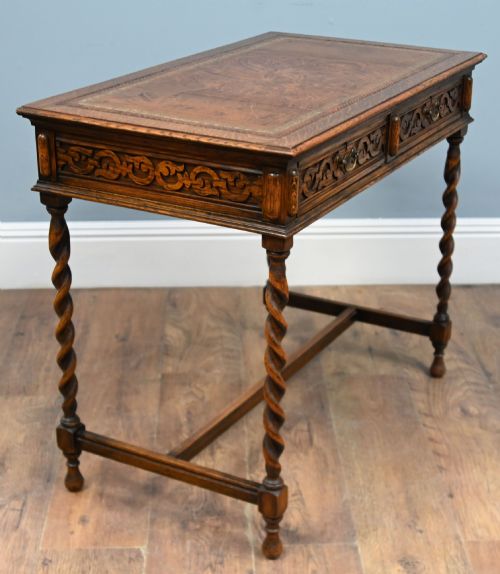
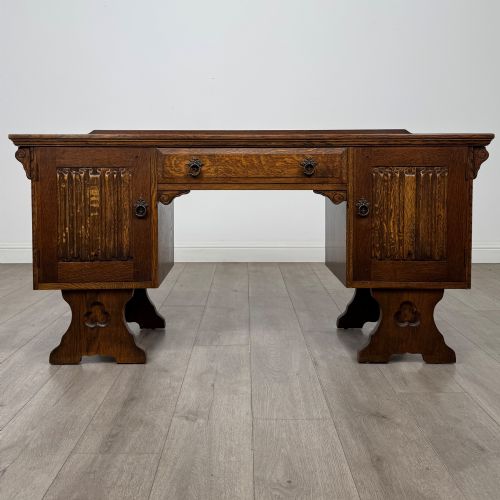
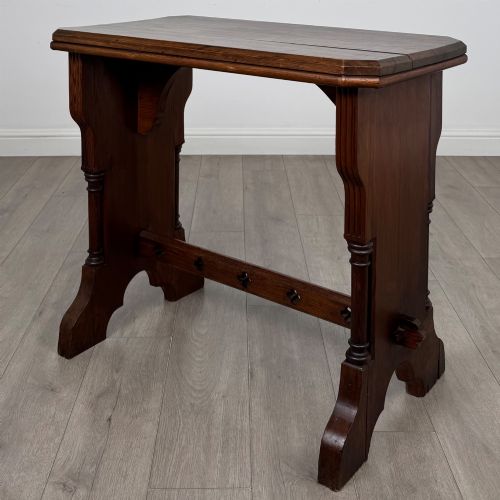
A gothic writing table combines heavy timber construction with pointed arches, linenfold panels, and carved details rooted in medieval architecture. These pieces emerge predominantly across the nineteenth century during the Victorian Gothic revival, taking shape as library tables, kneehole desks, and freestanding centre tables.
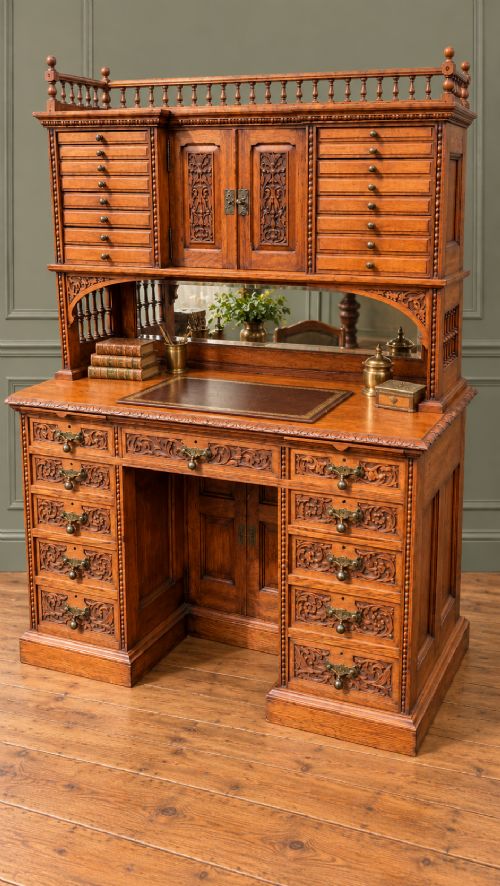
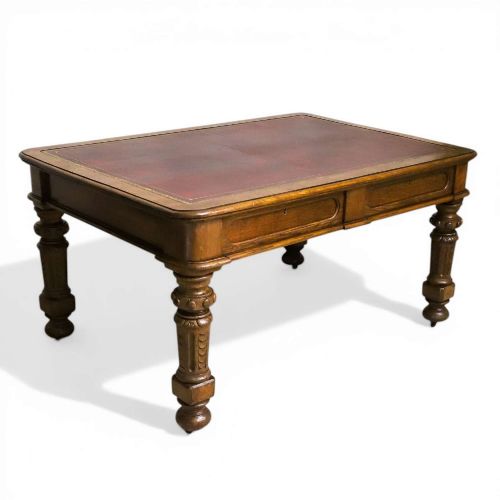
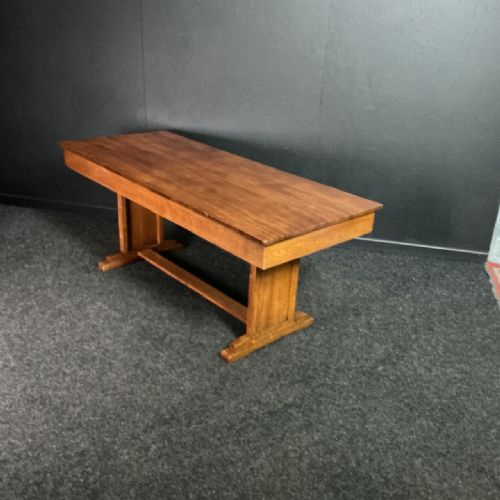
The oak writing table stands as the most common form on this page, often fitted with drawers and occasionally retaining a tooled leather writing surface. Alongside oak, makers utilise pitch pine and mahogany to construct these sturdy functional desks for domestic and institutional libraries.
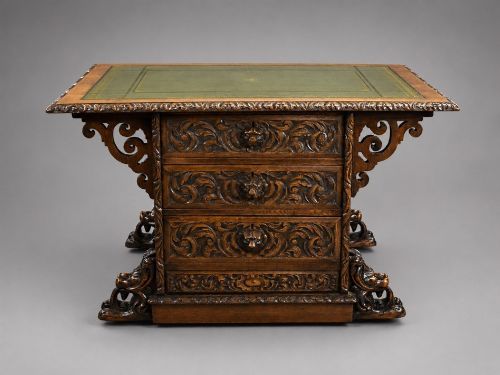
Influenced by designers such as Augustus Pugin and Charles Bevan, the style spans from strict gothic reform designs to heavily carved Victorian interpretations featuring green man motifs. These tables served both domestic correspondence and scholarly work in public schools and private libraries.
Materials and Construction
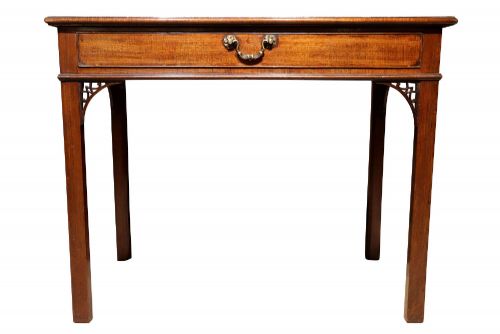
Solid oak provides the primary structural timber, chosen for its durability and capability to hold deep, crisp hand-carved relief. Workshops also employ pitch pine, mahogany, and walnut, sometimes combining ebonised wood or brass mounts to accent the structural lines.
Joinery relies on traditional methods to support heavy loads, integrating pegged mortise and tenon joints with robust pedestals or turned legs. Leather inserts appear on writing surfaces, secured by tooled borders that contrast against the surrounding timber.
Gothic Writing Table Retail Price Guide 2026
Typical asking prices for gothic writing table among the pieces listed under this phrase on Sellingantiques today, from the lower quarter to the upper quarter. They describe what is for sale here now, not the wider market.
The listings show oak as the predominant timber, accompanied by pitch pine, mahogany, and walnut across Victorian and Edwardian periods.
Judging Quality
Quality rests on the depth and precision of the carved detail, distinguishing sharp hand-chiselled tracery and green man masks from mechanical or shallow tooling. The selection of timber grain, particularly in figured oak or burr walnut panels, marks the distinction between standard utility pieces and high-end commissions.
Structural integrity and the preservation of original surfaces dictate value, favouring tables retaining their original tooled leather inserts, brass hardware, and patinated timber finishes over later alterations.
The Gothic Writing Table Glossary
- Gothic Revival
- An architectural and decorative movement reviving medieval forms, pointed arches, and ecclesiastical motifs during the nineteenth century. This style heavily influenced domestic furniture and institutional desks.
- Green Man
- A sculptural motif depicting a human face entwined with foliage, branches, or vines, symbolising rebirth. It frequently appears carved onto nineteenth-century oak furniture.
- Linenfold
- A style of wood carving that imitates folded linen cloth, commonly used on panels for desks and cabinets. It originates in late medieval ecclesiastical woodwork.
- Kneehole Desk
- A freestanding desk featuring a central recess for the user's legs, flanked by pedestals of drawers. They provide practical storage alongside decorative detailing.
- Reformed Gothic
- A sub-movement of the Gothic Revival emphasising structural honesty, geometric simplicity, and medieval metalwork rather than excessive ecclesiastical carving.
Gothic Writing Table: Frequently Asked Questions
What is a gothic writing table?
A gothic writing table is a nineteenth-century desk or library table built in the Gothic Revival style, featuring architectural motifs like pointed arches, carved tracery, and solid timber construction.
These pieces range from simpler institutional library tables to heavily carved domestic desks adorned with green man masks and linenfold panels.
How do I date a gothic desk?
Dating relies on examining the timber species, joinery techniques, and stylistic subsets recorded across the nineteenth century. Pieces from the 1850s and 1860s often reflect strict Gothic Reform principles, while later decades embraced heavier carved decoration.
Hardware, drawer linings, and the presence of original tooled leather inserts provide further physical evidence for placing a table within the Victorian or Edwardian periods.
Were these desks used in homes?
While many substantial library tables served institutions, public schools, and clerical offices, smaller writing tables were built for domestic studies and drawing rooms. They provided a dedicated surface for correspondence and reading.
Freestanding centre tables allowed writers to position the furniture away from walls, displaying carved decoration on all sides.
How do I care for an antique oak desk?
Maintain antique oak by keeping it away from direct heat sources and sudden humidity changes to prevent the timber from splitting. Regular dusting with a dry, soft cloth preserves the natural patina without building up residues.
Protect leather writing surfaces by avoiding moisture and applying appropriate wax dressings sparingly if the hide begins to dry out.