
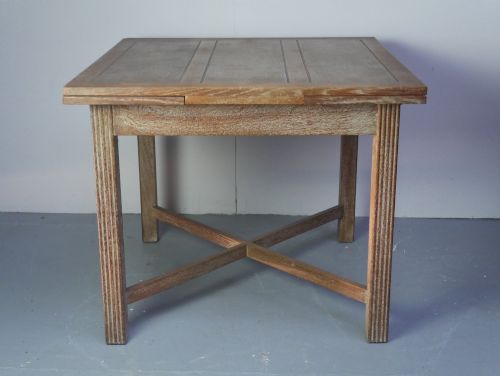


X Frame Dining Table
An x frame dining table brings solid timber construction and practical seating clearance to a room.
What an x frame dining table is
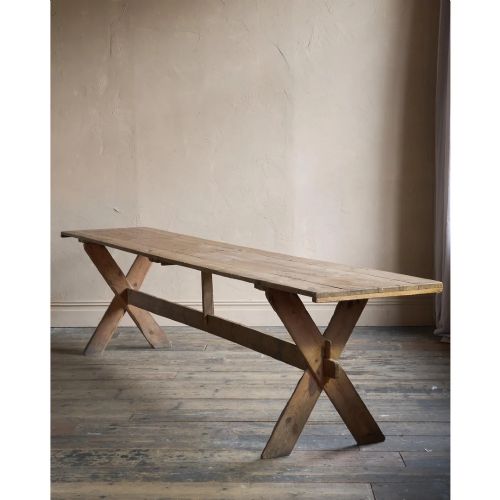
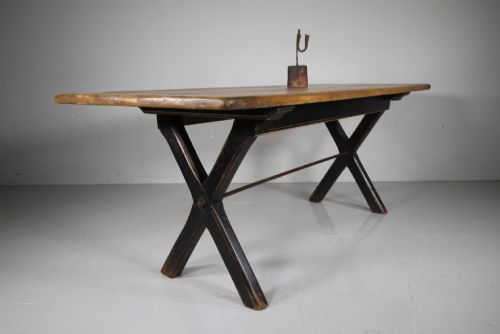
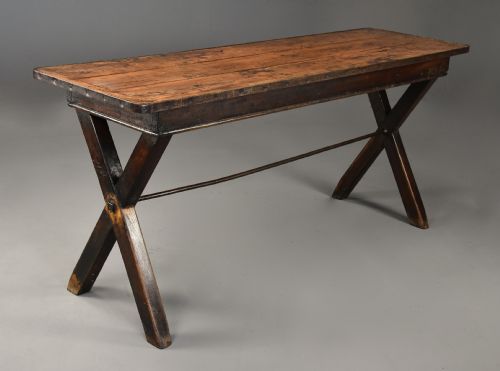
An x frame dining table relies on crossed structural supports rather than conventional corner legs to hold the top steady. This design allows diners to sit along the full length of the furniture without obstruction.
The pieces found here span the nineteenth century into the twentieth century, taking forms such as refectory tables, tavern tables, and kitchen tables.
Origins stretch across English and Swedish workshops, with styles encompassing Scandinavian country, rustic farmhouse, Victorian Gothic, and Art Deco.
How they were made
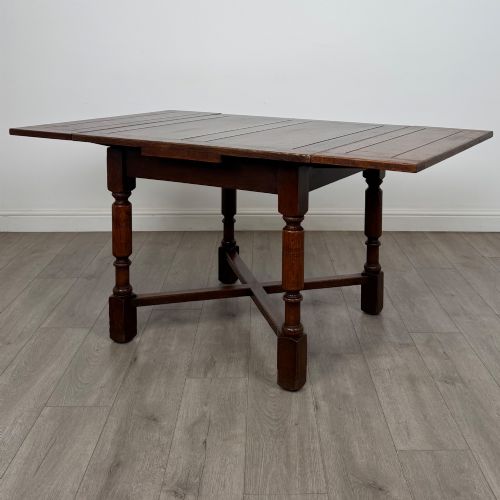
Carpenters built these tables using sturdy timbers including pine, oak, and limed oak, occasionally finishing surfaces with paint or leaving the wood weathered.
Construction methods involve plank tops with cleated ends joined to robust cross frames, sometimes incorporating iron reinforcement or fittings.
Retail Price Guide 2026
Typical UK retail prices for x frame dining table, calculated from the Sellingantiques database of over a million retail prices indexed since 2003. This retail price guide relies exclusively on Sellingantiques data; no external sources or auction records are used, so the figures do not describe the wider market.
Materials span pine, oak, limed oak, painted pine, and iron, styled in Scandinavian country, Victorian Gothic, and rustic farmhouse.
What varies in quality
The character of the timber dictates much of the distinction, separating simple utility furniture from pieces featuring select grain patterns or sophisticated limed finishes.
Structural integrity depends on the precise joining of the cross braces, where tighter joinery and heavier scantlings provide greater rigidity to the top.
Heals
The X Frame Dining Table Glossary
- X frame
- A structural base formed by two intersecting diagonal supports. This configuration distributes weight effectively while freeing up legroom beneath the top.
- Refectory table
- A long narrow dining table traditionally used in communal dining halls. The form translates well to domestic spaces through sturdy timber construction.
- Cleated ends
- Wooden battens fixed across the grain at the ends of a plank top. This technique helps prevent the boards from warping over time.
- Limed oak
- Timber treated with a specialised white pigment rubbed into the grain. The process highlights the natural texture of the wood.
- Tavern table
- A heavy-duty utilitarian table designed for commercial or domestic hospitality. These pieces often feature thick tops and robust bracing.
Frequently Asked Questions
How do I seat people around an x frame dining table?
The crossed trestle supports leave the corners and sides open for chairs or benches. Diners can sit closer to the ends without legs getting in the way.
Arranging seating requires checking the height of the cross braces relative to your chair seats. Most models accommodate standard dining chairs comfortably along the entire span.
Are these tables suitable for everyday family use?
Pine and oak construction provides a durable surface for daily meals and kitchen tasks. Many examples show the patina of prior use in homes and taverns.
Wiping surfaces down with a damp cloth maintains the finish. Heavier timbers withstand regular movement and heavy loads without losing stability.
How do I identify the period of an x frame table?
Nineteenth-century examples often display hand-planed pine boards and pegged joints. Gothic influences appear in pointed arches or carved oak details.
Early twentieth-century pieces, including those from the Art Deco era or associated with specific makers, feature cleaner lines and lighter oak finishes like limed treatments.
What is the difference between pine and oak versions?
Pine tables generally offer a softer appearance with painted or weathered surfaces typical of Scandinavian and English country styles. They bring a lighter visual weight to a dining space.
Oak models provide greater density and deeper grain patterns, frequently associated with refectory and Gothic designs. These tables feel heavier and anchor a room more formally.