




Art Deco Tea Table
An art deco tea table brings period character to a room, offering low surfaces and clever tiers for modern living.
Art Deco Tea Table
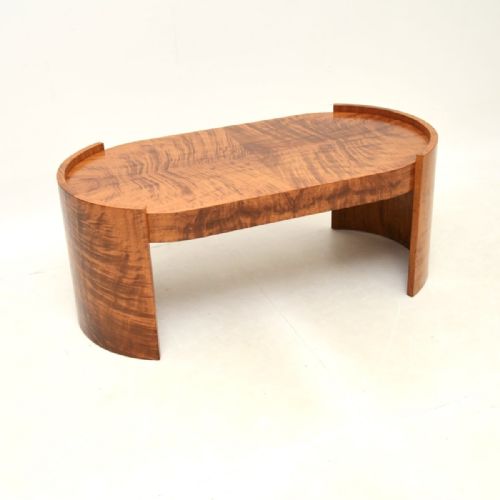
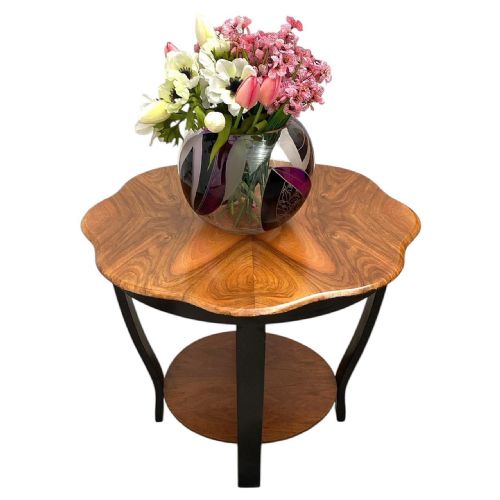
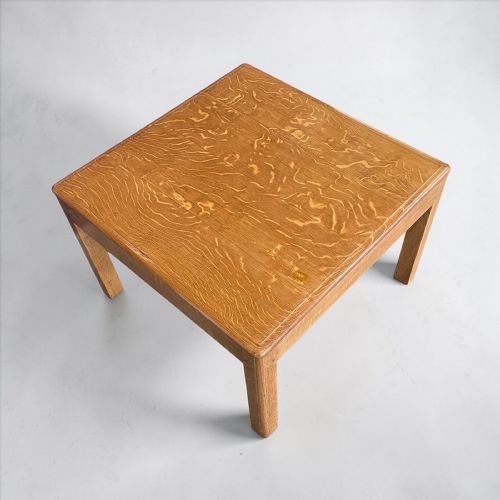
An art deco tea table serves as a low surface for daily use, appearing frequently as a coffee table, drinks trolley, or occasional table. These pieces emerge mainly from the 1920s and 1930s, reflecting the design movements of the interwar period.
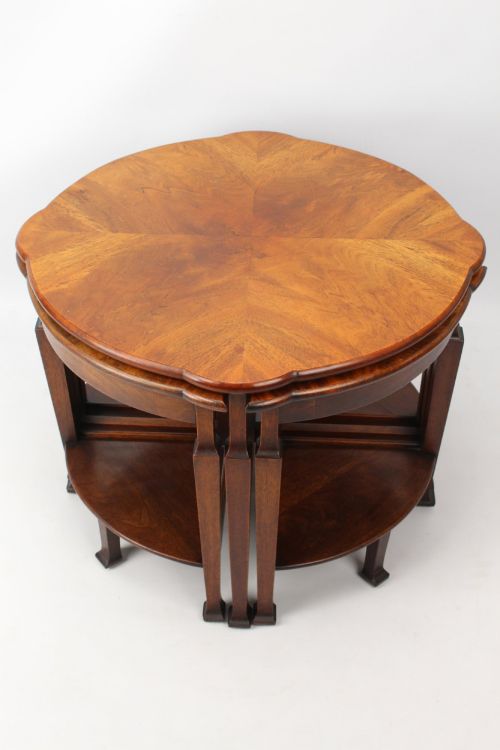
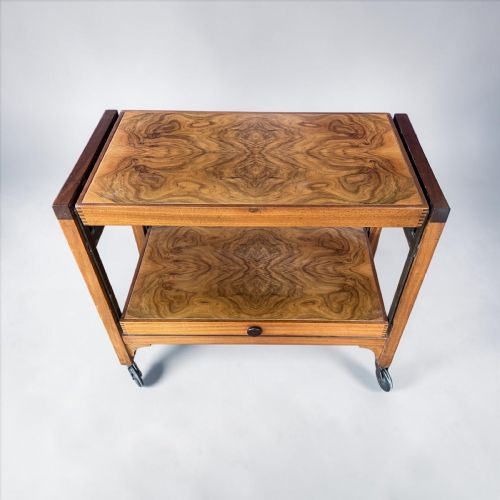
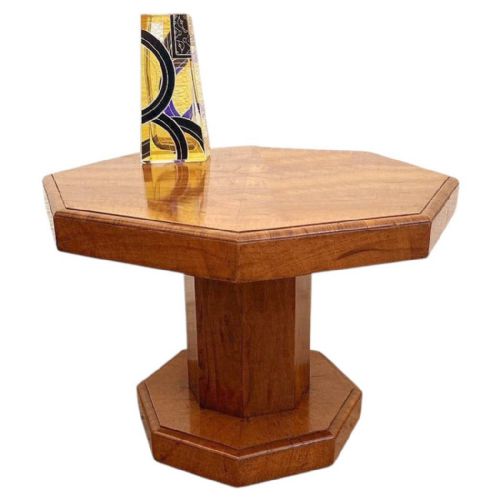
The forms span simple coffee tables, two-tier serving trolleys, and pedestal designs. English examples sit alongside pieces styled in Swedish Grace or revival idioms such as Queen Anne and Georgian.
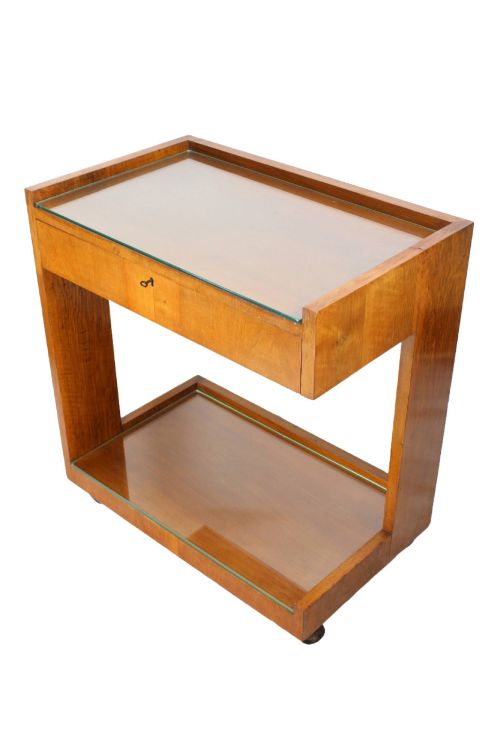
Makers and designers of the period utilised various formats to suit domestic spaces, ranging from compact occasional tables to metamorphic serving trolleys on casters.
What varies in quality
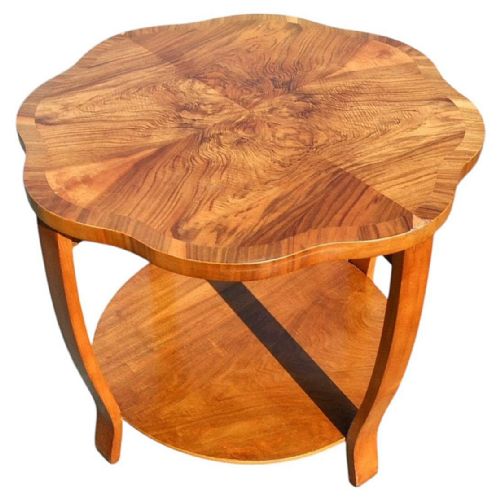
Quality rests in the selection of wood veneers and the handling of grain matching across the tabletop. Burr and figured walnut surfaces demonstrate finer cabinetmaking choices compared to simpler domestic timbers.
Construction details such as two-tier framing, metamorphic hardware, and integrated brass casters distinguish standard occasional tables from more complex trolleys and serving pieces.
Art Deco Tea Table Retail Price Guide 2026
Typical asking prices for art deco tea table among the pieces listed under this phrase on Sellingantiques today, from the lower quarter to the upper quarter. They describe what is for sale here now, not the wider market.
Some tables come with wheels so fast they almost beat you to the tea.
Betty Joel·Mappin & Webb
The Art Deco Tea Table Glossary
- Burr walnut
- A veneer taken from the warted growths of a walnut tree, producing swirling, intricate grain patterns. It adds distinct visual texture to table surfaces.
- Two tier
- A furniture design featuring a primary upper surface supported above a secondary lower shelf. This configuration provides extra space for storage or display.
- Metamorphic
- A piece of furniture engineered to transform or adapt its function through folding, extending, or moving parts. These designs maximise utility in compact spaces.
- Swedish Grace
- A refined neoclassical style popular in Sweden during the 1920s, combining classic proportions with pared-down modern details. It bridges traditional craftsmanship and early modernism.
Art Deco Tea Table: Frequently Asked Questions
What is an art deco tea table?
An art deco tea table is a low wooden table or trolley designed during the 1920s and 1930s. These pieces combine period styling with practical surfaces for entertaining and daily living.
They appear in various forms, including coffee tables, occasional tables, and two-tier serving trolleys equipped with casters for mobility.
How do I style a tea table?
Styling depends on the form, whether you choose a simple coffee table or a two-tier trolley. Use the lower shelf for books or glassware while keeping the top surface uncluttered.
Consider the wood tone, such as walnut or oak, to complement existing room decor and other period furnishings.
What materials were used?
These tables are constructed primarily from timber and wood veneers. Common woods include walnut, burr walnut, oak, birch, and elm.
Many designs incorporate additional elements like inset glass panels and brass hardware or casters on mobile trolleys.