


Solid Oak Coffee Table
A solid oak coffee table anchors a room with dense grain and honest construction, spanning rustic plank forms and refined revival pieces.
Solid Oak Coffee Table
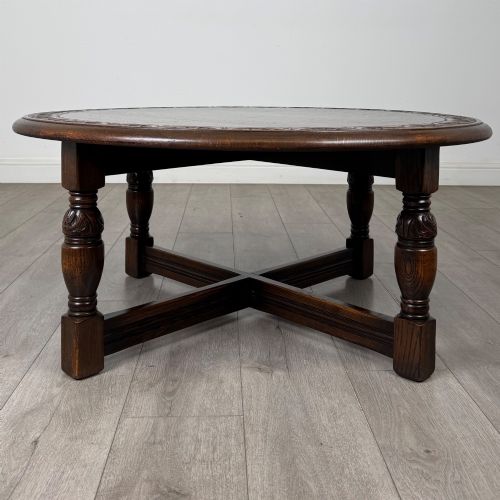
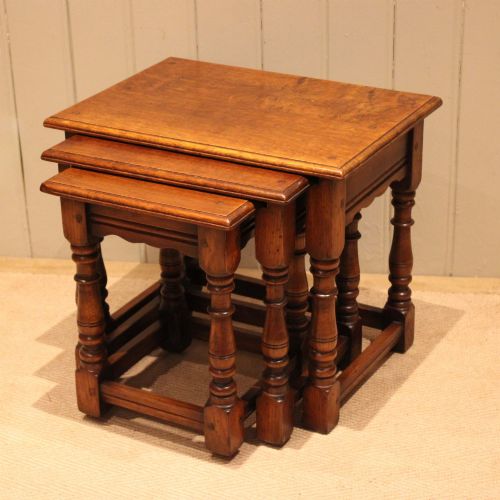
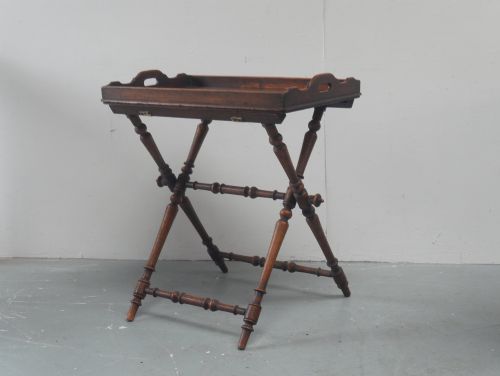
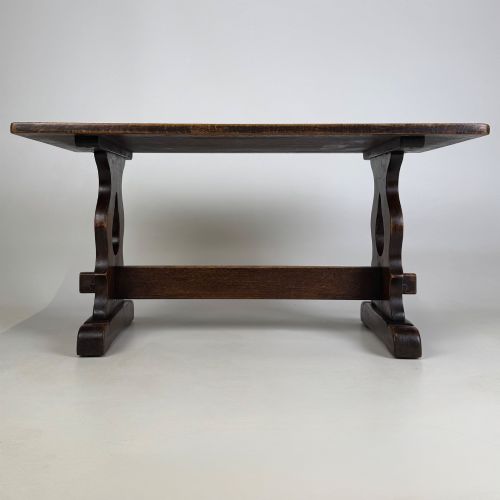
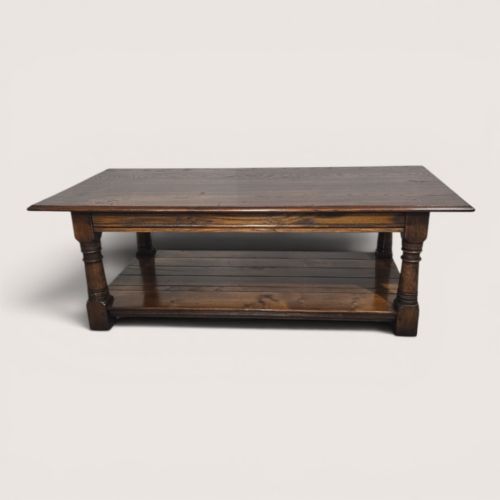
A solid oak coffee table brings substantial weight and pronounced timber grain into a sitting space, appearing across formats from low plank constructions to nests of three tables and butler trays on stands. These pieces emerge from periods ranging through the seventeenth, eighteenth, and nineteenth centuries, alongside Edwardian and 1920s examples.
The most common formats on this page include sturdy plank coffee tables, low side tables, and occasional tables shaped by Jacobean revival, Art Deco, and Arts and Crafts styles. Makers and workshops from French provincial traditions to English country vernacular also contribute low tables, refectory styles, and occasional gateleg pieces.
Buyers select these items for durability and historic character, utilising them as central low surfaces in living areas. The selection spans straightforward utilitarian forms and pieces carrying carved details, ebonised wood accents, or ceramic tile inserts.
Gradations of quality
Quality differentiates itself through the selection of timber figures, the integrity of the joinery, and the harmony of period proportions. Pieces exhibiting thick oak planks, balanced turnings, and deliberate stylistic execution stand apart from simpler utilitarian builds.
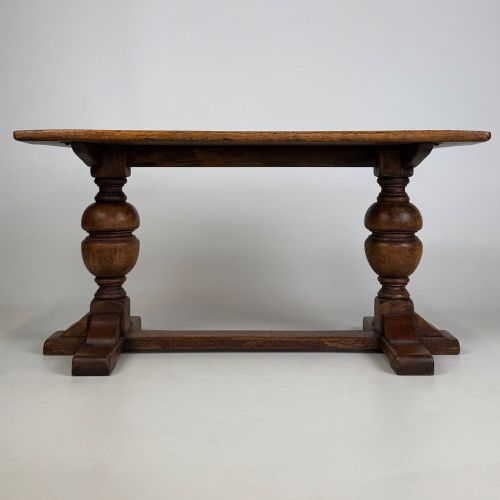
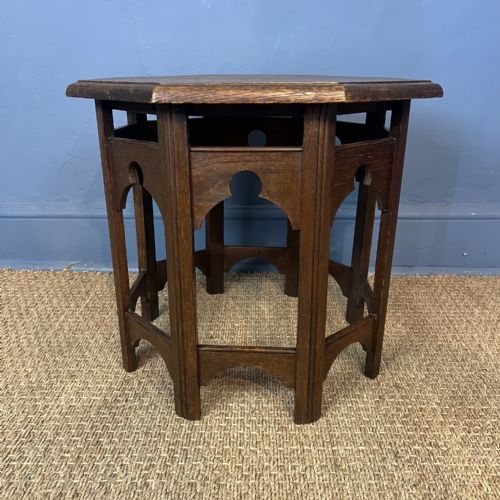
The distinction also rests in regional craftsmanship, whether seen in the refined lines of a Glasgow School hexagonal table or the substantial presence of a refectory style frame. Details such as integrated ceramic tiles or subtle ebonised accents elevate standard forms into more considered decorative objects.
Periods span from the seventeenth century through to Art Deco designs of the 1930s.
Betty Joel·Mouseman
The Solid Oak Coffee Table Glossary
- Plank top
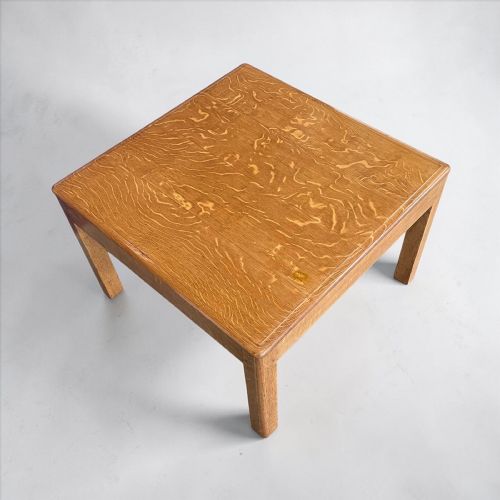
- A table surface constructed from thick, solid boards of timber joined side by side. This method displays the natural grain and growth rings of the oak.
- Butlers tray
- A removable wooden tray with raised sides and carrying handles, designed to sit upon a folding wooden stand. It functions as a portable serving surface adapted into a low table.
- Gateleg table
- A drop leaf table with hinged flaps supported by hinged legs that swing out like a gate. This mechanism allows the surface area to expand or fold down.
- Jacobean Revival
- A nineteenth and twentieth century design style copying seventeenth century English furniture. It employs dark oak, heavy turnings, and geometric panel carving.
- Ebonised wood
- Timber treated with a chemical stain or black finish to imitate ebony. This technique provides dark contrast against natural oak.
Solid Oak Coffee Table: Frequently Asked Questions
How do I clean a solid oak coffee table?
Dust the surface regularly with a soft, dry cloth to prevent particulate buildup in the grain. Avoid abrasive cleaners and excess moisture, applying a quality beeswax periodically to nourish the timber.
Protect the wood from direct heat and liquid spills by using coasters and mats. This preserves the original waxed or polished finish over decades of daily use.
What periods do these coffee tables come from?
The listings encompass items spanning the seventeenth century through to the Art Deco period of the 1930s. Edwardian and 1920s examples appear frequently alongside nineteenth century and earlier provincial pieces.
Stylistic revivals heavily influence the dates, with Jacobean and Arts and Crafts movements reproducing or reinterpreting historic forms for modern homes.
Are these tables suitable for everyday family use?
Solid oak provides exceptional durability and structural resilience, making these tables well suited for active living spaces. The dense timber withstands regular impacts and daily domestic routines far better than veneered alternatives.
Minor dents and patination accumulate gracefully on older oak surfaces, enhancing the historic character rather than detracting from the utility.
How do I identify an Arts and Crafts table?
Arts and Crafts pieces emphasise honest construction, visible joinery, and simplified forms derived from natural materials. They often discard excessive ornamentation in favour of architectural lines and functional integrity.
Examples on this page include hexagonal formats and side tables that reflect the philosophies of makers inspired by groups like the Glasgow School.