


Scrollwork Iron Table
A scrollwork iron table brings structural ironwork into domestic and garden spaces, offering durable utility combined with decorative metal curves.
Scrollwork Iron Table
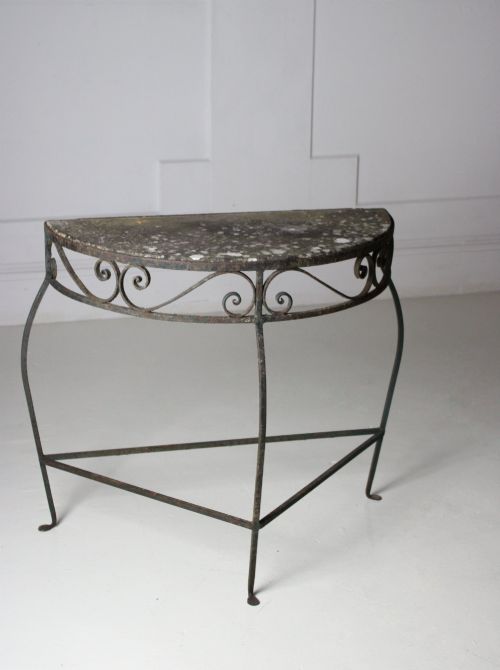
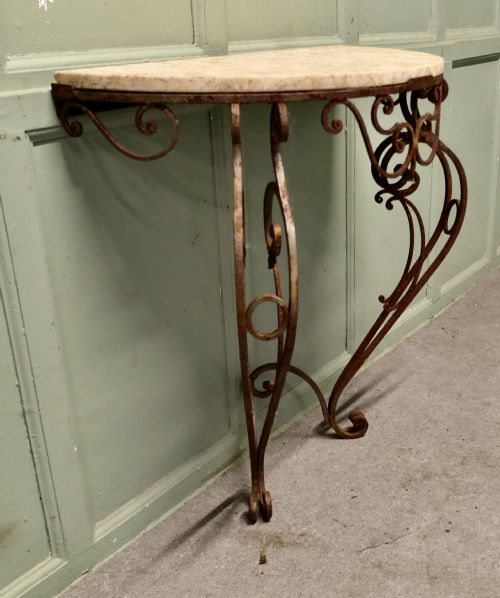
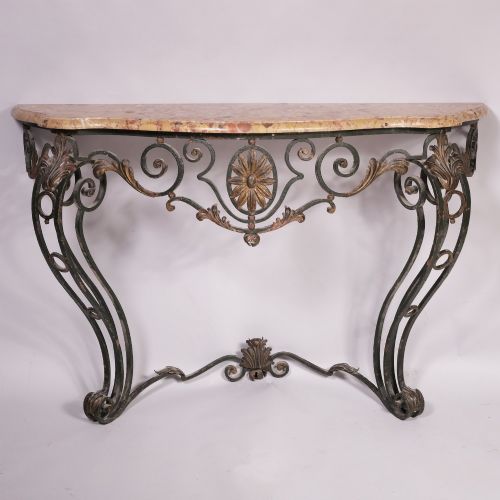
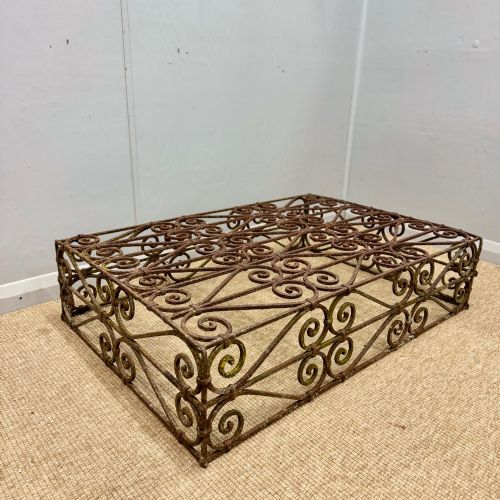
Scrollwork iron tables encompass console tables, coffee tables, and garden tables shaped by forged or cast metal curves. Buyers searching for a scrollwork iron table typically encounter pieces featuring intricate metal scrolling supporting stone or wood surfaces.
The selection here draws primarily from nineteenth-century, Edwardian, and early twentieth-century origins, showcasing French country influences alongside Victorian forms. Console tables and low coffee tables dominate the offerings, frequently paired with marble tops.
Origins stretch across French provincial and Victorian traditions, utilising both hand-forged wrought iron and moulded cast iron. These items serve functional roles in hallways, living rooms, and garden settings alike.
How they were made
Decorative scrollwork requires disciplined heat manipulation to bend iron into uniform volutes and curves. Artisans secured these iron scrolls using traditional joinery, rivets, or welds before mounting the stone or wooden surfaces.
The current listings combine wrought iron, cast iron, and marble across nineteenth-century and early twentieth-century periods.
What varies in quality
Quality rests on the crispness of the iron manipulation and the integration of the top surface. Hand-forged wrought iron displays individual hammer marks and fluid curves that distinguish it from mass-produced cast variants.
The choice of top material dictates the refinement of the piece, with fitted marble slabs offering greater weight and presence than standard wooden boards. Structural integrity in the scroll junctions ultimately determines the durability and visual balance of the table.
The Scrollwork Iron Table Glossary
- Wrought iron
- Iron that has been heated and hammered into shape by hand, resulting in a fibrous structure and distinct resilience. This material allows for slender, decorative scrolls.
- Cast iron
- Iron poured into a mould to set, producing heavier and more rigid components with repetitive decorative patterns. It provides sturdy support for garden and occasional furniture.
- Serpentine top
- A tabletop featuring a distinctive undulating front edge with alternating convex and concave curves. This contour adds movement to console and occasional tables.
- Console table
- A table designed to stand against a wall, frequently secured with brackets or supported by front legs. These items suit hallways and reception rooms.
- Strapp work
- Decorative metal strapwork applied to surfaces or frames to create geometric or strap-like patterns. It reinforces structural joints while adding visual texture.
Scrollwork Iron Table: Frequently Asked Questions
Where do I put a scrollwork iron table?
These tables adapt well to narrow hallways as console surfaces or sit centrally in reception rooms as coffee tables. Weather-resistant garden variants suit outdoor patios and conservatories.
Heavier marble-topped versions require stable flooring to support the combined weight of stone and iron.
How do I clean the iron frame?
Dust the scrollwork regularly with a dry cloth to prevent debris accumulation within the intricate metal curves. Avoid harsh chemical cleaners that might strip historical finishes.
Apply a light microcrystalline wax to protect raw iron surfaces from moisture in damp environments.
Are these tables suitable for outdoor use?
Garden tables and sets constructed from iron withstand outdoor conditions when properly maintained against moisture. Indoor console and coffee tables utilise marble and delicate finishes unsuited to continuous weather exposure.
Check the specific material notes to confirm whether a piece originated for interior or garden use.
What is the difference between cast and wrought iron?
Wrought iron is hand-forged, yielding fibrous, flexible metal capable of slender, varied scrollwork. Cast iron is poured into moulds, producing thicker, rigid forms with uniform decorative casting.
Hand-forged examples generally show subtle irregularities absent in moulded pieces.