
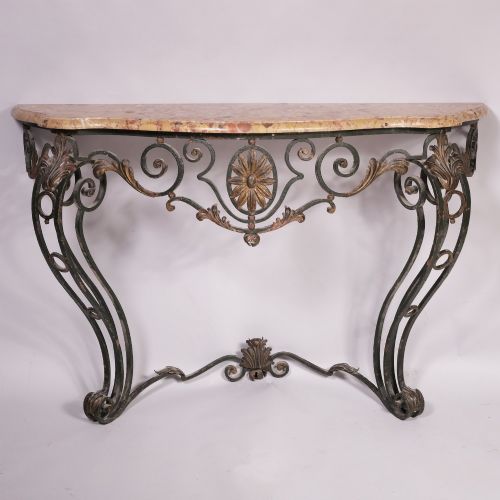

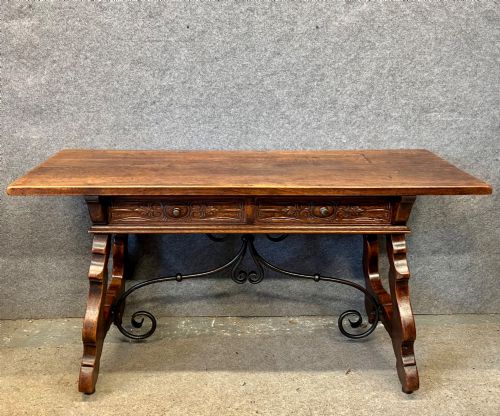


Wrought Iron Console Table
These robust pieces offer sturdy metal frames paired with stone or wood surfaces, providing a practical anchor for a hallway or living space.
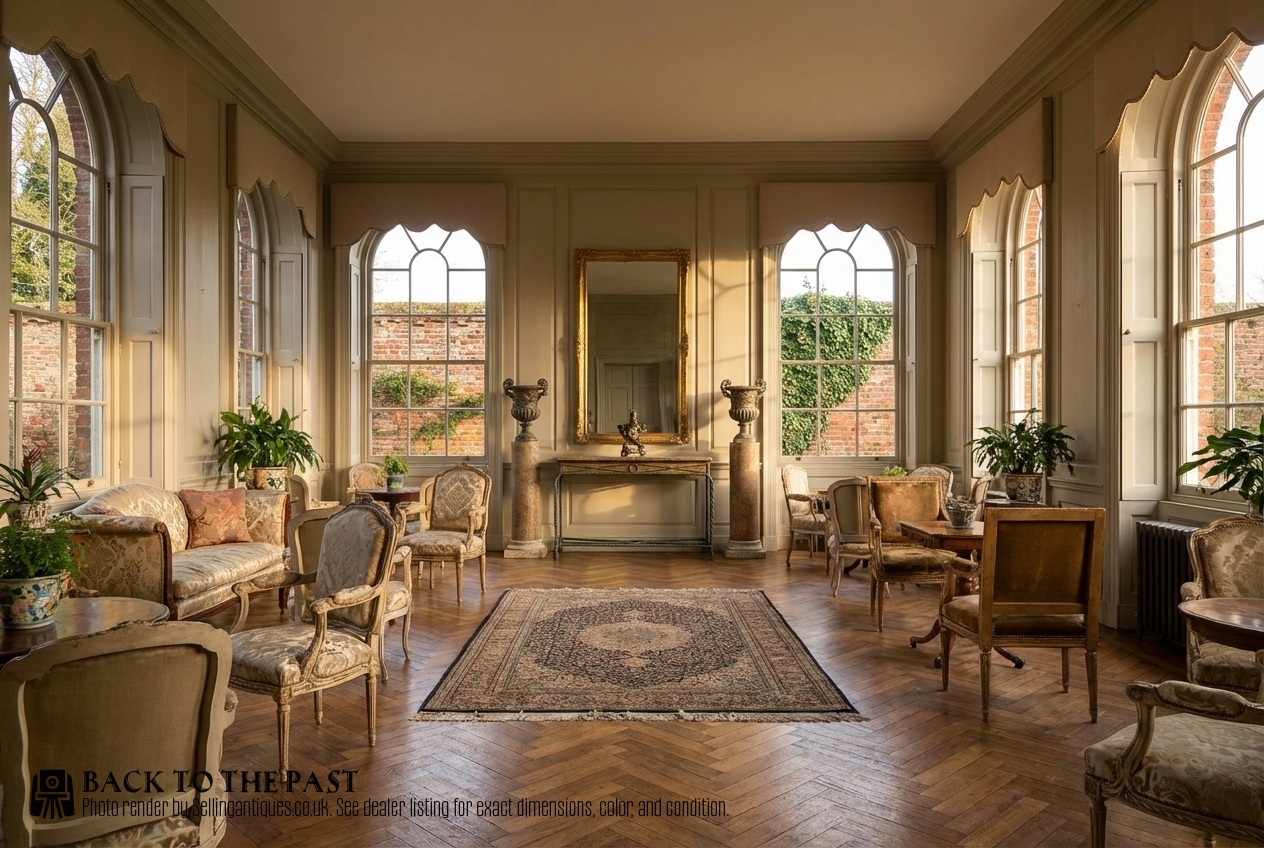
Wrought Iron Console Table
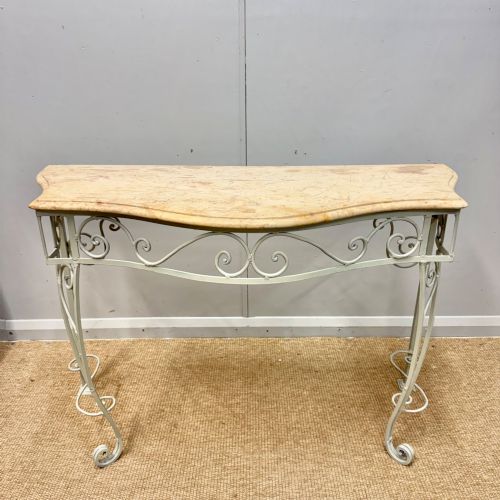
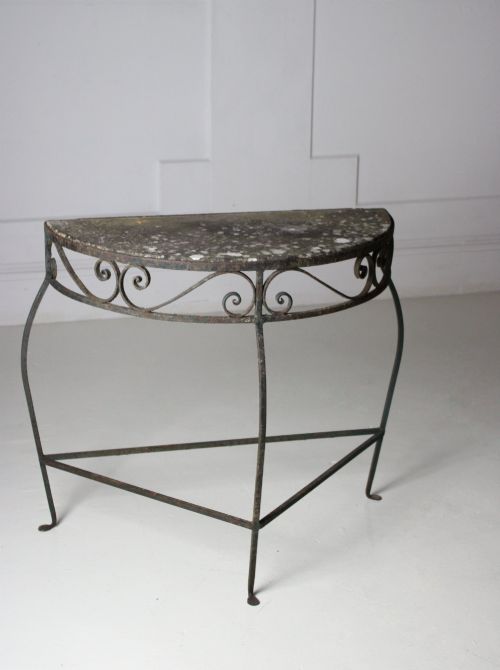
A wrought iron console table serves as a narrow surface designed to stand against a wall in a hallway, drawing rooms, or dining spaces. These pieces combine hand-forged metal supports with contrasting tops.
The versions most frequently met on this page date from the nineteenth century and the nineteen-twenties, often reflecting French country or Spanish styles. They appear alongside related forms like side tables, workbenches, and garden tables.
Makers historically paired the heavy iron bases with varied surfaces, most commonly white or coloured marble, alongside slate, granite, glass, and timber.
How they were made
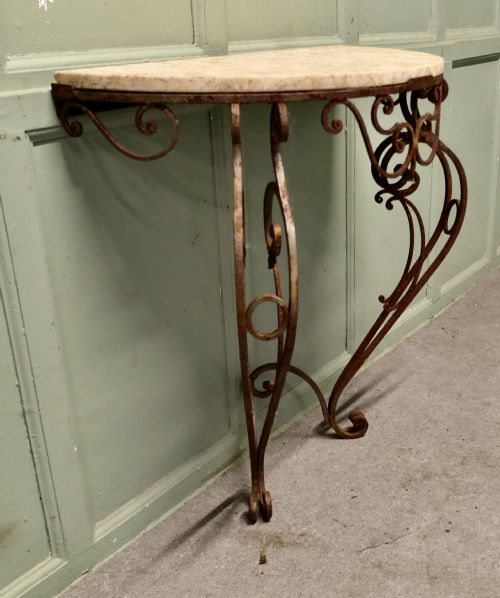
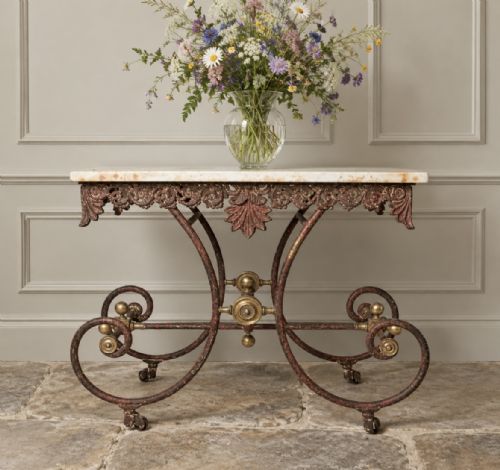
Blacksmiths shaped the iron bases by hand while hot, hammering the metal into scrolls, straight supports, or serpentine legs. Cast iron elements also appear among these structural frames.
Makers topped these metal bases with heavy slabs of marble, granite, or slate, sometimes secured with mortar or resting directly on the frame. Timber surfaces in oak, walnut, or pine were joined using traditional cabinet-making methods.
Wrought Iron Console Table Retail Price Guide 2026
Typical asking prices for wrought iron console table among the pieces listed under this phrase on Sellingantiques today, from the lower quarter to the upper quarter. They describe what is for sale here now, not the wider market.
Listings feature wrought iron, cast iron, marble, oak, and walnut across nineteenth-century and nineteen-twenties French and Spanish designs.
What varies in quality
The refinement of the forge work distinguishes standard utility pieces from finer examples, with hand-hammered detailing and complex scrollwork showing greater artisan skill. The weight and thickness of the marble or stone top also signal the calibre of the piece.
Original patination on the metal and timber surfaces maintains the integrity of the object, while later repainting or replaced stone tops alter the historical character.
The Wrought Iron Console Table Glossary
- Wrought iron
- Iron that has been heated and hammered into shape by hand rather than poured into a mould. This material yields a fibrous texture and durable structure.
- Console table
- A table designed to stand flat against a wall, traditionally supported by wall brackets or console legs. These tables occupy minimal floor space.
- Serpentine
- A shape characterised by a waving line of alternating convex and concave curves. This contour appears frequently on marble tabletops and iron aprons.
- Patina
- The surface sheen and colour acquired by materials through age, use, and exposure. Original patination preserves the historic character of the iron and wood.
- Demi-lune
- A half-moon shape used for tabletops and console bases designed to fit snugly against flat walls.
Wrought Iron Console Table: Frequently Asked Questions
Where should I place a wrought iron console table?
These narrow tables suit entrance halls, narrow corridors, and reception rooms where floor space is limited. Their sturdy build allows them to hold lamps, mirrors, and everyday objects.
They also function effectively behind sofas or against dining room walls to display decorative items without obstructing pathways.
How do I clean a marble top safely?
Use a damp cloth with mild, pH-neutral soap to wipe down stone surfaces. Avoid acidic cleaners, vinegar, or harsh chemicals that etch marble.
Dry the surface thoroughly with a soft cloth to prevent water marks and maintain the natural finish of the stone.
Are these tables heavy to move?
The combination of forged iron bases and thick stone tops makes these tables substantial in weight. Moving them usually requires two people to lift the top and base safely.
Many examples feature separate marble slabs resting on the iron frame, which can be lifted off independently to reduce weight during transport.
How can I tell a nineteenth-century piece from a later one?
Nineteenth-century examples often exhibit hand-forged irregularities in the ironwork, traditional joinery in any wooden components, and natural wear consistent with heavy use in French workshops or homes.
Later pieces from the nineteen-twenties often display Art Deco influences, more uniform machine fabrication, or specific material combinations like vitrolite glass.