



19th Century Butcher Table
A 19th century butcher table is a sturdy utilitarian workspace prized for heavy timber surfaces and honest functional design.
19th Century Butcher Table
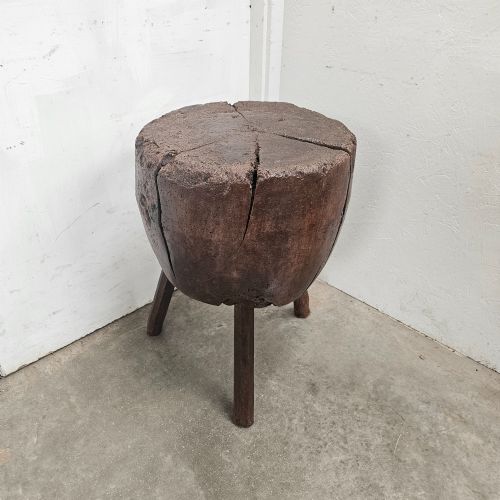
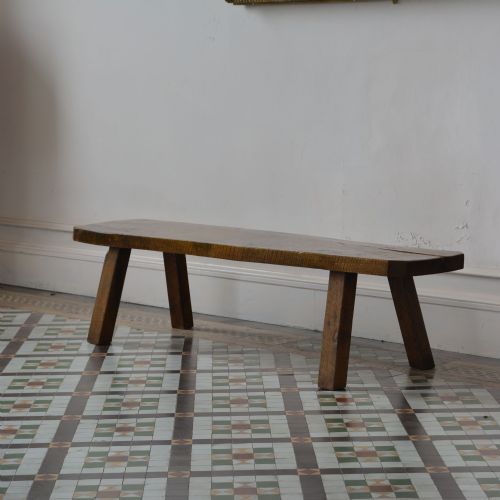
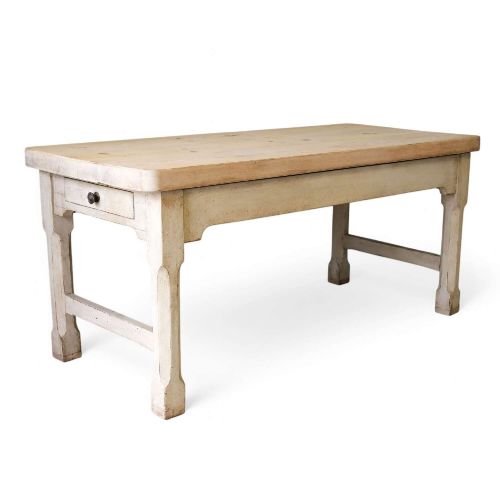
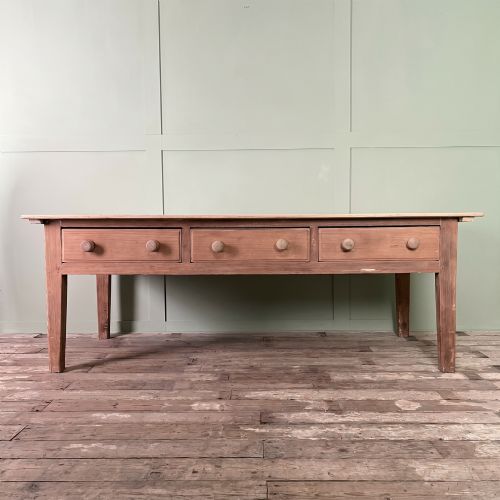
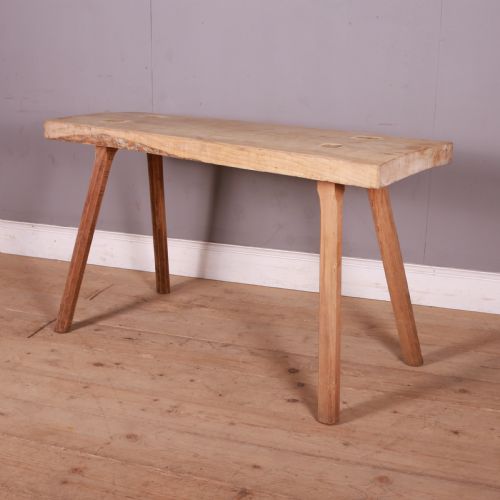
A 19th century butcher table takes several practical forms, appearing most often as thick wooden chopping blocks, prep tables, and low pig benches. These heavy pieces were built for rigorous daily work in country houses, dairies, and commercial kitchens rather than formal display.
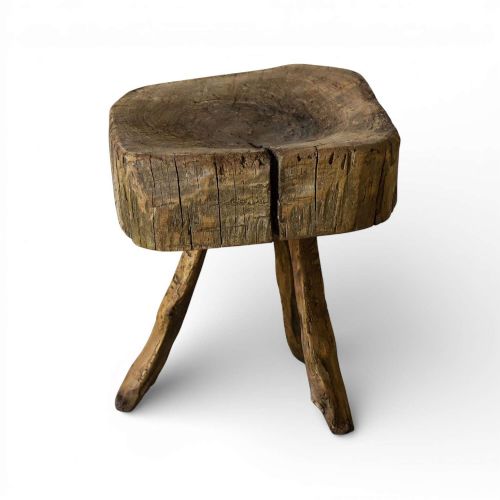
Most examples originate from rural England and France, carrying regional styles such as French Provincial, Rustic Country, and Vernacular Rural. You will frequently encounter heavy timber tops supported by sturdy trestles or gnarled legs designed to withstand intense downward pressure.
How they were made
These tables rely on dense hardwoods like elm, sycamore, oak, beech, and pine for their thick working tops. Cabinetmakers and local joiners selected these specific timbers for their resistance to splitting under heavy impact and moisture.
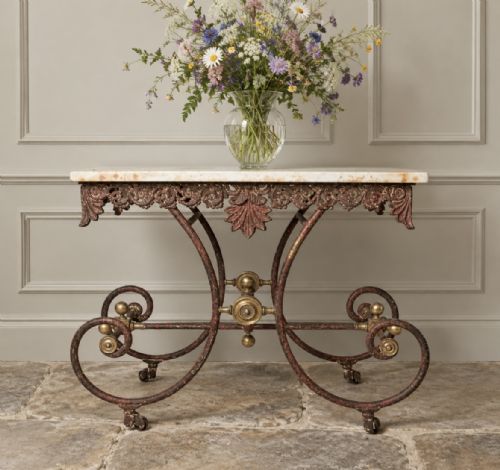
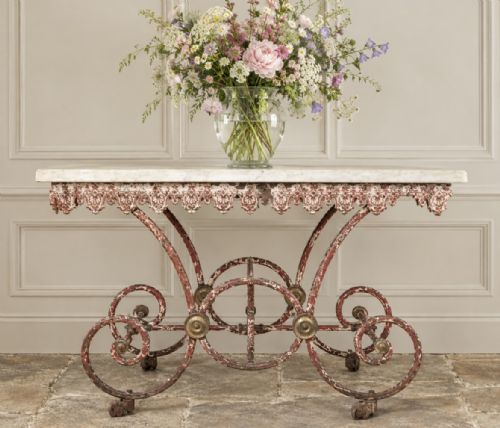
Supporting structures combine sturdy wooden legs, sometimes reinforced with wrought iron or brass fixtures, while certain specialised patisserie pieces incorporate solid marble slabs for temperature control.
Some nineteenth-century chopping blocks retain deep chop marks so pronounced they map out decades of Sunday joint preparations.
What varies in quality
Quality rests in the original relationship between the heavy working top and its supporting base, where proportion and structural integrity matter deeply. Tables that retain their original gnarled legs or pegged trestles demonstrate superior authenticity compared to altered assemblies.
The depth and grain density of the timber top dictate the grade of the piece, with thick, end-grain blocks showing superior wear patterns from decades of actual service. Original surface patination, whether scrubbed clean or bearing honest traces of historic paint, separates untouched examples from modern interventions.
Trussant & Cie
The 19th Century Butcher Table Glossary
- Pig bench
- A low wooden bench traditionally used in rural farmhouses for butchery tasks. These low platforms provide exceptional stability for heavy preparation work.
- End-grain
- Timber cut across the growth rings to present the hardest possible surface for chopping. This orientation prevents knife blades from dulling too quickly during heavy use.
- Patisserie boucher
- A hybrid table style featuring a marble top set into a wooden frame. The stone surface kept pastry cool while remaining sturdy enough for general kitchen prep.
- Trestle
- A structural support consisting of a horizontal beam balanced on two pairs of splayed legs. This framing method allows maximum legroom beneath large work surfaces.
- Vernacular rural
- A design style born from local traditions and practical needs rather than academic architecture. Objects in this style use regional materials and straightforward construction methods.
19th Century Butcher Table: Frequently Asked Questions
How do I clean a wooden butcher block?
Scrub the timber surface using warm water and a stiff brush, avoiding harsh chemical detergents that dry out the grain. Regular oiling with food-safe mineral oil preserves the wood and prevents moisture penetration.
Allow the timber to dry completely between cleanings to maintain structural integrity. This simple routine protects the historic patination accumulated over generations.
Can I use these tables for kitchen prep?
These historical blocks and tables function wonderfully as modern kitchen islands and food preparation stations. Their dense wooden and marble surfaces provide durable areas for cooking and baking.
Keep in mind that centuries of practical use mean surfaces carry deep indentations and marks. Embracing these authentic signs of labour allows you to live comfortably with the history of the piece.
How do I tell French and English tables apart?
French examples often display lighter woods like sycamore or feature marble inserts for patisserie work, frequently carrying provincial styles like French Chateau. English variants lean towards heavy oak and elm, particularly low pig benches and country house prep tables.
Construction details also offer clues, as regional joinery methods reflect local workshop traditions. Examining the timber species and leg configuration helps identify the likely country of origin.
Are marble top tables original?
Many patisserie and butcher tables were manufactured specifically with heavy marble slabs to keep ingredients cool during preparation. These stone surfaces sit securely within wooden frames designed to support their substantial weight.
Check the fit of the marble within the timber surround to assess originality. Authentic examples show natural integration between the stone slab and the supporting wooden base.