



Wrought Iron Scroll Table
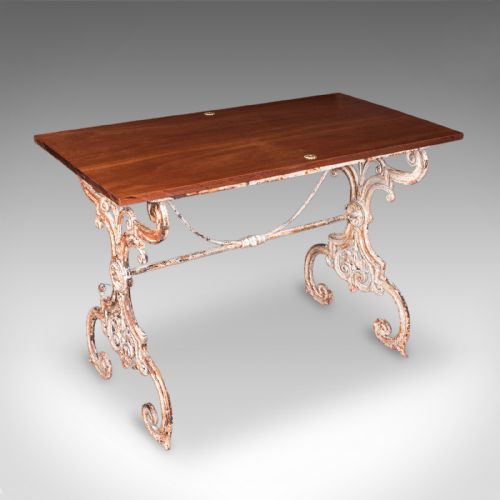
A wrought iron scroll table brings undeniable character and robust French styling to a room.
Wrought Iron Scroll Table
When you search for a wrought iron scroll table, you encounter practical console tables, coffee tables, and garden tables shaped by French provincial and Victorian aesthetics. These pieces combine sweeping metalwork with functional surfaces intended for everyday use.
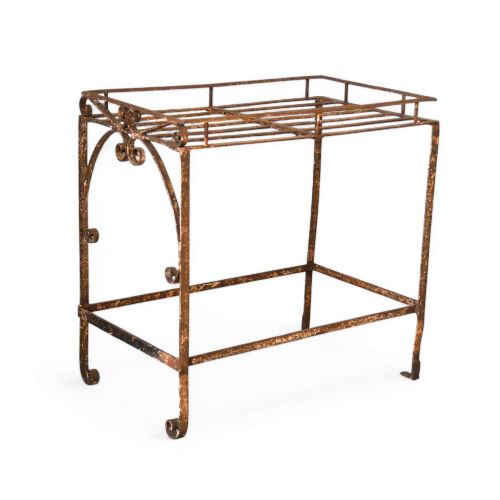
The versions you are most likely to meet on this page hail predominantly from the nineteenth century and the early decades of the twentieth century. They manifest as estate-made garden racks, occasional tables, and baker tables reflecting distinct regional sensibilities.
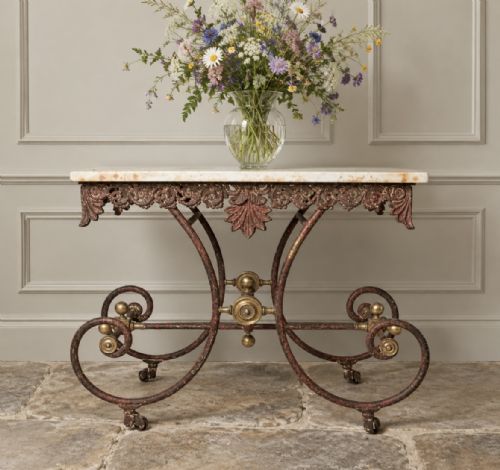
Many examples feature curated surfaces such as marble or glass paired directly with the forged metal frame. This structural pairing defines the visual weight and utility of the furniture across domestic and garden settings.
Materials and construction methods
Master craftsmen shaped these structures primarily from wrought iron and cast iron, heating and hammering the metal to achieve flowing scroll details. Brass elements occasionally appear as decorative accents to contrast with the dark ironwork.
Table surfaces frequently utilise heavy marble, clear glass, or polished wood supported securely by the metal framework. Gilt finishes and mirror panels are also integrated into select designs to enhance the reflective quality of the piece.
Wrought Iron Scroll Table Retail Price Guide 2026
Typical asking prices for wrought iron scroll table among the pieces listed under this phrase on Sellingantiques today, from the lower quarter to the upper quarter. They describe what is for sale here now, not the wider market.
Several pieces originate directly from French country estates, carrying the honest scars of old garden work and provincial kitchens.
Distinguishing quality in forged metal furniture
The distinction between ordinary and superior pieces lies in the fluidity and precision of the hand-forged scrollwork. Finer examples display meticulous attention to detail at the joints and terminations where the metal curves.
The selection of top-tier inset materials, such as thick slabs of marble or original mirrored glass, elevates the overall integrity of the table. Lesser pieces rely on simpler secondary materials that lack the substantial presence of the best period items.
The Wrought Iron Scroll Table Glossary
- Console table
- A table designed to stand against a wall, frequently topped with marble or wood. These pieces often feature decorative brackets or substantial iron scrolls beneath the surface.
- Scroll work
- Ornamental spiral or curved ornamentation shaped into metalwork. This technique defines the visual rhythm of the frame.
- Estate-made
- An item produced locally for a specific property rather than a commercial factory. These objects carry unique hand-forged anomalies.
- Baker table
- A sturdy utility table featuring a stone or marble top used historically in food preparation. They translate well into domestic interiors as durable coffee or console surfaces.
Wrought Iron Scroll Table: Frequently Asked Questions
Where do I put a wrought iron scroll table?
These tables find natural homes in hallways, living rooms, and garden rooms where their structural frames can be fully appreciated.
Console versions suit narrow spaces against walls, whilst coffee and occasional tables anchor seating arrangements effectively.
How do I clean a marble top?
Use a soft cloth dampened with warm water and mild, pH-neutral soap to wipe down the surface gently.
Avoid acidic cleaners or harsh scrubbing pads that can etch or dull the polished stone over time.
Are these pieces suitable for outdoor use?
Many of these items originated as garden or estate furniture designed to withstand outdoor conditions.
Protecting vulnerable surfaces and monitoring for weathering helps preserve the original iron and finish.
How do I identify a nineteenth-century piece?
Examine the forged iron for hand-hammered marks, irregularities in the scrolls, and traditional construction joints.
Period items often exhibit a density and patina distinct from later mass-produced reproductions.