




Extending Console Table
An extending console table turns from a compact hall piece into a dining board, built from mahogany, rosewood, and oak across Georgian and Victorian periods.
Extending Console Table
When searching for an extending console table, a buyer seeks a clever dual-purpose furniture piece that transforms from a wall console into a dining table. These items span periods from the eighteenth century through the Victorian era and into the 1930s, reflecting changing domestic needs for flexible entertaining space.
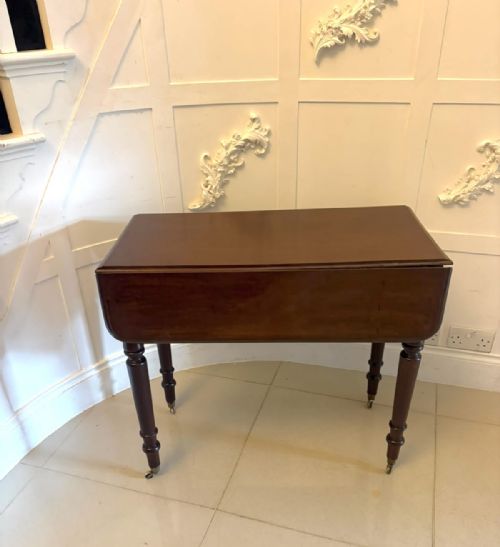
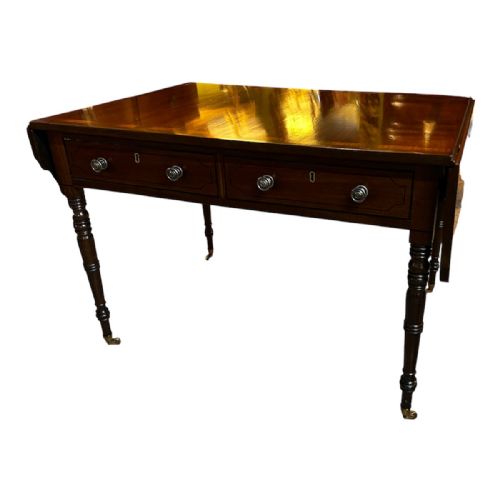
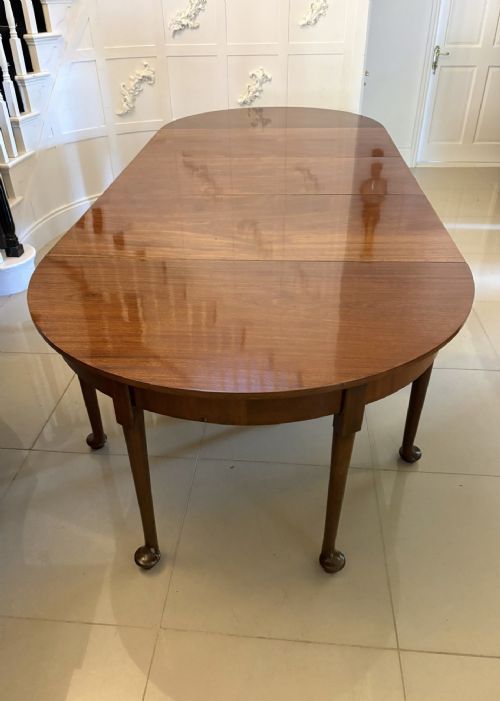
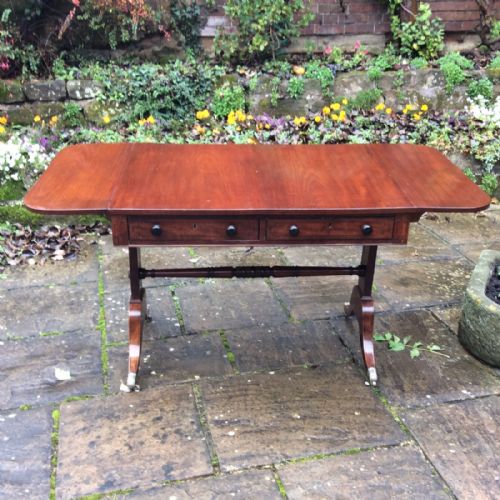
The most common formats met on this page include pairs of demi-lune or D-end tables that pull apart to accept drop leaves or central insert leaves. Alongside these, metamorphic sofa tables, Pembroke drop-leaf designs, and side tables appear, utilising mahogany, rosewood, and oak in Regency, Georgian, and Victorian styles.
How they were made
Cabinet makers constructed these extending console tables primarily using solid and figured mahogany, rosewood, and oak timbers. Marquetry inlay provided decorative surface detail on specific examples, while brass elements secured the extending mechanisms and drop-leaf hinges.
Joinery techniques relied on clever drop-leaf actions, folding tops, and pull-out frames that allowed side tables or console pairs to expand securely into dining formats. These structural modifications required precise carpentry so that leaves aligned flatly when opened for dining use.
The listings span eight distinct periods, from 18th century Georgian and Regency pieces through Victorian eras to 1930s examples.
What varies in quality
The calibre of timber selection dictates the visual impact, particularly where figured mahogany or rich rosewood veneers display striking grain patterns. Superior examples exhibit refined brass fittings and smooth, stable sliding actions within the extending frames.
Design sophistication also marks out the better specimens, ranging from disciplined Georgian proportion to elaborate French Empire marquetry inlay. The integrity of the original joints and the precision of the drop-leaf alignment separate standard utilitarian items from finer cabinet work.
The Extending Console Table Glossary
- Console table
- A table designed to stand against a wall, frequently supported by brackets or legs that match the surrounding interior architecture.
- Metamorphic table
- A piece of furniture engineered to transform from one functional form, such as a console, into another, such as a dining table.
- Demi-lune
- A half-moon shape characteristic of tables that form a full circle or oval when placed together.
- Drop leaf
- A hinged section of a tabletop that folds down when not in use and lifts to extend the surface area.
- Sofa table
- A small rectangular table traditionally placed in front of or behind a sofa, often fitted with drop leaves and small drawers.
Extending Console Table: Frequently Asked Questions
How do these tables extend?
Many of these pieces operate as pairs of console tables that pull apart to accept extra leaves between them. Others utilise drop leaves, folding tops, or sliding frames to expand their surface area.
This engineering allowed households to maintain a compact hall piece that transformed quickly into a full dining table when guests arrived.
What periods do they come from?
The listings span several centuries, featuring Georgian, Regency, and Victorian pieces alongside Edwardian and 1930s examples. Each era brought its own aesthetic preferences to the design of convertible furniture.
Georgian and Regency pieces frequently showcase mahogany and rosewood, while later Victorian and Edwardian items introduce diverse timbers and varied mechanical actions.
Where were they used in the home?
These tables served primarily in hallways, reception rooms, and dining spaces where floor space needed to adapt throughout the day. A console stood neatly against a wall until dinner required a larger surface.
Some smaller formats, such as sofa tables or Pembroke designs, sat comfortably within sitting rooms before being repurposed for meals.
What woods are most common?
Mahogany and figured mahogany appear most frequently across these listings, providing a sturdy and handsome framework for extending mechanisms. Rosewood and oak also feature prominently in specific regional and period pieces.
Decorative touches like marquetry inlay add visual depth to select French Empire and Victorian variations.
Can a single console table extend?
Some single tables extend via drop leaves or folding actions, such as Pembroke or card table formats adapted for dining. Other designs rely on a pair of D-end or demi-lune consoles that unite to create a large seating surface.
Both configurations provide the flexibility required for multi-purpose rooms without dominating the floor permanently.