
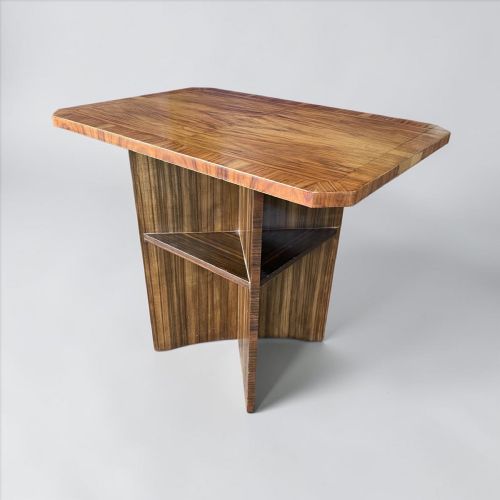
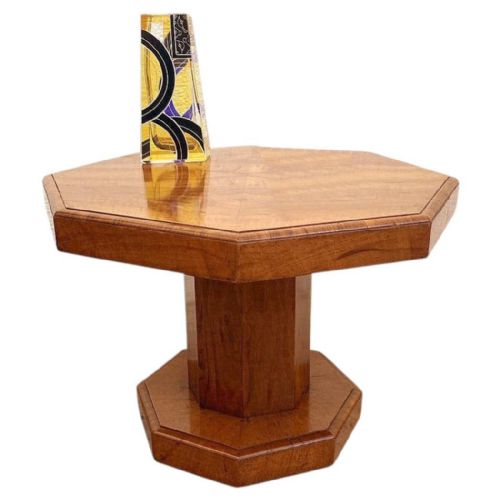


Art Deco Center Table
An art deco centre table anchors a room with strong geometry and rich wood grain.
Art Deco Center Table
An art deco centre table brings distinct early twentieth-century design to a room, functioning as a focal point or a surface for daily use. These forms emerge primarily from the nineteen-twenties and nineteen-thirties, spanning English, French, and Scandinavian origins.
The selection here encompasses low coffee tables, multi-tiered occasional tables, and substantial centre tables. Materials range from native timbers to exotic veneers, capturing the varied domestic aesthetics of the period.
How they were made
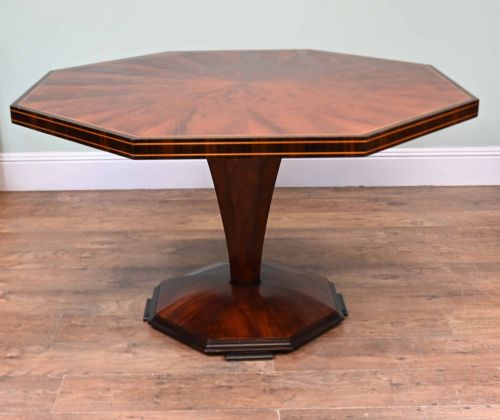
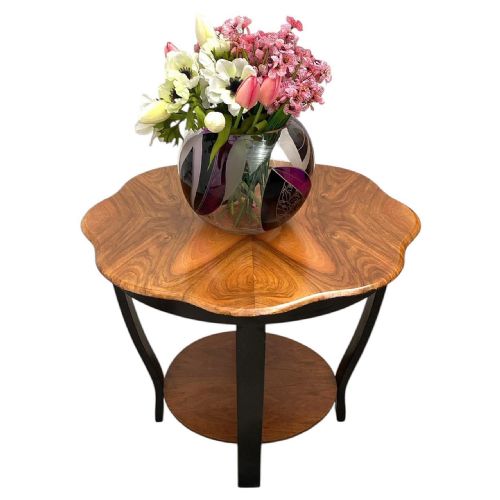
Cabinet makers built these tables using sturdy primary woods as a foundation, applying fine veneers such as burr walnut, figured walnut, birch, and ebony macassar to visible surfaces. This technique allowed workshops to display striking natural grain patterns across flat tops and curved tiers.
Inlaid details, ebonised trim, and glass inserts frequently complemented the woodwork, reflecting the meticulous craftsmanship of French, English, and Scandinavian makers.
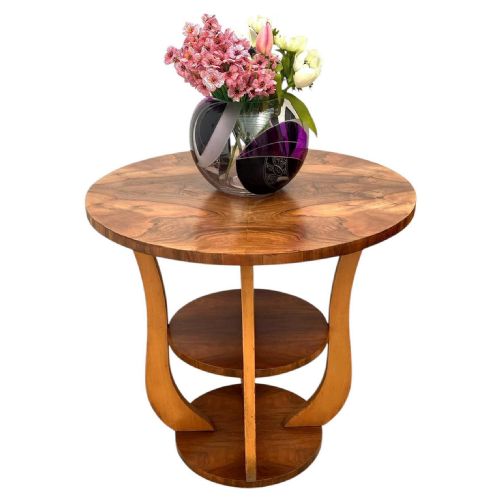
An occasional table can have three tiers, proving that early twentieth-century designers understood the human need to stack books.
What varies in quality
The choice of veneer sets individual pieces apart, with highly figured burr walnut, birds eye maple, and exotic macassar ebony marking out the more ambitious examples. Simpler constructions rely on plain walnut or standard wood finishes.
Complexity of form also defines the tier, from straightforward single-surface coffee tables to multi-tiered occasional designs and inlaid Scandinavian work. The integration of materials like silvered glass further distinguishes the build.
The Art Deco Center Table Glossary
- Veneer
- A thin slice of decorative wood applied to a sturdier underlying timber. This method allowed makers to utilise expensive grain patterns efficiently across large surfaces.
- Burr walnut
- A prized timber harvested from growth deformations on walnut trees, yielding intricate, swirling grain patterns. It remains a hallmark of high-end period cabinetry.
- Occasional table
- A small, movable table designed for specific, intermittent use rather than permanent seating placement. These often feature multiple tiers for storage or display.
- Swedish Grace
- A refined Scandinavian design movement bridging classical restraint and early modernist elegance during the nineteen-twenties. It frequently employed pale timbers such as birch.
- Mirror plateau
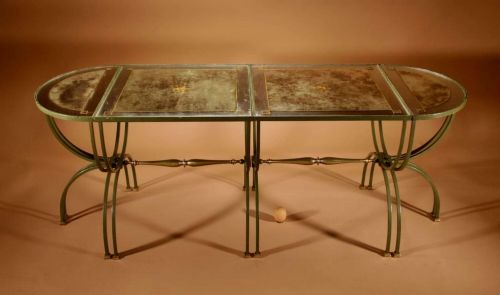
- A mirrored tabletop base originally used to reflect light and display decorative objects or candelabra. It forms an uncommon variant within these dining and living accessories.
Art Deco Center Table: Frequently Asked Questions
What is an art deco centre table?
An art deco centre table is a freestanding occasional or coffee table created during the early twentieth century, characterised by geometric lines and striking wood veneers. These tables served as central decorative and functional pieces in period interiors.
Examples on this page span English, French, and Scandinavian workshops from the nineteen-twenties and nineteen-thirties, utilising materials like walnut, birch, and maple.
How do I style a centre table?
Styling depends on the tier count and surface material, whether glass-topped or veneered in figured walnut. Lower coffee tables suit central seating arrangements, while multi-tiered occasional tables work well beside chairs.
Keep decorative objects minimal to allow the natural grain patterns and geometric lines of the wood to remain visible.
How do I identify Scandinavian pieces?
Scandinavian pieces often feature lighter timbers such as birch and elm, sometimes combined with subtle inlay work or carved details. Swedish Grace designs from the nineteen-twenties display a distinct restraint compared to heavier continental styles.
Check the origin notes and timber selection to distinguish Nordic examples from English walnut or French modernist work.
Were these tables used for dining?
While the majority function as coffee or occasional tables, the grouping includes larger centre tables and specific dining tables. Lower variants suited lounge spaces rather than formal meals.
Multi-tiered designs provided extra surface space for books or tea without cluttering the primary tabletop.