




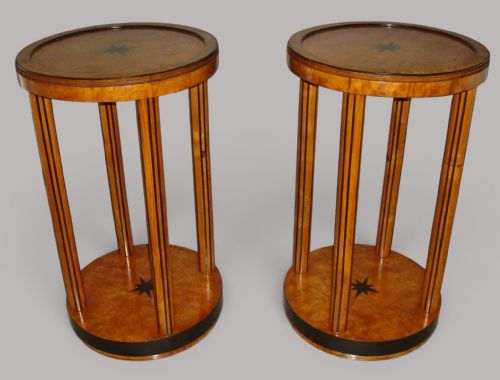


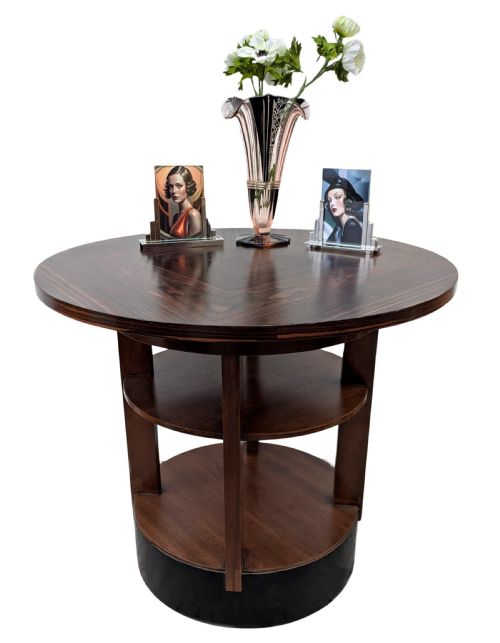


Art Deco Display Table
An art deco display table brings geometric punch and rich graining to a room, offering a surface that works hard for its footprint.
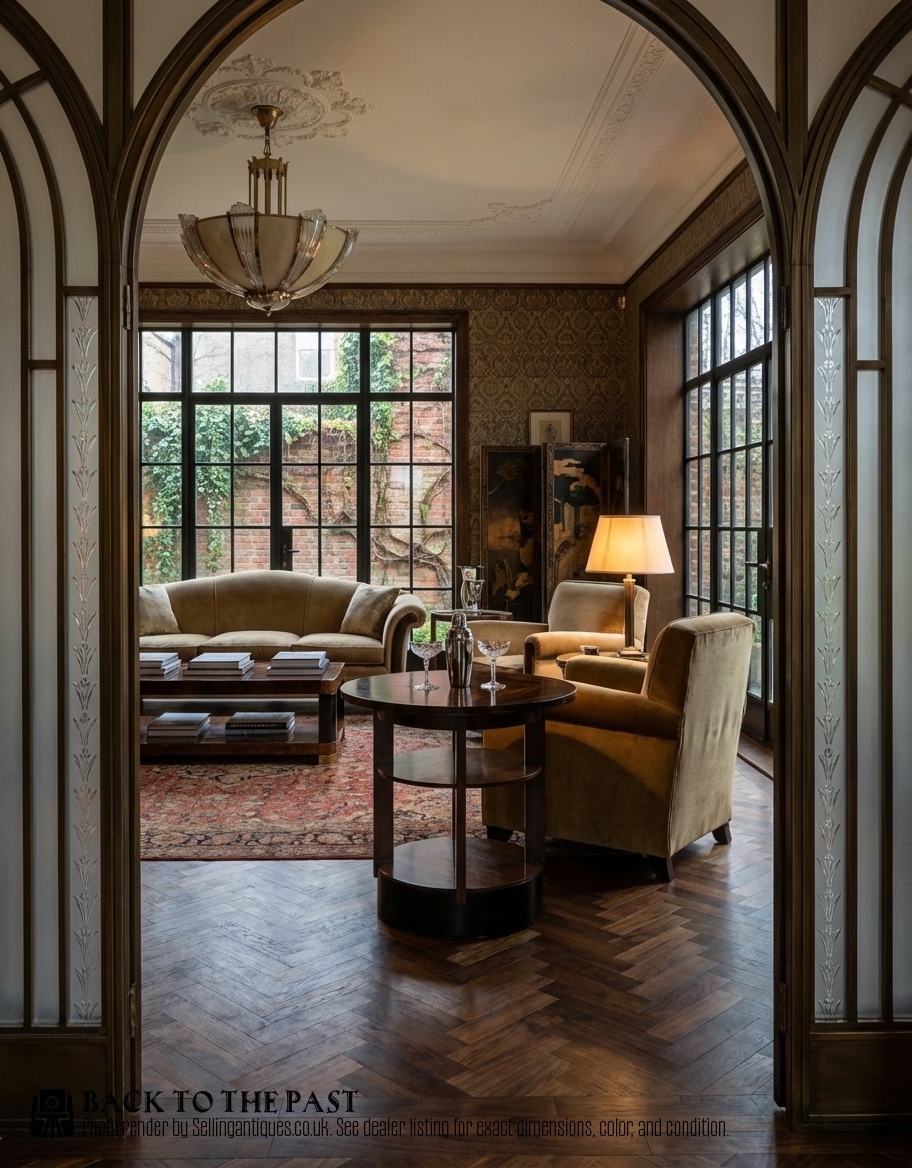
Art Deco Display Table
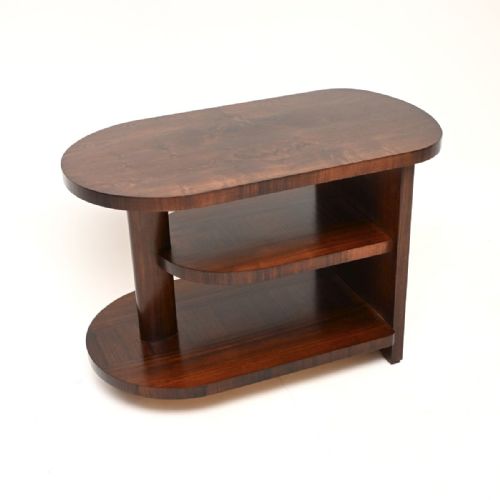
An art deco display table takes the form of occasional tables, side tables, and centre tables originating from the nineteen thirties. These pieces serve as functional surface furniture with characteristic modernist lines and tiered structures.
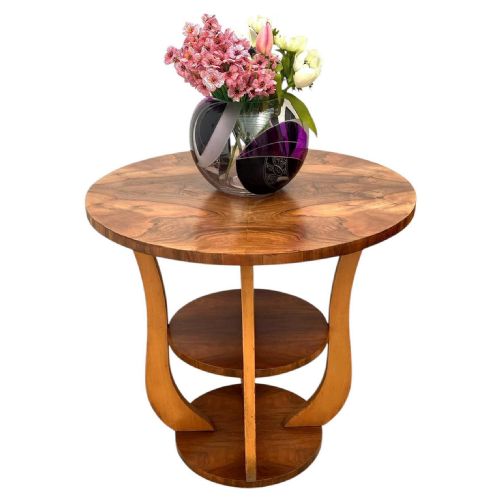
The buyer meets occasional and centre tables most frequently on this page, often featuring multi-tiered designs. These variants provide distinct levels for display while maintaining the signature profile of the period.
How they were made
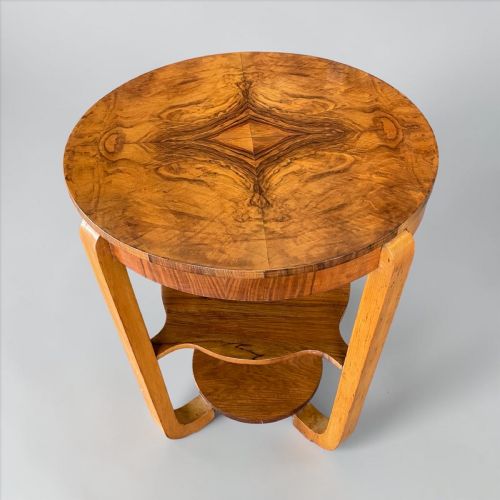
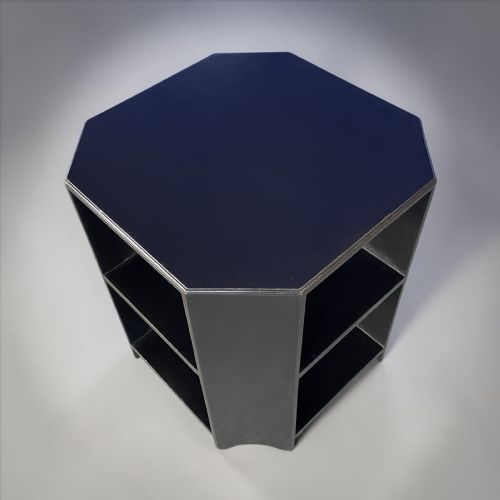
Cabinet makers construct these tables using solid woods paired with decorative veneers such as walnut, burr walnut, rosewood veneer, and satinwood. Ebonised wood and metal provide sharp contrasts against the warmer tones of the primary timbers.
Makers integrate glass elements into the structure to complement the wooden frames. The combination of varied veneers and contrasting materials creates the polished surfaces typical of nineteen thirties furniture.
Art Deco Display Table Retail Price Guide 2026
Typical asking prices for art deco display table among the pieces listed under this phrase on Sellingantiques today, from the lower quarter to the upper quarter. They describe what is for sale here now, not the wider market.
A three-tiered centre table provides enough levels to lose your keys in three separate decades simultaneously.
What varies in quality
Quality rests in the selection and matching of wood veneers across the surface. Distinctive grain patterns like burr walnut elevate a piece above simpler timber constructions.
The complexity of the form dictates the standard of execution. Three-tiered designs and ebonised detailing require precise joinery to succeed.
The Art Deco Display Table Glossary
- Art Deco
- A design style of the nineteen thirties characterised by geometric shapes, streamlined forms, and modern materials. This aesthetic defines the overarching look of these tables.
- Veneer
- A thin slice of figured wood applied over a stable secondary timber to create decorative surfaces. Walnut and rosewood frequently appear in this application.
- Occasional Table
- A small, movable table designed for intermittent use rather than a fixed purpose. These pieces fit easily beside seating or in corners.
- Centre Table
- A freestanding table designed to be viewed from all sides, placed prominently in the middle of a room. Such forms command attention through their scale and symmetry.
Art Deco Display Table: Frequently Asked Questions
What is an art deco display table?
An art deco display table is a nineteen thirties surface piece designed for both utility and visual impact. These tables incorporate geometric forms and contrasting materials.
They appear as occasional, side, or centre tables, frequently utilising multiple tiers to showcase objects.
How do I use a centre table?
A centre table stands freely in the middle of a room as a focal point. It provides a surface for lamps, books, or decorative objects.
Because these tables lack a primary orientation against a wall, they require placement where movement surrounds them entirely.
What woods are used in these tables?
Makers utilise a variety of timbers including walnut, satinwood, and rosewood veneer. Burr walnut provides distinct patterned surfaces.
Ebonised wood and metal frequently supplement these primary woods to deliver contrast and definition.
How do I identify nineteen thirties furniture?
Nineteen thirties furniture relies on streamlined silhouettes, geometric shapes, and stepped or tiered structures. Decoration is minimal yet bold.
The integration of glass with dark woods and contrasting veneers points directly to this specific period.