



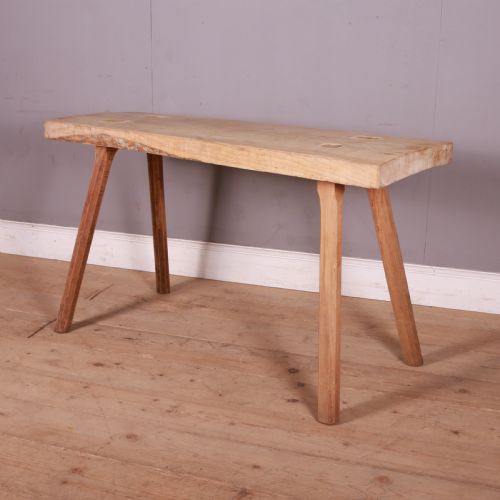
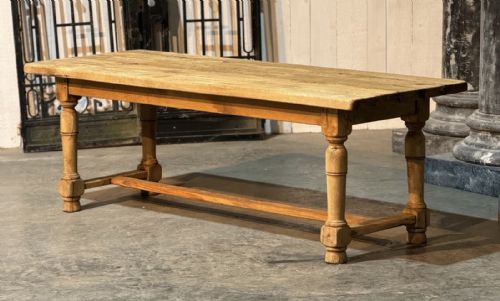


Blonde Wood Dining Table
A blonde wood dining table brings pale, luminous timber into the heart of the home, offering warmth through grain rather than dark stain.
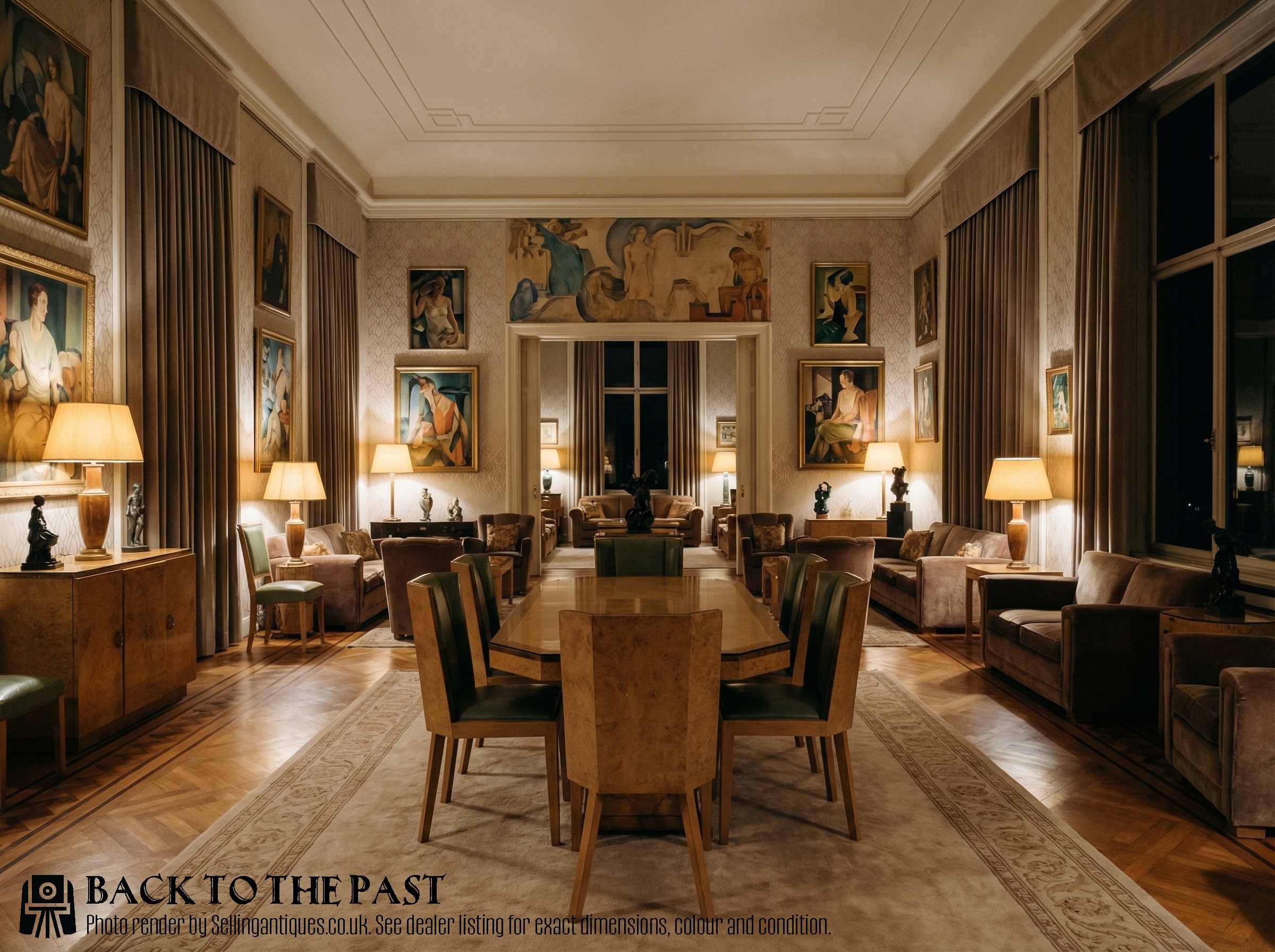
Blonde Wood Dining Table
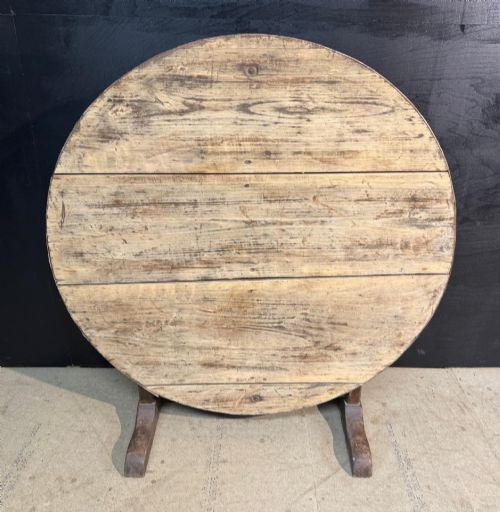
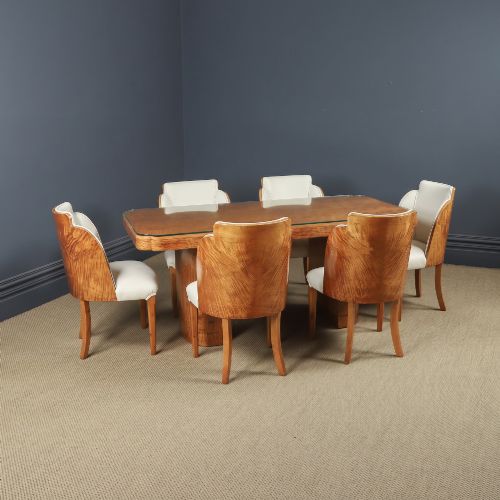
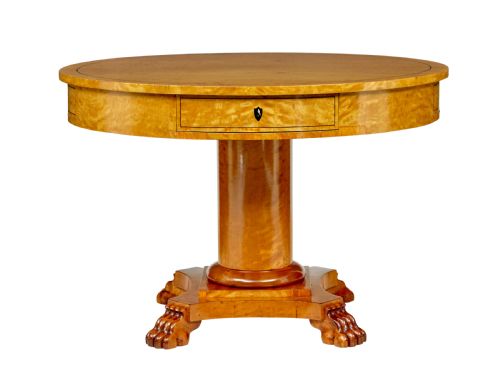
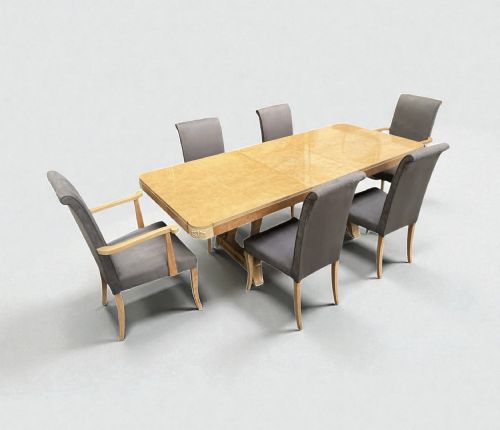
A blonde wood dining table encompasses pale timber surfaces ranging from the golden warmth of sycamore and satinwood to the striking figures of birch, maple, and bleached oak. These pieces stretch across the nineteenth century and into the geometric lines of the Art Deco period, spanning styles from rustic farmhouse forms to Swedish circular centre tables.
The most common examples on this page balance utility with decorative grain, appearing as large kitchen tables or as part of larger dining suites paired with matching chairs. Forms vary from simple trestle and farmhouse tables to radially veneered circular centrepieces and sophisticated burr maple designs.
Judging quality and proportion
Quality rests in the selection of the timber and the honesty of the construction, where figured veneers and radially matched grains show deliberate planning by the maker. The integrity of the frame, whether an H stretcher or a central pedestal, dictates how well the piece endures years of gathering.
Fine examples balance the pale tone of the wood with balanced proportions, ensuring that decorative elements such as satinwood inlay or brass details complement rather than crowd the natural grain.
Blonde Wood Dining Table Retail Price Guide 2026
Typical asking prices for blonde wood dining table among the pieces listed under this phrase on Sellingantiques today, from the lower quarter to the upper quarter. They describe what is for sale here now, not the wider market.
Bird's eye maple gets its name from tiny knots that look like watchful little eyes staring right back at your dinner guests.
Hille
The Blonde Wood Dining Table Glossary
- Sycamore
- A pale British hardwood with a fine, close grain that takes a clean finish without darkening the room. It forms the primary surface of many nineteenth-century provincial and farmhouse tables.
- Bird's Eye Maple
- A figured variation of maple marked by tiny circular eyes created by depressions in the growing wood's annual rings. Cabinet makers prize this timber for high-status Art Deco dining suites.
- Radial Veneering
- A technique where wood veneers are cut and arranged in a sunburst pattern radiating from a central point. This method highlights the natural figure of the timber on circular tables.
- Biedermeier
- A Central European style spanning the nineteenth century that emphasises clean lines, minimal ornamentation, and pale timbers like birch. Swedish interpretations of this style frequently utilise pale wood for centre tables.
Blonde Wood Dining Table: Frequently Asked Questions
How do I clean a blonde wood dining table?
Wipe surfaces gently with a damp cloth and dry immediately to protect the lighter timber from moisture rings and stains.
Avoid harsh modern chemical sprays that can strip the finish and dull the natural grain of woods like sycamore and maple.
Are these tables suitable for daily use?
Many of these pieces originated as functional farmhouse or kitchen tables designed to handle heavy daily activity.
Art Deco suites and polished centre tables require slightly more care with placemats and coasters to preserve the veneer.
How do I date a pale wood table?
Examine the construction methods underneath, the presence of hand-cut joints, and the characteristic style of the legs and stretcher.
Nineteenth-century pieces often show provincial hand-working, whereas nineteen-thirties examples display geometric veneers and streamlined forms.
What rooms suit a pale wood table?
Pale timbers reflect light effectively, making them ideal for brightening smaller dining rooms or open-plan modern spaces.
They bridge rustic and formal interiors, pairing easily with leather chairs or simpler side seating.