
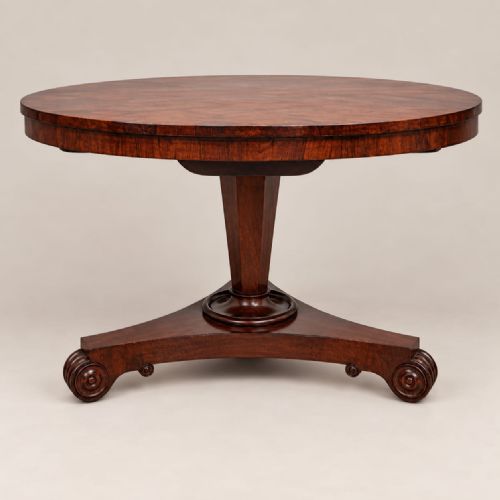

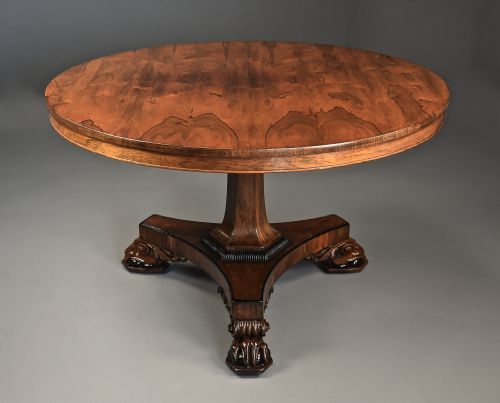
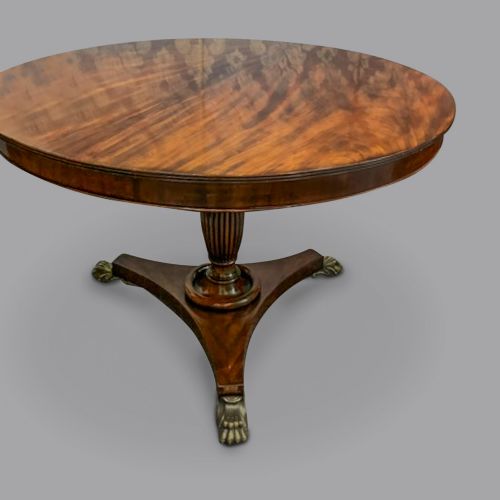
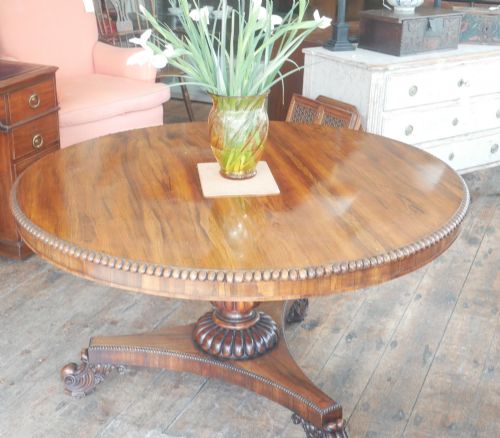


Triform Base Dining Table
These triform base dining table examples combine architectural presence with practical dining functions, offering stability and refined proportions.
Triform Base Dining Table
A triform base dining table brings together George III, Regency, and William IV periods through robust central pedestals supported by three feet. These pieces frequently appear in rosewood, mahogany, and goncalo alves, reflecting the prevailing preferences of the nineteenth century.
Buyers encountering this selection will most often find circular breakfast tables, loo tables, and centre tables featuring heavy triangular or concave bases. Such formats served multifunctional purposes in historical interiors, operating as large dining surfaces or central hall pieces.
The styles span grand Regency designs alongside later William IV interpretations, often incorporating tilt-top mechanisms for ease of movement and storage. These variations demonstrate the enduring popularity of three-sided pedestals throughout the eighteen-hundreds.
What varies in quality
The grade of timber selection and complexity of veneer work heavily influence the standing of an individual table. Superior examples display carefully matched grain patterns across large circular tops and well-executed radial arrangements.
Architectural execution of the triform base itself sets apart finer productions, particularly where carving, parcel gilding, or precision brass inlay integrate smoothly with the main structure. Attributions to known makers and workshops also distinguish the upper tier of these pieces.
Listings feature rosewood, mahogany, goncalo alves, macassar ebony, and brass alongside tilt-top and radial veneer techniques.
Gillows·Walker-Lancaster·James Winter of Wardour Street
The Triform Base Dining Table Glossary
- Triform base
- A support structure resting on three distinct feet or lobes, typically branching from a central pillar. This configuration provides a stable footprint while allowing legroom.
- Tilt-top
- A hinged mechanism allowing the tabletop to pivot into a vertical position when not in use. This design saved space in period dining rooms and parlours.
- Goncalo alves
- A dense exotic hardwood prized for its striking contrasting grain, often utilised in high-status Regency furniture. It yields a distinctive mottled or striped appearance.
- Veneer
- A thin layer of figured wood applied over a stable underlying timber foundation. This technique allowed cabinet makers to display decorative grain patterns without relying entirely on solid luxury boards.
Triform Base Dining Table: Frequently Asked Questions
How were tilt-top tables used?
Tilt-top tables functioned as versatile furniture pieces that could be pivoted vertically and pushed against a wall when floor space was required for other activities. In the nineteenth century, this mechanism allowed large breakfast or centre tables to be cleared away easily.
When lowered for dining or display, a brass catch or wooden button secured the top firmly to the pedestal.
Which woods are common?
Mahogany and rosewood dominate the recorded selection, appearing in both solid construction and elaborate veneer work. Cabinet makers also utilised goncalo alves, macassar ebony, and sycamore for decorative contrast.
These dense timbers allowed for precise turning on pedestals and smooth finishing on large circular surfaces.
How do I distinguish Regency from William IV?
Regency pieces often display refined classical restraint, sometimes incorporating brass inlay, goncalo alves, or lighter woods like sycamore. William IV examples tend toward heavier, more robust proportions with bolder carved rosewood pedestals.
Both styles frequently employ triform bases, but the later nineteenth-century pieces usually exhibit greater mass and more pronounced architectural mouldings.