



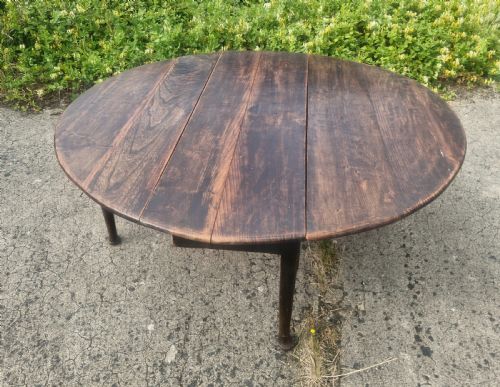

Large Round Table
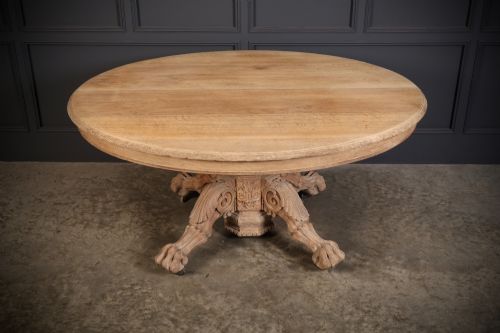
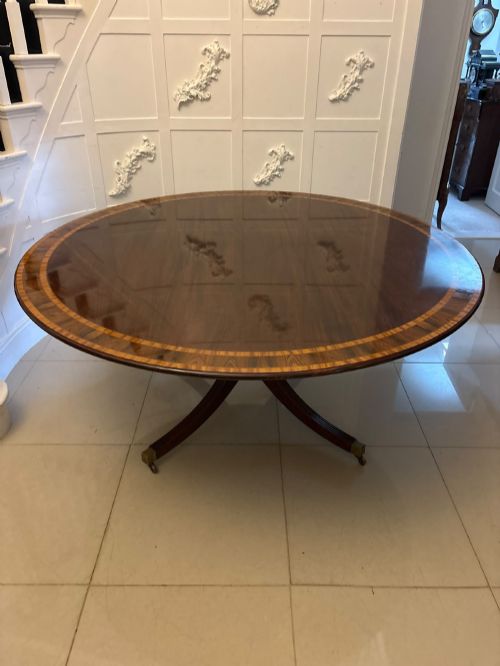
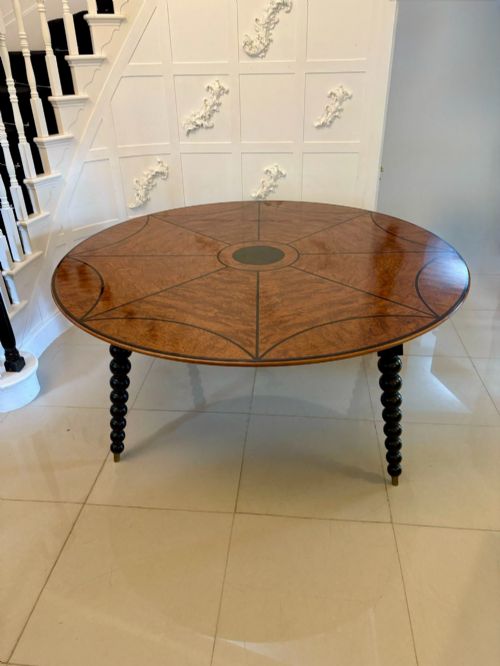
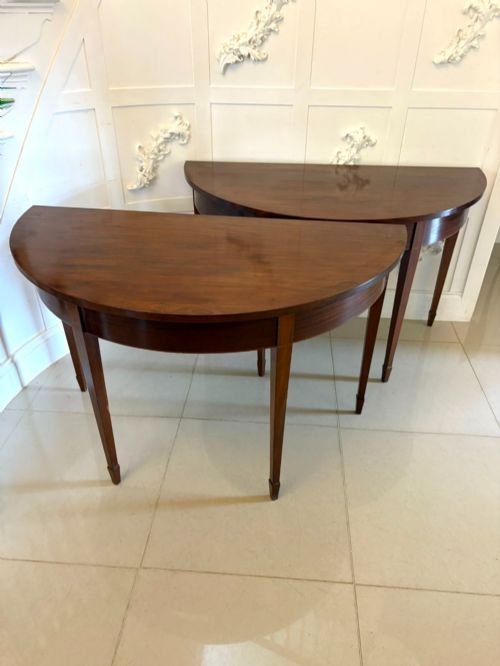
A large round table anchors a room, offering generous proportions and an inviting shape suited for dining, libraries, and grand hallways.
Large Round Table
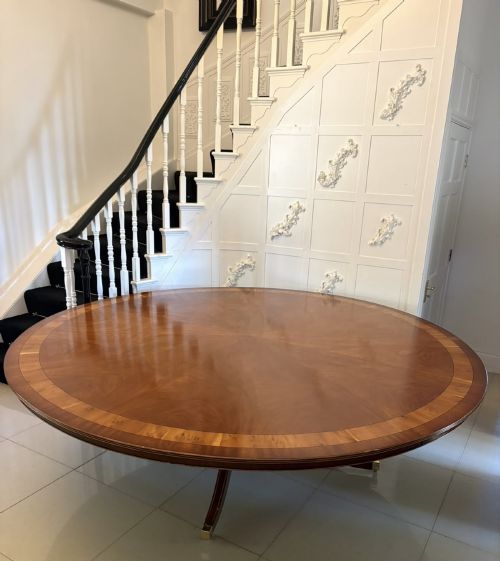
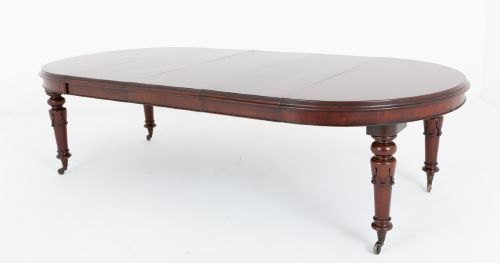
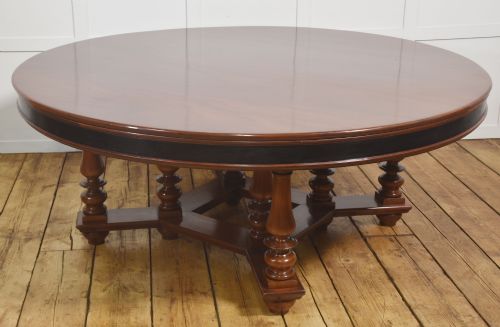
When you search for a large round table, you encounter substantial pieces spanning the eighteenth, nineteenth, and early twentieth centuries, designed primarily as dining tables, centre tables, and breakfast tables. The most common examples you meet on this page are mahogany and rosewood pedestal dining tables and tilt-top breakfast tables from the Regency and Victorian eras, often seating eight or more guests.
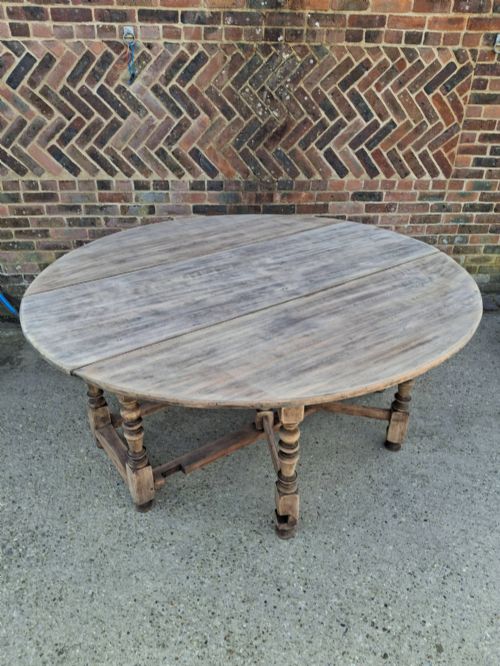
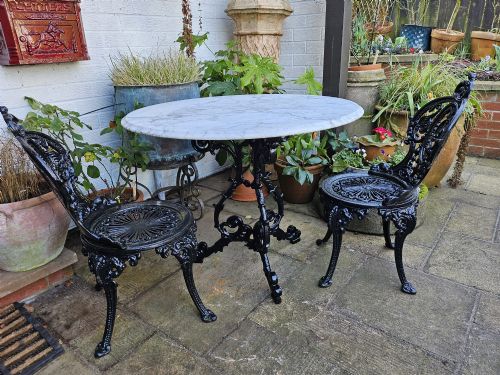
Beyond formal dining furniture, the selection encompasses sturdy pine cricket tables, oak gateleg tables, walnut coffee tables, and marble-topped gueridons. These diverse forms appear across various stylistic revivals, from William IV and French Empire to Art Deco, reflecting the enduring utility of circular surfaces in both country houses and urban interiors.
How they were made
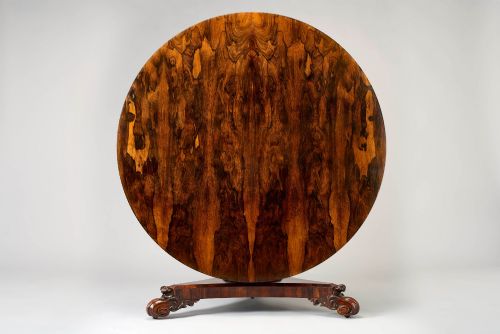
Cabinet makers utilised dense native and imported timbers, pairing solid mahogany, oak, walnut, and pine with decorative veneers such as flame mahogany, burr walnut, and pollard oak. Surfaces frequently feature cross-banding, marquetry inlay, or inset leather panels, supported by substantial central pedestals or turned legs.
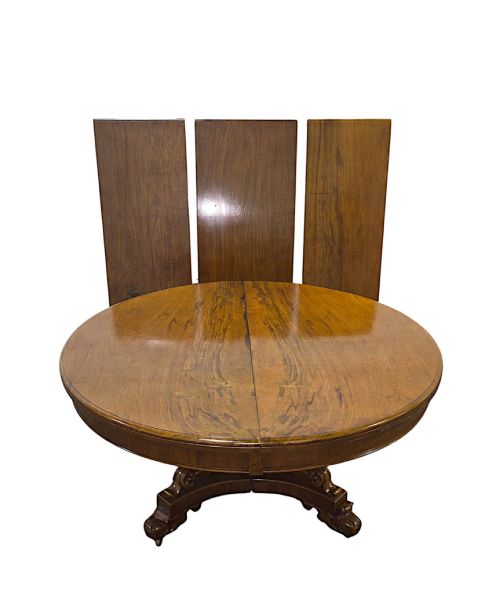
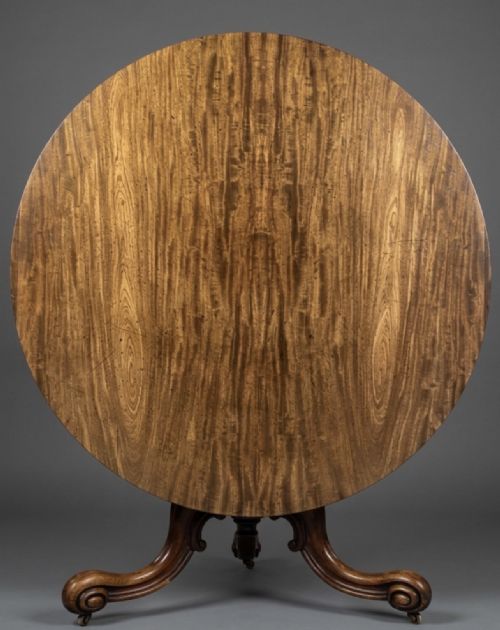
Construction techniques evolved to accommodate scale and movement, particularly in extending dining tables that employ wind-out mechanisms and extra leaves. Tilt-top breakfast tables utilise pivoting mechanisms on robust tripod or platform bases, allowing the heavy circular tops to be stored upright against a wall when not in use.
Large Round Table Retail Price Guide 2026
Typical asking prices for large round table among the pieces listed under this phrase on Sellingantiques today, from the lower quarter to the upper quarter. They describe what is for sale here now, not the wider market.
What varies in quality
The distinction between ordinary production and exhibition quality lies in the selection of timber and the execution of decorative details. Finer pieces display exceptionally figured veneers, intricate marquetry, and deeply carved pedestal bases, often reflecting workshop attribution.
Structural integrity and proportion also separate the grades. Superior tables maintain absolute flatness across wide circular tops despite seasonal timber movement, and mechanical elements such as tilt catches and extending runners operate with precision.
The Large Round Table Glossary
- Gueridon
- A small French occasional table, often round and supported by a single central column or figures, frequently featuring a marble top.
- Tilt-top
- A table mechanism allowing the circular surface to pivot ninety degrees into a vertical position for storage.
- Cricket table
- A small, sturdy English table with a round wooden top supported by three splayed legs, traditionally used in domestic settings.
- Marquetry
- Decorative woodwork in which pieces of tinted wood, shell, or ivory are fitted into a veneer to form geometric or pictorial designs.
- Cross-banding
- A narrow strip of veneer applied to the border of a table top with the grain running perpendicular to the main surface.
Large Round Table: Frequently Asked Questions
How do I seat guests comfortably around a round table?
A large circular surface allows conversation to flow freely between all diners without the head-of-table hierarchy found in rectangular formats. Ensure you allow adequate legroom beneath the central pedestal or support legs.
Measure your dining space carefully to maintain a comfortable circulation path around the perimeter of the table when chairs are pulled out.
What is the difference between a breakfast table and a dining table?
Traditional breakfast tables from the Georgian and Victorian periods often feature tilt-top mechanisms designed to save space in domestic interiors. They were intended for morning meals or as centre tables in grand halls.
Standard dining tables remain fixed in position and frequently incorporate extending mechanisms with removable leaves to accommodate larger dinner parties.
How do I care for antique wood and leather surfaces?
Protect timber surfaces from direct sunlight and extremes of humidity to prevent veneer lifting or timber splitting. Regular dusting with a soft cloth preserves the polished finish.
Leather table tops benefit from occasional specialist wax treatment to maintain suppleness and prevent the material from drying out over time.
How can I distinguish a tilt-top table from a fixed centre table?
Examine the underside of the top where it joins the pillar to locate the pivoting catch and block assembly. Tilt-top versions allow the surface to drop flat and lock securely into a horizontal plane.
Fixed centre tables feature rigid box framing or heavy bracing beneath the surface, ensuring absolute stability for daily use without pivoting capability.