



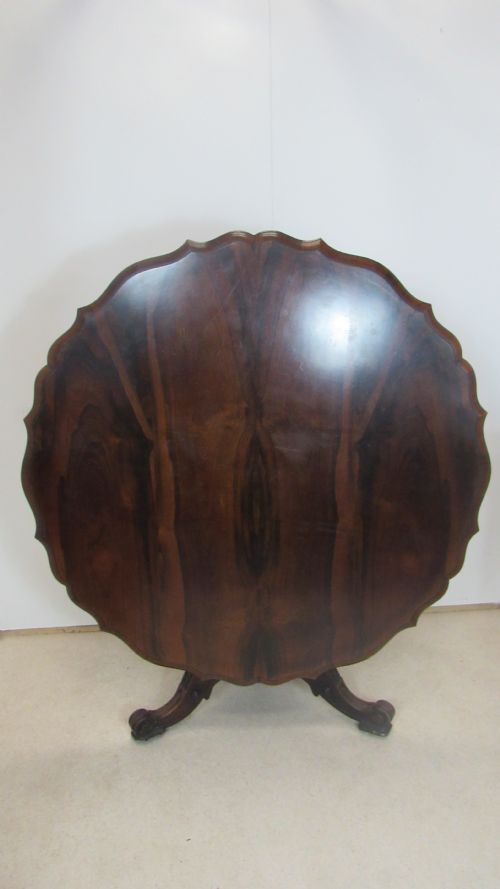


Veneered Round Dining Table
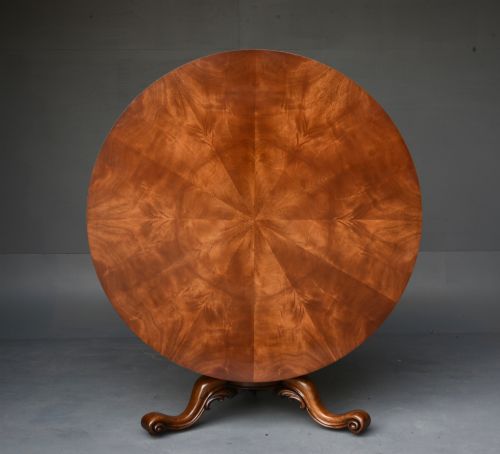
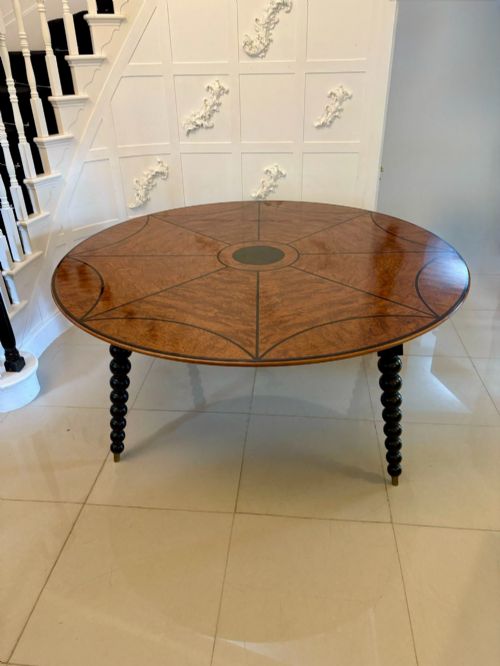
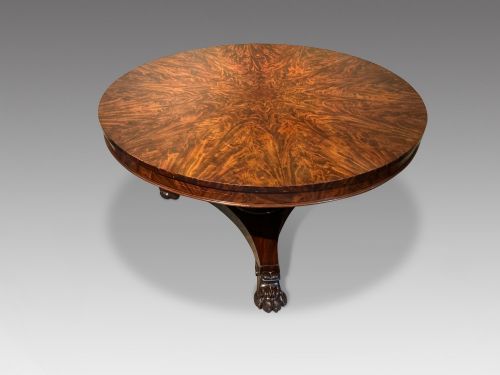
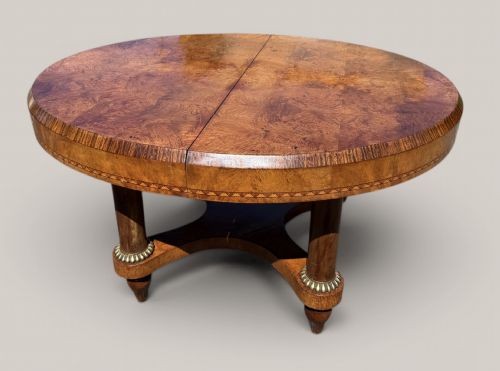
A veneered round dining table brings a striking circular presence to a room, offering warm timber grains and generous space for gathering.
Veneered Round Dining Table
A veneered round dining table combines a circular top displaying figured timber surfaces with a sturdy pedestal or leg arrangement designed for social dining.
Buyers browsing this selection encounter pieces originating primarily from the nineteenth century, the Victorian era, and the interwar decades up to nineteen thirty.
Common regional styles and design revivals span Regency, William IV, French Provincial, and Scandinavian Art Deco movements.
Forms alternate between fixed tops, tilt-top mechanisms, and large extending formats suitable for larger assemblies.
How they were made
Craftsmen applied thin slices of decorative hardwoods over stable secondary timbers to create intricate patterns across the circular surface.
Makers utilised distinct woods such as walnut, mahogany, oak, satinwood, flame mahogany, burr elm, and birch, often arranging grains radially.
Additional detailing incorporated contrasting inlays and polished brass fittings to accentuate the geometric form of the table.
Veneered Round Dining Table Retail Price Guide 2026
Typical asking prices for veneered round dining table among the pieces listed under this phrase on Sellingantiques today, from the lower quarter to the upper quarter. They describe what is for sale here now, not the wider market.
Some nineteenth-century breakfast tables tilt sideways purely so they could double as decorative room dividers when the morning meal finished.
What varies in quality
The sophistication of the timber selection dictates the visual impact, with matched burr veneers and radial grain alignments representing superior craftsmanship.
Structural integrity depends on the stability of the central support and the precision with which the underlying core timbers were joined.
The subtlety of historical French polishing enhances the depth of the wood figure, whereas heavy or unsympathetic restoration diminishes the character.
The Veneered Round Dining Table Glossary
- Veneer
- A thin layer of figured wood applied to a stable backing timber to create decorative patterns. This technique allows cabinetmakers to display striking grain figures that solid wood planks rarely provide.
- Radial
- Arranged like rays emanating from a common centre. Segmented tops often utilise radial veneer placement to draw the eye towards the middle of the table.
- Tilt-top
- A mechanism allowing the circular tabletop to pivot vertically for storage or room clearance. It is frequently found on nineteenth-century centre and breakfast tables.
- Centre table
- A freestanding piece designed to be viewed from all sides rather than pushed against a wall. These tables often anchor a room with a central pedestal base.
- Burr
- A growth deformity on a tree that yields swirling, knotty wood patterns highly prized by cabinetmakers. Burr walnut, oak, and elm dominate the most decorative surfaces.
Veneered Round Dining Table: Frequently Asked Questions
How do I care for a veneered table?
Keep wooden surfaces away from direct heat sources and strong sunlight to prevent the timber from drying out or fading over time. Use coasters and placemats to protect the polished finish from moisture and heat damage.
Dust regularly with a soft, dry cloth and occasionally apply a quality beeswax to nourish the wood. Avoid silicone-based sprays, which can build up and soften the historic polish.
Can round tables extend for guests?
Some circular designs incorporate internal mechanisms and hidden leaves that pull apart to accommodate additional diners. These extending formats maintain their central pedestal stability while increasing surface area.
Other historical examples remain fixed in size, relying on a generous initial diameter to seat multiple people comfortably without crowding.
What is a tilt-top table used for?
Historically, tilt-top tables were tipped upright and placed against room perimeters when not in use to maximise floor space. They served primarily as occasional furniture until needed for dining or parlour gatherings.
Today, the tilting mechanism remains a testament to nineteenth-century ingenuity and allows for easier maneuvering through tight doorways during relocation.
How do I distinguish Victorian from Art Deco?
Victorian pieces typically showcase rich, dark woods like mahogany and walnut, frequently adorned with elaborate pedestal carvings and traditional Revival motifs. Their proportions lean towards ornate historical interpretations.
Art Deco examples from the nineteen twenties and thirties favour streamlined geometric shapes, lighter birch veneers, and minimal ornamentation, reflecting a shift toward modernism.