
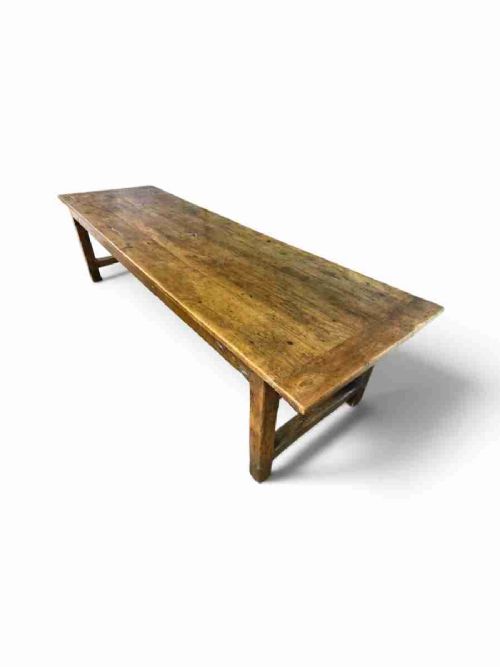
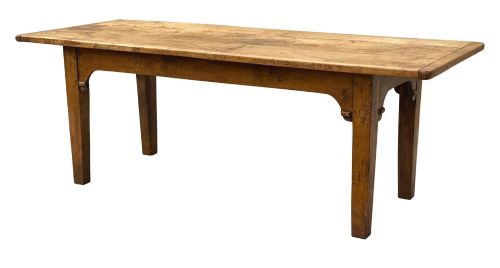
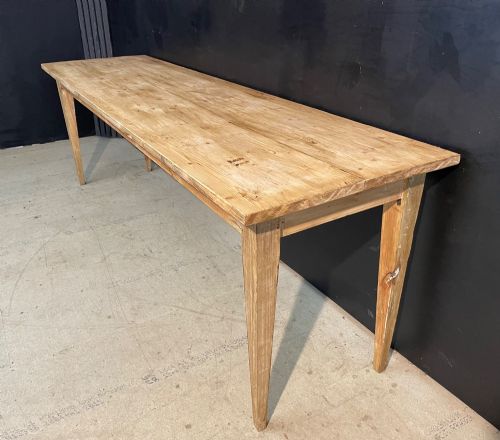
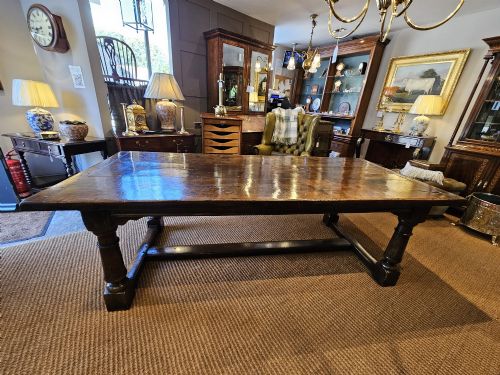
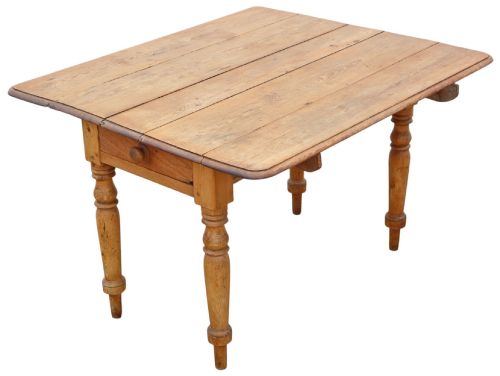
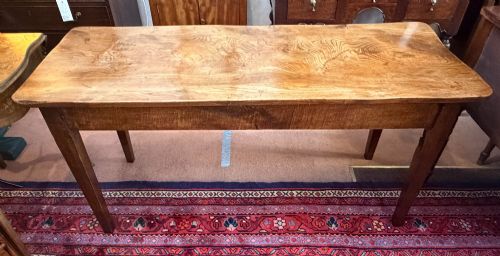
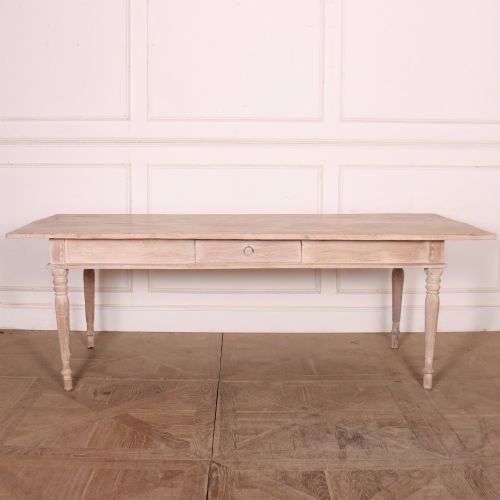
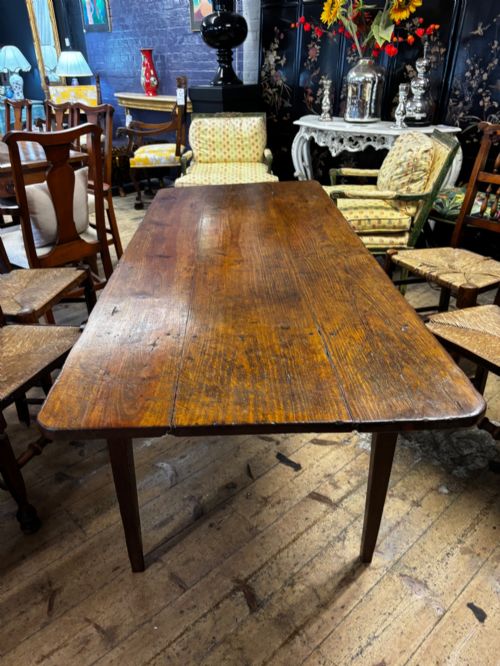
Farmhouse Kitchen Dining Table
A farmhouse kitchen dining table anchors the room with sturdy practicality, offering generous timber surfaces built for daily family life.
Farmhouse Kitchen Dining Table
A farmhouse kitchen dining table brings together historical utility and enduring rustic charm, drawing from centuries of practical domestic design. These heavy timber boards and sturdy frames reflect the functional needs of past rural households, where cooking, dining and daily labour happened around the same central hearth.
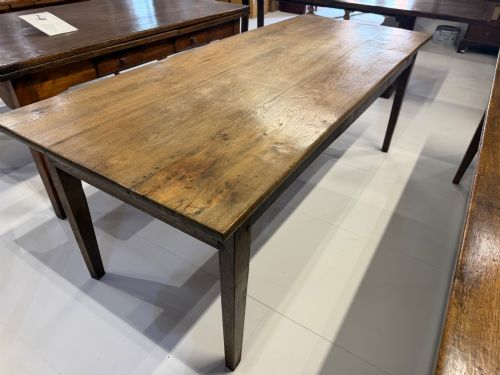
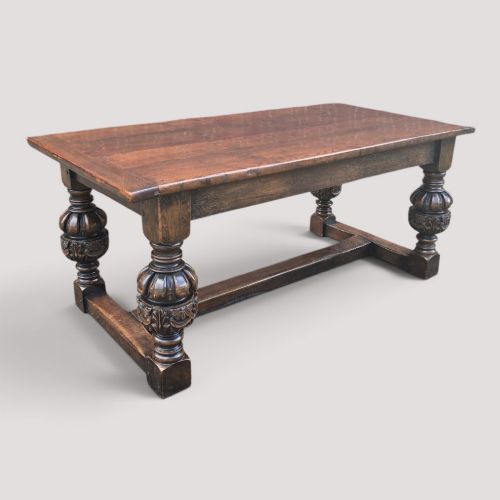
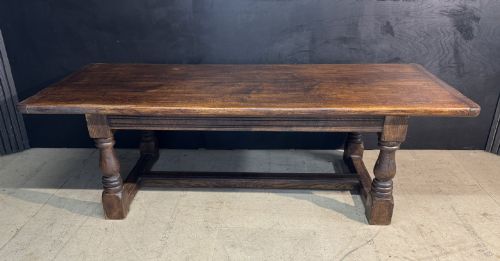
The versions most commonly encountered on this page date from the eighteenth and nineteenth centuries, alongside early twentieth-century interpretations. Oak, pine and fruitwood predominate, often taking the form of long refectory formats or simpler boards equipped with utilitarian drawers.
Regional styles span English country workshops and continental European traditions, particularly French provincial and country designs. Buyers selecting a farmhouse kitchen dining table seek authentic timber patination and substantial proportions capable of seating large gatherings.
How these tables were constructed
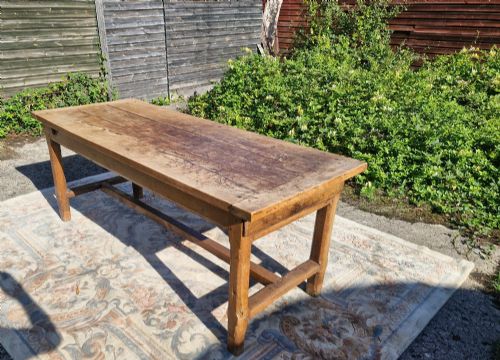
Construction relies heavily on native hardwoods and softwoods such as oak, pine, fruitwood, elm and beech, chosen for their local availability and structural resilience. Cabinet makers and rural joiners utilised thick plank tops joined securely to heavy legs, often employing pegged mortise and tenon joints to withstand decades of rigorous use.
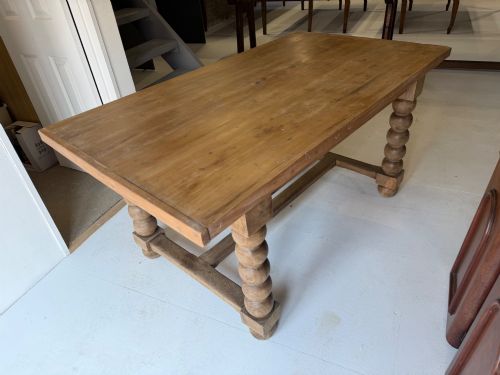
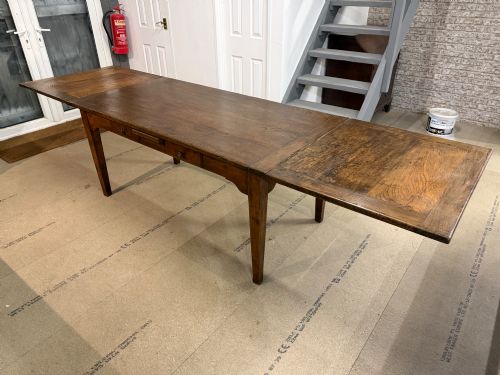
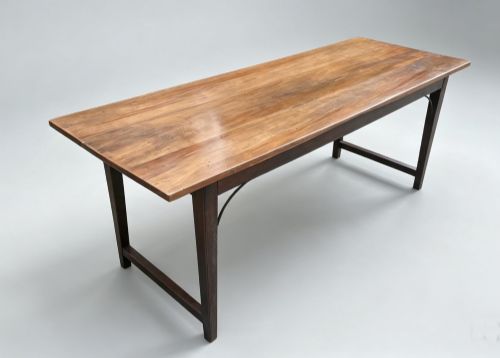
Surface finishes range from natural wax and polished grain to historic painted elements, reflecting the working environment of the original kitchen. Details such as tapered legs, bobbin turnings, folding drop-leaf mechanisms and integrated side drawers demonstrate the varied practical adaptations developed by makers.
Farmhouse Kitchen Dining Table Retail Price Guide 2026
Typical asking prices for farmhouse kitchen dining table among the pieces listed under this phrase on Sellingantiques today, from the lower quarter to the upper quarter. They describe what is for sale here now, not the wider market.
Listings feature eighteenth-century, nineteenth-century and early twentieth-century examples constructed from oak, pine, fruitwood, elm and beech.
What separates exceptional examples from standard pieces
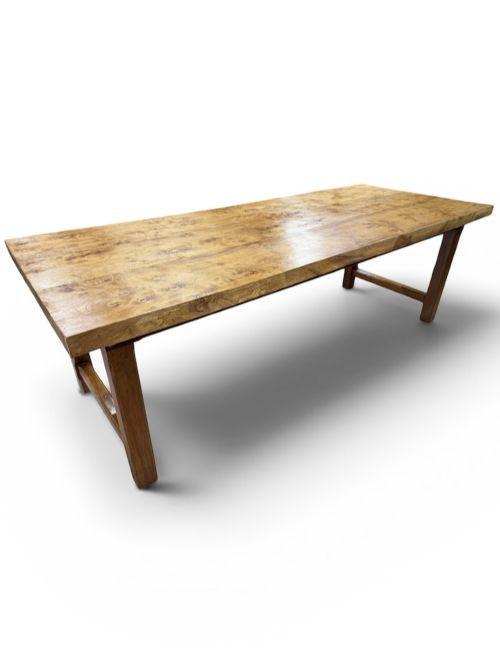
Quality in a farmhouse kitchen dining table rests upon the integrity of the timber selection and the honesty of its construction. Single-piece or wide-plank tops displaying deep, natural patination command greater appreciation than composite tops patched from disparate boards.
The balance between scale and proportion dictates the aesthetic weight of the piece, where slender tapered or turned legs support heavy surfaces without appearing clumsy. Original structural fixtures, such as deep drawers retaining their historic pulls, elevate the integrity of the piece.
The Farmhouse Kitchen Dining Table Glossary
- Refectory table
- A long, narrow dining table traditionally used in communal dining halls and large country kitchens. These forms typically feature substantial stretcher bases for added stability.
- Patina
- The deep sheen and surface alteration developed on timber over decades of exposure, handling and polishing. This characteristic signals genuine age and continuous domestic use.
- Mortise and tenon
- A traditional woodworking joint where a projecting tongue fits snugly into a corresponding cavity. This method creates a rigid, durable connection without relying on modern metal fasteners.
- Stretchers
- Horizontal wooden bars connecting the legs of a table near the floor to reinforce the framework. They frequently double as footrests in rustic kitchen settings.
- Drop-leaf
- A hinged table design featuring movable flaps that lower or fold down to save space. These mechanisms allowed rural families to adjust the surface area according to immediate needs.
Farmhouse Kitchen Dining Table: Frequently Asked Questions
How do I care for an antique timber top?
Maintain the wood by applying natural beeswax periodically to nourish the grain and protect against moisture. Avoid placing the table near direct heat sources to prevent timber shrinkage.
Clean spills promptly with a slightly damp cloth rather than harsh chemical sprays. Gentle upkeep preserves the historic patination accumulated over generations.
Were these tables used exclusively for dining?
Historical rural households utilised these sturdy surfaces for multiple daily chores well beyond eating meals. Food preparation, kneading bread dough and general household labour all occurred on the same boards.
Many examples incorporate built-in drawers specifically designed to house linens, cutlery or small kitchen implements. This multifunctionality explains their robust construction and generous proportions.
How can I tell pine tables from oak ones?
Oak is a dense hardwood displaying prominent grain patterns, medullary rays and a heavier physical weight. Pitch pine and standard pine are softer coniferous woods featuring lighter tones and straighter, simpler grain lines.
Over time, oak generally darkens into rich golden or deep brown hues, whereas pine often develops a softer, warmer amber tone. Both materials show distinct wear patterns consistent with rural domestic service.
What indicates a piece originates from France?
French regional pieces frequently utilise fruitwoods like cherry or pear alongside regional oak, reflecting local woodland resources. Stylistic markers include provincial shaping on apron rails and slightly softer overall silhouettes compared to English iterations.
Cabriole or subtly tapered legs appear frequently in provincial workshops. These details distinguish continental country pieces from domestic British refectory designs.