


Cream Marble Side Table
A cream marble side table brings a cool, enduring stone surface and classical proportion to a room, grounding the space with weight and quiet line.
Cream Marble Side Table
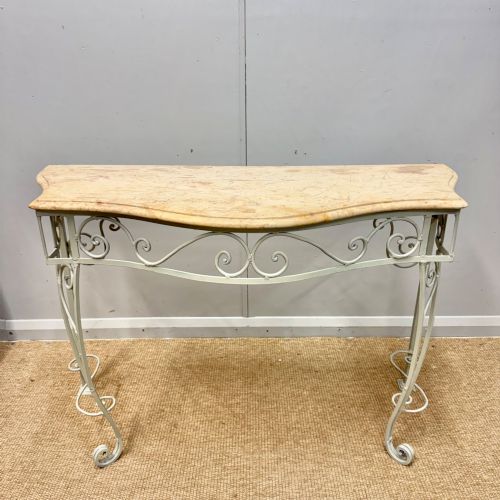
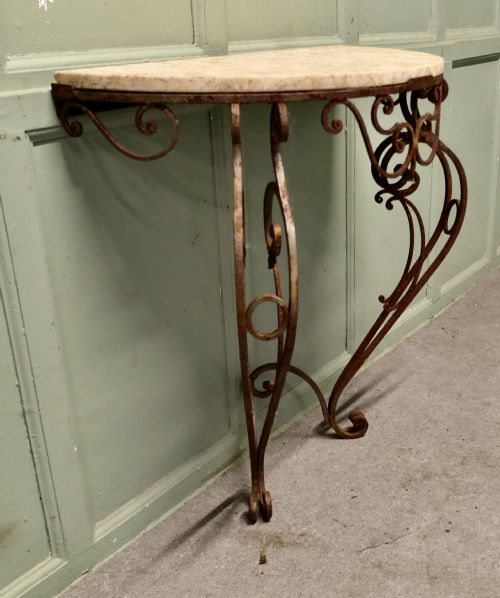
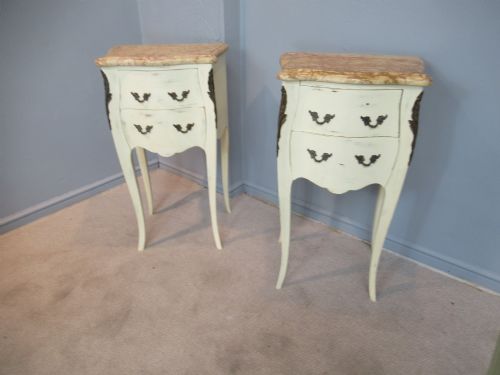
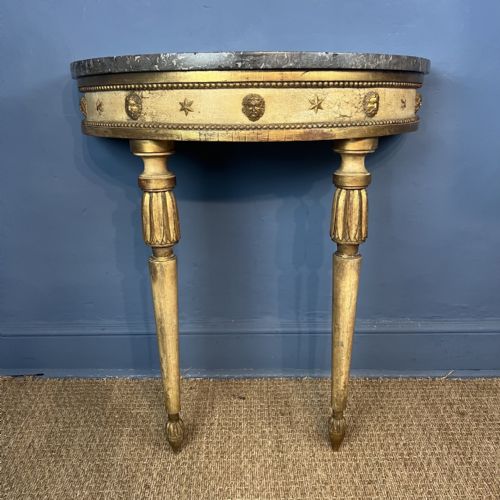
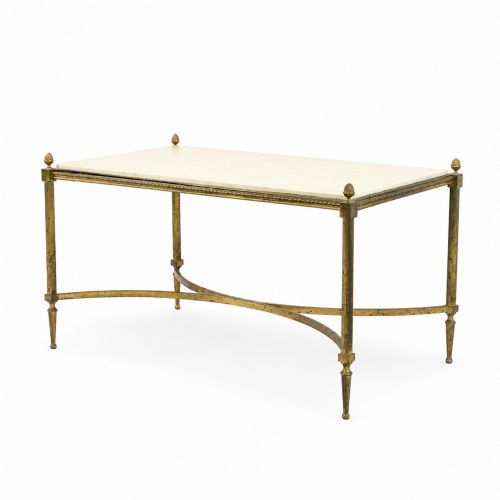
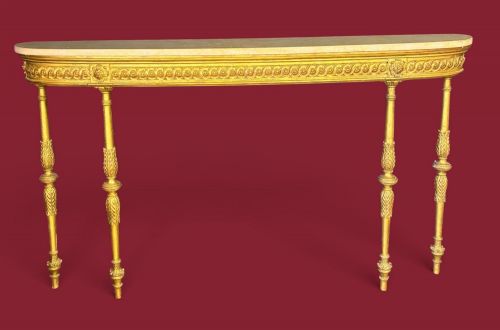
When you search for a cream marble side table, you encounter a variety of forms spanning console tables, side tables, occasional tables, and coffee tables produced across the eighteenth, nineteenth, and early twentieth centuries. These pieces serve practical functions in hallways, drawing rooms, and bedrooms while introducing durable stone tops supported by decorative wooden, iron, or gilt frames.
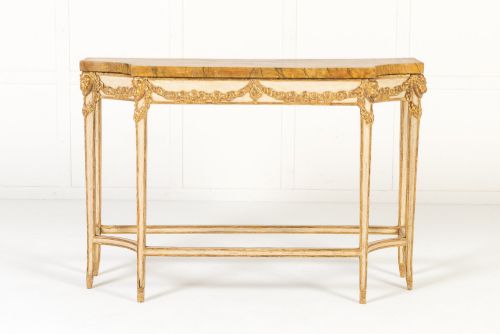
The versions most frequently met on this page include console tables and side tables shaped by Neoclassical, Italian Neoclassical, French Country, and Gustavian design traditions. They combine pale painted wood, giltwood, or wrought iron bases with distinctive marble surfaces that reflect European decorative movements from the 1800s onward.
Materials and construction methods
Makers built these tables using natural stone, solid timber, wrought iron, and brass, pairing heavy marble slabs with sturdy structural frames. Wooden bases often received layers of paint, gesso, and parcel gilt to create decorative surfaces that complemented the veined pattern of the stone top.
Wrought iron elements were hand-forged into scrolls and legs, providing robust support for heavy marble and onyx slabs. Joinery techniques relied on traditional cabinetmaking methods to ensure the stability of tables carrying dense stone tops.
Some tables require two strong people and a cup of tea just to move them three inches to the left.
Distinctions in quality and execution
Quality in these pieces rests upon the integrity of the stone top and the finesse of the supporting frame, whether carved from solid wood or forged from iron. Superior examples display finely hand-carved details, original painted or parcel gilt finishes, and tightly fitted marble slabs that sit flush within their frames.
Lesser or heavily restored specimens may exhibit mismatched repairs to the stone, replacement bases, or modern paint layers that obscure the underlying historical surface. The depth of hand-carving in wood and the purity of the marble significantly elevate the standing of a piece.
Masion Ramsay
The Cream Marble Side Table Glossary
- Console table
- A wall-mounted or freestanding table designed to stand against a vertical surface, frequently topped with marble. These tables often feature decorative front legs while relying on wall fixings for stability.
- Giltwood
- Timber that has been coated with a thin layer of gold leaf over a prepared gesso base. It creates a brilliant reflective surface common on high-status European furniture.
- Wrought iron
- Iron that has been heated and hammered into shape by hand, producing strong, malleable components used for table bases and scrollwork supports.
- Neoclassical
- A style spanning the eighteenth and nineteenth centuries that draws inspiration from the classical art and architecture of ancient Greece and Rome. It emphasises symmetry, restrained ornament, and straight lines.
- Gustavian
- The Swedish interpretation of French Louis XVI style, characterised by pale painted finishes, restrained carving, and functional elegance.
Cream Marble Side Table: Frequently Asked Questions
What rooms suit a marble top table?
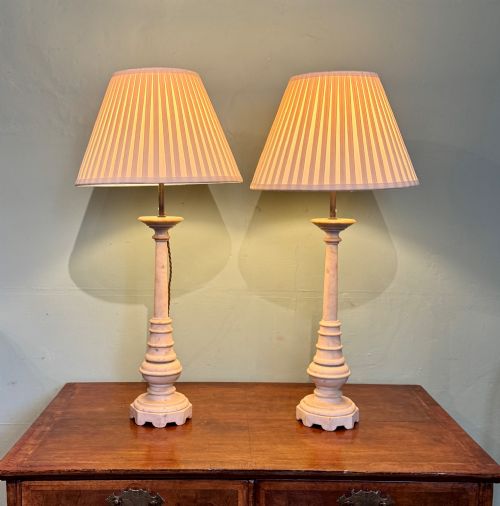
Marble top tables suit hallways, living rooms, and bedrooms where their stone surfaces provide a durable resting place for lamps and decorative objects. Their formal lines work particularly well against plain or panelled walls.
In practical terms, the cool stone surface resists everyday wear while adding a refined architectural element to domestic interiors.
How do I clean cream marble?
Clean cream marble surfaces using a soft cloth dampened with warm water and a mild, neutral soap. Avoid abrasive cleaners or acidic substances that can etch the polished stone.
Promptly wiping away spills preserves the original finish and prevents staining on porous natural marble.
Are these tables heavy to move?
These tables tend to be heavy due to the density of the marble slabs set into their frames. The weight depends largely on whether the top is removable or fixed to the base.
When relocating a table, lifting the stone separately from the wooden or iron base prevents structural damage to the joints.
How do I identify a 19th-century piece?
Nineteenth-century pieces often reveal their age through hand-forged ironwork, traditional joinery methods, and the natural ageing of painted or gilded wood surfaces. Tool marks and handmade variations distinguish older items from later reproductions.
Examining the underside of the table provides further clues regarding construction techniques and historical materials.
What is a console table used for?
Console tables function as decorative side furniture placed against walls in entryways, reception rooms, and hallways. They support table lamps, plants, and small decorative items without occupying excessive floor space.
Historically, larger versions served as serving tables in dining rooms or as display surfaces for porcelain and bronzes.