


French Chateau Pier Table
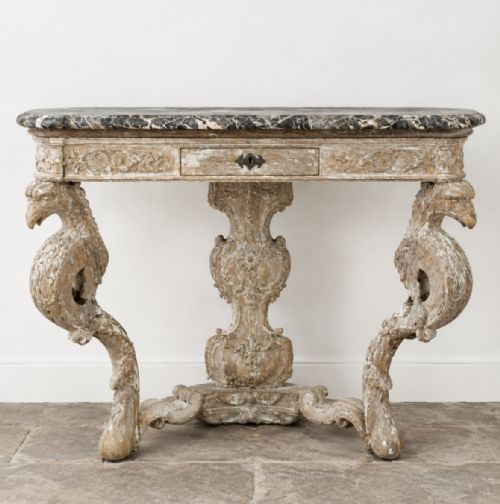
A french chateau pier table brings heavy marble and carved wood against a wall where an old mirror hangs above.
French Chateau Pier Table
A french chateau pier table sits flat against the wall between windows, designed to hold heavy stone and decorative objects without blocking the light. You will find these listed as console tables, wall console tables, or matching sets paired with large mirrors.
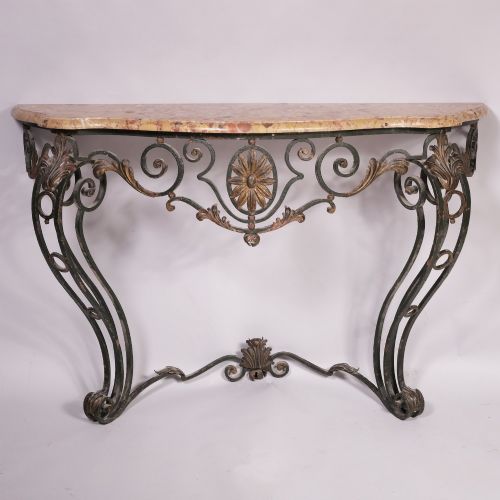
The pieces on this page date from the eighteenth century through the nineteen-thirties, with the nineteenth century providing the largest share of examples. Forms range from rustic wrought iron frames to elaborate carved and gilded showpieces.
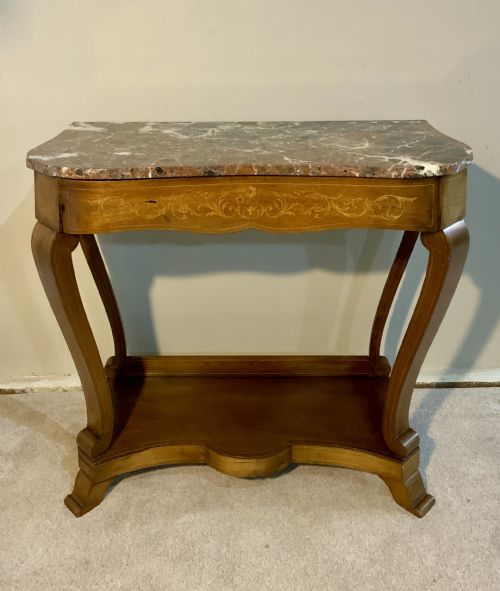
Styles lean heavily towards French Rococo, Louis XVI, and Neoclassical designs, alongside simpler provincial and country pieces. Walnut, mahogany, and painted wood form the structural carcasses beneath fitted stone tops.
Materials and construction
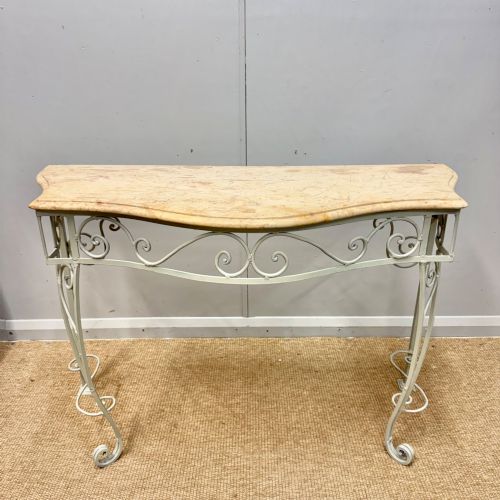
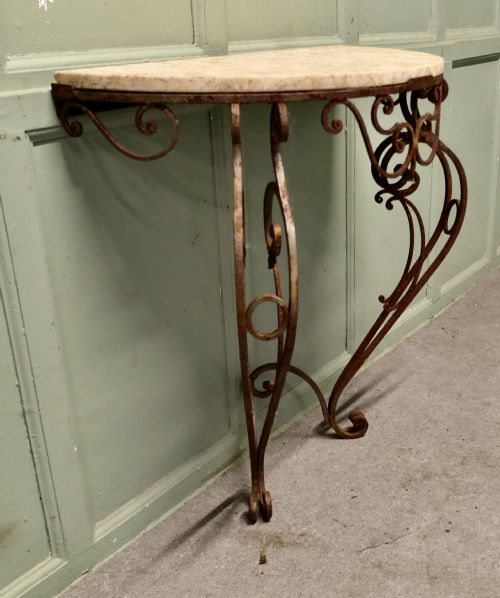
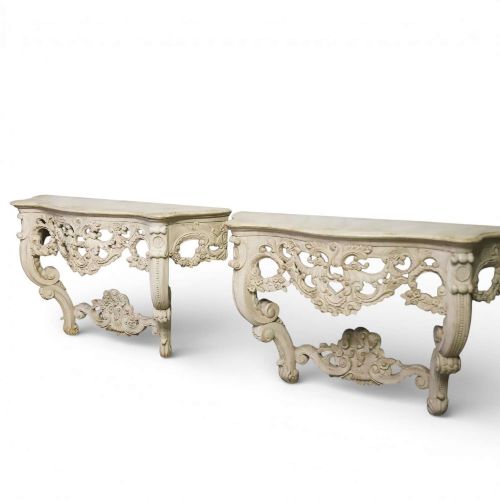
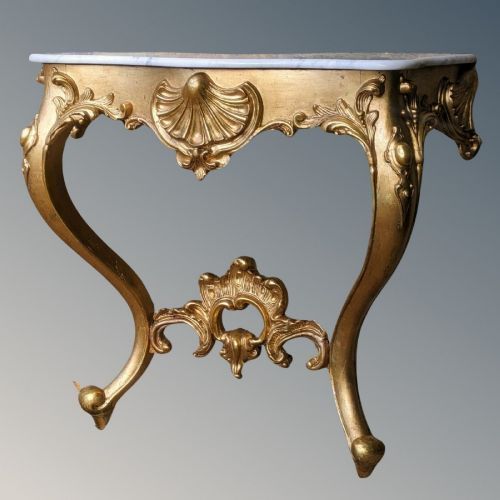
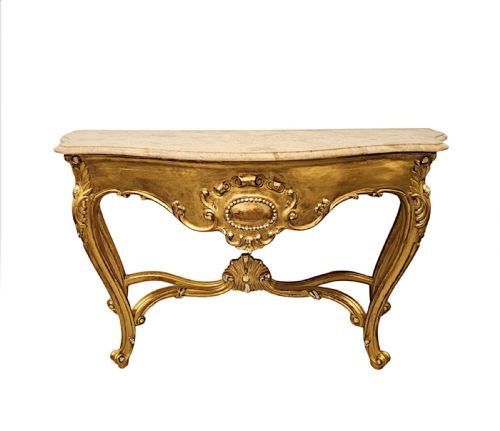
Carpenters shaped wood such as walnut, mahogany, and pine into serpentine and straight frames, applying gesso and paint or laying gold leaf over carved details. Wrought iron appears in domestic examples designed for simpler country rooms.
Slabs of heavy marble form the top surface of nearly every piece, cut to follow the serpentine or rectangular contour of the wooden base. Gilding and hand-painted white or antique finishes complete the surfaces.
Several tables arrive with matching mirrors, proving that even French aristocrats appreciated the value of double-checking their wigs before leaving the room.
What separates the tiers
The depth and sharpness of the hand-carved wood separate ordinary frames from exceptional ones, where gesso and giltwood show crisp floral and scrolling motifs. Heavy, thick marble slabs with distinct veining command greater presence than thin or plain stone replacements.
Original painted and parcel gilt surfaces retain more character than later repainting, while matching console and mirror sets represent the highest level of domestic interior planning.
The French Chateau Pier Table Glossary
- Pier table
- A table designed to stand against the wall between two windows, directly beneath a pier glass mirror.
- Giltwood
- Timber coated with gold leaf over a prepared gesso ground. It reflects candlelight and daylight in a formal interior.
- Serpentine
- A curved line that undulates inwards and outwards, frequently seen on the front edge of these marble tops.
- Console table
- A wall-mounted or freestanding table supported by front legs, requiring stability from the wall it touches.
French Chateau Pier Table: Frequently Asked Questions
Where should I place a pier table?
These pieces suit narrow wall spaces, hallways, or the area between two windows where traditional floor tables take up too much room.
They work well beneath large wall mirrors or paintings, creating a focal point in a reception room or entrance hall.
Are the marble tops original?
Many marble tops remain original to their wooden bases, shaped precisely to fit the serpentine or rectangular frames.
Some replacement stones appear on nineteenth-century examples due to centuries of domestic wear and heavy use.
How do I clean the marble?
Wipe the stone surface gently with a soft damp cloth using mild soap when necessary. Avoid harsh chemical cleaners that can etch or dull the polished finish.
What is the difference between a console and a pier table?
A console table attaches to a wall for support, whereas a traditional pier table sits squarely on its own legs between architectural windows.
In modern descriptions, dealers often use the terms interchangeably for furniture sharing this narrow wall-standing format.