


Vintage Marble Pier Table
A vintage marble pier table brings architectural weight and a cool stone surface to an entrance hall or living room.
Vintage Marble Pier Table
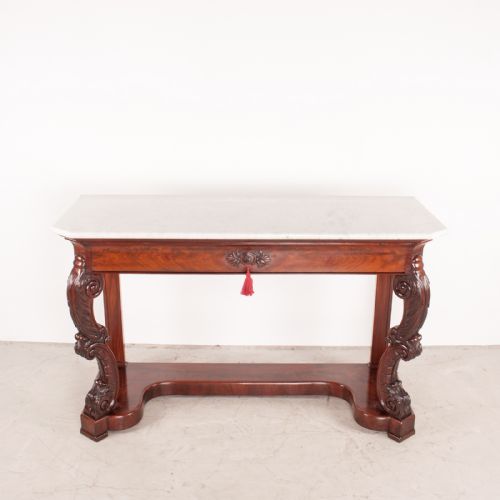
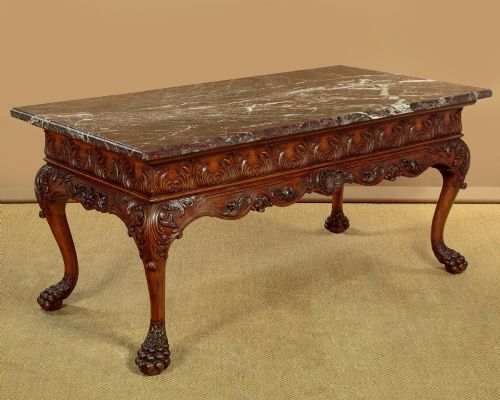
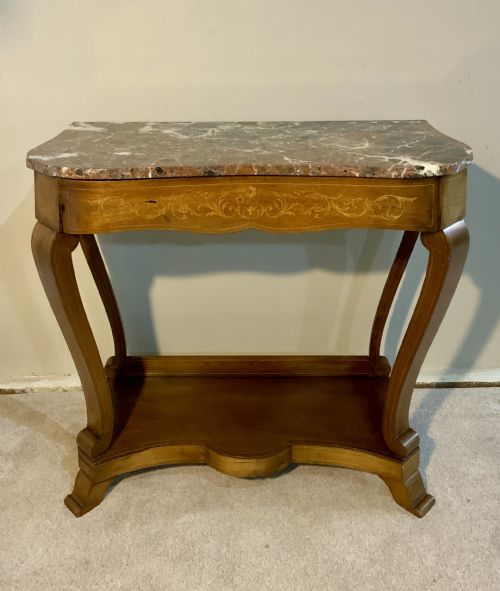
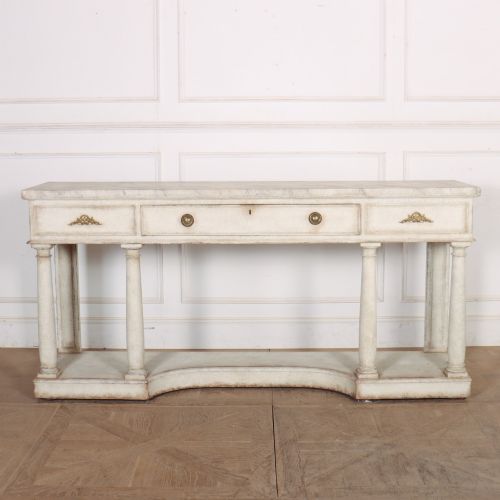
When you search for a vintage marble pier table, you encounter heavy stone-topped surfaces designed to stand against a wall, frequently between windows. The examples found here span several centuries and decorative movements, encompassing console tables, side tables, and washstands.
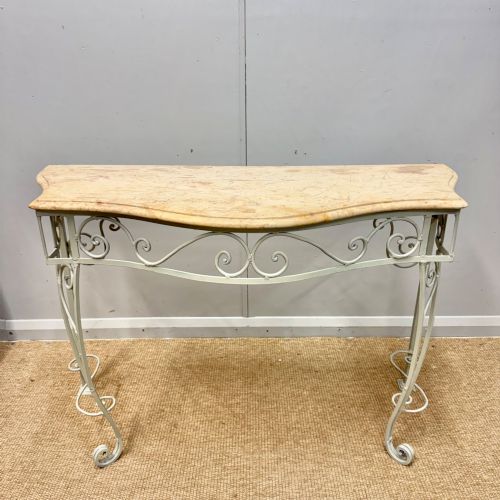
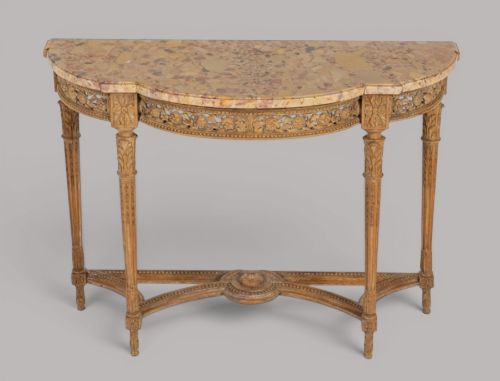
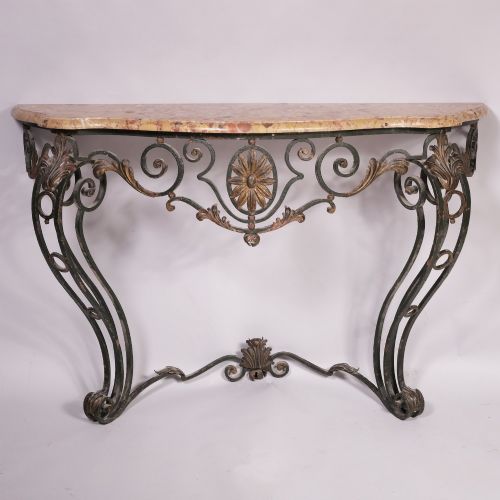
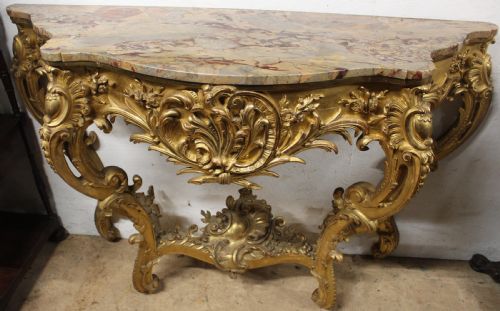
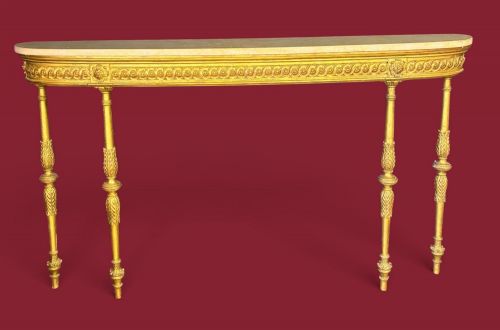
The selections range from nineteenth-century French giltwood and wrought iron frames to eighteenth-century walnut and painted Italian pieces. Most versions rely on a fitted marble slab resting upon a substantial wooden or metal base, often featuring serpentine outlines.
Originating largely from European workshops, these furnishings include pieces styled after French Rococo, Neoclassical, and Empire designs. Buyers typically select them to anchor a hallway or to serve as a decorative focal point beneath a mirror.
Materials and construction
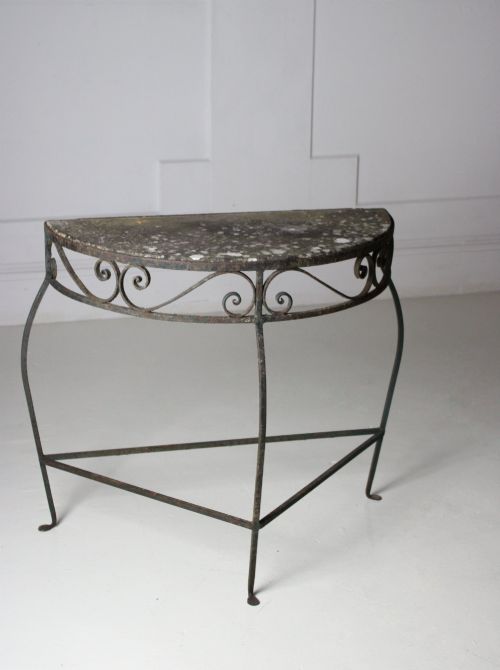
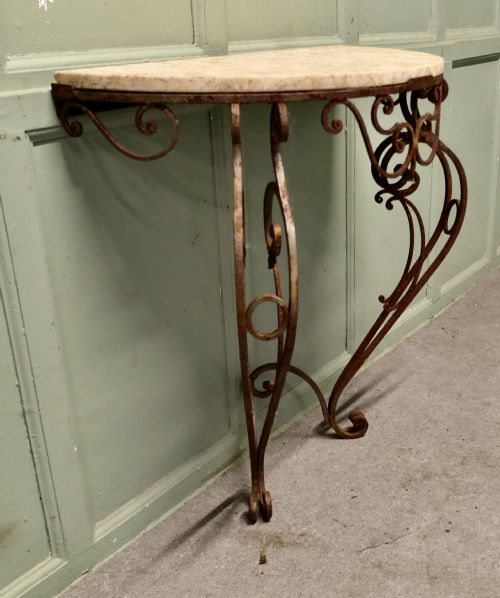
The construction combines heavy slabs of polished marble with structural frames built from mahogany, walnut, rosewood, oak, or wrought iron. Giltwood and gesso finishes provide ornamental detail on pieces influenced by French styles.
Carpenters shaped the timber frames using traditional joinery, often carving intricate motifs into the wood for Neoclassical and Rococo Revival designs. Iron frames are shaped and joined to support the considerable weight of the stone top.
Several tables feature serpentine marble tops shaped to follow the gentle, rolling curves of eighteenth-century French fashion.
Variations in quality
Quality depends upon the depth and crispness of the hand-carving on the wooden frames, as well as the thickness and figuring of the marble top. Finishes such as original gilding or period paintwork retain higher integrity than later alterations.
The weight and stability of the frame indicate structural competence, particularly given the heavy load of a stone surface. Finer examples display harmonious proportions between the decorative base and the marble slab.
The Vintage Marble Pier Table Glossary
- Pier table
- A table designed to stand against a wall, typically between two windows. It often sits beneath a matching wall mirror.
- Console table
- A table supported by brackets or console legs attached to a wall, though many freestanding variants exist in these listings.
- Serpentine outline
- A curved edge that bends inward in the centre and outward at the ends, common in eighteenth and nineteenth-century designs.
- Giltwood
- Timber coated with a thin layer of gold leaf or gold paint. It defines the ornate surfaces of French and English decorative tables.
Vintage Marble Pier Table: Frequently Asked Questions
Where should I place a pier table?
These tables suit narrow entrance halls, living room walls, or spaces beneath large wall mirrors where a shallow surface is useful.
Because their flat backs are designed to stand directly against a wall, they do not take up excessive floor space in tight rooms.
How do I care for the marble?
Wipe the stone surface with a soft, damp cloth and avoid acidic cleaners that can etch the polish.
Using coasters and mats prevents staining from liquids and protects the vintage surface from unnecessary wear.
Are these tables freestanding?
Most console and pier tables rely on the wall for ultimate stability, even when they possess four legs.
Heavier iterations benefit from being secured to the wall to prevent tipping under the weight of the stone.
How do I identify a period style?
Look to the decorative motifs, such as the scrolling curves of Rococo Revival or the straight, formal lines of Neoclassical design.
The choice of timber, such as walnut or mahogany, often aligns with the manufacturing traditions of the eighteenth and nineteenth centuries.