
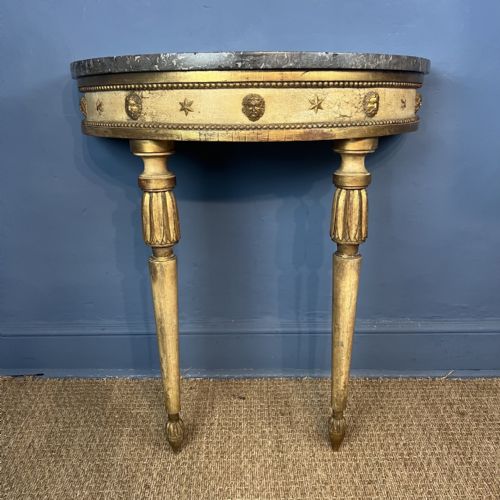
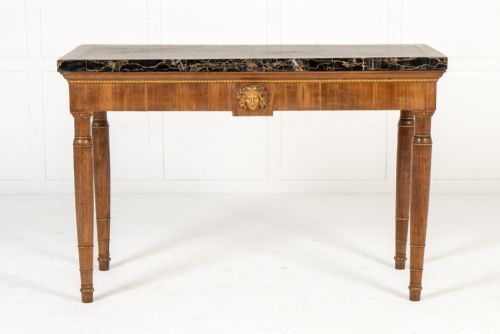


Wall Mounted Console Table
A wall mounted console table brings architectural grace to a hallway or reception room, fixing directly to the wall to anchor a mirror or display ornaments.
Wall Mounted Console Table
When searching for a wall mounted console table, you encounter architectural ledges designed to fix directly to a vertical surface rather than standing on four independent legs. These pieces serve as decorative focal points in entrance halls and reception rooms, often accompanied by matching mirrors.
The selections span various forms including wall consoles, pier tables, and console tables with mirrors, originating from the nineteenth century up to the nineteen-thirties.
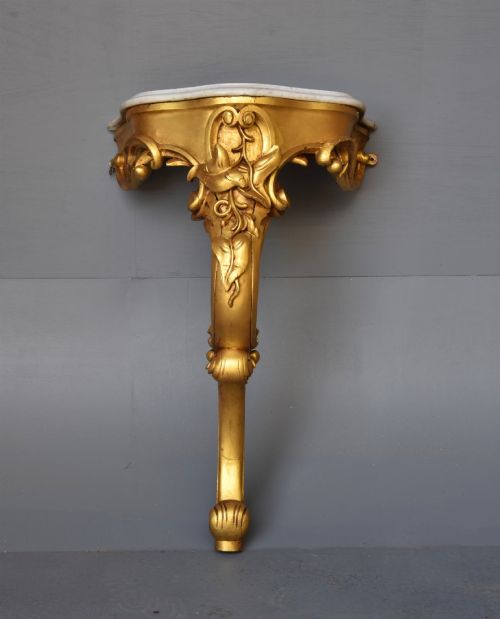
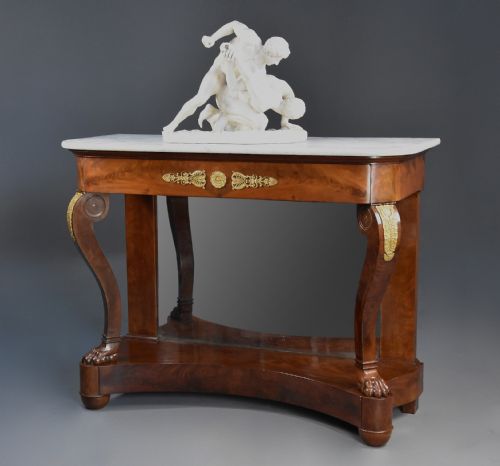
You are most likely to meet French and Italian examples from the nineteenth century, finished in carved giltwood, painted wood, or mahogany with marble tops.
Materials and construction
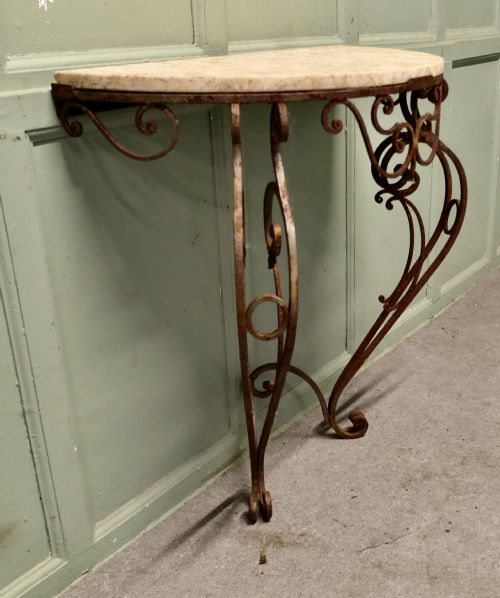
Craftsmen shaped solid woods such as mahogany, walnut, and wrought iron into structural frames, applying layers of gesso to carved wooden details before finishing with gilding or paint.
Heavy marble slabs form the top surfaces of many pieces, providing a cool and durable counterpoint to ornate wooden or gilded aprons and supports.
Wall Mounted Console Table Retail Price Guide 2026
Typical asking prices for wall mounted console table among the pieces listed under this phrase on Sellingantiques today, from the lower quarter to the upper quarter. They describe what is for sale here now, not the wider market.
Listings feature pieces spanning from the early nineteenth century through the nineteen-thirties, incorporating marble, giltwood, gesso, and mahogany.
Judging the work
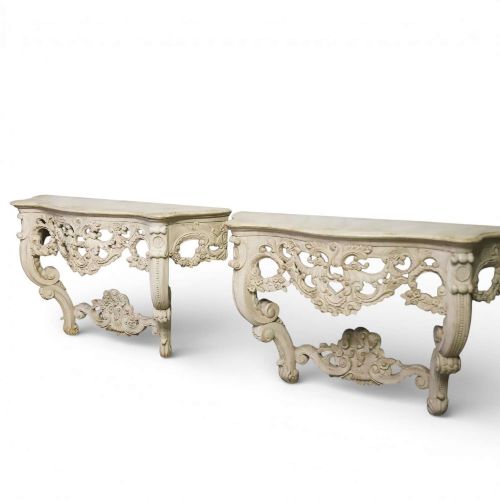
Quality rests in the crispness of the hand-carved detail upon the wooden or gesso frames, where deeper, more deliberate carving distinguishes finer workshop output from simpler production.
The integration between the heavy stone top and the supporting console reveals the maker's precision, alongside the depth and longevity of the original gilding or paint layers.
The Wall Mounted Console Table Glossary
- Giltwood
- Wood that has been coated with thin sheets of gold leaf over a prepared base. This finish creates a bright metallic lustre common in nineteenth-century decorative furniture.
- Gesso
- A plaster mixture applied to wood surfaces as a smooth base for gilding or painting. It allows craftsmen to carve intricate relief decorations before finishing.
- Ormolu
- Gilded bronze mounts applied to furniture for decorative effect. These metallic accents catch the light and enrich the surrounding wood or marble surfaces.
- Pier table
- A table designed to stand against a wall beneath a pier glass mirror. These tables often match the accompanying mirror frame in material and style.
- Demi lune
- A half-moon shape characteristic of certain console tables. This curved profile allows the furniture to sit flat against a wall while projecting into the room.
Wall Mounted Console Table: Frequently Asked Questions
How do I secure a wall mounted console table?
These tables require sturdy fixings into solid masonry or properly located wall studs to support the weight of the frame and marble top.
Professional installation is often advisable due to the heavy stone components and the requirement for absolute stability against the vertical surface.
Where should I place a console table?
They suit entrance halls, narrow corridors, and reception rooms where floor space is limited but surface display area is desired.
Positioning them beneath a picture frame or wall mirror creates a balanced architectural composition within the interior.
What maintenance do marble tops require?
Marble surfaces benefit from regular dusting with a soft cloth and immediate blotting of any liquid spills to prevent staining.
Harsh chemical cleaners should be avoided in favour of mild soapy water designed for natural stone.
How do I identify French and Italian styles?
French pieces often display exuberant Rococo curves or formal Empire proportions, utilising rich flame mahogany or bright giltwood finishes.
Italian examples frequently incorporate cream paint, parcel gilding, and restrained neoclassical lines or carved walnut.