


Louis XV Style Console
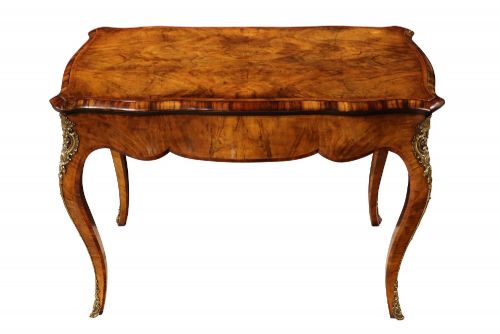
When you search for a louis xv style console, you are looking for serpentine walnut, gilded gesso and marble tops built for Parisian salons and revived through the nineteenth century.
Louis XV Style Console
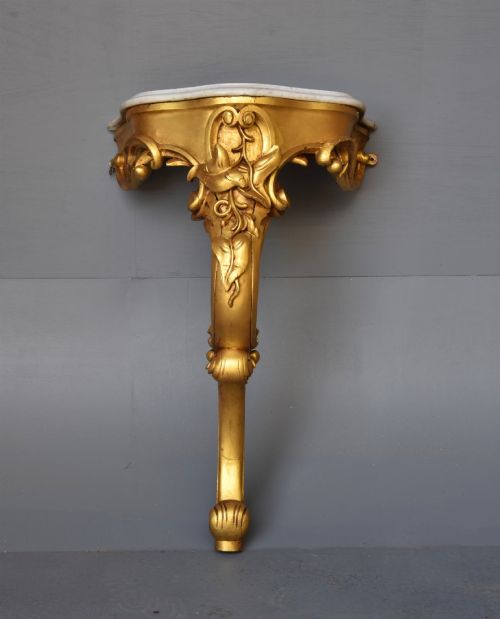
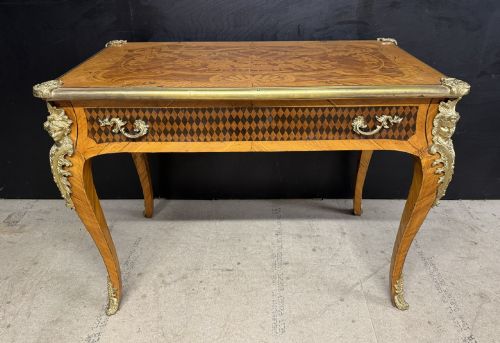
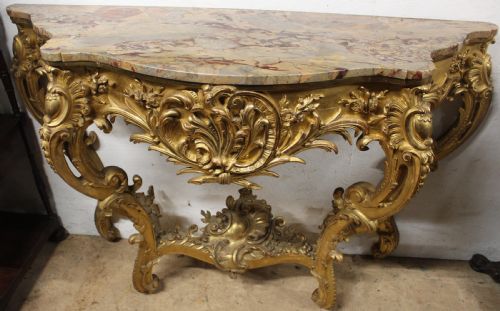
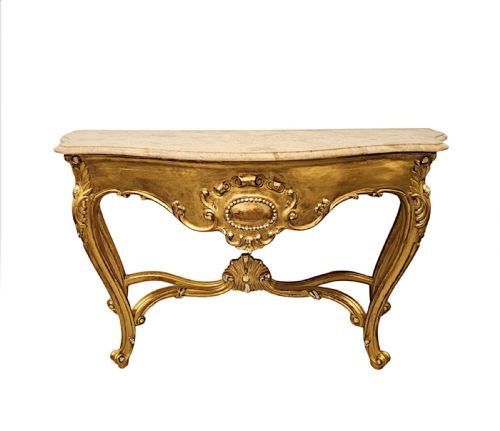
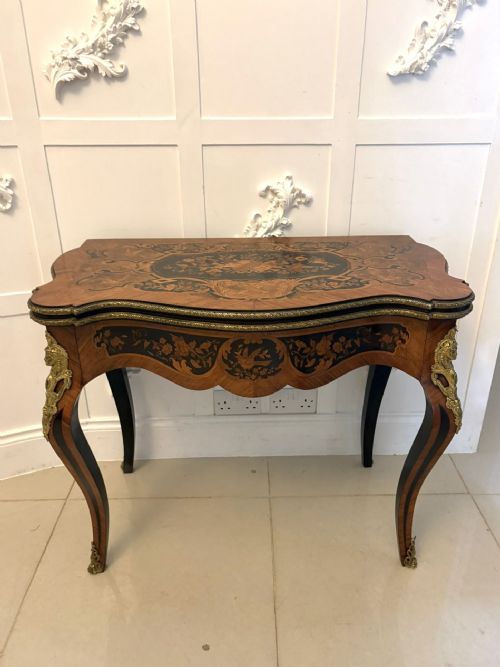
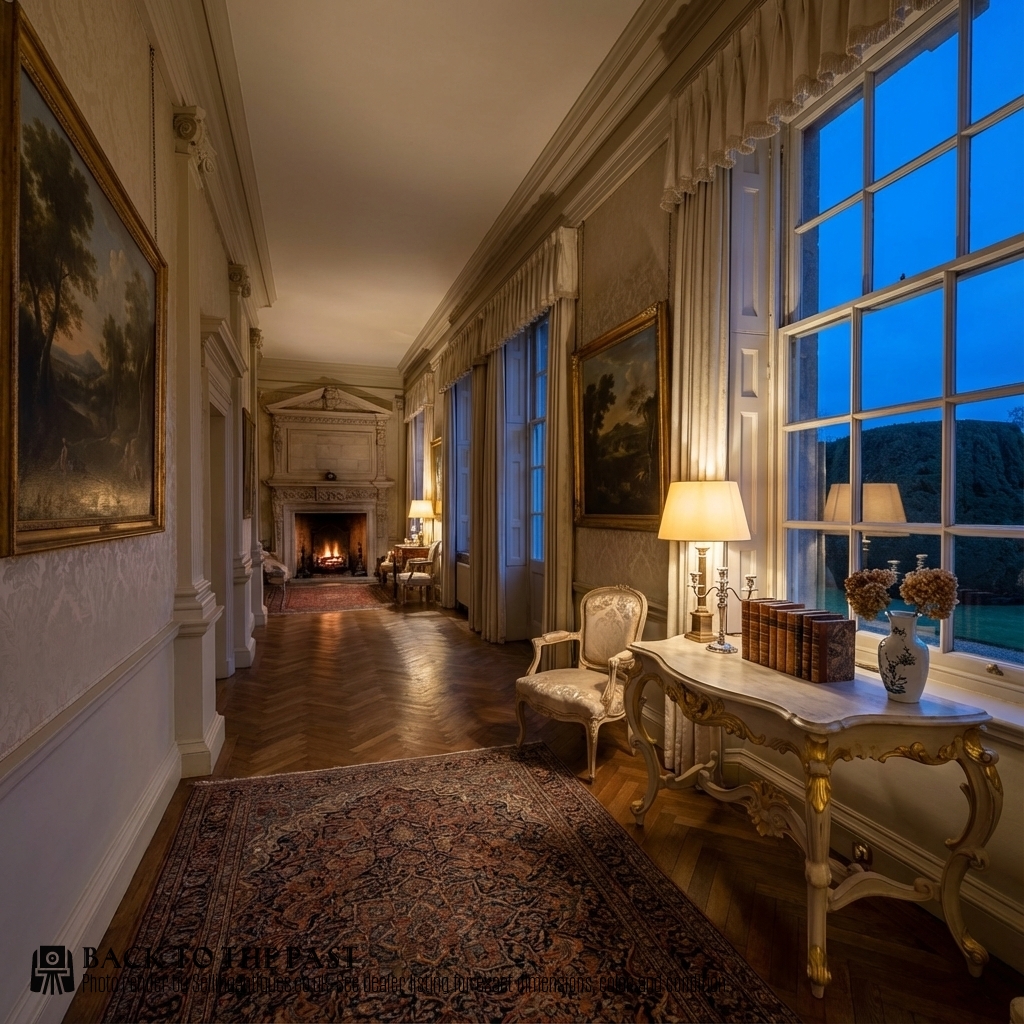
A louis xv style console typically appears as a wall table designed with deep serpentine lines, scrolling supports and substantial marble tops. The pieces listed across this page include console tables, side tables, card tables and games tables originating from the nineteenth and early twentieth centuries.
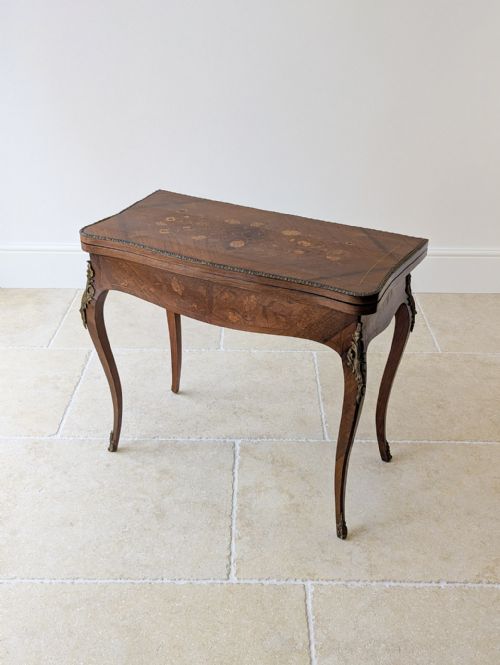
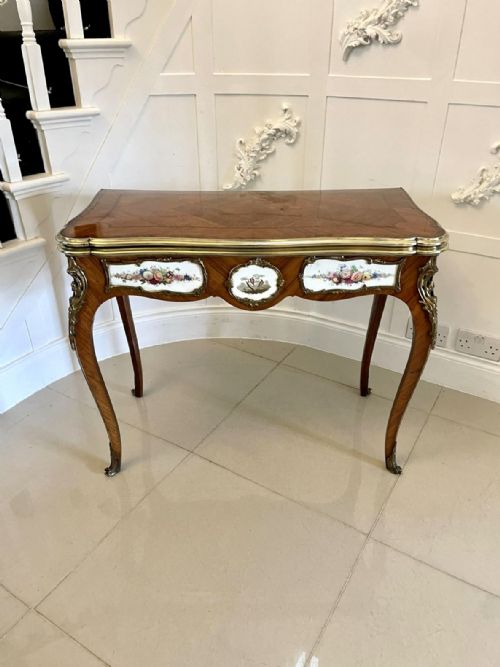
Makers and cabinet-makers working in London and Paris drew heavily upon French Rococo vocabulary, producing folding card tables in kingwood alongside heavily carved giltwood console tables. The survival of pairs and mirrored sets indicates these items were originally commissioned for formal reception rooms.
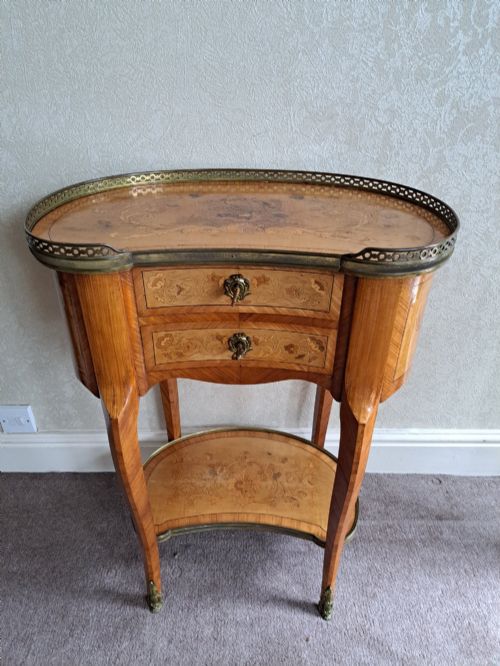
While many examples adhere to strict classical proportions in walnut or cherrywood, others incorporate elaborate marquetry and demi-lune shapes designed to fit specific architectural alcoves.
Materials and Technique
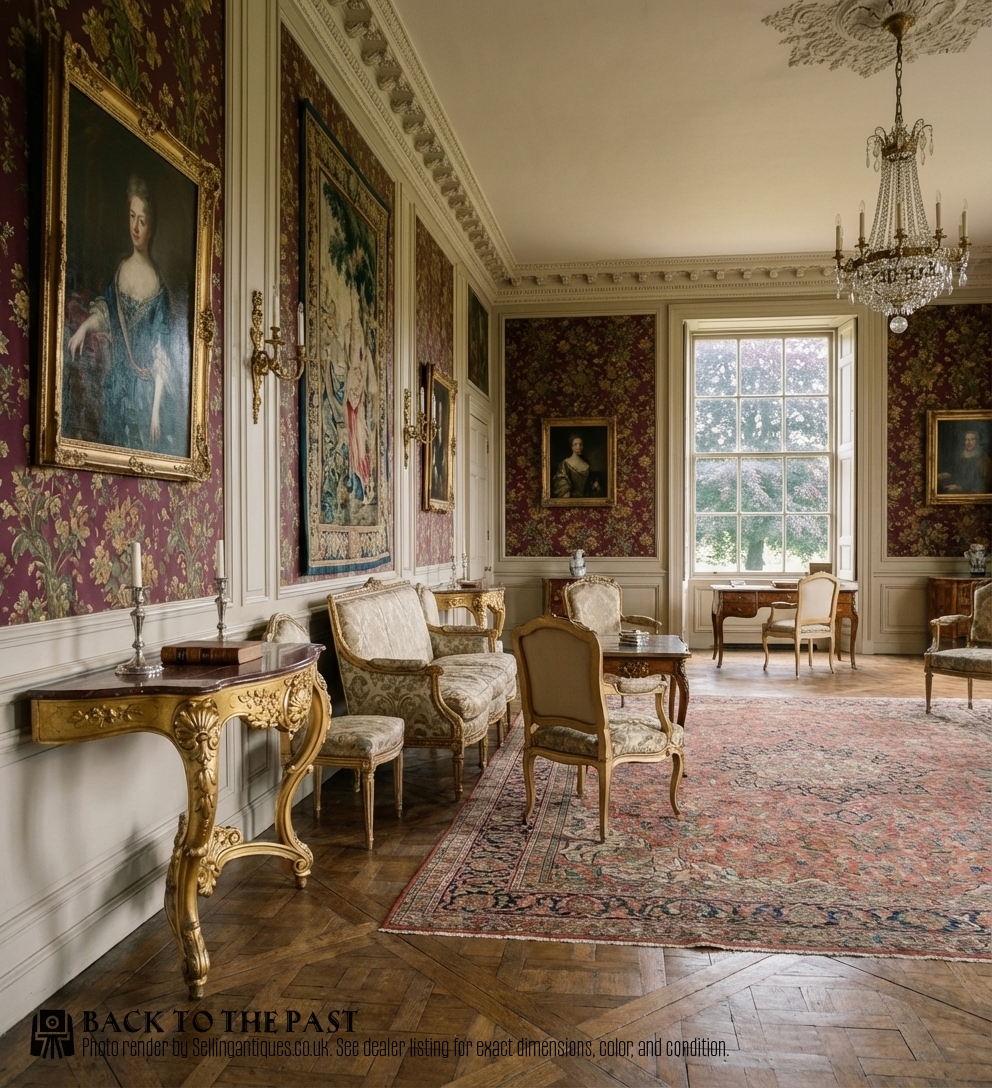
Cabinet-makers relied on native woods such as walnut, cherrywood and mahogany for foundational carcases, frequently applying veneers of kingwood, tulipwood and burr walnut in intricate floral or geometric marquetry patterns. Giltwood and gesso frames provided the characteristic metallic sheen for wall-mounted consoles.
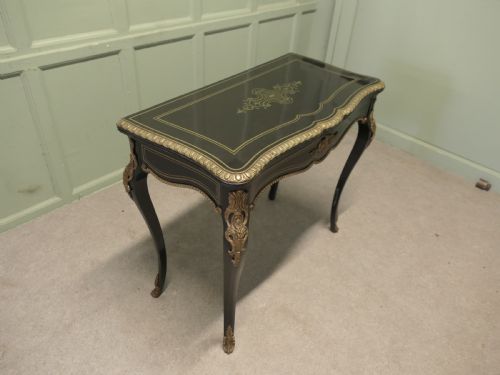
Cast ormolu mounts shaped as acanthus leaves and scrolling motifs were applied to corners and aprons to accentuate the asymmetrical curves typical of the period. Heavy slabs of shaped marble, cut to follow the serpentine contours of the wooden frame, completed the upper surfaces.
Louis XV Style Console Retail Price Guide 2026
Typical asking prices for louis xv style console among the pieces listed under this phrase on Sellingantiques today, from the lower quarter to the upper quarter. They describe what is for sale here now, not the wider market.
Listings feature walnut, kingwood, mahogany and cherrywood alongside giltwood frames and heavy marble tops.
The Measure of Craft
Quality rests upon the depth and crispness of the hand-carving within the gesso and giltwood frames, where sharper undercutting distinguishes skilled workshops from mechanical production. The fluidity of the wood veneers and the precision of the brass inlay demonstrate the maker's competency.
The weight and thickness of the fitted marble top, alongside the chasing and mercury gilding of the bronze ormolu mounts, separate standard commercial output from pieces produced by notable nineteenth-century makers.
G T Morant·Joseph-Emmanuel Zwiener·Maison Millet·Edwards And Roberts·Krieger Of Paris
The Louis XV Style Console Glossary
- Ormolu
- Gilt bronze mounted onto furniture and decorative objects. The technique involves applying a gold amalgam to cast brass before firing.
- Kingwood
- A dense Brazilian timber featuring rich dark violet and brown tones. Cabinet-makers used it extensively for geometric veneering.
- Gesso
- A plaster mixture applied to wood frames and smoothed before gilding. It allows for sharp, high-relief decorative carving.
- Boulle
- Marquetry technique combining tortoiseshell and brass inlay. It takes its name from the master cabinet-maker André-Charles Boulle.
- Demiround table constructed with a flat back to sit flush against a wall
- These pieces frequently functioned as card or side tables.
Louis XV Style Console: Frequently Asked Questions
How do I identify a louis xv style console?
Look for asymmetrical curves, cabriole legs ending in scroll feet, and serpentine aprons carved with floral motifs. These design elements define the Rococo aesthetic.
The presence of shaped marble tops and giltwood framing further confirms the style, distinguishing these pieces from later, more geometric revival periods.
Where should I place a console table?
Console tables suit entrance halls, drawing rooms and dining spaces where floor depth is restricted. Their flat backs allow them to sit securely against walls.
Pairing a wall-mounted console with a matching mirror creates a balanced focal point reminiscent of nineteenth-century interior arrangements.
Are these tables sturdy enough for daily use?
Most examples are structurally robust, utilising hardwoods like walnut and oak for their internal carcases. However, heavy marble tops require stable placement.
Folding card tables and games tables feature hinged tops that need careful handling to preserve the original pivot mechanisms and wooden joints.
What is the difference between an original and a revival piece?
Eighteenth-century originals reflect the direct reign of Louis XV, whereas revival pieces date predominantly from the Victorian era and the late nineteenth century. Both categories employ similar construction methods.
Revival furniture often incorporates eclectic details from subsequent design movements while retaining the core serpentine silhouette of the original period.