
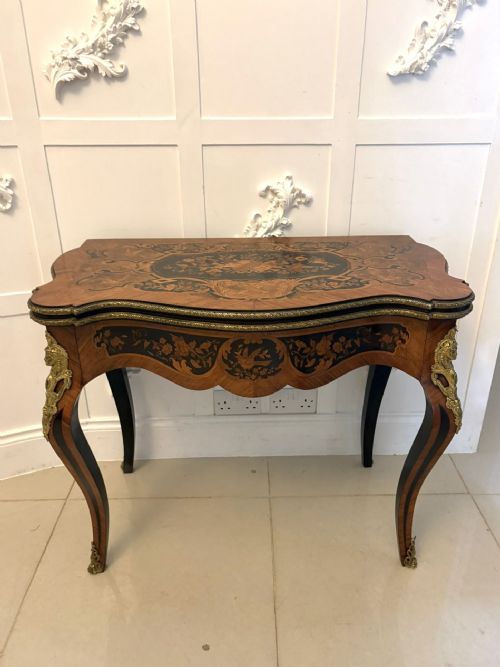


Louis XV Games Table
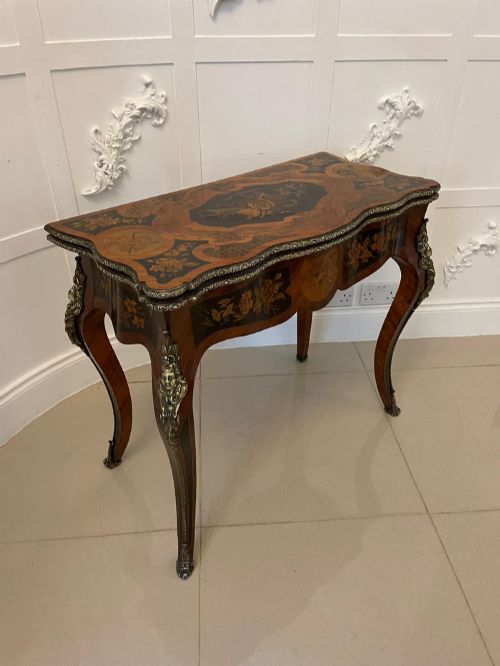
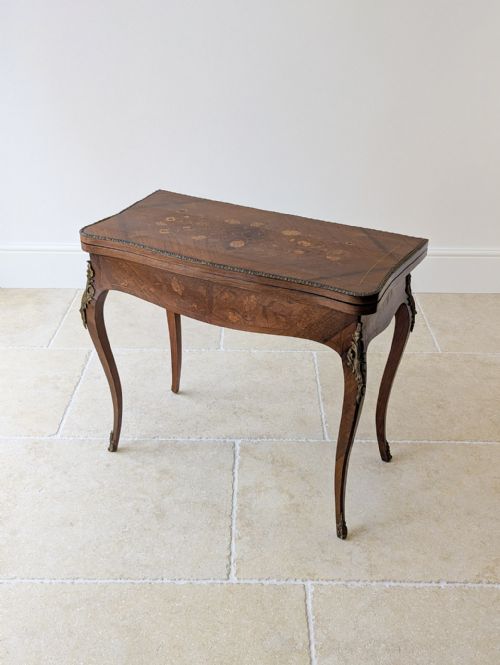
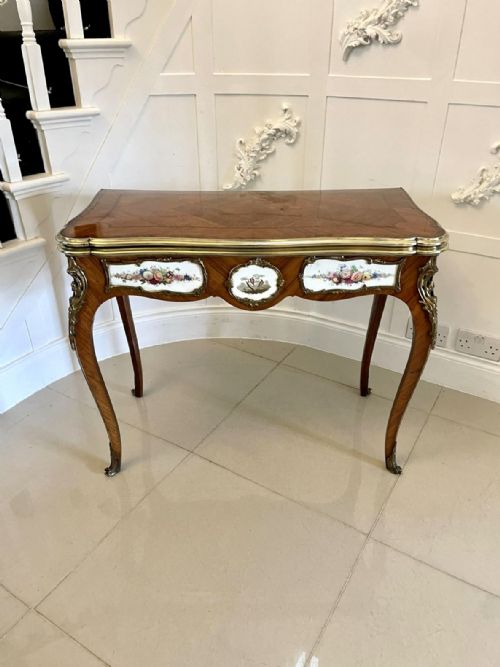
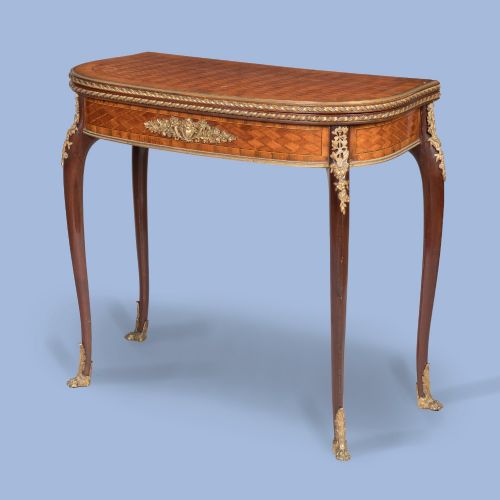
A louis xv games table brings fluent rococo curves and rich marquetry into a room, serving as a fold-over card surface or console.
Louis XV Games Table
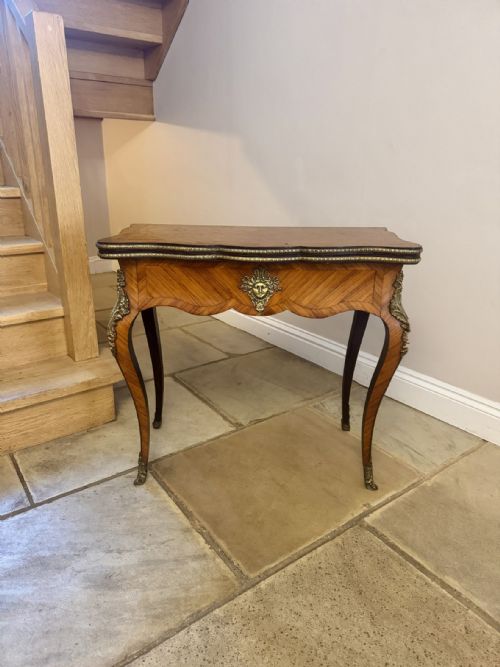
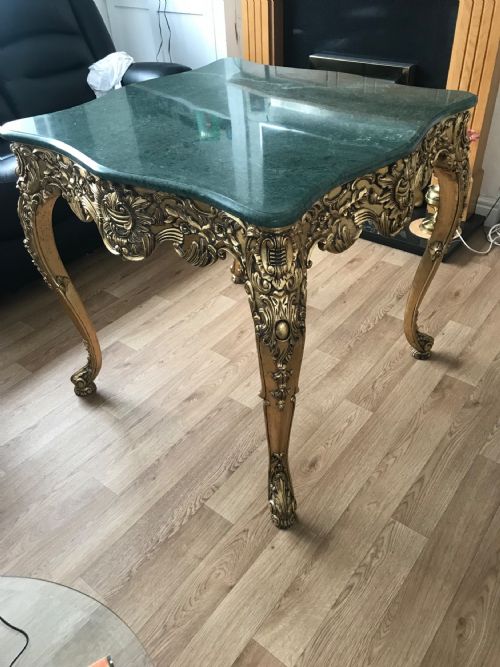
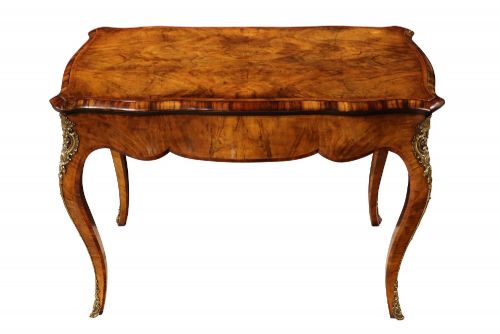
A louis xv games table is primarily encountered in nineteenth-century revival iterations, spanning card tables, side tables, and occasional tables with serpentine or demi-lune forms.
The pieces on this page originate predominantly from French workshops and Victorian English makers interpreting continental styles during the eighteen-fifties to eighteen-nineties.
Makers adapted the historic repertoire into functional fold-over surfaces that transition seamlessly from a compact wall console to a central gaming area.
Materials and Techniques
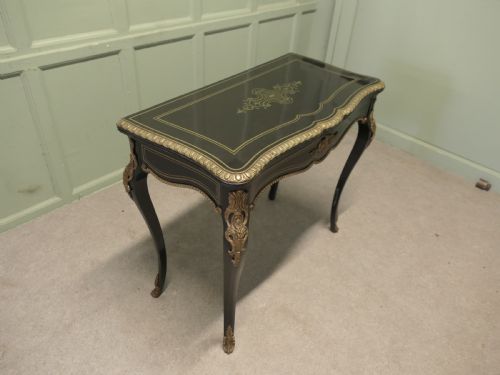
Cabinetmakers constructed the carcases from walnut, mahogany, or rosewood, applying intricate kingwood veneers and floral marquetry or brass and tortoiseshell boulle work across the tops.
Gilt bronze and ormolu mounts punctuate the corners, aprons, and cabriole legs, protecting vulnerable edges while accentuating the characteristic organic sweeps of the design.
Internal hinges and rotating mechanisms allow the folding wooden leaves to open smoothly and rest securely upon pivoted rear legs.
Louis XV Games Table Retail Price Guide 2026
Typical asking prices for louis xv games table among the pieces listed under this phrase on Sellingantiques today, from the lower quarter to the upper quarter. They describe what is for sale here now, not the wider market.
Periods represented on the page span from mid-Victorian revival pieces through to twentieth-century examples.
Judging Quality
Quality rests upon the precision of the timber inlay and the crispness of the chased ormolu mounts, where superior examples exhibit hand-finished depth rather than flat, cast repetition.
The integrity of the internal folding mechanism and the weight of the timber dictate the stability of the piece when open for play.
Signatures or attributions to recorded nineteenth-century cabinetmakers elevate certain pieces above standard commercial production.
G T Morant·François Linke·Joseph-Emmanuel Zwiener·Maison Millet·Edwards & Roberts·Henry Dasson
The Louis XV Games Table Glossary
- Ormolu
- Gilded bronze mounts applied to furniture. This technique provides metallic highlights along the structural curves.
- Marquetry
- Fitted wood veneers forming pictorial or floral patterns. Craftsmen use contrasting timbers to achieve naturalistic shading.
- Boulle
- Inlay work combining tortoiseshell and brass. This decorative method was popular in nineteenth-century French revival pieces.
- Kingwood
- A dense exotic timber with distinctive dark grain. It frequently forms the ground for intricate marquetry panels.
- Cabriole leg
- A furniture leg featuring a double curve modelled on animal limbs. It defines the profile of rococo revival tables.
Louis XV Games Table: Frequently Asked Questions
What is a louis xv games table used for?
These pieces function as compact console or side tables against a wall when folded shut, opening out to reveal a baize-lined surface for card games.
Their dual nature made them versatile additions to nineteenth-century drawing rooms where space-saving furniture was prized.
How do I tell an original eighteenth-century table from a nineteenth-century revival piece?
Most examples found today date from the nineteenth century, utilising secondary timbers and mechanical assembly methods typical of that industrial era rather than earlier hand-pegged construction.
Revival pieces often display heavier ormolu mounts and crisper veneer work characteristic of major exhibition workshops.
How do I care for wood inlay and ormolu?
Keep the wood nourished with appropriate wax polish and avoid placing the surface in direct sunlight or near heat sources that might cause timber to shrink and veneers to lift.
Dust ormolu mounts gently with a soft brush without applying abrasive metal cleaners that can strip the original gilding.
Can I use it as a everyday dining table?
These tables are built with delicate folding mechanisms and veneered tops that are susceptible to moisture, heat, and heavy weight, making them unsuitable for regular dining.
They are best utilised as occasional display surfaces or for light card games as originally intended.