



Antique French Wall Table
An antique french wall table brings classical interior lines to a room, offering a functional surface that mounts directly against plaster.
Antique French Wall Table
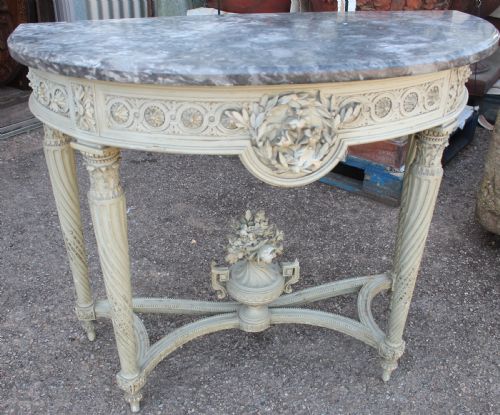
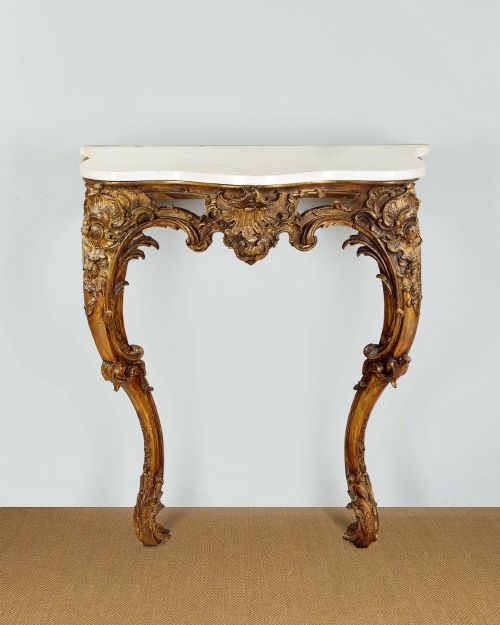
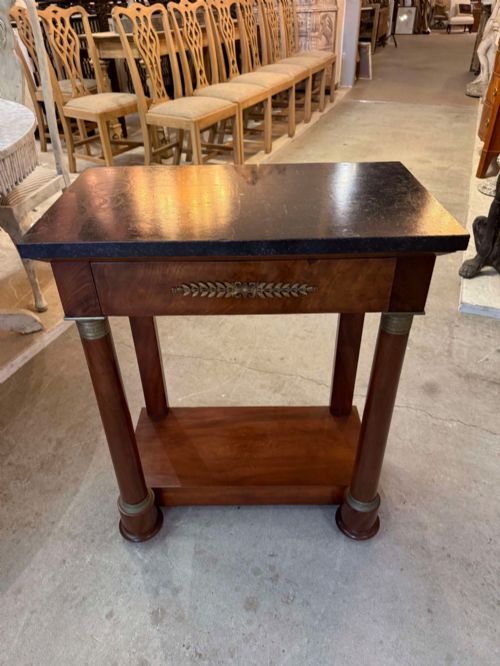
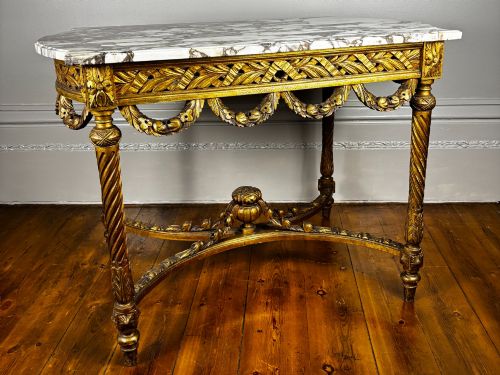
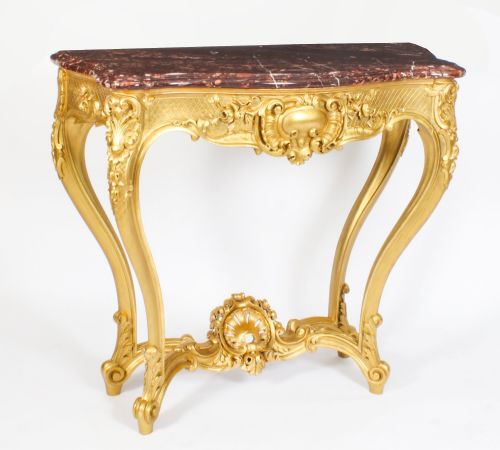
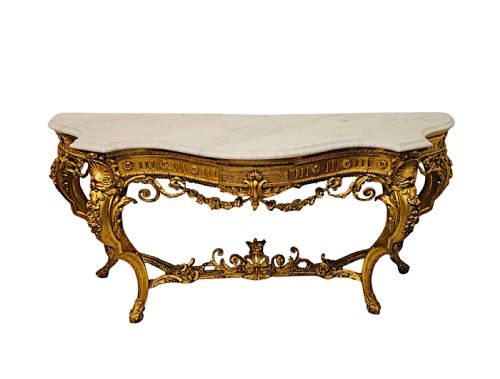
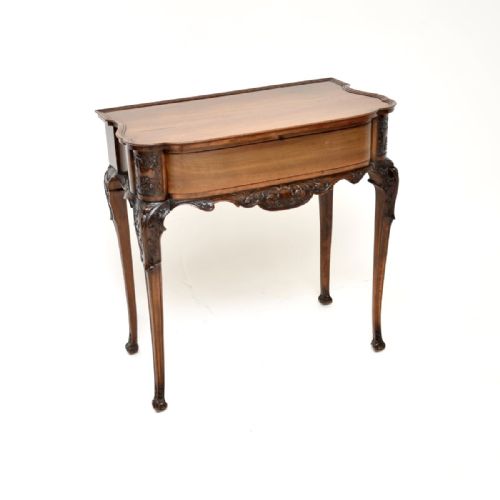
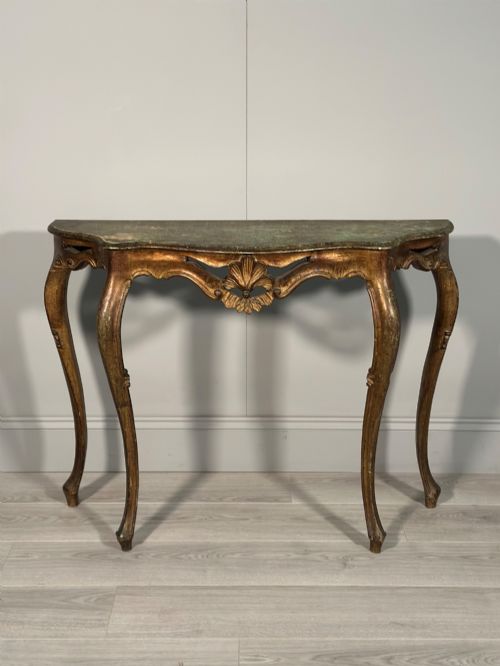
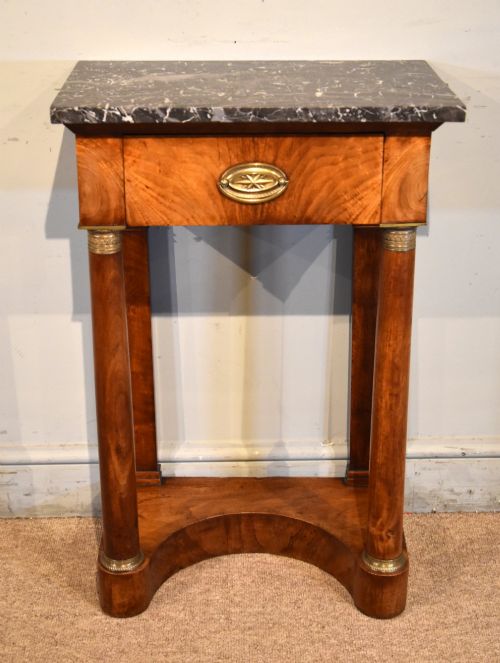
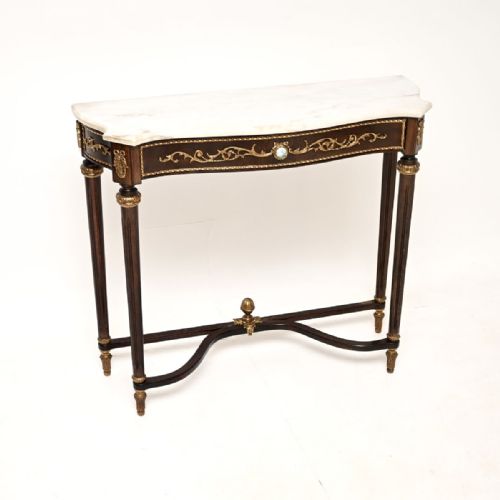
An antique french wall table is a console or side table designed to be fixed directly to a wall, often featuring a heavy stone top supported by a decorative wooden frame. These pieces serve as narrow display surfaces in hallways, reception rooms, and salons where floor space is limited.
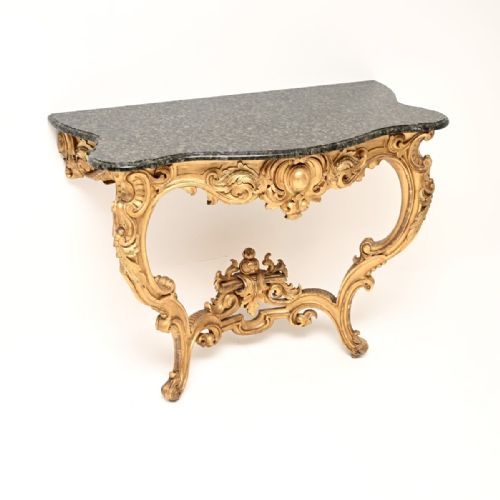
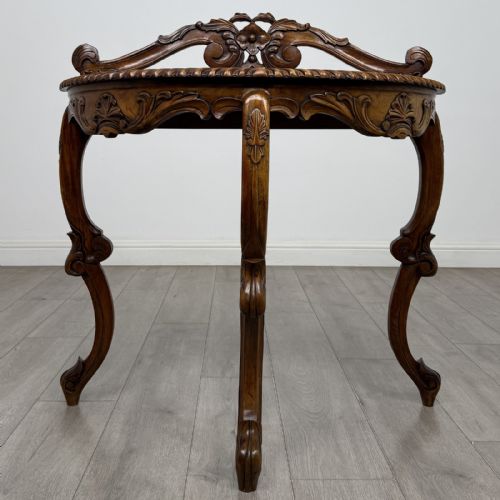
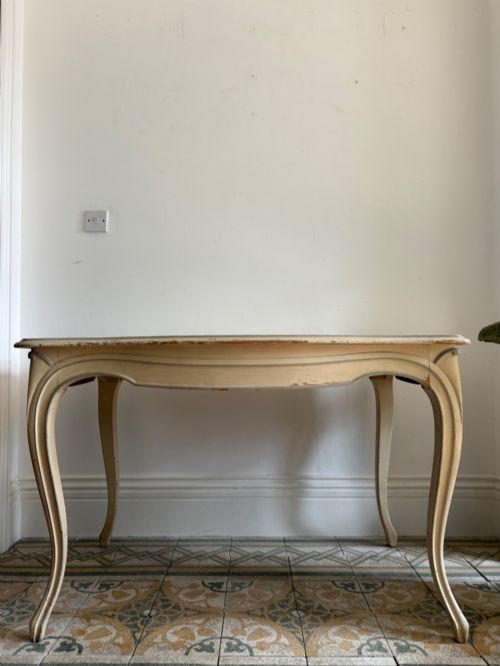
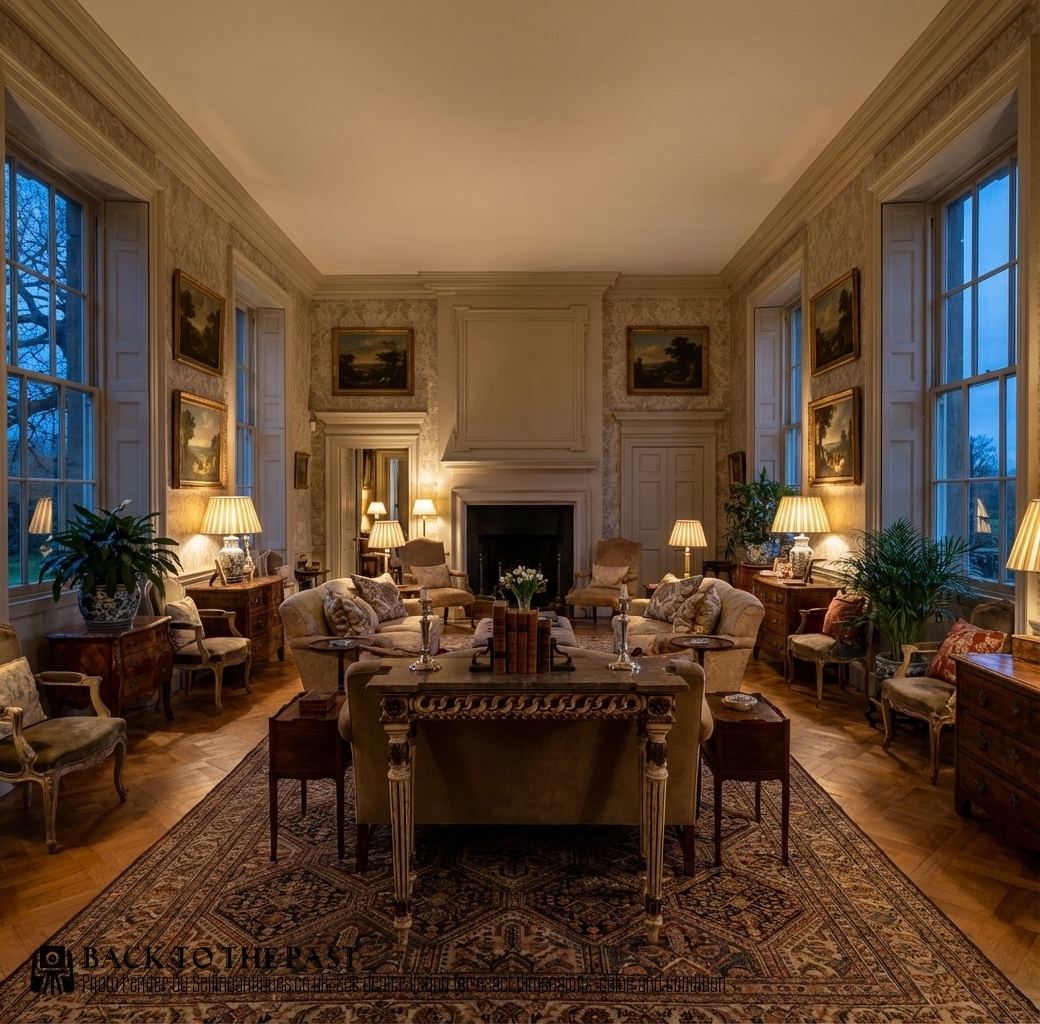
The pieces on this page span the nineteenth century, the Victorian era, and nineteen twenty, drawing on French Neoclassical, Rococo, and Chateau styles. Buyers encounter console tables, side tables, and hall tables in single pieces and matched pairs.
Most examples rely on wall mounting or structural attachment to remain stable, functioning as permanent architectural fixtures within a room. Their forms include carved and painted finishes alongside gilded wood and giltwood constructions.
How they were made
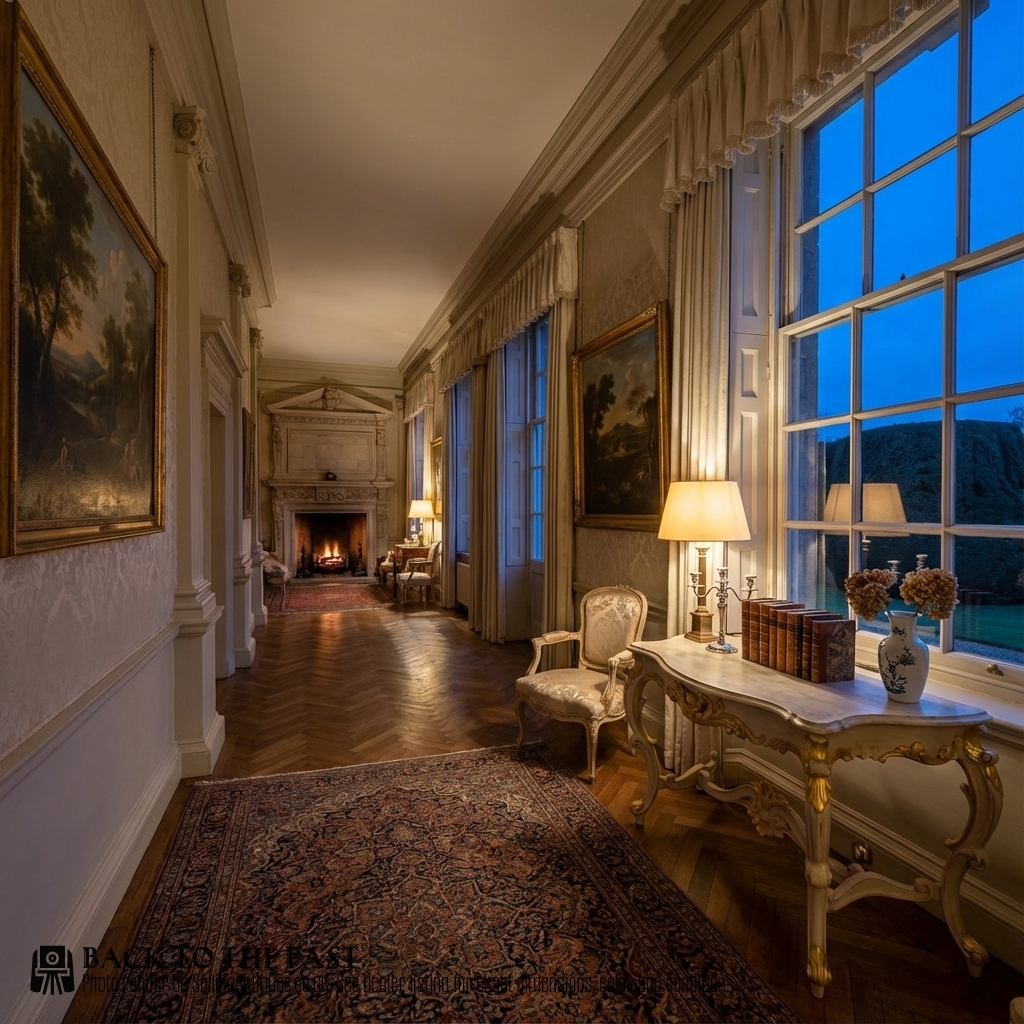
Carpenters shaped the framework from carved wood, applying gesso as a smooth preparation layer before adding paint, parcel gilt, or gold leaf finishes. Giltwood and gilded wood constructions required delicate application of thin metal leaf over prepared wooden bases.
Marble formed the heavy stone tops of many console tables, providing a durable and cool surface that contrasted with the ornate wooden framework below. Gilt bronze mounts occasionally augmented the wooden and marble structures on specific wall mounting pieces.
Antique French Wall Table Retail Price Guide 2026
Typical asking prices for french wall table among the pieces listed under this phrase on Sellingantiques today, from the lower quarter to the upper quarter. They describe what is for sale here now, not the wider market.
Console tables and side tables appear in single formats and matching pairs spanning French Neoclassical, Rococo, and Chateau styles.
What varies in quality
The refinement of the carved wood details separates standard production from finer work, as does the depth and clarity of the gesso and gilding layers. Crisp ornamentation on the wooden frames indicates higher skill in the workshop.
The selection and finishing of the marble top influences the overall character of the table, alongside the integrity of the original paint or gold leaf surfaces. Tables featuring cohesive matching pairs show greater uniformity in their decorative execution.
The Antique French Wall Table Glossary
- Console table
- A table designed to fix against a wall, frequently supported by front legs while relying on wall brackets for stability. These pieces function primarily as decorative ledges in formal spaces.
- Giltwood
- Timber that has been coated with a thin layer of gold leaf or gold powder over a prepared gesso base. This technique creates a luminous metallic finish on the carved wooden structure.
- Gesso
- A plaster mixture applied to wood as a smooth base before gilding or painting. It allows craftsmen to carve intricate relief details before finishing the surface.
- French Neoclassical
- A decorative style drawing inspiration from classical antiquity, featuring restrained symmetry and architectural motifs. It appears across nineteenth-century furniture designs.
- French Rococo
- A style characterised by asymmetric curves, scrollwork, and organic ornamentation. It creates a sense of movement in carved wooden frames.
Antique French Wall Table: Frequently Asked Questions
How do I mount an antique french wall table?
Most antique french wall tables require secure fixing to wall studs or masonry using appropriate brackets to bear the weight of the frame and marble top.
Professional installation is recommended due to the heavy stone components and the structural reliance on wall support.
What rooms suit an antique french wall table?
These tables suit narrow hallways, entrance spaces, and reception rooms where a deep surface would obstruct movement.
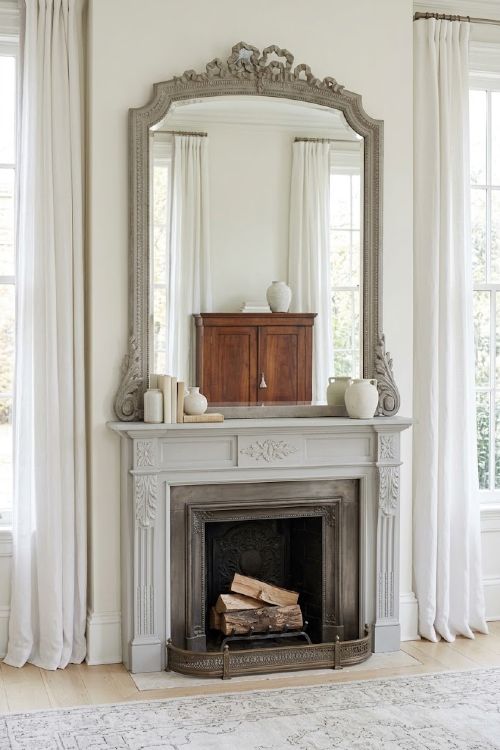
Their shallow profile and decorative wall-mounting design make them effective beneath mirrors or artwork in formal interiors.
How do I tell nineteenth century pieces apart?
Nineteenth-century pieces incorporate styles such as Neoclassical, Rococo, and Chateau, utilising carved wood, gesso, paint, and gold leaf.
Distinctions rely on the specific decorative motifs, the execution of the woodcarving, and whether the finish is painted, gilded, or parcel gilt.