

Gold Wall Table
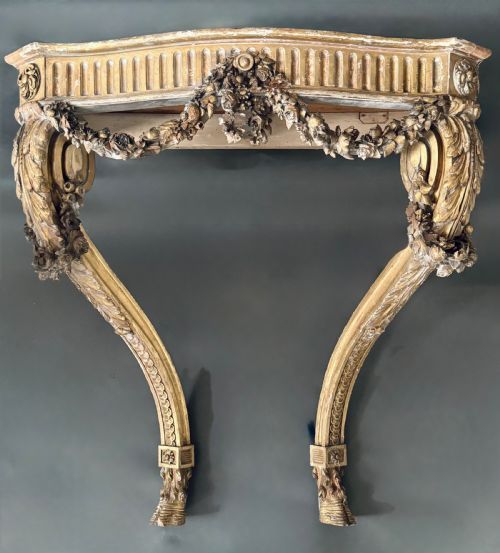
A gold wall table brings architectural presence and carved ornamentation to a room, functioning as a console or pier table designed to anchor against a wall.
What these gold wall tables are
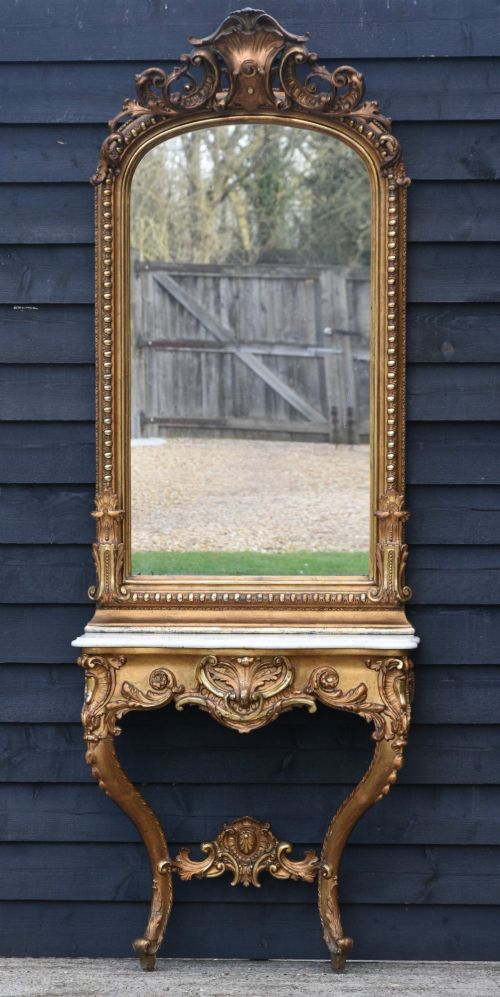
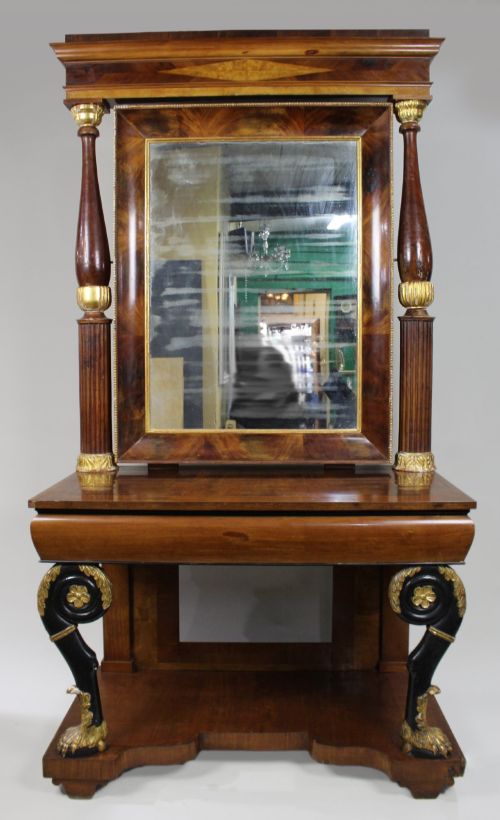
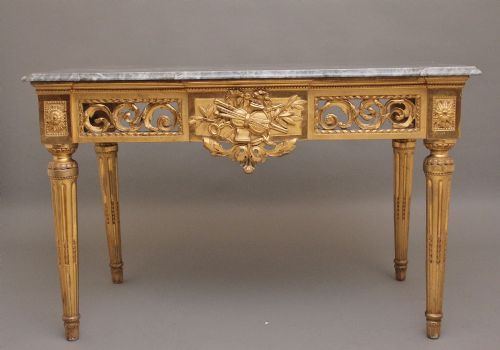
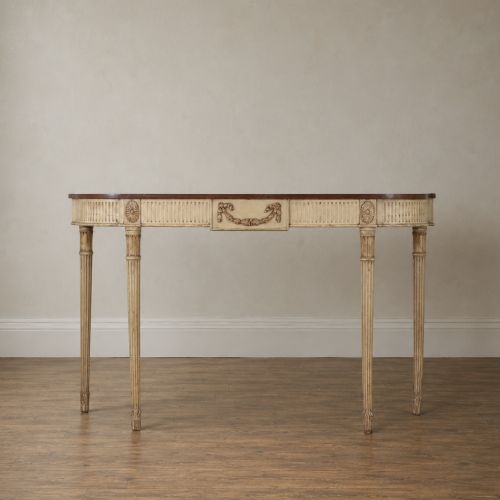
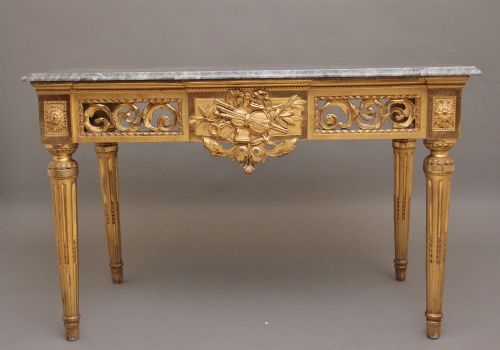
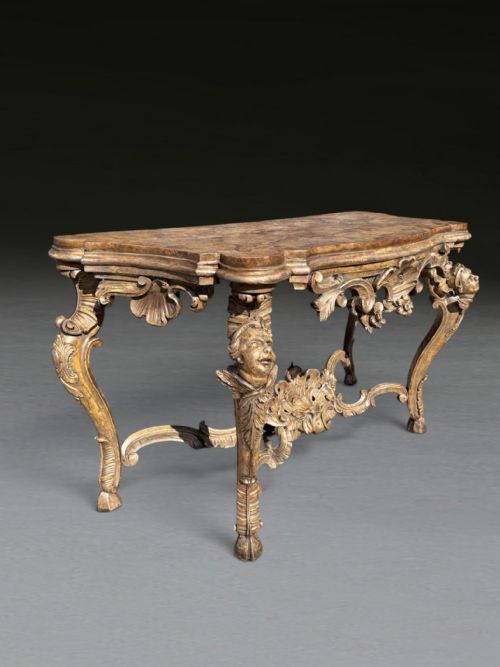
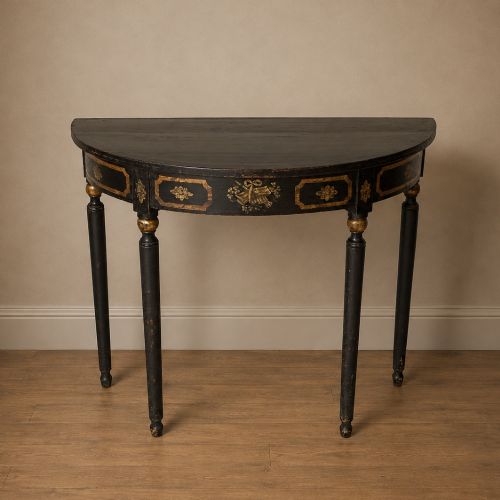
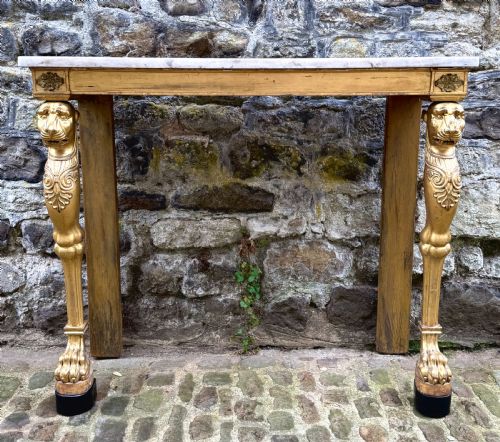
A gold wall table most commonly takes the form of a console table or pier table designed to stand flat against a vertical surface, frequently paired with a mirror above. The examples available span from the eighteenth century through the Victorian era, encompassing Venetian, German, and French origins.
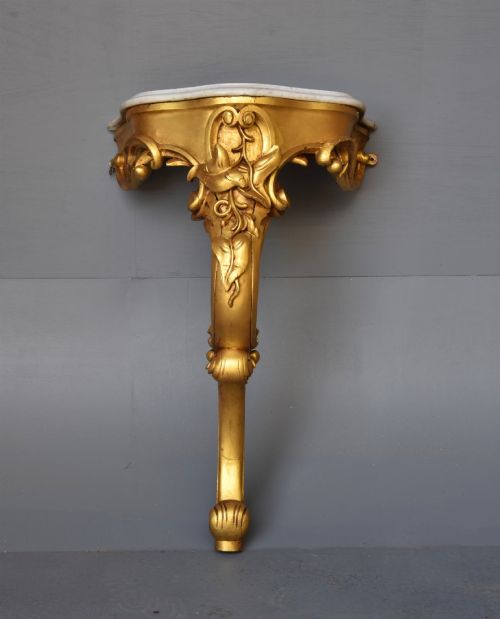
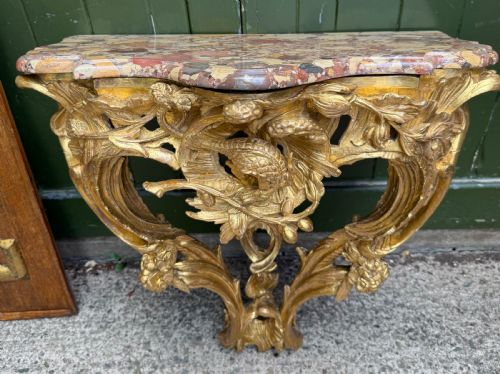
The aesthetic leans heavily towards French Neoclassical, French Rococo, Louis XVI, and Rococo Revival styles. These pieces range from small eighteenth-century giltwood forms to grand nineteenth-century carved bases.
Buyers will encounter serpentine pier tables from around eighteen seventy alongside earlier walnut and gilt creations. Each piece reflects the decorative ambitions of its specific period, whether through restrained classical lines or exuberant carved flourish.
How they were made
Makers constructed these tables primarily from wood, often applying gesso to create a smooth preparatory layer before gilding. Giltwood forms the dominant material signature across the inventory, providing a brilliant metallic surface that catches interior light.
Carvers shaped the timber frames by hand before applying gold leaf or liquid metal finishes to the gesso and wood substrates. Surviving pieces incorporate heavy marble or stone slabs laid across the top to provide a solid horizontal counterpoint to the ornate frames beneath.
Retail Price Guide 2026
Typical UK retail prices for gold wall table, calculated from the Sellingantiques database of over a million retail prices indexed since 2003. This retail price guide relies exclusively on Sellingantiques data; no external sources or auction records are used, so the figures do not describe the wider market.
One nineteenth-century cabinetmaker named Felix-Alfred Ternisien clearly decided that a simple table base deserved grand artistic billing.
What varies in quality
Quality rests heavily on the depth and precision of the wood carving, where fluid, deeply undercut foliage and scrollwork distinguish superior workshop output from mechanical repetition. The integrity of the original gesso and the crispness of the gilt surface dictate the visual impact of the piece.
The choice and thickness of the inset marble or stone top also separate standard examples from high-tier commissions. Superior proportions and a harmonious balance between the structural base and the decorative motifs elevate certain consoles above simpler vernacular iterations.
Felix Alfred Ternisien
The Gold Wall Table Glossary
- Giltwood
- Wood that has been coated with gold leaf or powder over a preparation of gesso and size. This technique provides the characteristic metallic sheen seen on period frames and console structures.
- Console Table
- A table supported by wall brackets or console legs, designed to stand against a vertical surface. These items frequently feature flat backs and elaborate front legs.
- Pier Table
- A decorative table made to stand against the wall between two windows, often placed directly beneath a pier glass mirror. They share similarities in form with console tables.
- Gesso
- A plaster mix applied to wood surfaces to create a smooth base for gilding and fine carving detail. It allows artisans to achieve sharp relief before applying gold leaf.
- Serpentine
- A curved line or shape featuring a convex centre flanked by concave sweeps. This profile frequently defines the tabletops and aprons of nineteenth-century pier tables.
Frequently Asked Questions
What is a gold wall table used for?
These tables served primarily as decorative architectural furniture in formal reception rooms and hallways. They held ornamental objects, clocks, or candelabras while anchoring wall mirrors.
Today, they function as striking display surfaces in entrance halls or living spaces, providing a narrow footprint that suits transitional areas.
How do I distinguish eighteenth-century from nineteenth-century pieces?
Eighteenth-century examples often display the lighter, asymmetrical curves of Rococo or the strict symmetry of Neoclassical design. Wood quality and hand-carving techniques reflect earlier workshop practices.
Nineteenth-century revivals frequently incorporate heavier proportions and denser gesso applications, reflecting Victorian tastes for opulent historical interpretation.
Are these tables free-standing?
Console and pier tables are structurally engineered to be secured against a wall. Their front legs bear the visible weight while the rear relies on wall fixings or brackets for stability.
Placing them in the centre of a room is structurally unviable due to the absence of independent rear support.
What materials make up the tops?
Surviving tables frequently feature heavy marble or stone slabs fitted directly into the wooden framework. These heavy tops counterbalance the ornate carved bases.
Some iterations utilise solid wood or gesso surfaces, though stone remains standard for grander French and Venetian pieces.