

Gilded Wood Table
A gilded wood table brings warmth and reflective brilliance to a room, offering functional surface space through ornate console, side and coffee table forms.
Gilded Wood Table
A gilded wood table encompasses diverse functional forms designed for display and daily use, ranging from console tables and side tables to coffee tables and occasional tables. Buyers exploring this category encounter pieces spanning the eighteenth century through the early twentieth century, reflecting enduring domestic utility.
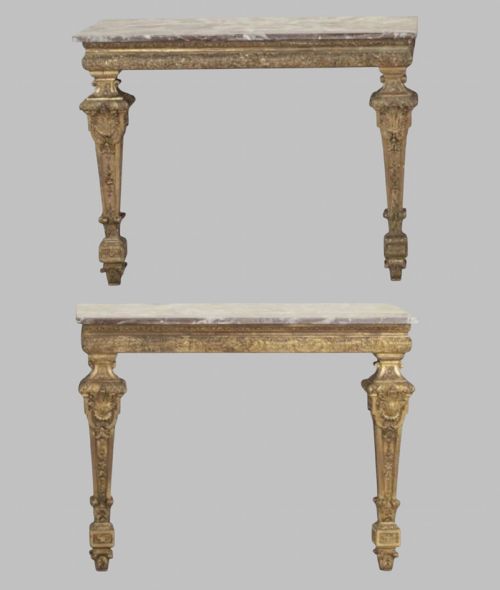
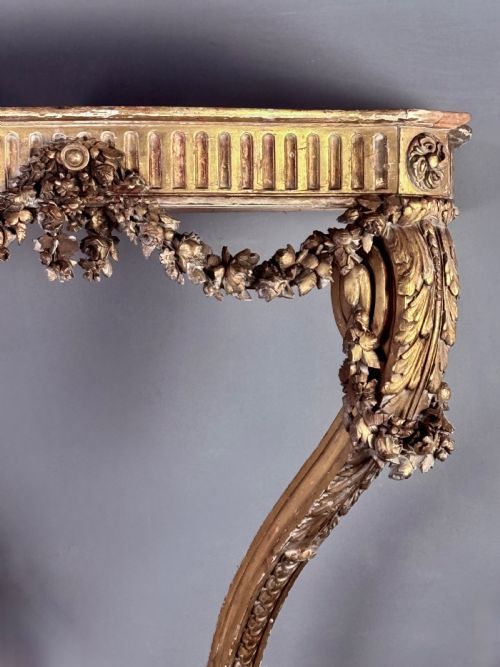
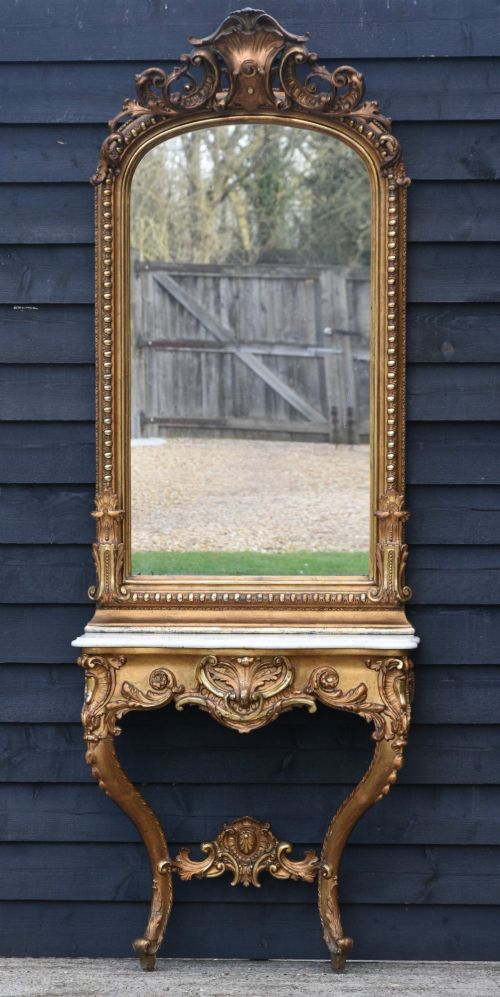
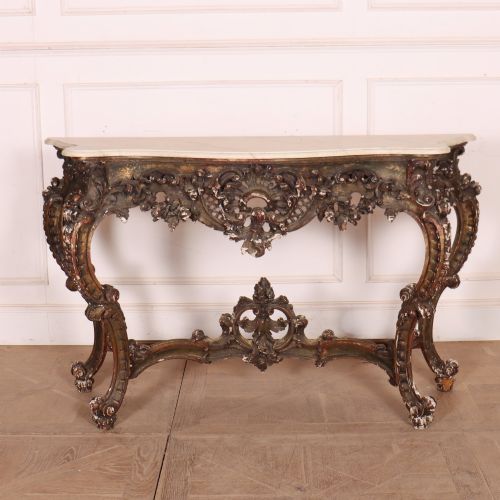
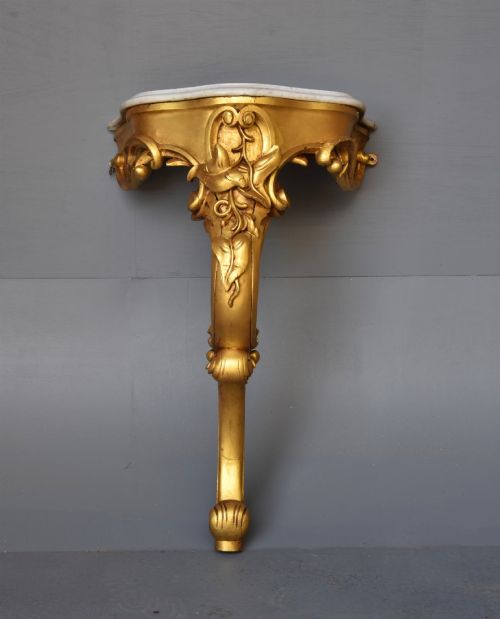
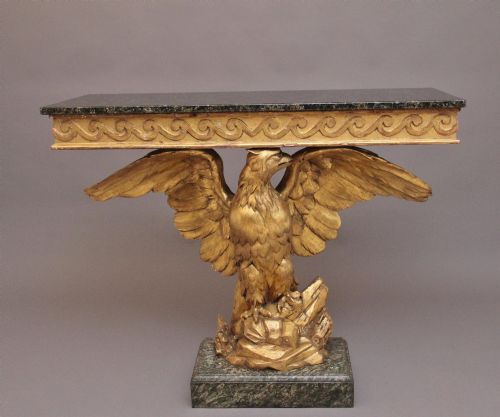
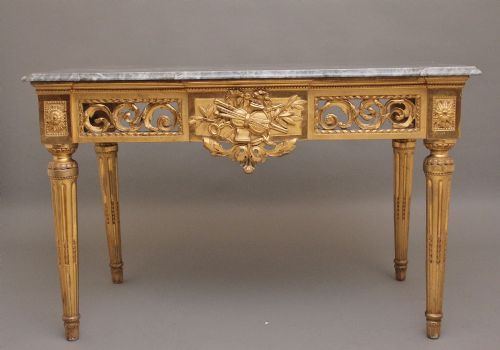
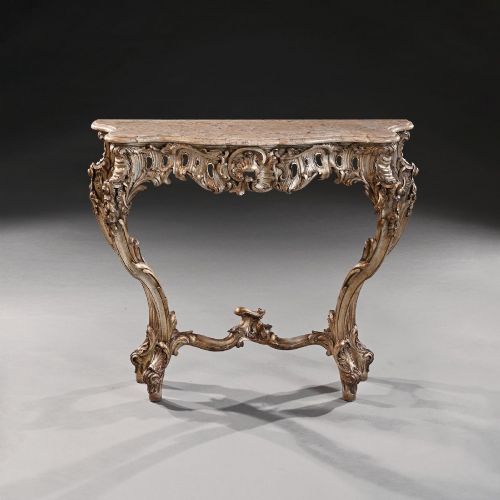
Console tables form the most prominent group within these listings, frequently featuring shaped marble tops paired with carved wooden bases. These items often display regional design vocabularies including French Rococo, Italian Baroque, and Neoclassical styles.
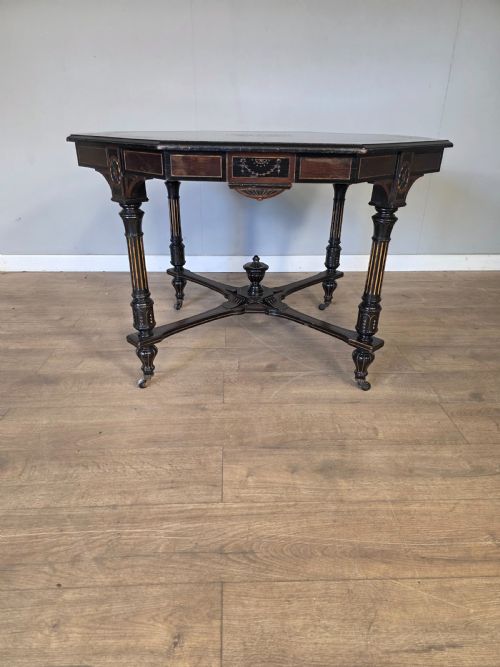
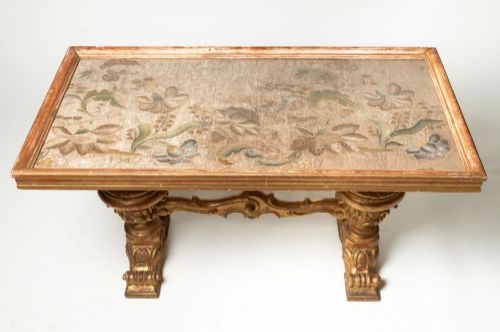
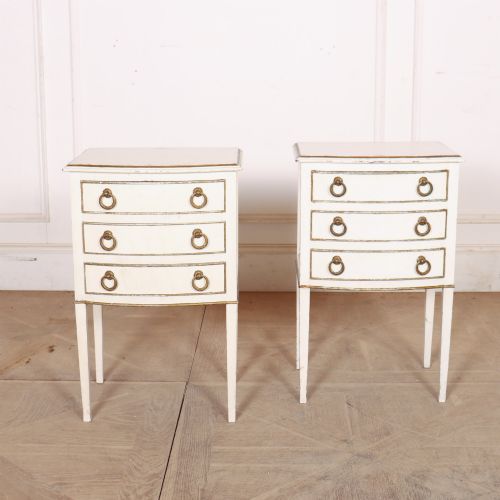
Additional variations include low coffee tables, compact bedside tables, and multi-tiered étagères incorporating brass, paint, and occasional wood types such as mahogany, walnut, and rosewood. The selection balances monumental Italian examples with refined French and English decorative furnishings.
Materials and construction techniques
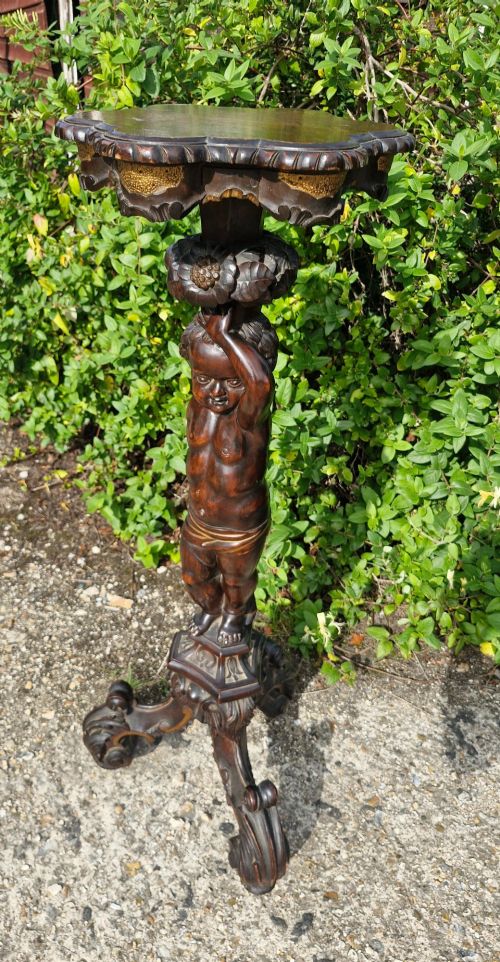
Construction relies upon traditional joinery applied to foundational timbers like pine, oak, walnut, and limewood, which provide structural stability for heavy stone surfaces. Carvers shape these woods into elaborate scrolls, foliage, and figurative supports before applying preparatory layers.
The characteristic metallic sheen is achieved through gesso application followed by the meticulous laying of gold leaf, silver gilt, or gold paint onto the prepared wooden surface. Craftsmen frequently combine this gilding with inset marble, onyx, or breccia tops, secured to resist shifting over time.
Current listings feature console tables, coffee tables, and étagères spanning the eighteenth to the twentieth centuries, utilising giltwood, marble, gesso, and gold leaf.
Distinctions in craftsmanship and design
Quality differentiates itself through the depth and crispness of the hand-carved wooden relief beneath the metallic surface. Superior examples demonstrate fluid lines and intricate detailing on motifs such as acanthus leaves and lion paw supports.
The integrity of the gilding application and the selection of secondary materials, such as figured breccia or 'breche d'alep' marble, separate standard regional pieces from high-workshop productions. The harmony between the structural woodwork and the stone or glass top governs the overall refinement of the piece.
Felix-Alfred Ternisien·Amleto Bertoni
The Gilded Wood Table Glossary
- Giltwood
- Wood that has been coated with gold leaf or gold paint over a prepared ground. This technique creates a luminous surface finish while protecting the underlying timber.
- Gesso
- A plaster-like mixture applied to wood surfaces as a smooth base for gilding or painting. It allows carvers to achieve sharp definition on ornamental details.
- Console Table
- A table designed to stand against a wall, frequently secured with brackets. These pieces often feature elaborate front legs and support decorative marble tops.
- Étagère
- A piece of furniture consisting of open shelves for displaying small objects. These tiered tables often combine painted finishes with parcel gilding.
- Breccia Marble
- A composite marble made of angular rock fragments embedded in a fine-grained matrix. It provides colourful, patterned surfaces for antique table tops.
Gilded Wood Table: Frequently Asked Questions
What is a gilded wood table used for?
These tables serve primarily as decorative display surfaces in hallways, living rooms, and reception spaces. Console variants traditionally stand against walls beneath mirrors, while smaller occasional and coffee tables provide accessible surfaces for lamps and decorative objects.
Historically, grander iterations communicated status in formal rooms, whereas smaller nineteenth and twentieth-century versions adapted these aesthetic conventions for domestic sitting rooms and bedrooms.
How do I distinguish eighteenth-century pieces?
Earlier eighteenth-century examples typically display hand-carved timber construction beneath the gilding, featuring organic Rococo or restrained Neoclassical asymmetry. The weight of the timber and the depth of the gesso layering reveal traditional workshop practices.
Later nineteenth-century revivals often adopt heavier proportions, incorporating machine-assisted elements or bolder revival motifs such as Italian Baroque flourishes and distinct marble varieties.
Where should I place a console table?
Console tables function best against flat wall spaces, frequently positioned in entrance halls beneath hanging mirrors or paintings. Their shallow depth allows them to occupy narrow thoroughfares without obstructing movement.
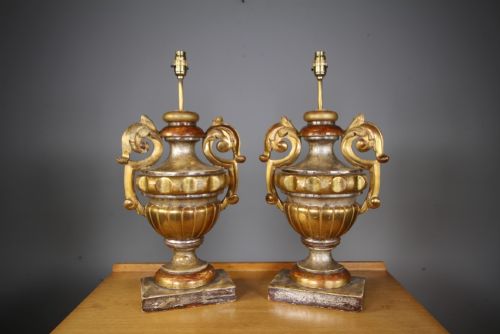
Pairing a console with balanced table lamps or decorative objects creates a symmetrical focal point within a room scheme.
How do I care for antique giltwood?
Maintain giltwood surfaces by dusting gently with a soft, dry cloth to prevent particulate accumulation. Avoid chemical cleaners, excessive moisture, and direct sunlight, which can degrade delicate gold leaf and underlying gesso.
Stable indoor humidity levels protect both the wooden substrate and any fitted marble tops from expansion and contraction.