
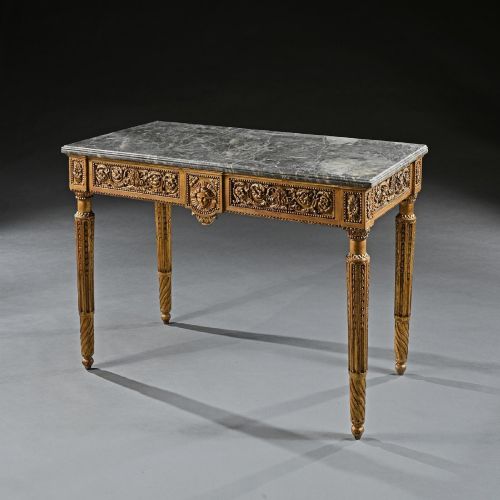
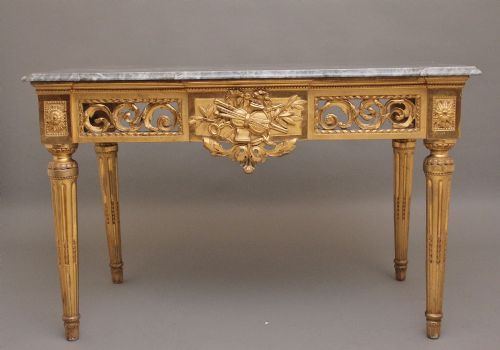
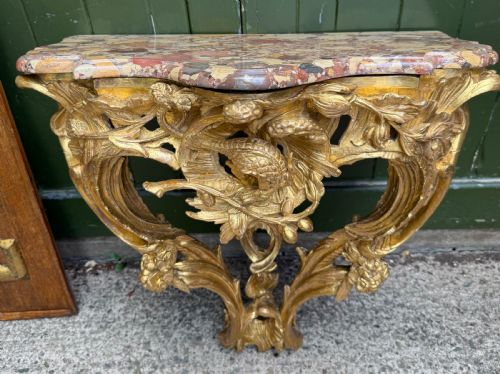
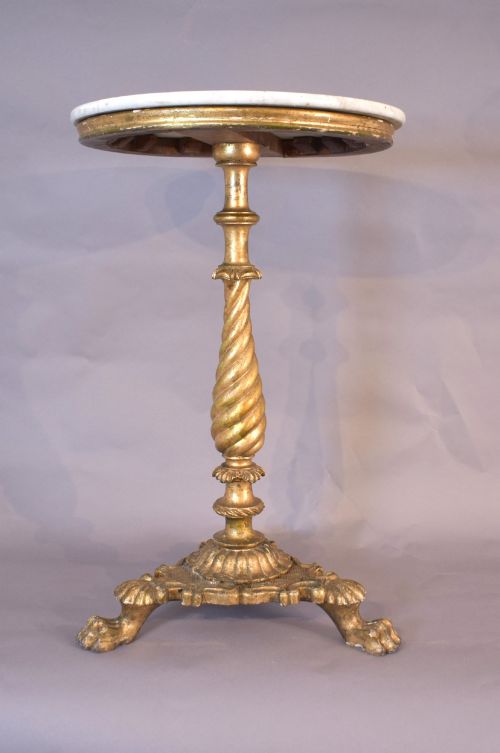
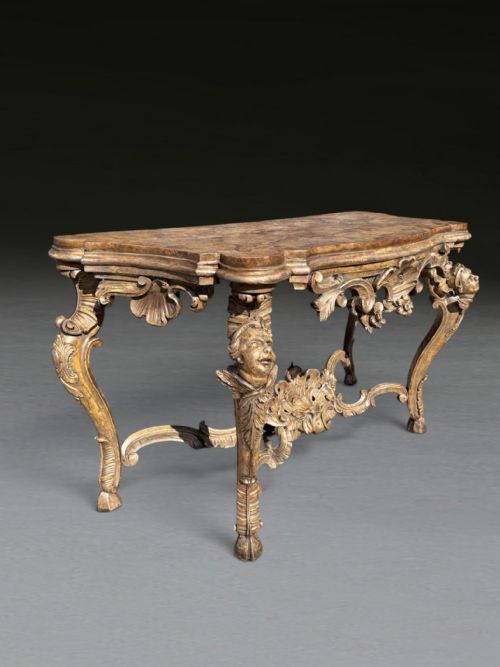
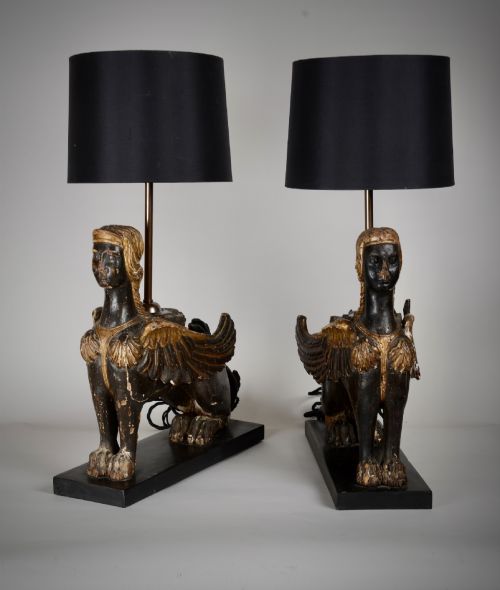
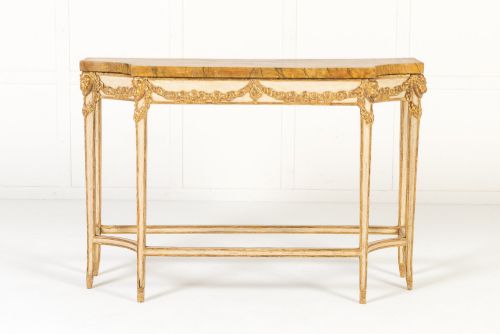
Carved Gilt Side Table
A carved gilt side table brings instant architectural theatre and reflective brilliance to a room.
What these pieces are
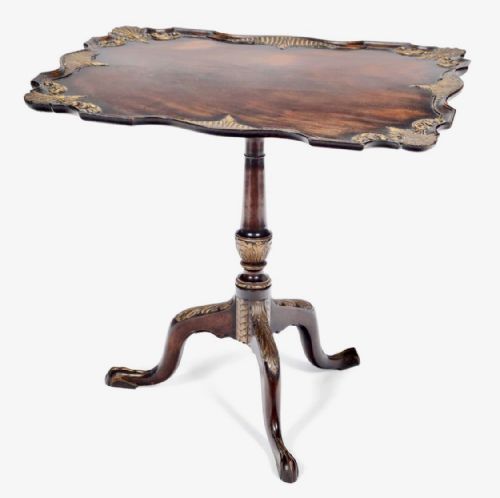
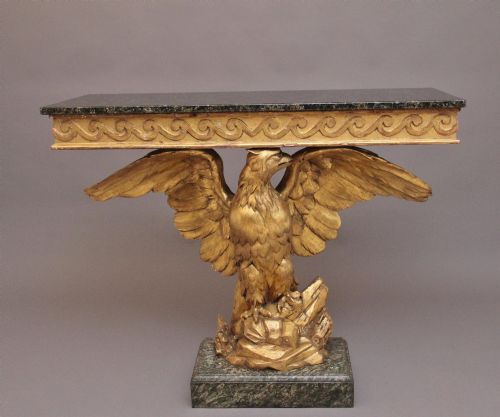
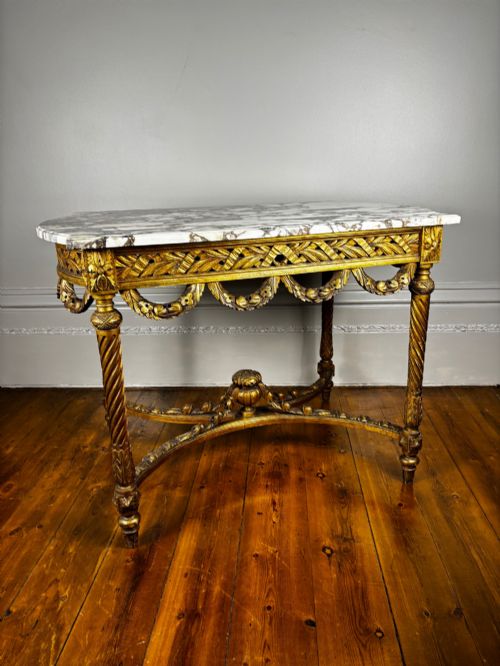
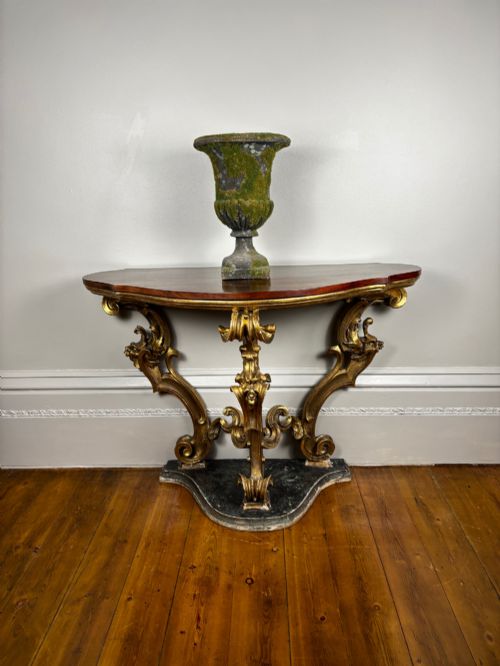
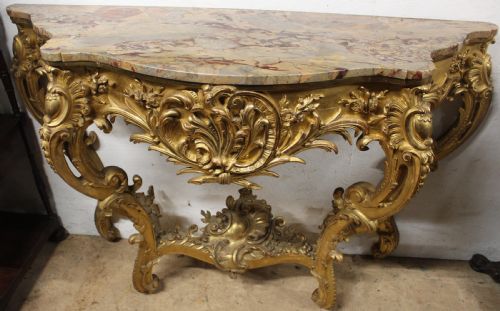
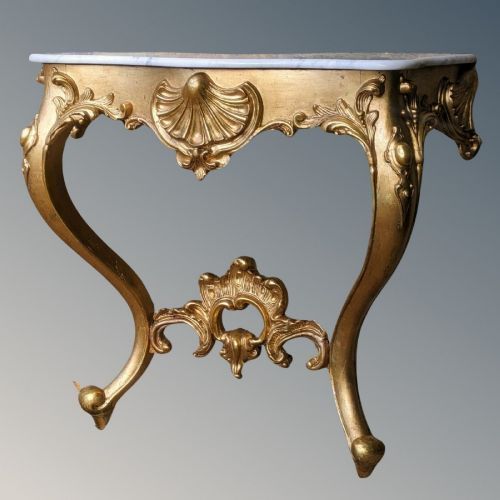
A carved gilt side table is typically encountered as a console table designed to stand against a wall, frequently paired with a matching mirror or topped with marble. The examples appearing on this page span the eighteenth century, the nineteenth century, and nineteen thirty, drawing primarily on Italian origins.
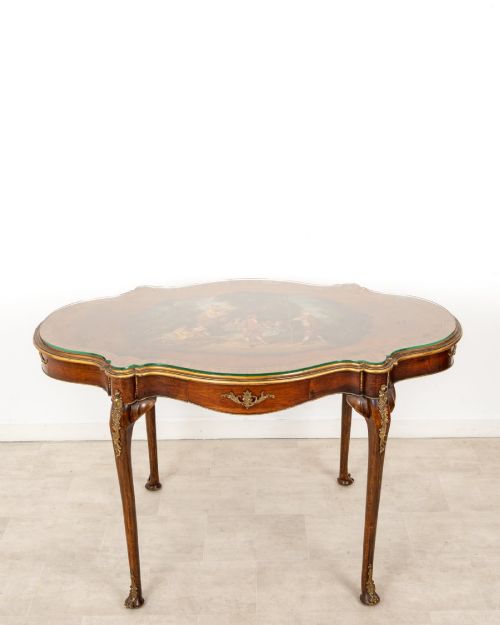
Forms range from serpentine-shaped console tables and tiered etagere tables to grand console table and mirror sets. Makers across the eighteenth and nineteenth centuries drew heavily on Neoclassical, Rococo, and Louis XVI design vocabularies to shape these ornate pieces.
How they were made
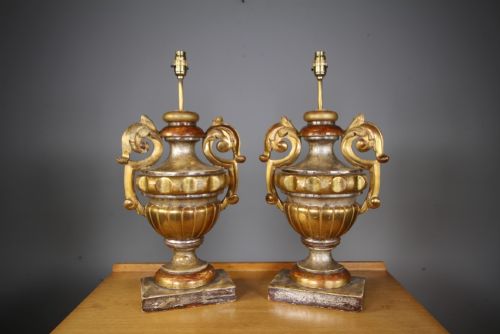
Makers utilised wood as the core structural material, applying gesso to create smooth surfaces suitable for intricate carving before finishing the pieces in gold leaf and paint. The structural frames support heavy stone tops, notably marble, which sit neatly upon the carved wooden bases.
Additional material details recorded across the listings include walnut and brass, providing sturdy construction and subtle contrasting accents within the decorative schemes.
Retail Price Guide 2026
Typical UK retail prices for carved gilt side table, calculated from the Sellingantiques database of over a million retail prices indexed since 2003. This retail price guide relies exclusively on Sellingantiques data; no external sources or auction records are used, so the figures do not describe the wider market.
Listings on this site feature giltwood, marble, wood, gesso, gold leaf, paint, walnut, and brass across eighteenth-century, nineteenth-century, and nineteen-thirty periods.
What varies in quality
The distinction between standard and superior pieces rests in the depth and crispness of the carved details executed in the gesso and wood. Tables featuring heavy, sculptural forms and integrated mirror sets typically demonstrate a higher level of artisan investment.
The choice of surface finish also dictates the tier of the piece, with genuine gold leaf application and preserved marble tops marking out the most sophisticated examples compared to simpler painted or mixed wood variants.
The Carved Gilt Side Table Glossary
- Giltwood
- Wood that has been coated with gold leaf or powder. This finish gives the carved surfaces their characteristic metallic brilliance and protection.
- Gesso
- A plaster-like mixture applied to wooden frames as a base for carving and gilding. It allows craftsmen to achieve sharp, intricate relief details before applying gold leaf.
- Console table
- A table designed to be fixed against a wall, often supported by ornate brackets or legs rather than four standard posts. These pieces frequently feature shaped marble tops.
- Serpentine
- A furniture shape characterised by a wavy, undulating front edge. This contour adds movement and visual complexity to the silhouette of a side table.
- Neoclassical
- A style drawing on classical Greek and Roman art. It emphasises symmetry, straight lines, and restrained classical ornamentation.
Frequently Asked Questions
Where should I place a console table?
These tables are traditionally designed to stand flat against a wall in a hallway, reception room, or dining space. Because many feature finished fronts and flat backs, they anchor architectural spaces without protruding far into the room.
Pairing a console with a matching wall mirror, as seen in set configurations, creates a unified focal point above the surface.
How do I care for giltwood surfaces?
Giltwood requires gentle maintenance to preserve the delicate layers of gold leaf and underlying gesso. Dusting should be done lightly with a dry, soft cloth, avoiding commercial polishes or moisture that can damage the metallic finish.
Marble tops can be wiped with a damp cloth and mild soap, keeping liquids away from the vulnerable wooden joints and gilded borders.
What periods do these tables represent?
The pieces available span several eras, notably the eighteenth and nineteenth centuries, alongside later twentieth-century examples from nineteen thirty. Eighteenth-century models often showcase refined Italian craftsmanship and distinct Neoclassical or Rococo proportions.
Nineteenth-century items frequently embrace revival styles, incorporating bolder ornamentation and dramatic serpentine forms.
What materials make up these tables?
The construction relies on wood frames coated in gesso and finished with gold leaf or paint. Many examples incorporate heavy marble slabs fitted precisely to the upper surface.
Additional elements such as walnut timber and brass hardware appear across various pieces to provide structural support and decorative contrast.