

French Marble Console Table
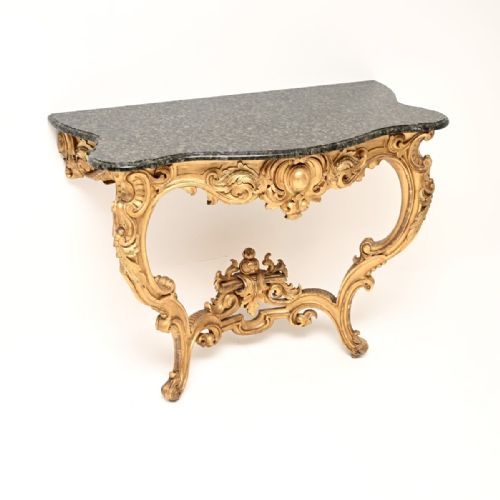
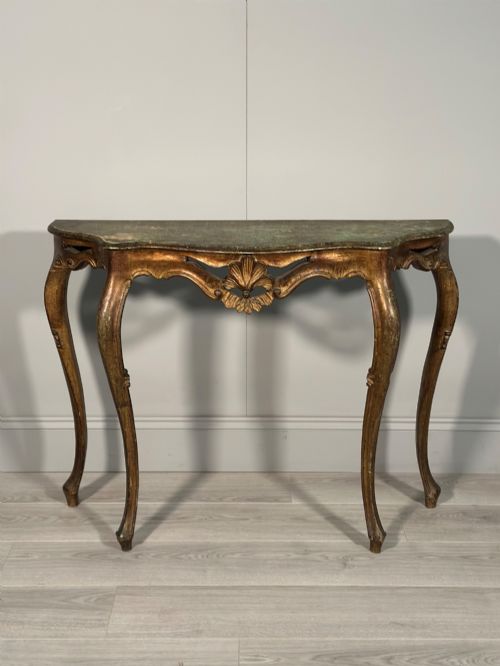
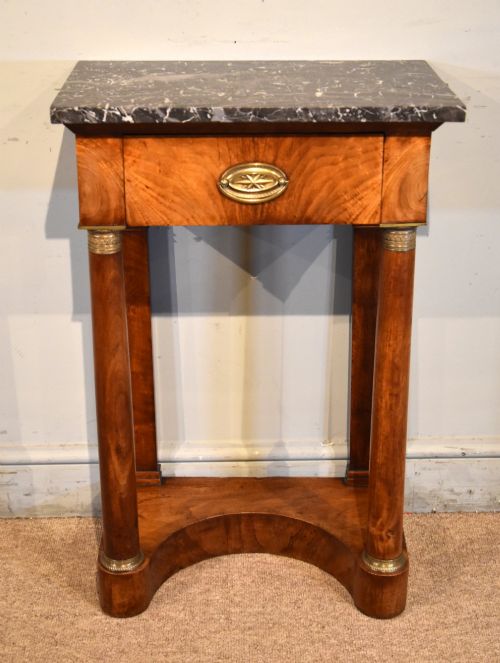
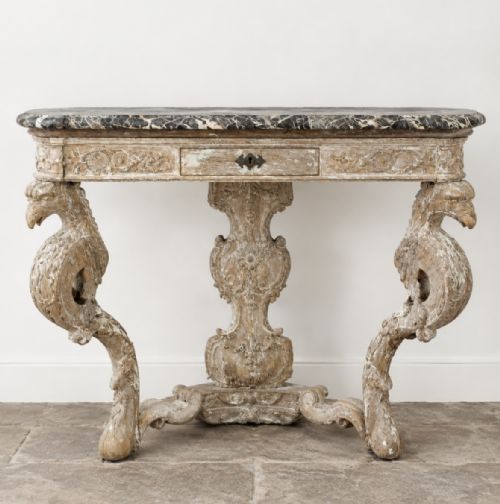
A french marble console table combines stone and timber or gilded framing to anchor an interior with classical proportion.
French Marble Console Table
A french marble console table is a wall-fixed or freestanding surface designed for hallways, reception rooms and salons, pairing a heavy stone slab with an ornate or restrained base.
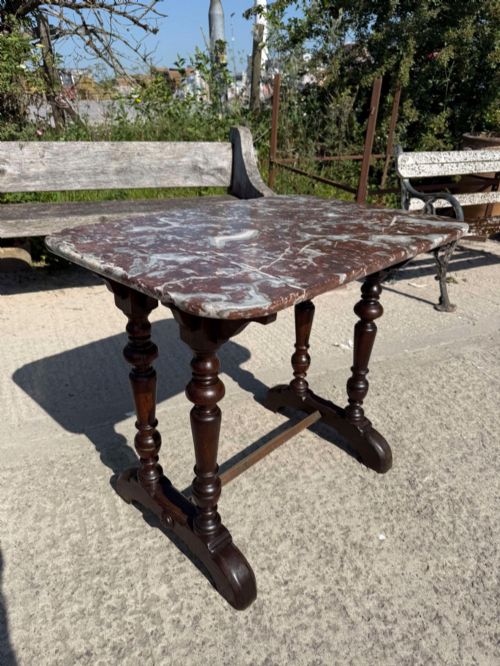
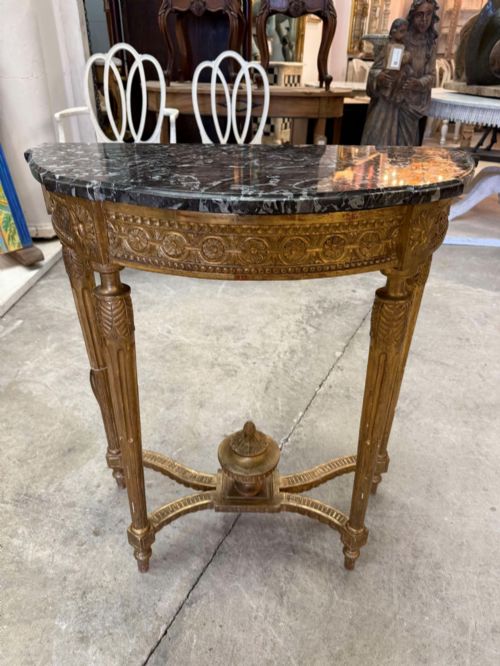
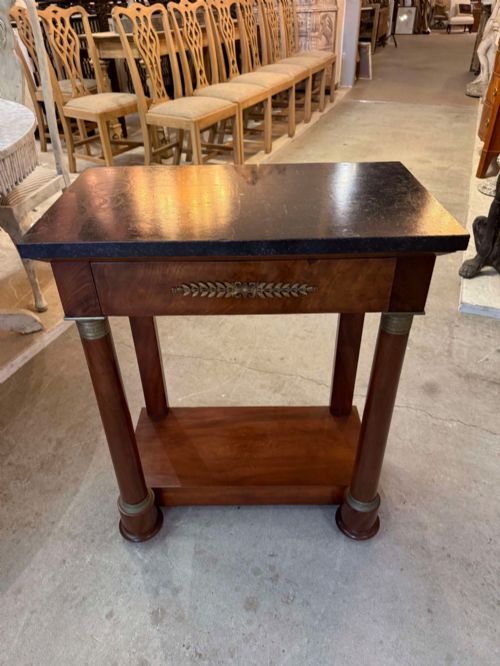
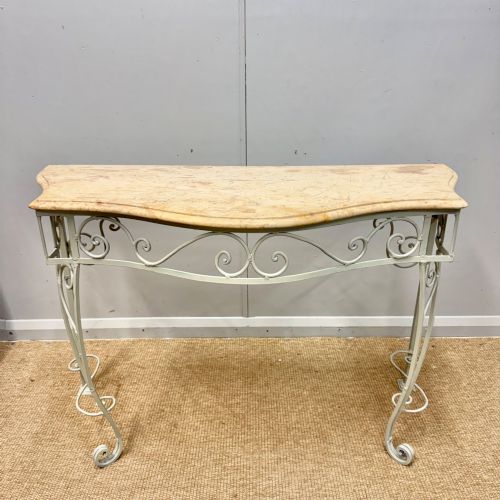
The selections span the eighteenth, nineteenth and early twentieth centuries, encompassing styles from French Empire and Louis XVI to rustic prep tables and wrought iron bistro pieces.
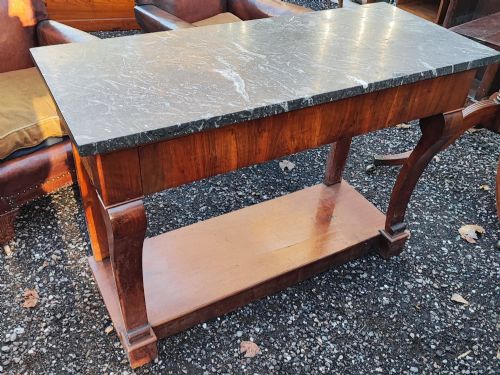
Most examples found here combine mahogany, walnut or giltwood frames with marble tops in white, rouge or figured varieties, frequently accompanied by matching pier mirrors.
How they were made
Joiners and cabinetmakers utilised dense hardwoods like mahogany and walnut alongside softer timbers designated for gesso and gilding, constructing frames designed to carry significant weight.
Marble slabs were hand-sawn and polished to fit individual rails, sometimes resting directly upon the wooden structure or secured within moulded lips.
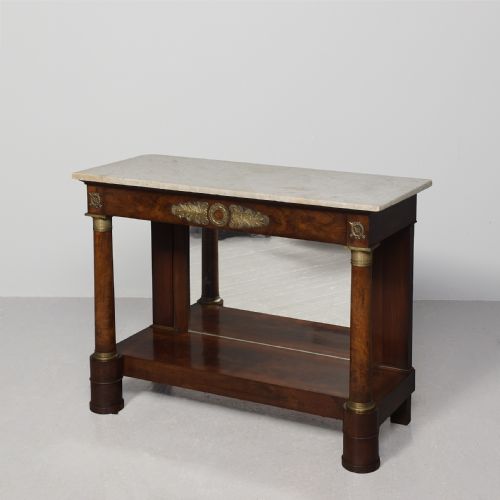
Decorative metalwork elements, including ormolu mounts, brass details and wrought iron framework, added structural rigidity and visual contrast to the stone and timber.
French Marble Console Table Retail Price Guide 2026
Typical asking prices for french marble console table among the pieces listed under this phrase on Sellingantiques today, from the lower quarter to the upper quarter. They describe what is for sale here now, not the wider market.
Listings incorporate walnut, mahogany, wrought iron and giltwood frames paired with marble, spanning the eighteenth to the twentieth centuries.
What varies in quality
The depth and crispness of hand-carved ornamentation on giltwood or walnut frames distinguish standard commercial pieces from workshop productions bearing maker stamps.
The selection and thickness of the marble top, particularly figured varieties like breche d'alep or fossil stone, dictate the visual weight and cost of the finished item.
The integrity of the structural joints and the original condition of the mercury gilding or polished wood surfaces reflect the care taken during manufacture and subsequent upkeep.
Maison Millet·Krieger Paris·JACOB
The French Marble Console Table Glossary
- Ormolu
- Gilded bronze mounts applied to furniture. This technique was widely utilised during the eighteenth and nineteenth centuries.
- Pier glass
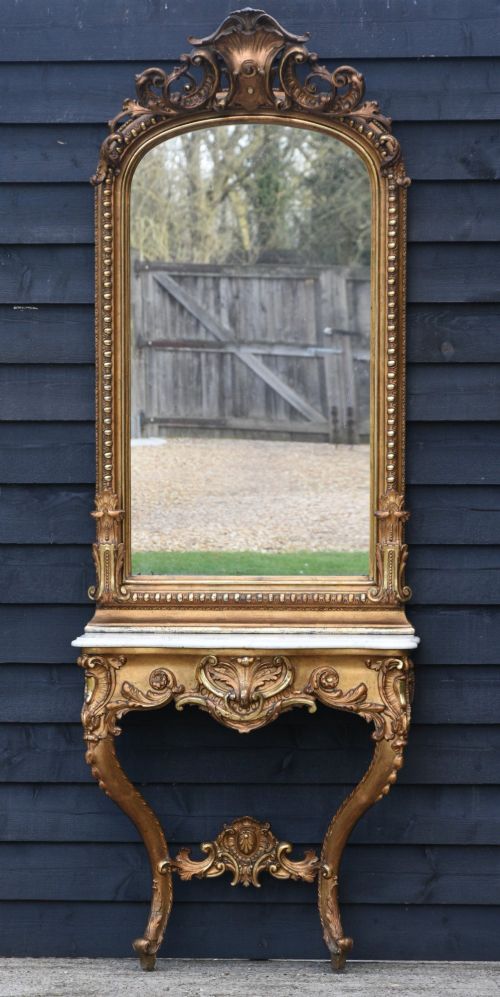
- A tall mirror designed to hang above a console table between two windows. These pieces were often produced as matching sets.
- Breche d'alep
- A type of multi-coloured quarried marble featuring brecciated patterns. It appears frequently on eighteenth and nineteenth-century tables.
- Gesso
- A plaster-based mixture applied to wood frames to provide a smooth surface for gilding. It allows for intricate relief carving.
- Serpentine
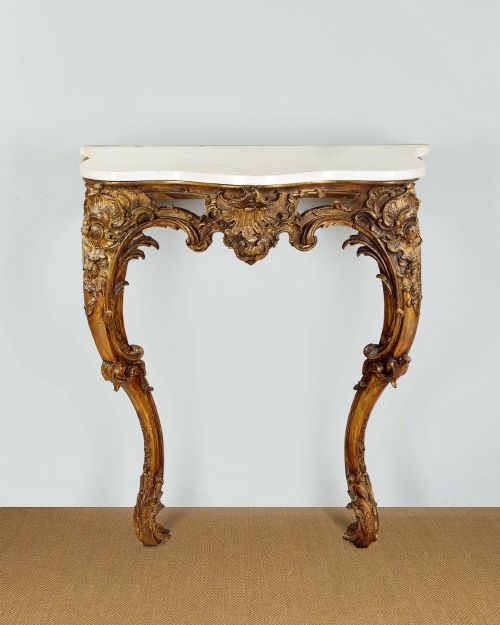
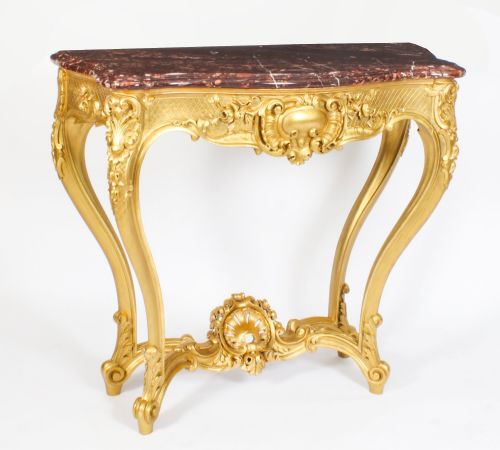
- A gently undulating curved line characteristic of rococo furniture design. This profile shapes both wooden rails and marble tops.
French Marble Console Table: Frequently Asked Questions
Are these tables fixed to the wall?
Many traditional console tables were designed to stand against a wall with support from front legs, sometimes requiring wall brackets for complete stability. Lighter bistro or centre tables stand entirely on their own.
Heavier marble tops often rest on the base without permanent fixings, relying on gravity and precise joinery to remain secure.
How do I clean the marble top?
Marble is porous and sensitive to acidic substances like wine, lemon juice or vinegar, which can etch the polished surface over time. Warm water and a soft cloth are usually sufficient for daily maintenance.
Professional sealing can help protect historical stone from staining while preserving the original sheen of the material.
Can I use a console table as a desk?
Most antique console tables are shallower than standard writing desks and lack knee clearance due to structural stretchers or lower rails. They serve primarily as display surfaces or hall furniture.
Centre tables or larger prep tables listed within these categories offer more room for seating if alternative uses are required.
How do I identify a Louis XVI style table?
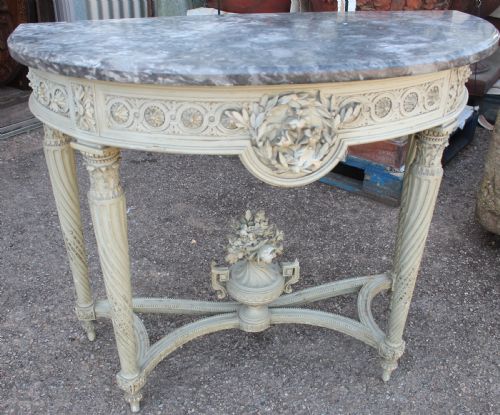
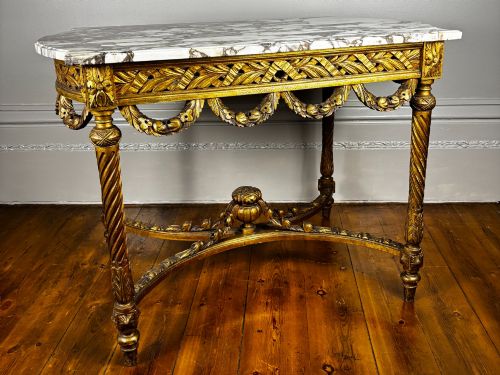
Louis XVI style pieces typically feature straight, tapered legs, often fluted to resemble classical columns, contrasting with the curved lines of earlier rococo designs. Ornamentation draws on neoclassical motifs such as acanthus leaves, bead reels and geometric symmetry.
Ormolu mounts and mahogany or giltwood construction frequently accompany this aesthetic across nineteenth-century revivals.