
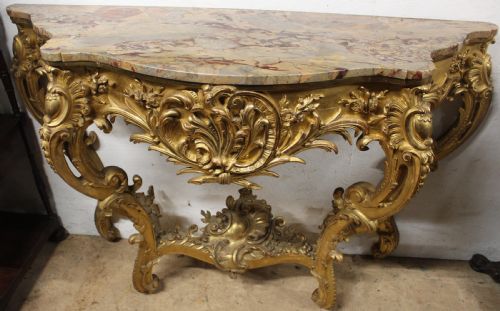
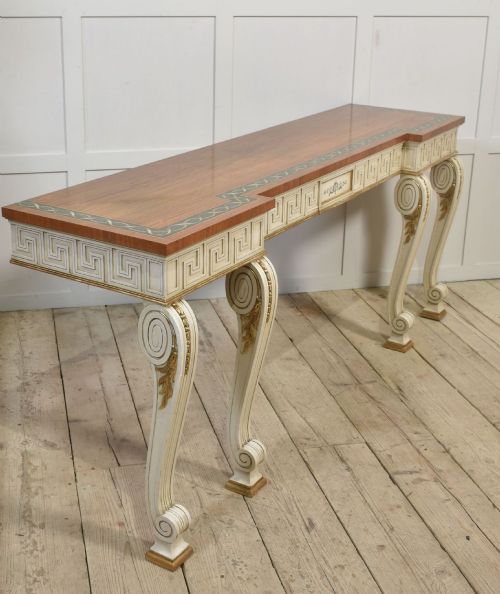
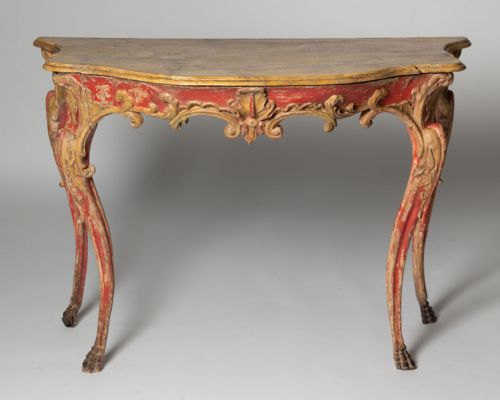

Gilded Wood Console Table
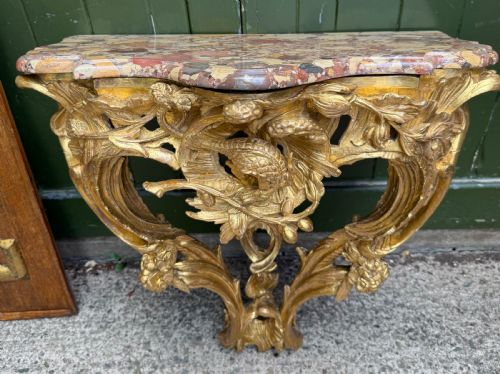
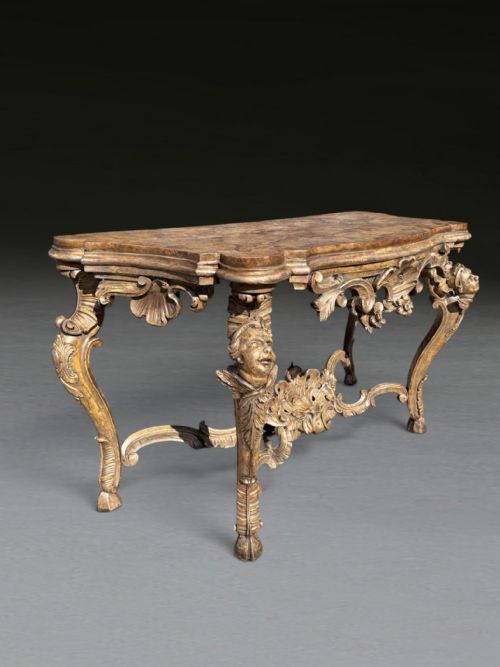
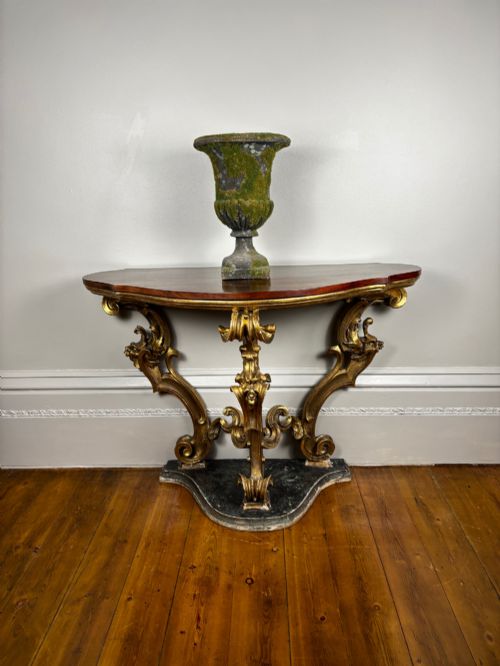
A gilded wood console table brings formal weight and carved surface brilliance to a room, standing flat against a wall.
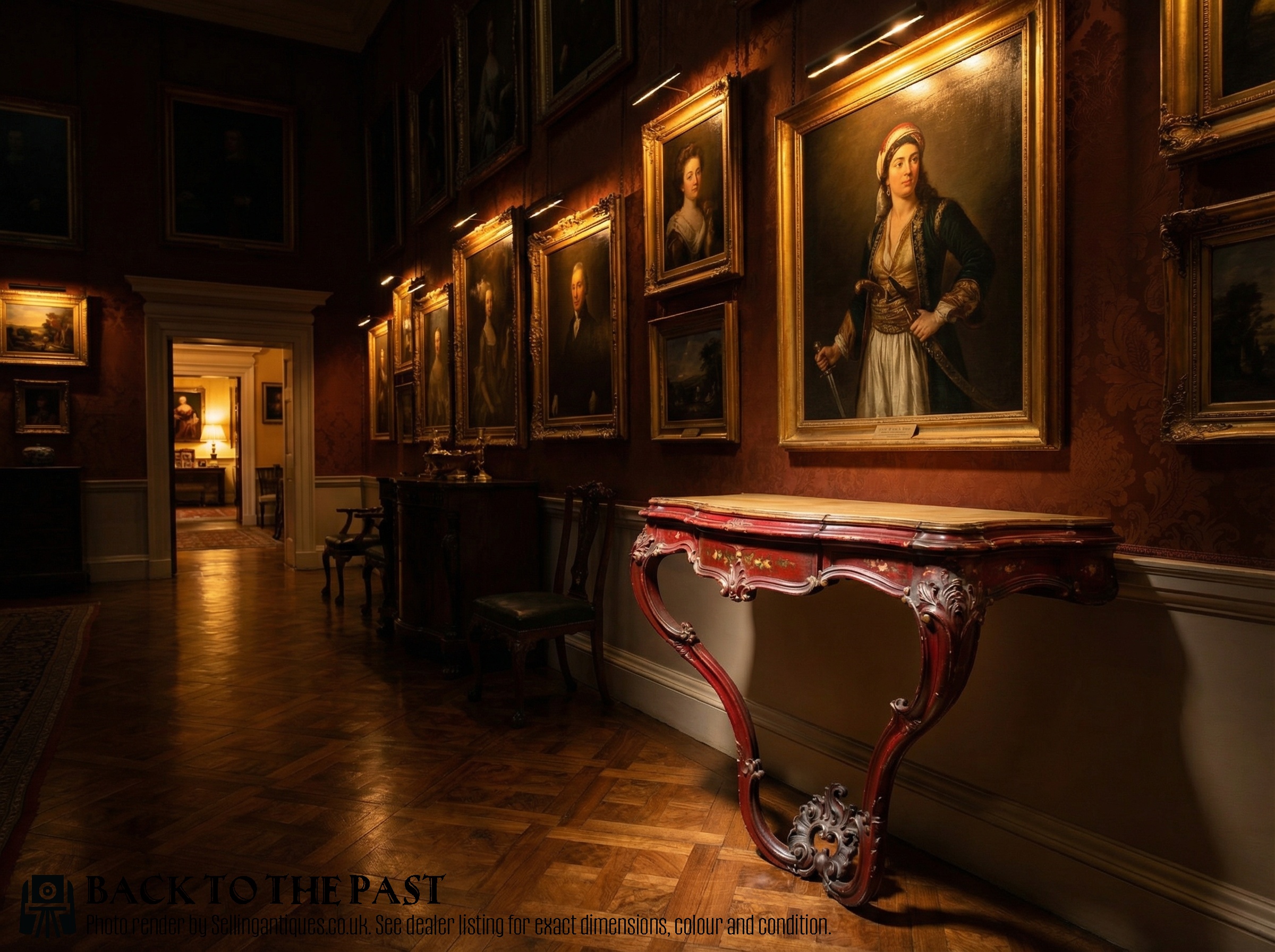
Gilded Wood Console Table
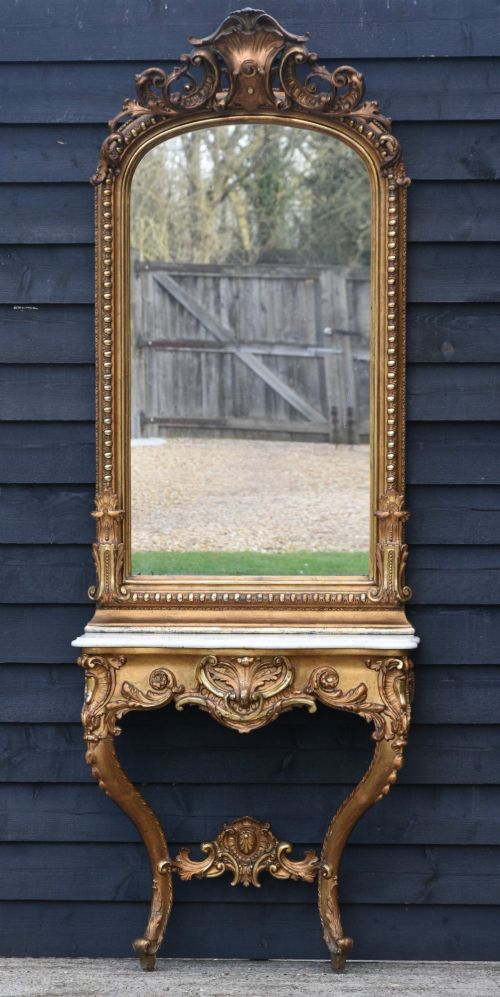
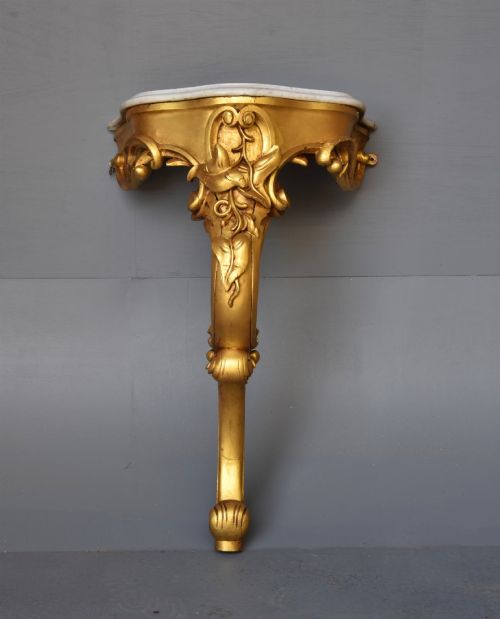
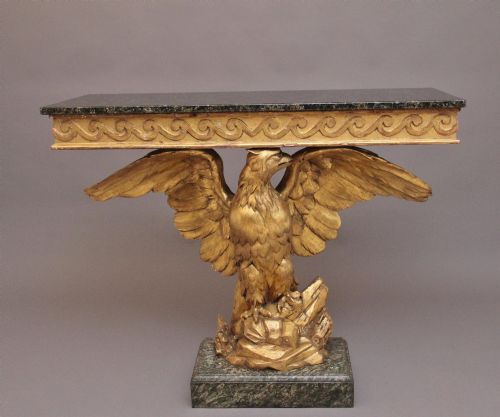
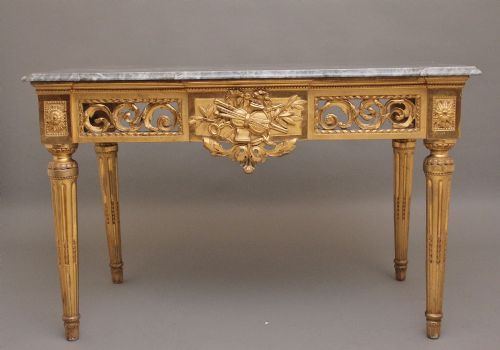
A gilded wood console table is a wall-fixed or freestanding support designed to stand in a reception room or hallway, frequently paired with a matching mirror above. The examples available here span the eighteenth, nineteenth, and early twentieth centuries, originating predominantly from French and Italian workshops.
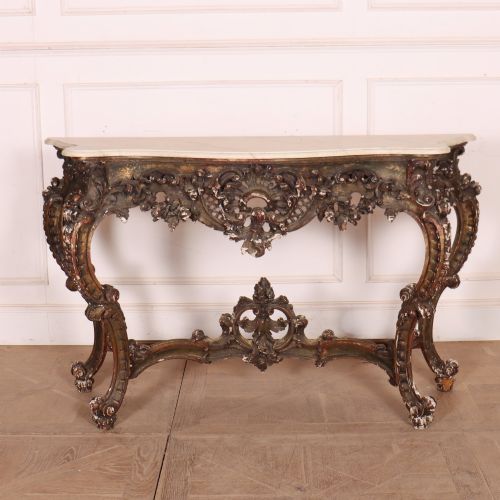
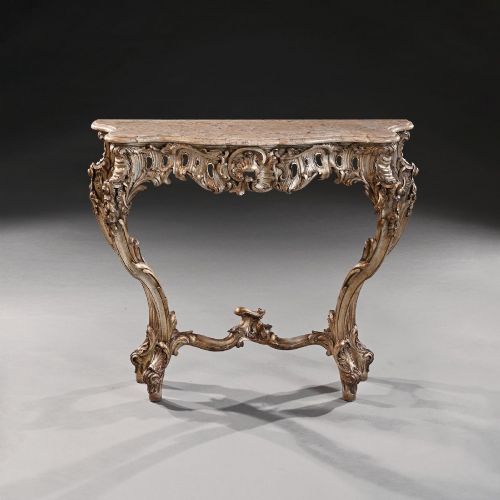
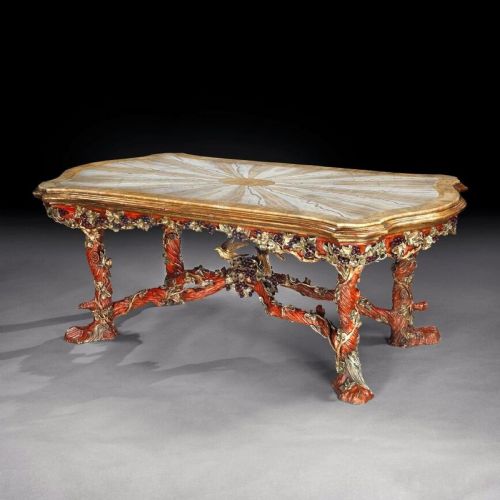
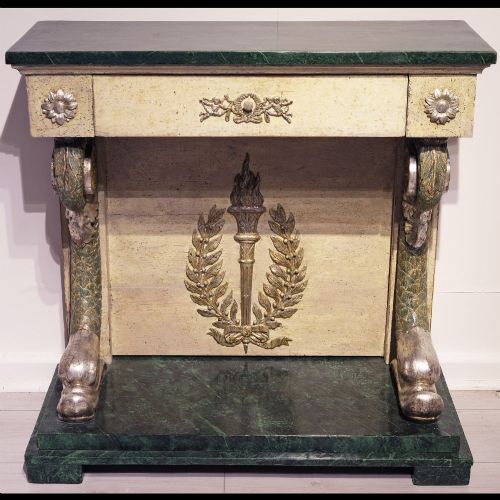
The form encompasses serpentine fronts, demi-lune shapes, and rectangular frames topped with marble, onyx, or wood. Alongside traditional console tables, buyers encounter related forms such as centre tables, card tables, and side tables sharing similar decorative vocabulary.
How they were made
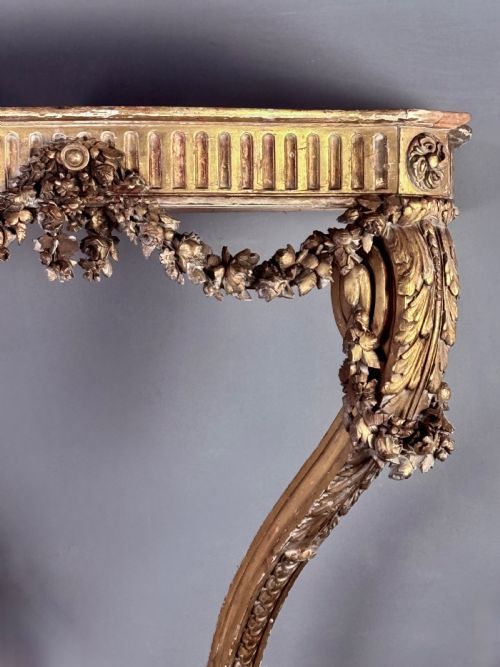
Carved wood provides the structural skeleton, shaped into elaborate scrolls, foliage, and figural supports like dolphins or lion's paws. Craftsmen applied gesso layers over the timber base to smooth the surface before laying gold leaf or silver gilt.
Many specimens incorporate heavy marble tops, including varieties such as breccia and breche d'alep, fitted precisely to the wooden rails. Paint and polychrome finishes appear alongside giltwood, while select pieces integrate ormolu mounts and brass detailing.
Gilded Wood Console Table Retail Price Guide 2026
Typical asking prices for gilded wood console table among the pieces listed under this phrase on Sellingantiques today, from the lower quarter to the upper quarter. They describe what is for sale here now, not the wider market.
Listings feature items spanning the eighteenth century through to 1920, predominantly constructed from carved wood, gesso, and giltwood with marble tops.
What varies in quality
The depth and definition of the wood carving dictate the visual impact of a piece, separating fluid hand-cut decoration from shallower, rigid moulding. Crispness in the application of gold leaf and the handling of the gesso ground determine how well the surface catches ambient light.
Materials dictate baseline worth, notably the selection and thickness of figured marble tops paired with the primary timber. Structural integrity of the wall fixings and the original harmony between the table frame and its surface finish define the standard of survival.
Felix-Alfred Ternisien·Amleto Bertoni·Maison Mottheau
The Gilded Wood Console Table Glossary
- Giltwood
- Timber coated with gold leaf applied over a prepared gesso ground. This technique creates a luminous metallic surface characteristic of formal antique furniture.
- Console table
- A table designed to stand against a wall, historically supported by two front legs and fixed to the masonry behind. It functions as a display surface for decorative objects.
- Gesso
- A plaster mixture spread over wood to prepare a smooth surface for gilding or painting. It allows carvers to achieve sharp relief details.
- Serpentine
- A furniture outline featuring a concave centre flanked by convex ends, creating a flowing wave motion along the front edge. This shape appears frequently on eighteenth and nineteenth-century frames.
- Pier mirror
- A tall wall mirror designed to hang in the wall space between windows, often positioned directly above a matching console table. Together they form a unified decorative scheme.
Gilded Wood Console Table: Frequently Asked Questions
How do I secure a wall table?
Many console tables are designed to rely on wall fixings for total stability because they possess only front legs. Brackets or structural ties attach the rear frame safely to the plaster.
Professional installation is recommended for heavy marble-topped specimens to ensure the weight distributes properly against the wall surface.
What rooms suit a console table?
These tables find a natural home in entrance halls, drawing rooms, and dining spaces where floor space is limited. Their narrow profile allows them to sit flush against a wall without blocking walkway paths.
Pairing a table with an overmantel or pier mirror creates a vertical focal point that draws the eye upward in high-ceilinged interiors.
How do I clean gilded wood?
Gilded surfaces require gentle dusting with a soft, dry ostrich feather brush or a clean microfibre cloth. Moisture and chemical polishes strip the delicate gold leaf and damage the underlying gesso.
Marble tops tolerate slightly more robust maintenance using a damp cloth, provided no acidic cleaners touch the stone.
How can I date a piece?
Dating relies on observing stylistic markers, such as the sweeping asymmetry of Rococo revival curves or the restrained symmetry of Neoclassical and Regency designs. Timber selection, construction joints, and the method of gilding provide further chronological clues.
Comparative analysis with signed workshop pieces or documented catalogue examples helps narrow down the decade of manufacture.