
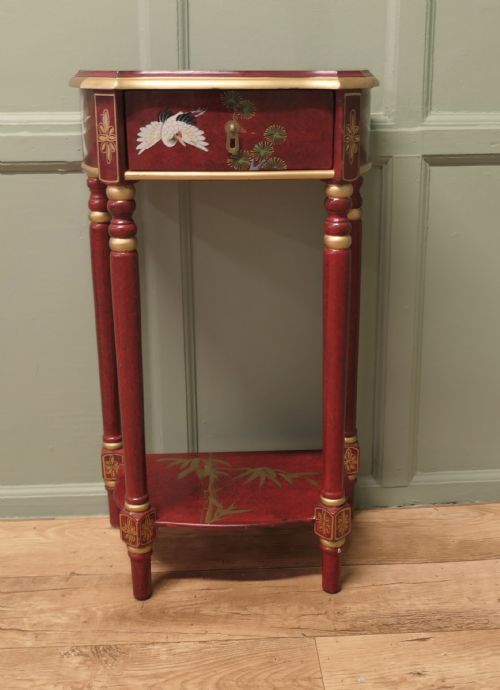
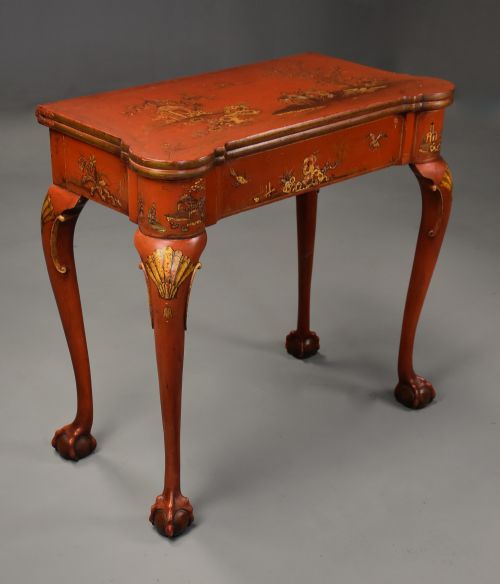


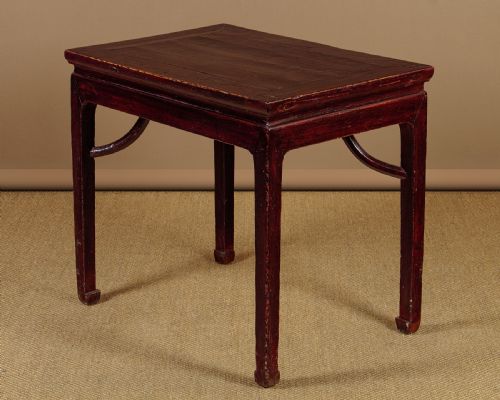


Red Lacquer Console Table
These red lacquer console table examples bring vibrant colour and historic presence to a room, offering rich surface detail alongside practical display space.
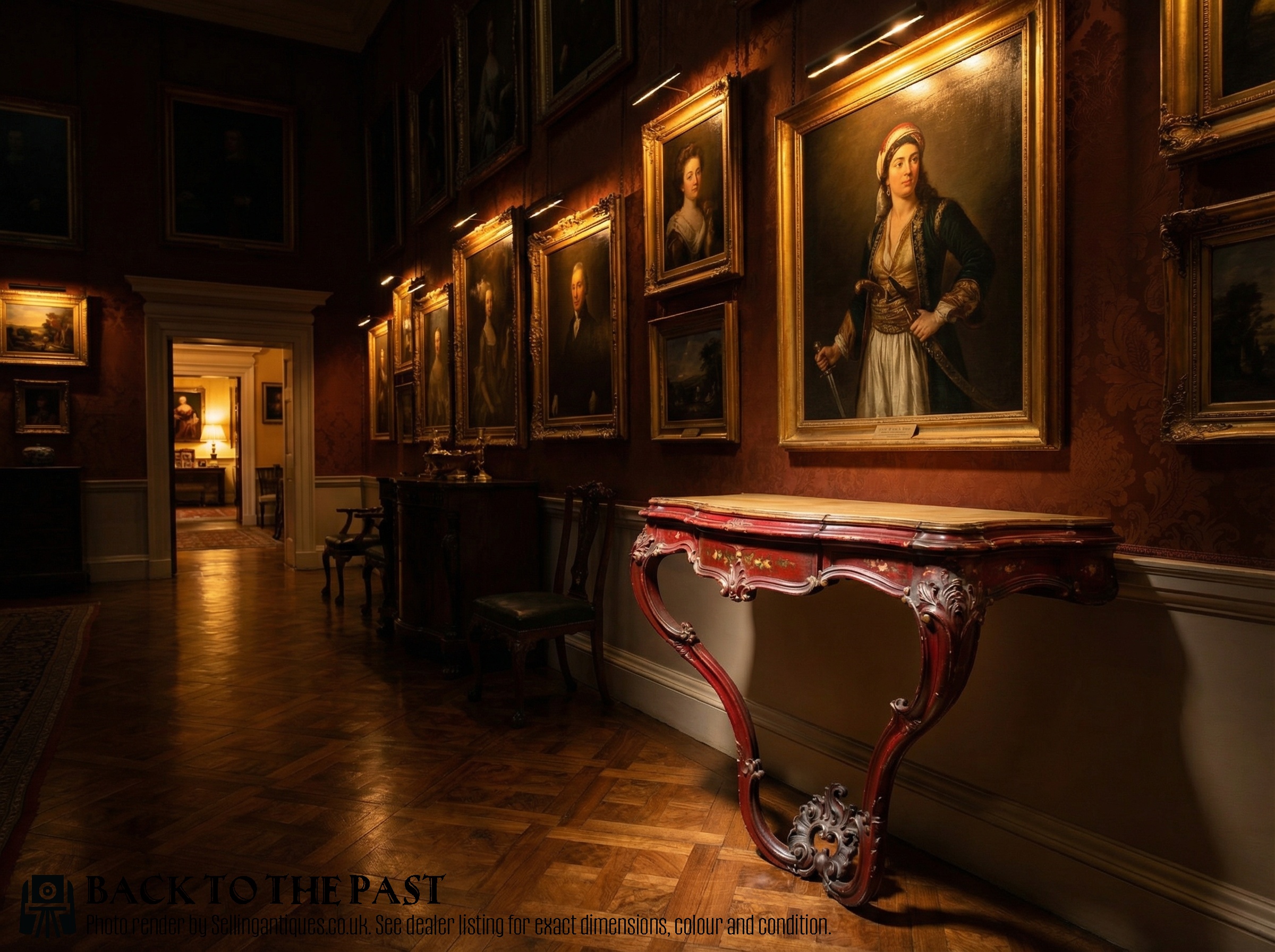
Red Lacquer Console Table
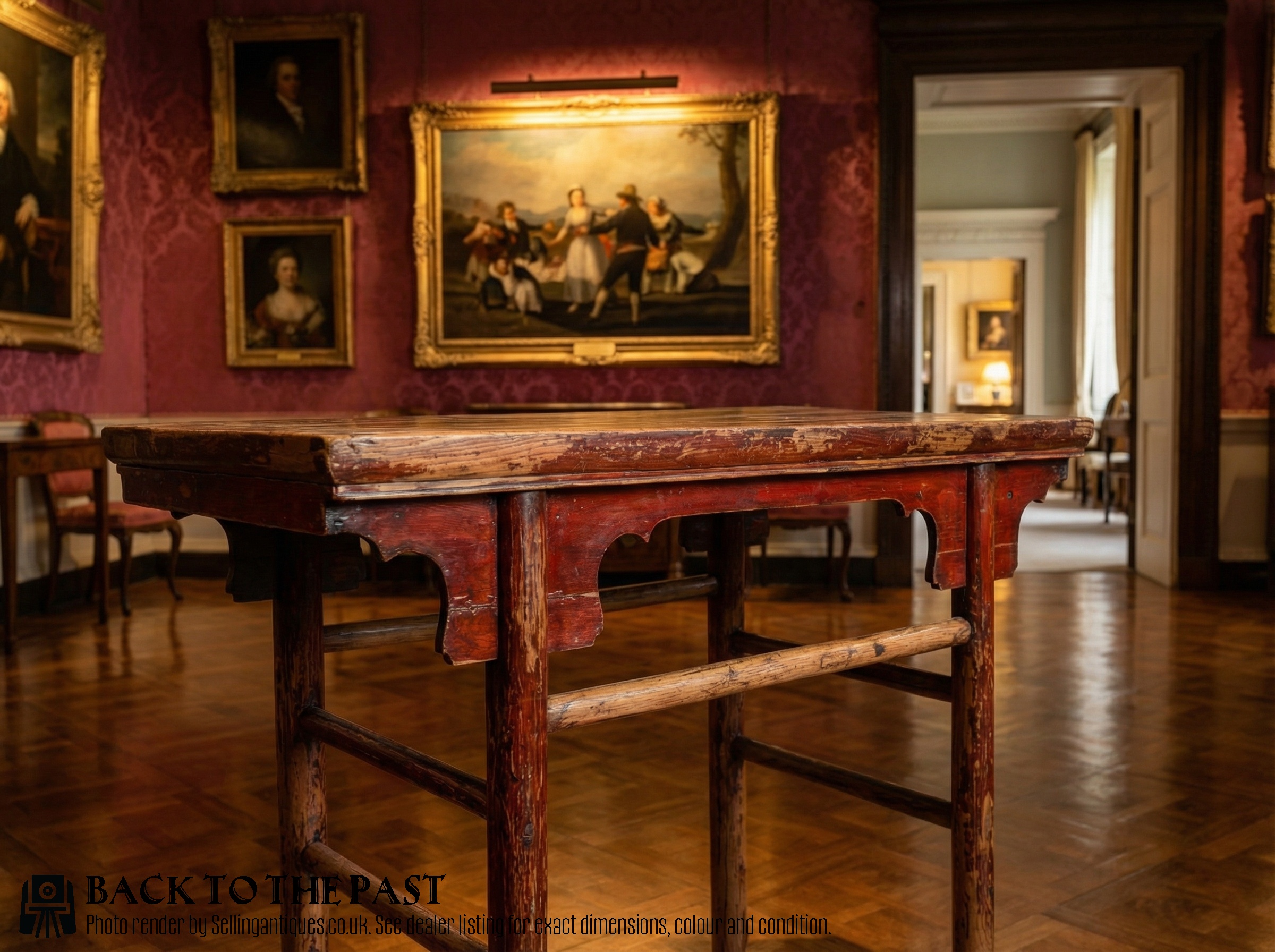
When you search for a red lacquer console table, you are looking at statement furniture spanning the nineteenth century and the early twentieth century, drawing on Chinese provincial, Qing dynasty, and European Chinoiserie traditions. These tables serve multiple functions in a home, appearing frequently as altar tables, side tables, games tables, and writing desks.
The versions you are most likely to meet on this page include nineteenth-century Chinese export pieces and nineteenth-century half tables or demi-lune tables, alongside Queen Anne style Chinoiserie interpretations. They range from large console formats to slender elm half tables designed to sit flush against a wall.
How they were made
Construction relies on traditional timber framing using woods such as elm, pine, and general hardwoods beneath the surface finish. Artisans built these pieces with sturdy joinery suitable for heavy ritual furniture like altar tables or practical items like writing desks.
The distinct red lacquer finish involves applying successive coats of sap or resin to the wood substrate, often complemented by gilt detailing, painted Chinoiserie motifs, or brass mounts in European interpretations. This layered technique creates a deep, glossy exterior that withstands daily use while maintaining its decorative impact.
Red Lacquer Console Table Retail Price Guide 2026
Typical asking prices for red lacquer console table among the pieces listed under this phrase on Sellingantiques today, from the lower quarter to the upper quarter. They describe what is for sale here now, not the wider market.
Listings feature items from the nineteenth century and nineteen-twenty, constructed from lacquer, wood, elm, brass, gilt, and pine.
What varies in quality
Quality rests primarily in the depth and preservation of the lacquer work and the crispness of any gilt or painted decoration. Pieces featuring intricate Chinoiserie scenes or well-preserved nineteenth-century surfaces stand apart from simpler painted furniture.
Structural integrity also dictates value, distinguishing heavy elm altar tables and large console formats with solid framing from lighter utility items. The fidelity of the period style - whether executing a Qing dynasty design or a European Queen Anne revival - shapes the overall character.
The Red Lacquer Console Table Glossary
- Lacquer
- A durable finish created from natural resin applied in multiple layers to a wooden base. It yields a smooth, hard surface that takes rich colour and polish well.
- Chinoiserie
- European decorative style from the seventeenth and eighteenth centuries that imitated Chinese artistic traditions. It appears on domestic furniture through painted figures, landscapes, and pavilions.
- Demi-lune
- A half-moon shape used for tables designed to stand flat against a wall. This format appears frequently among nineteenth-century side and console pieces.
- Altar table
- A traditional Chinese form characterised by a long, narrow rectangular top often featuring upturned ends. These pieces provided a commanding presence in domestic or ceremonial settings.
- Qing dynasty
- The final imperial dynasty of China, lasting from sixteen-forty-four to nineteen-twelve. Furniture from this era forms the basis of many provincial and export designs seen here.
Red Lacquer Console Table: Frequently Asked Questions
What is a red lacquer console table used for?
These tables provide a striking focal point in entrance halls, living rooms, or dining spaces while offering a narrow surface for lamps, mirrors, or decorative objects. Many historical examples originate from altar tables or side desks that now function effectively as display furniture.
Their versatile proportions allow them to sit flush against walls without dominating floor space, combining utility with strong visual character.
How do I clean a red lacquer console table?
Dust the surface regularly with a soft, dry, lint-free cloth to prevent particle buildup. Avoid harsh chemical cleaners, abrasives, or excessive moisture, which can damage the historic lacquer finish.
If deeper cleaning is necessary, use a slightly damp cloth followed immediately by a dry one, keeping the piece away from direct sunlight and radiators to protect the wood and resin layers.
Are these tables solid wood?
The underlying construction typically utilises regional timbers such as elm, pine, or general hardwoods depending on the workshop and region of origin. These foundational woods provide the structural strength required for heavy tops and sturdy legs.
The defining red lacquer layer and any gilt or painted decoration are then built up over this wooden substrate through traditional coating techniques.
How do I tell Chinese export pieces from European Chinoiserie?
Chinese export pieces generally utilise indigenous woods like elm and follow traditional structural forms such as altar tables or provincial side tables reflecting nineteenth-century craftsmanship. The lacquer work and motifs derive directly from Eastern manufacturing traditions.
European Chinoiserie items often adopt domestic furniture shapes like Queen Anne style dressing tables or incorporate brass mounts while applying Asian-inspired painted decoration to suit Western interiors.