

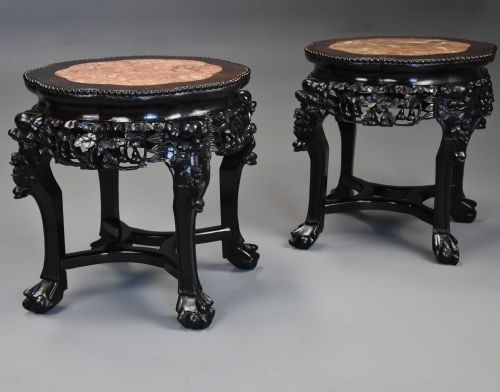
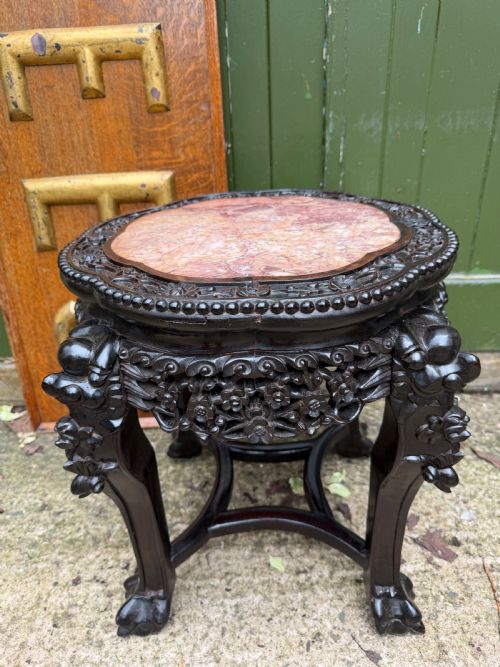


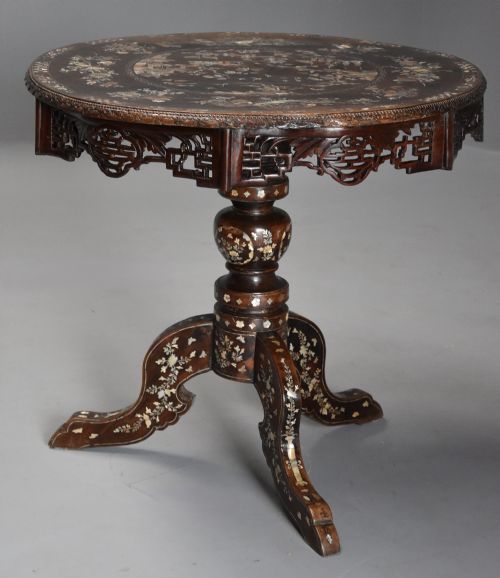


Late 19th Century Chinese Table
A late 19th century chinese table brings dense native timbers and carved detail into a room, offering functional surface space with distinct regional character.
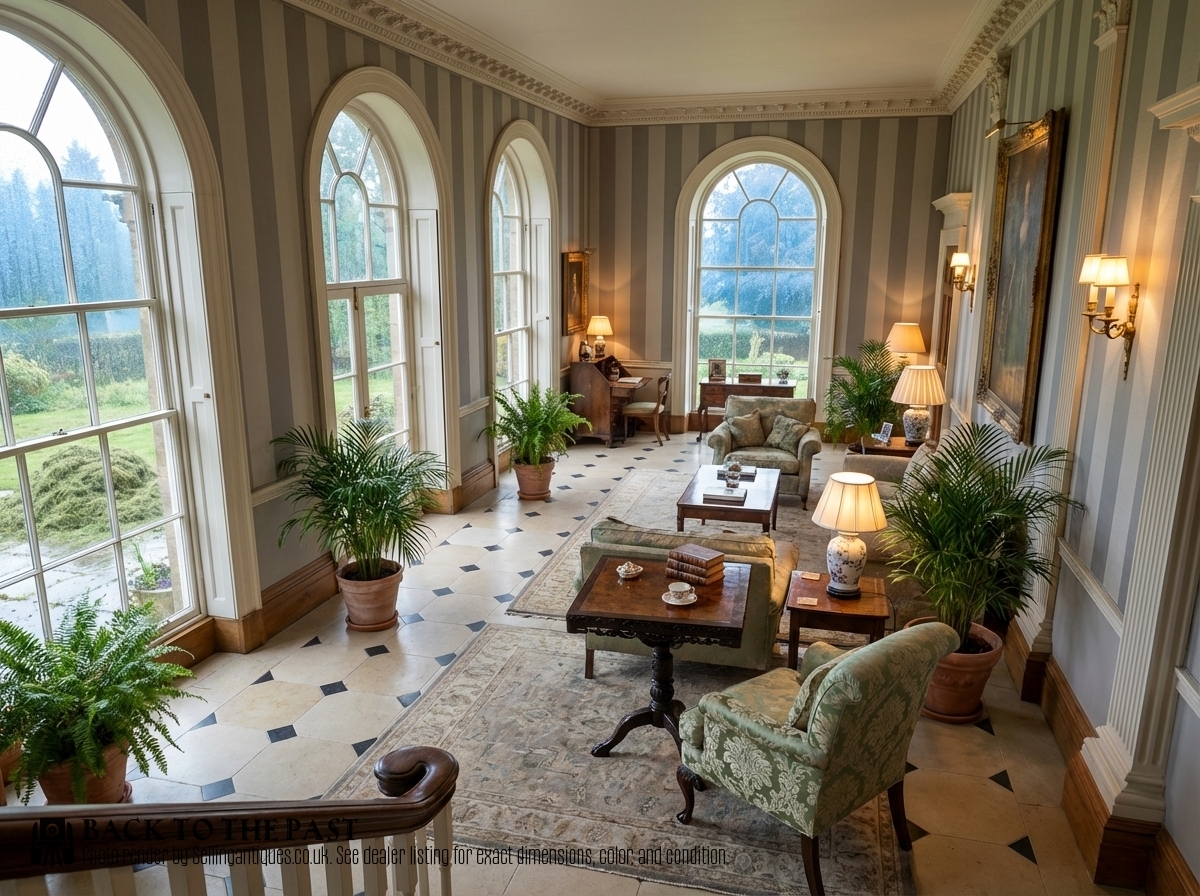
Late 19th Century Chinese Table
A late 19th century chinese table encompasses a broad range of domestic furnishings produced during the late Qing Dynasty, spanning formal altar tables to low occasional stands. The inventory leans heavily toward compact forms such as pot stands, jardiniere pedestals, and low tea tables rather than large dining formats. Buyers encounter both provincial utility pieces and highly decorative export items designed for Western markets.
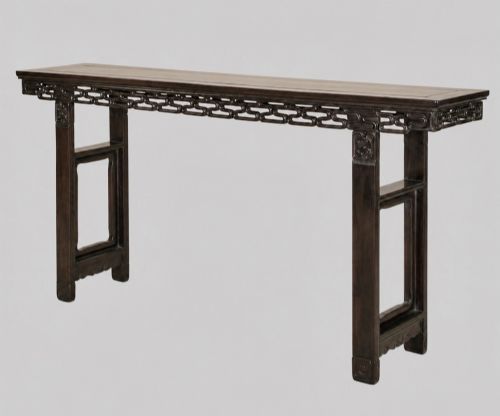
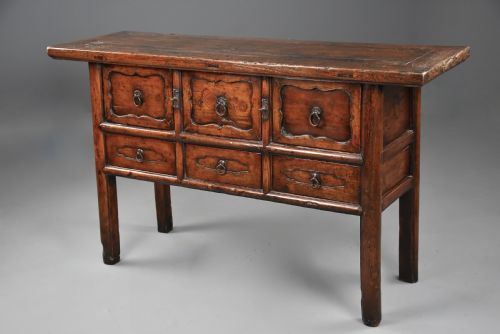
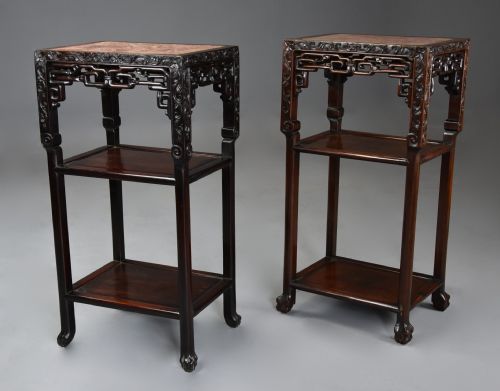
The surviving examples frequently manifest as small circular stands, rectangular side tables, and multi-tiered pedestals intended to display porcelain or plants. Altar tables and long sideboards also appear, constructed with traditional joinery that reflects both scholarly taste and domestic practicality. These diverse forms share an origins timeframe anchored primarily around the 1880s and 1890s.
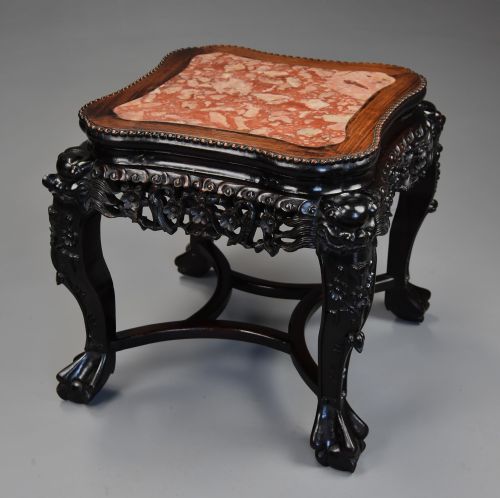
Rootwood, elm, and dense Asian hardwoods dominate the domestic items, whilst scholarly variants incorporate fine carving and inset stone panels. Buyers seeking functional low furniture will find opium tables and Kang tables alongside tall vase supports. Each piece serves to anchor a corner or display decorative objects through traditional craftsmanship.
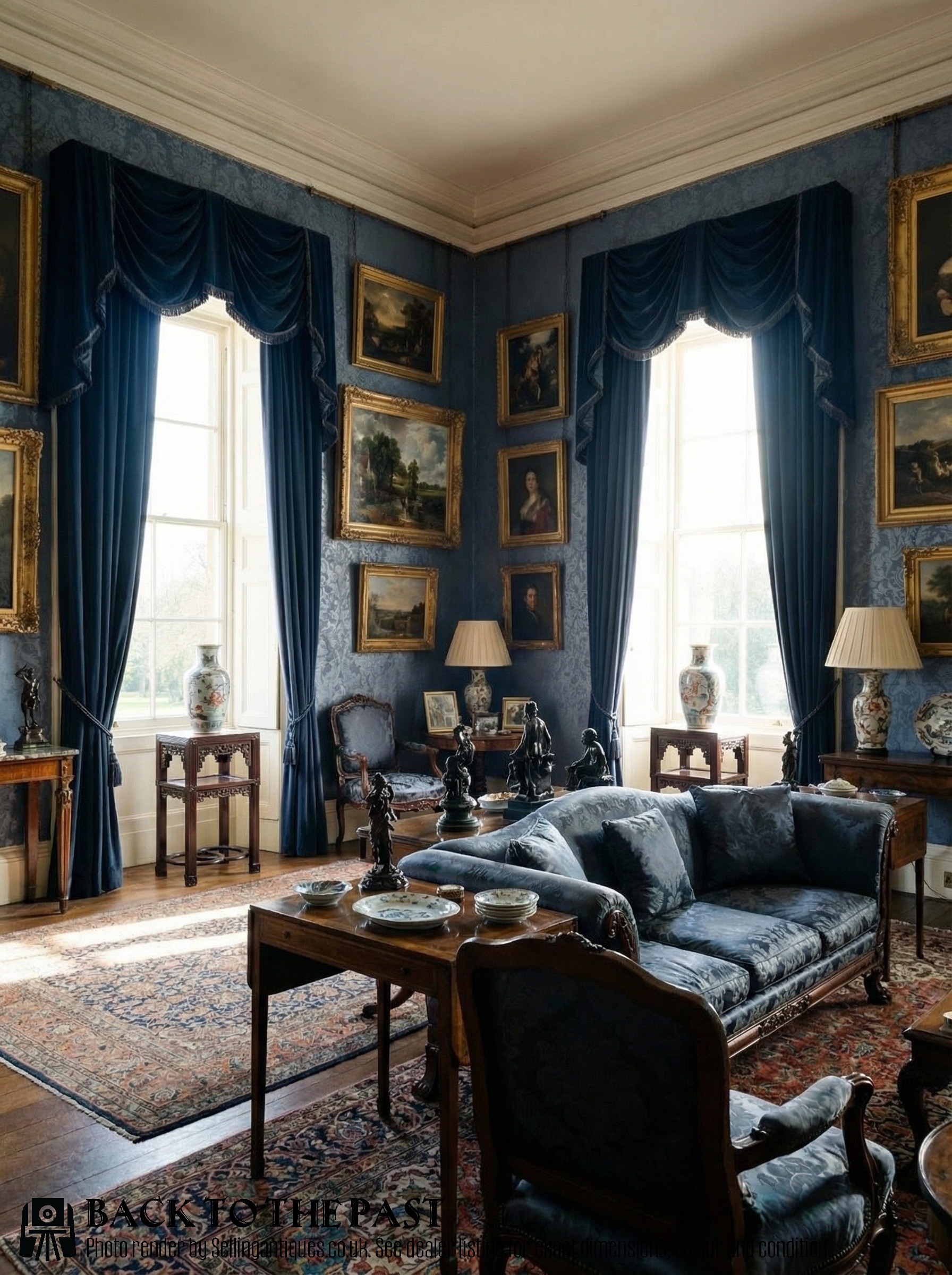
How they were made
Makers utilised dense timbers such as hongmu, huali, and padouk, relying on their natural weight and tight grain to construct stable frames without excessive metal fixings. Elm and rootwood provided alternatives for rustic or irregular forms, treated with clear finishes to highlight natural figuring and patina. These tropical and domestic hardwoods allowed for deep relief carving on skirts, aprons, and legs.
Construction frequently incorporated traditional mortise and tenon joinery alongside complex interlocking frames that accommodated wood movement across seasonal humidity changes. Inlaid details utilised contrasting materials, including mother-of-pearl, brass, and carved stone inserts such as variegated rouge marble or quartz. Lacquered surfaces received multiple hand-applied coats to achieve deep red or black finishes.
Late 19th Century Chinese Table Retail Price Guide 2026
Typical asking prices for late 19th century chinese table among the pieces listed under this phrase on Sellingantiques today, from the lower quarter to the upper quarter. They describe what is for sale here now, not the wider market.
Recorded forms include altar tables, opium tables, plant stands, and multi-tiered pedestals.
What varies in quality
The distinction between standard utility items and superior examples lies in the crispness of the wood carving and the selection of timber. Dense, heavily figured hongmu and well-matched marble inserts denote higher workshop standards than plain elm or softwoods. Superior pieces demonstrate precise joinery where aprons meet legs seamlessly without visible gaps or corrective filler.
Intricate detailing such as mother-of-pearl inlay or pierced friezes requires meticulous hand execution, separating ambitious workshop output from routine production. The condition of the original lacquer or wax finish also dictates the overall integrity, as excessive stripping or poor later restoration diminishes the historic surface character.
The Late 19th Century Chinese Table Glossary
- Hongmu
- A dense tropical hardwood prized in Chinese furniture making for its dark colour and heavy weight. It translates literally as red wood and accommodates intricate relief carving.
- Altar Table
- A long, narrow table traditionally placed against a wall for ceremonial use or display. They feature upturned flanges at the ends and deeply carved aprons.
- Kang Table
- A low, portable table used domestically for sitting or drinking tea upon a heated brick platform. These surface types now function as coffee tables in modern interiors.
- Jardiniere Stand
- A tall or low pedestal specifically designed to support heavy ceramic plant pots. They often incorporate inset marble tops to protect the wood from moisture.
- Huali
- A fragrant, highly figured rosewood utilised for fine Qing Dynasty scholarly furniture. Its grain patterns provide decorative movement across flat surfaces.
Late 19th Century Chinese Table: Frequently Asked Questions
What is a kang table used for?
A kang table served domestic functions on a heated brick sleeping platform, providing a stable surface for writing, dining, or drinking tea.
Today, these low proportions translate well into modern interiors as coffee tables or display platforms for low seating arrangements.
How do I identify a Qing Dynasty table?
Identification relies on observing traditional joinery methods, dense Asian hardwoods like hongmu, and characteristic carved motifs such as dragons, prunus, or geometric borders.
Many pieces from this era also incorporate inset marble or stone panels within the top surface to display decorative objects safely.
Can I use a pot stand as a side table?
Pot stands and jardiniere pedestals offer sturdy surfaces despite their narrow footprints, making them suitable for resting small lamps or drinks.
Their varied heights allow them to function effectively beside armchairs or in tight corners where standard tables will not fit.
What wood is hongmu?
Hongmu is a category term used for dense, heavy tropical hardwoods with rich dark tones, highly favoured by traditional Chinese cabinetmakers.
Its structural stability allowed artisans to carve deep, crisp relief designs into table aprons and legs without weakening the frame.